Circa 1940s, a French-made 'Salt & Pepper Cotton Twill Atelier Coat'.
The Atelier Coat — a staple of French workwear.
Against the backdrop of France's golden age of artistic culture — painting, sculpture, architecture flourishing — this coat was favored primarily by artists working within ateliers, the creative studios where such work took place.
Records show, however, that the Atelier Coat extended far beyond the artist's studio. Teachers, office workers, and even children wore them — a garment woven into the fabric of everyday French life.
Painters of the era, in particular, maintained their formal dress while at work, and this coat served a singular purpose: to protect their clothing from the inevitable marks of creation. Named quite literally for its origin — 'the coat worn in the atelier' — it stands as one of French workwear's most culturally resonant pieces.
Worn daily in the creative act, yet possessed of both formal beauty and functional grace, it embodies the luxury of being made beautiful through use.
What first arrests the eye is the restrained, dignified appeal of its lapelled collar.
Stripped of excess ornamentation, its geometric lines carry a craftsman's honesty — expressing an understated, literal beauty.
Patch pockets at the chest and waist speak to practicality, designed to carry tools and materials.
Their squared stitching creates a visual rhythm, lending texture and presence to the fabric itself.
Though linear in silhouette at first glance, the garment holds a subtle softness in wear, following the body with the quiet ease that only age can bestow — that distinctly vintage quality of refined restraint.
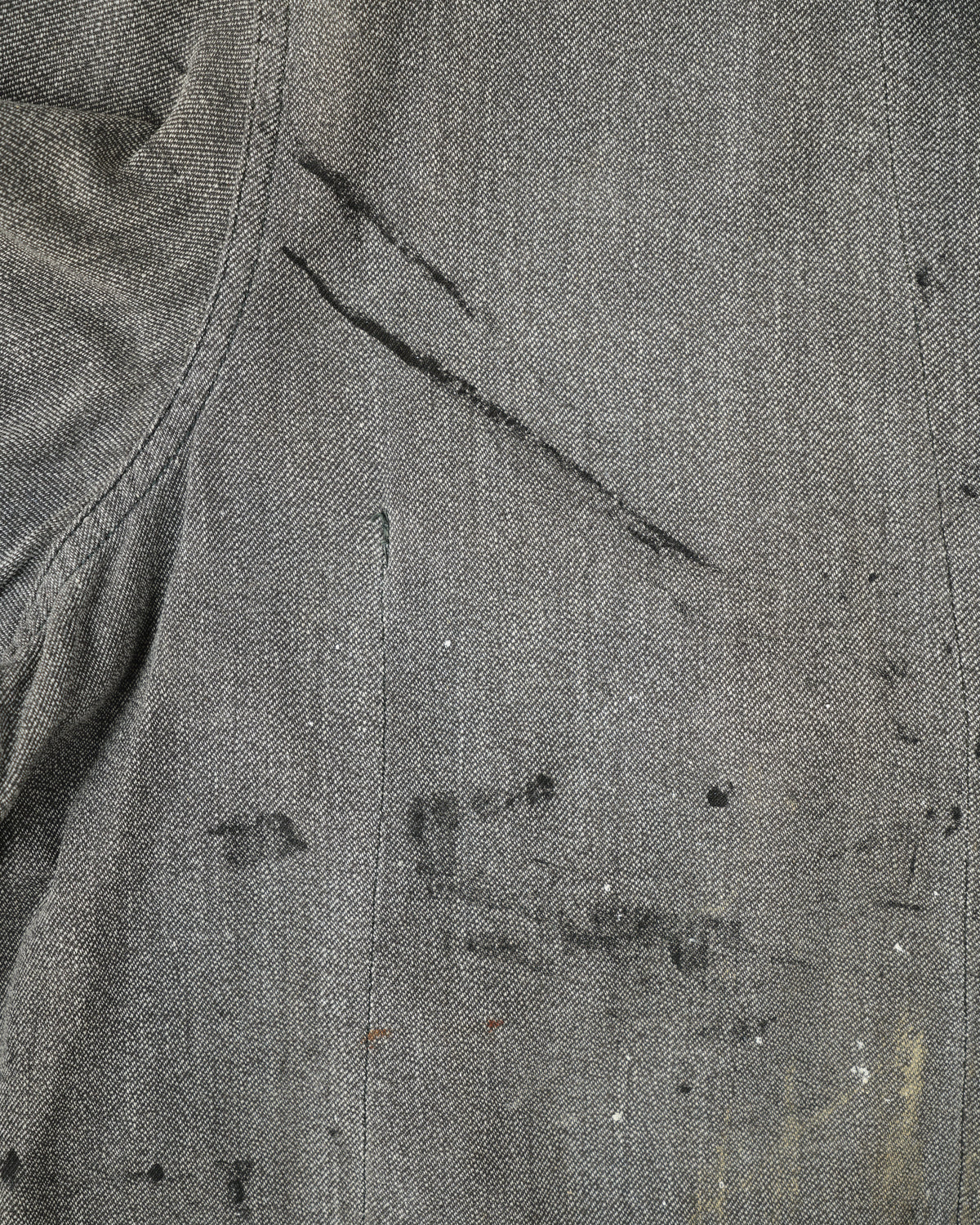
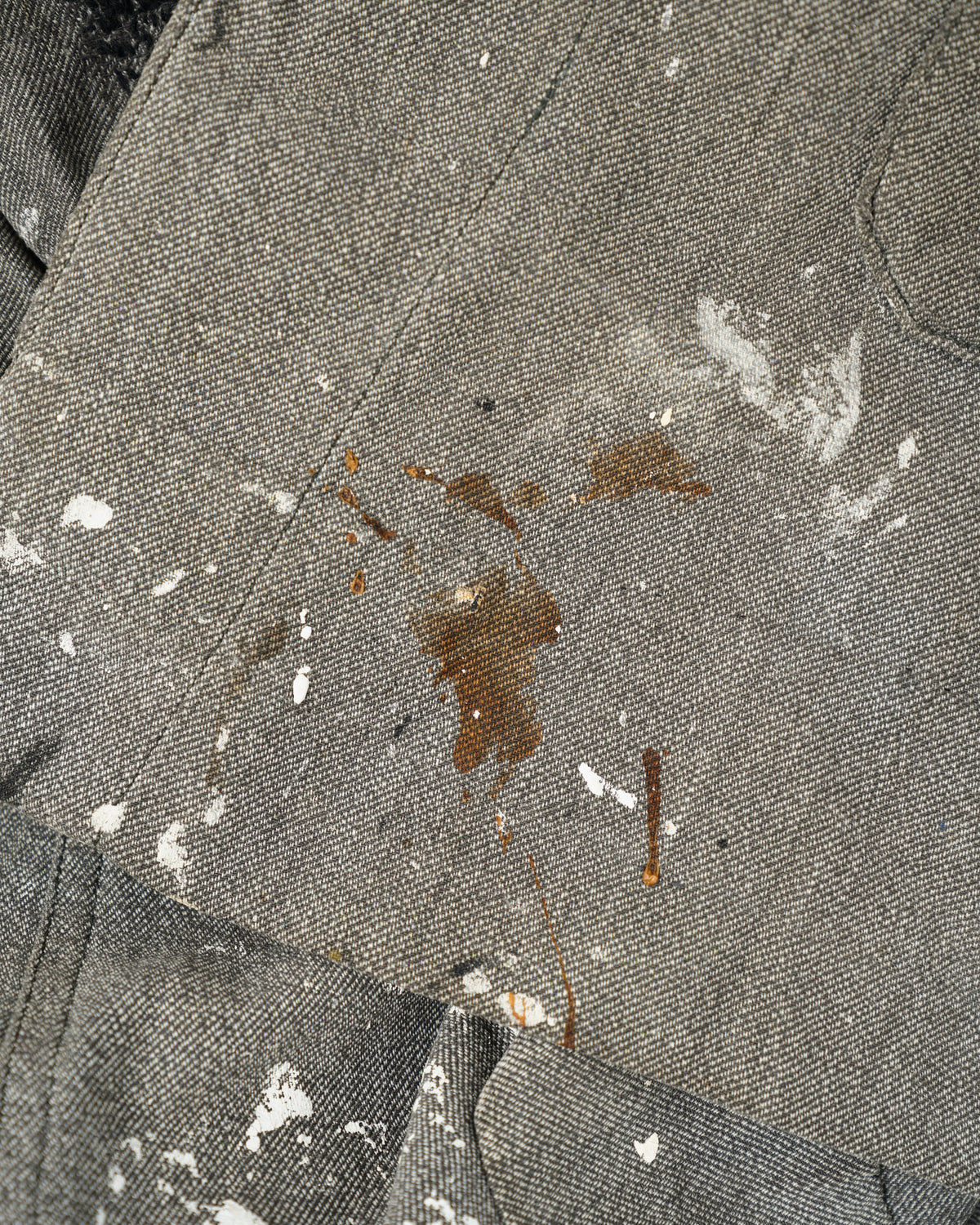
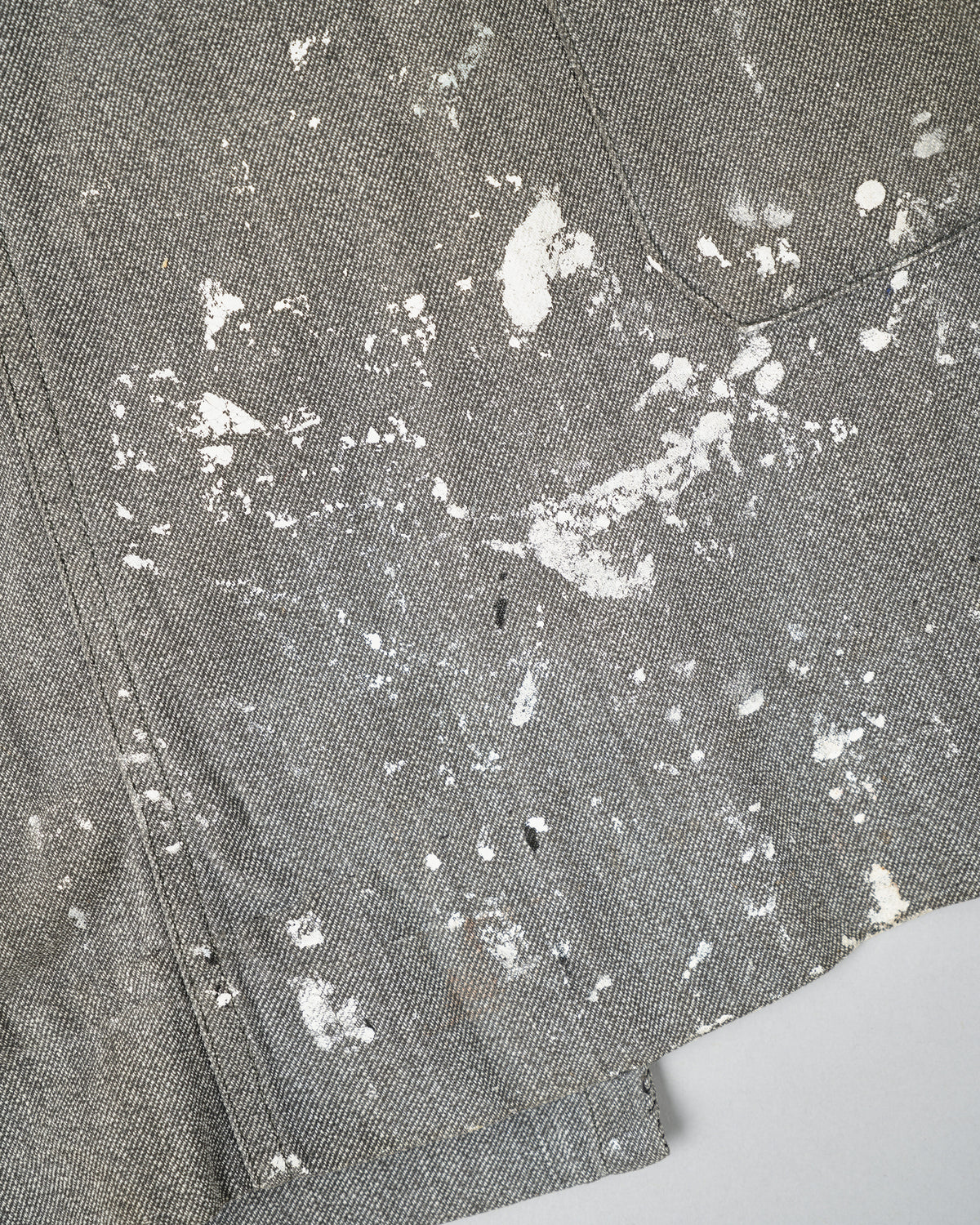
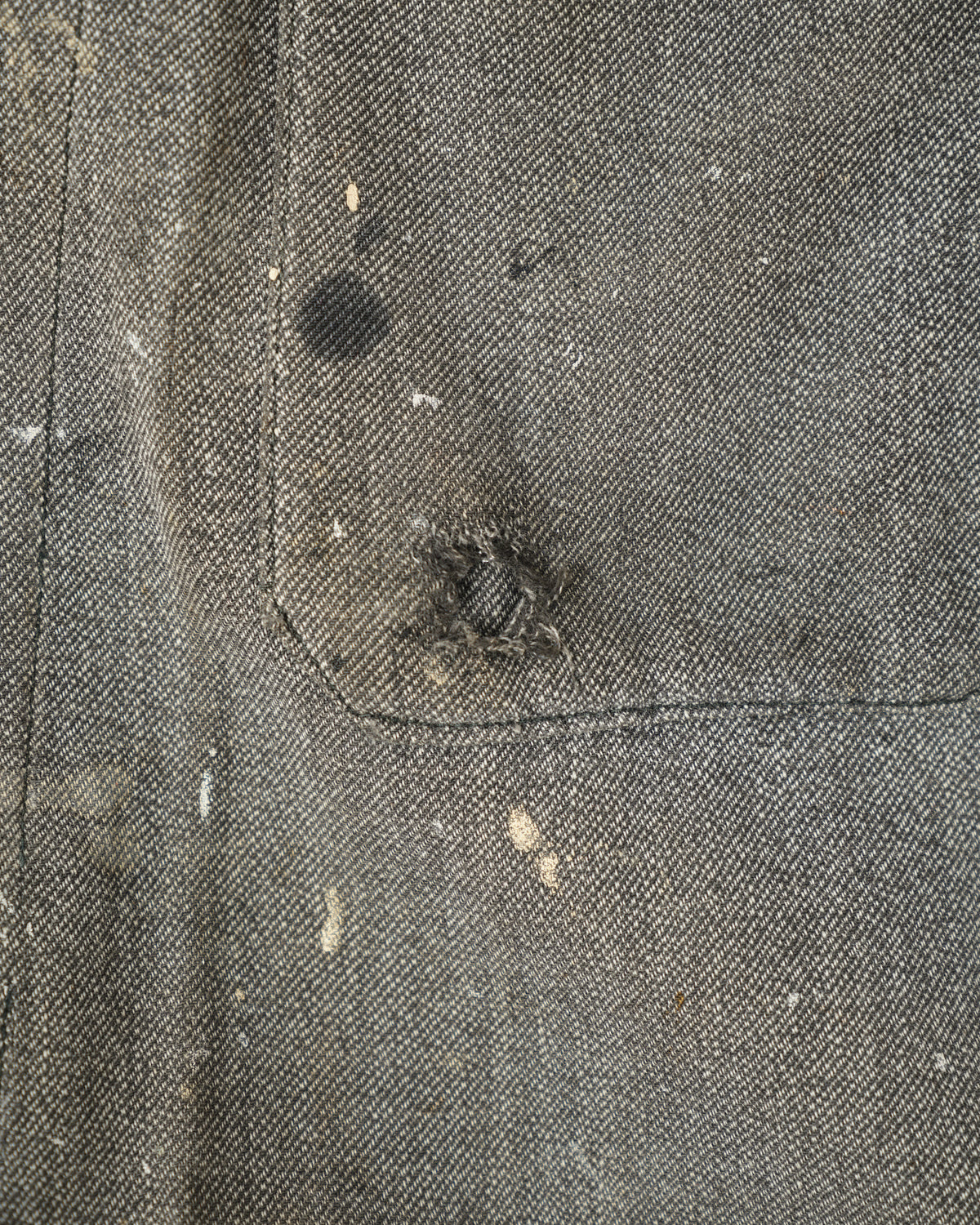
Yet the true distinction of this piece lies in its 'crazy paint' — flecks and traces scattered across its entire surface.
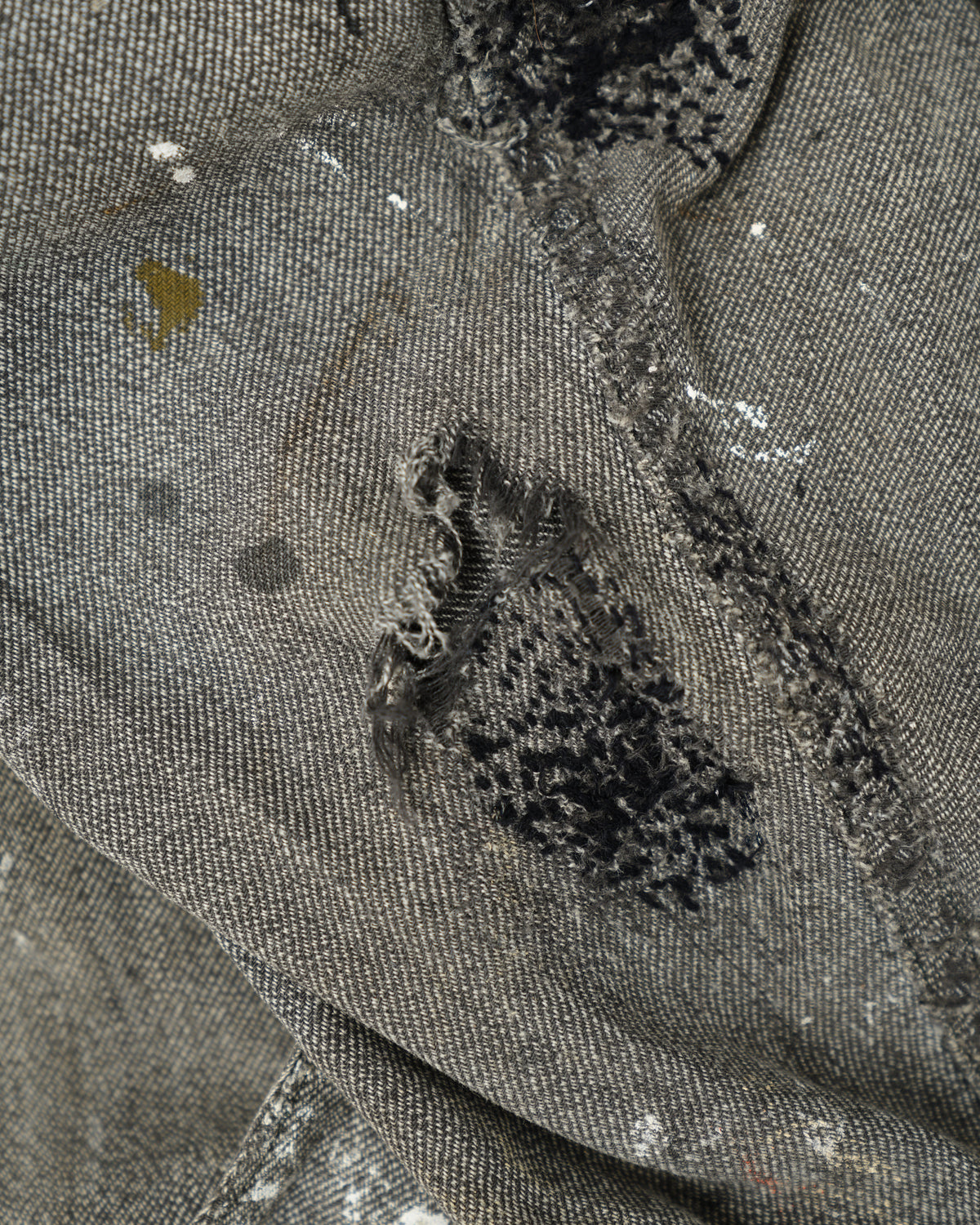
White, black, brown — spatters, scuffs, brushstrokes layering and overlapping — each mark unmistakably the product of the actual studio, not some designed effect. This is authentic patina.
Alongside these painted traces are instances of hand-sewn darning repairs — at the chest pocket, along the sleeves — each stitch placed with care. The garment carries the warmth of continuous repair and use, the temperature of the studio itself woven into its cloth.
Uniform salt-and-pepper grey animated by white paint, punctuated by the black rhythm of darning stitches.
In effect, a garment that carries the fervor of the atelier directly into one's wardrobe.
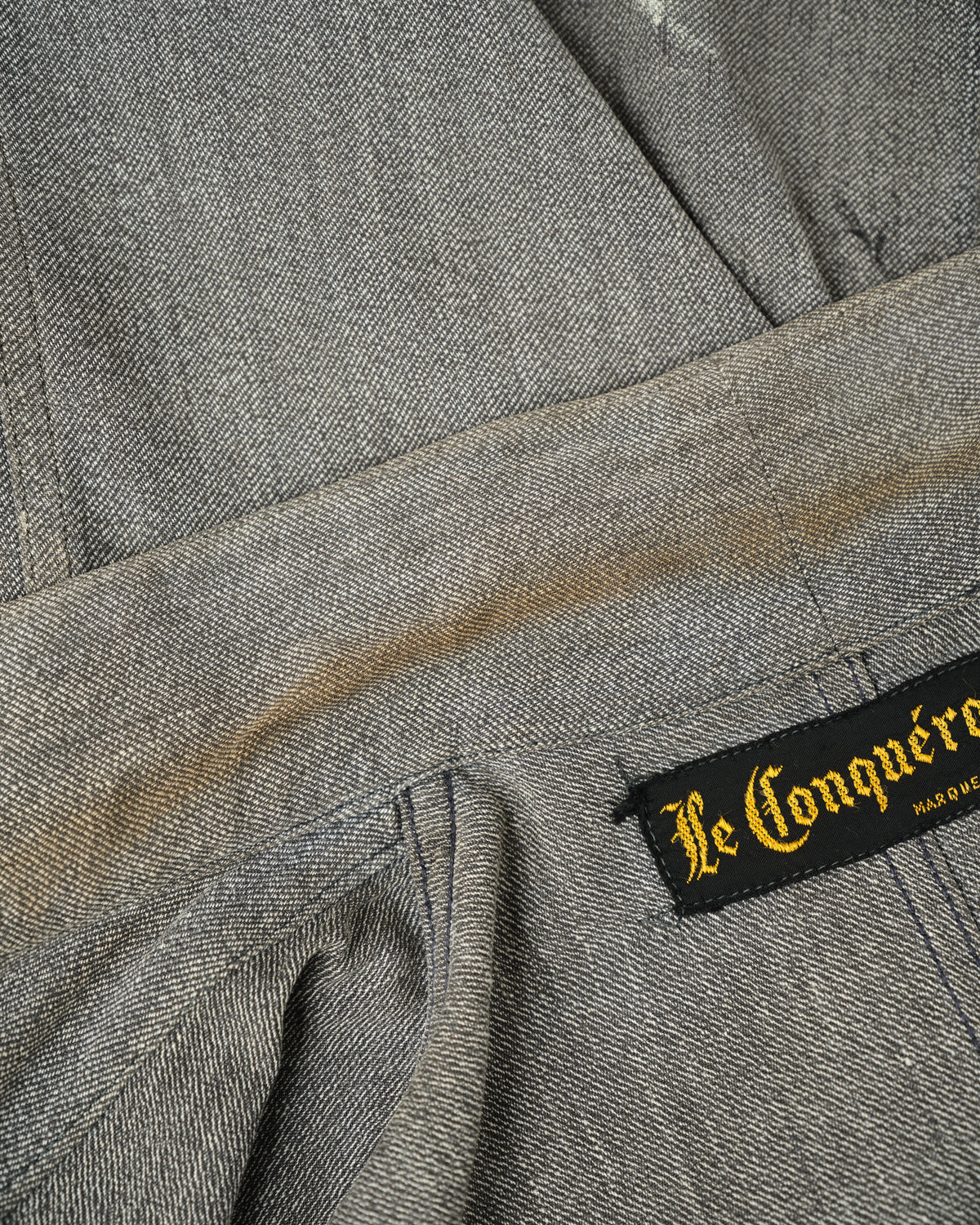
Inside the collar sits a black label bearing gold embroidery — a LE CONQUÉRANT maker's mark.
Vintage pieces bearing such embroidered labels are highly sought; they stand as markers of a particular era.
This example is woven from 100% cotton in a classic salt-and-pepper weave.
Alternating cream and charcoal threads create the distinctive texture — appearing as a fine fleck from a distance, yet revealing considerable depth upon closer inspection.
The fabric's surface shifts in shadow and light, moving between sand and slate depending on angle and ambient conditions.
The color is quintessentially Atelier Coat: grey.
Its mottled gradation dances subtly across its surface, the play of light creating a complexity that no solid color could achieve — a quiet, unstudied individuality.
While fundamentally utilitarian workwear, pieces demonstrating such aesthetic consideration in their material selection remain rare. This coat realizes that particular luxury: appearing effortless in the everyday, yet allowing the fabric itself to speak.
No size marking survives, though we estimate it corresponds to M through L.
Given the measurements, it appears a golden size for the Japanese frame — accommodating a broad range of builds.
It reads well worn close to the body or with deliberate ease.
The garment carries visible signs of its working life: soiling, scuffing, loose stitches, small holes, tears, and repair work. Yet it sustains no damage that would prevent its continued wear.
Material scarcity, historical depth, and that understated beauty peculiar to French craftsmanship — this Atelier Coat embodies them all. It transcends the category of vintage clothing; it is, quite simply, a garment through which to wear culture itself.
Unlike the sterile simulacra produced at the desk, a piece like this — shaped by the actual passage of time in actual studios — is singular and irreplaceable.
A rare opportunity to wear the air of the French atelier.
If it speaks to you, we would suggest moving without delay.