A German Luftwaffe Winter Flight Jacket, estimated from the 1940s.
A truly exceptional piece has arrived.
The German Luftwaffe was the air force of Nazi Germany, established between 1935 and 1945 during World War II.
It formed one of three principal branches of the Wehrmacht, alongside the Army and Navy.
The Luftwaffe functioned as Germany's primary military force throughout the Second World War.
Upon its establishment, it rapidly expanded by adopting the world's most advanced aviation technology and tactics.
As war commenced, the Luftwaffe became the cornerstone of Blitzkrieg strategy, participating in many decisive early engagements including the campaigns in Poland (1939), France (1940), and the Battle of Britain (1940).
Yet defeat in the Battle of Britain marked a critical turning point. Subsequently, as Allied air superiority grew and resources diminished, the Luftwaffe's capacity waned.
By war's end, its influence had substantially eroded, and it was dissolved with Germany's defeat in 1945.
We present herein a Winter Flight Jacket—issued to and worn by high-altitude pilots of fighters and dive bombers operating on the Eastern Front within the German air force.
Also known as the Kanal Jacke or Channel Jacket, this piece ranks among the most coveted items within the Luftwaffe archive.
Adopted exclusively for individual pilot use and produced for merely two years—1943 to 1945—examples remaining in circulation are extraordinarily scarce. Many encountering this jacket encounter it for the first time.
Two distinct variants have been documented: one constructed from cotton-blend fabric, the other from leather.
Colors identified include blue-grey, black-grey, and white-grey variations.
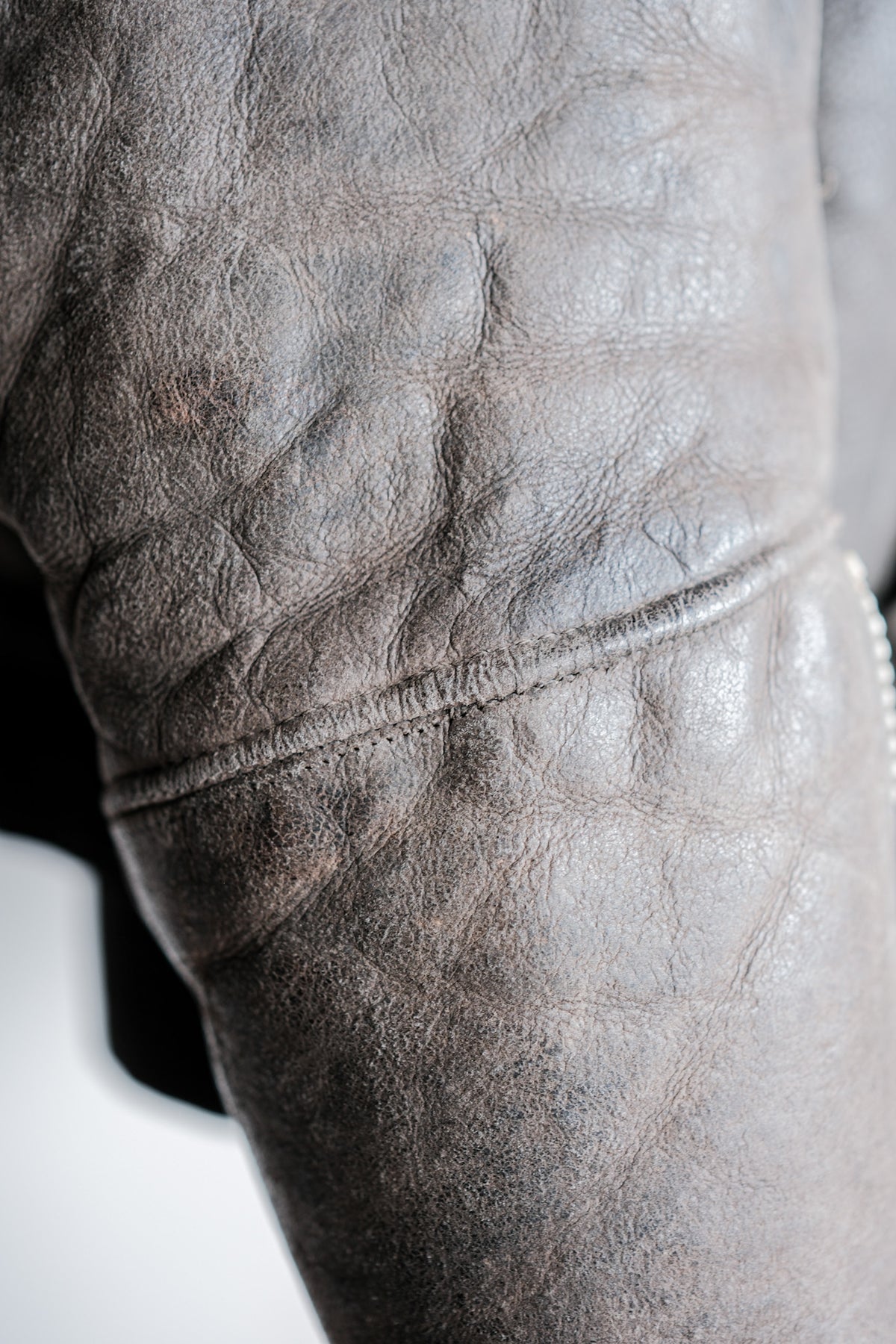
This example employs a brown-grey leather construction.
Earlier examples we acquired featured irregular zip-style hand warmers, whereas this specimen exhibits the standard button-closure pockets consistent with examples in general circulation.
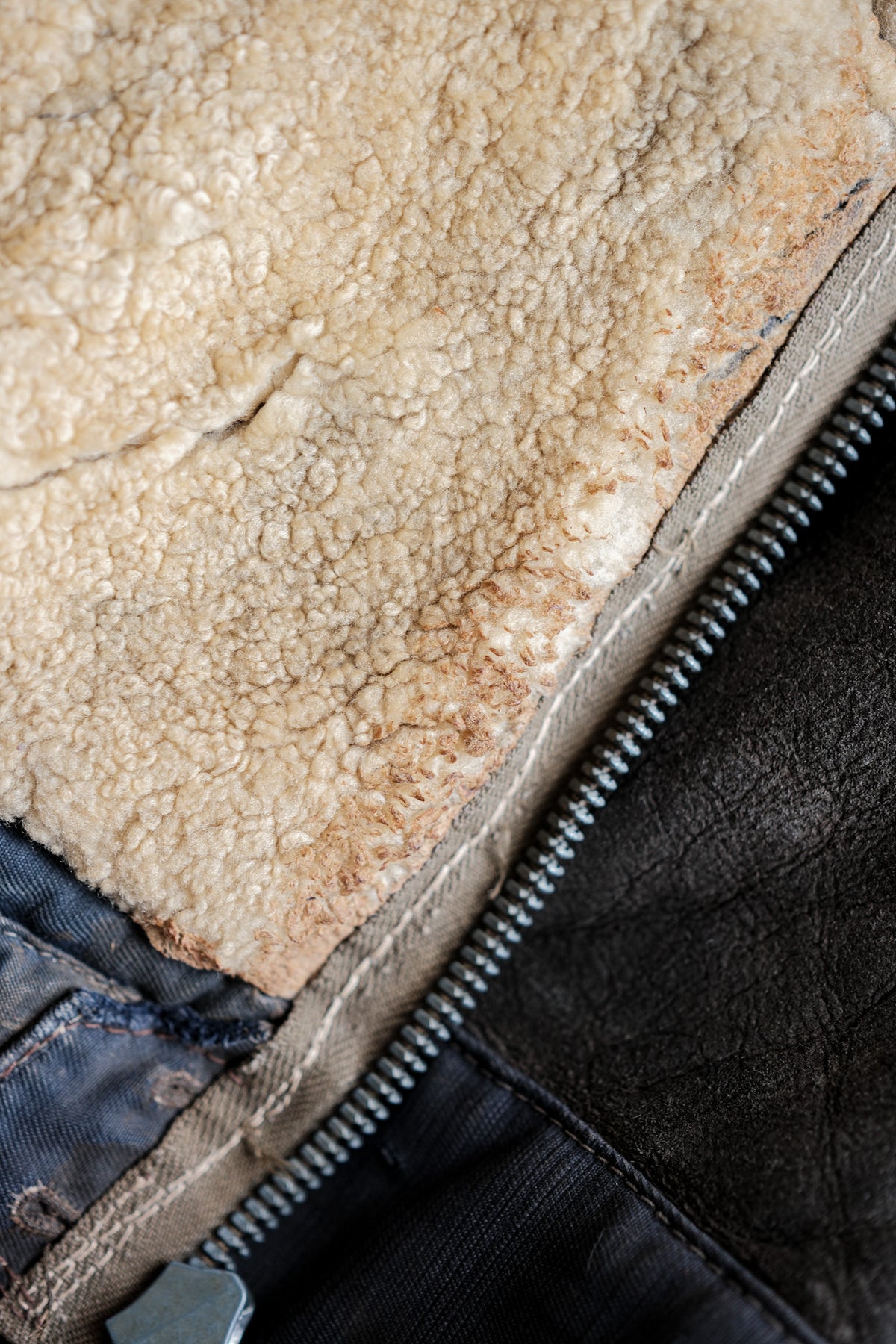
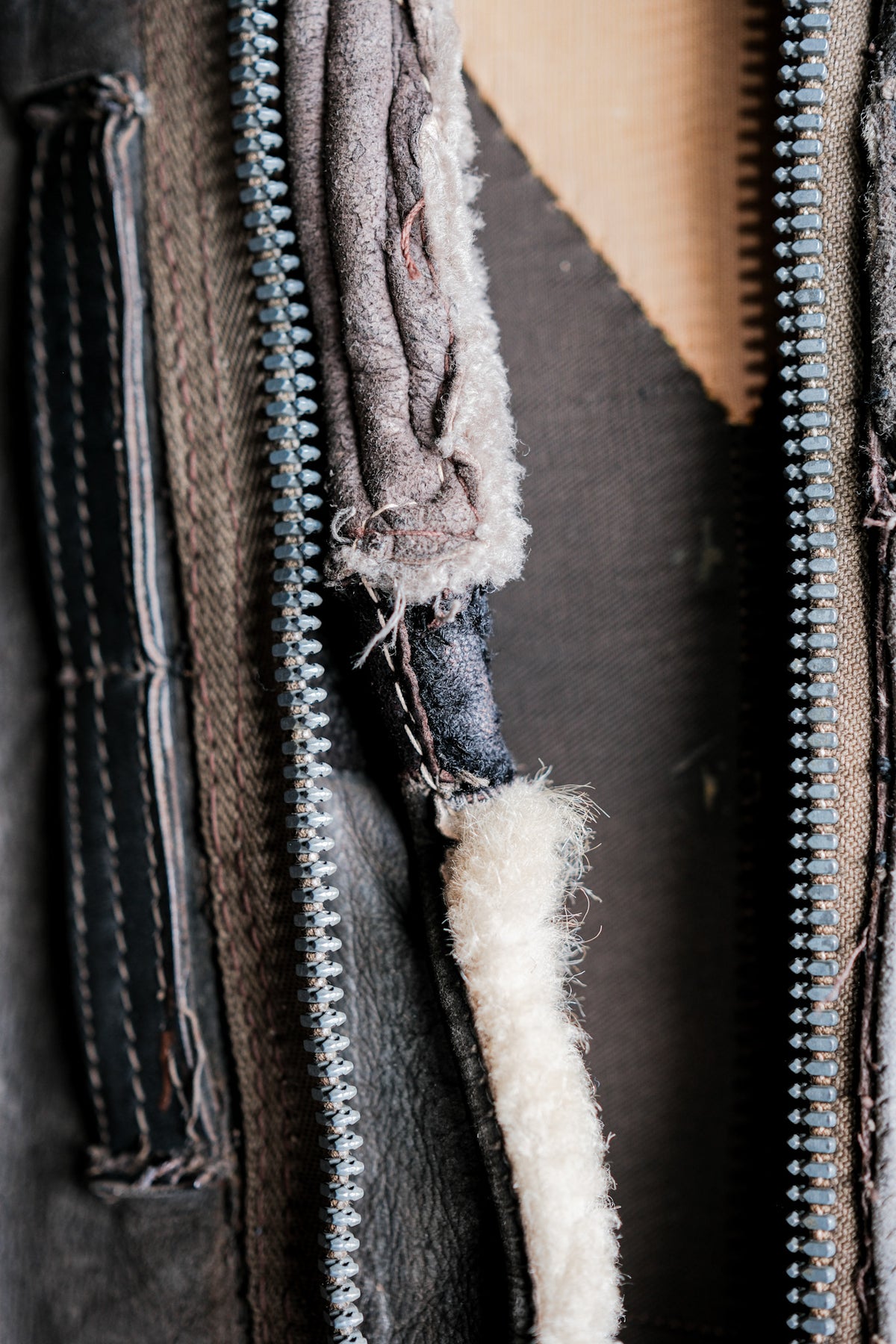
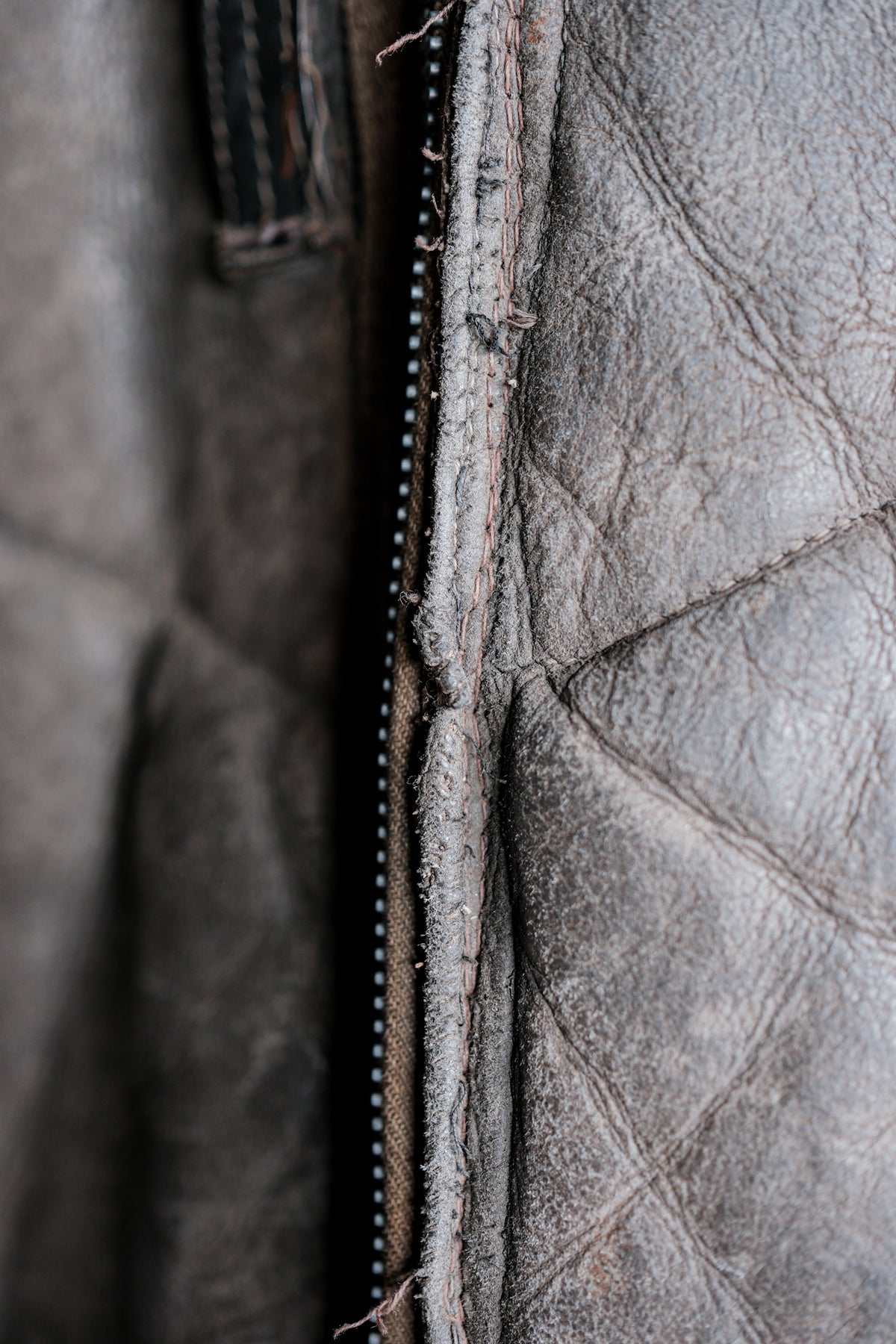
The front closes via full-length zipper.
The zipper bears no maker's mark, suggesting it has been replaced at some point.
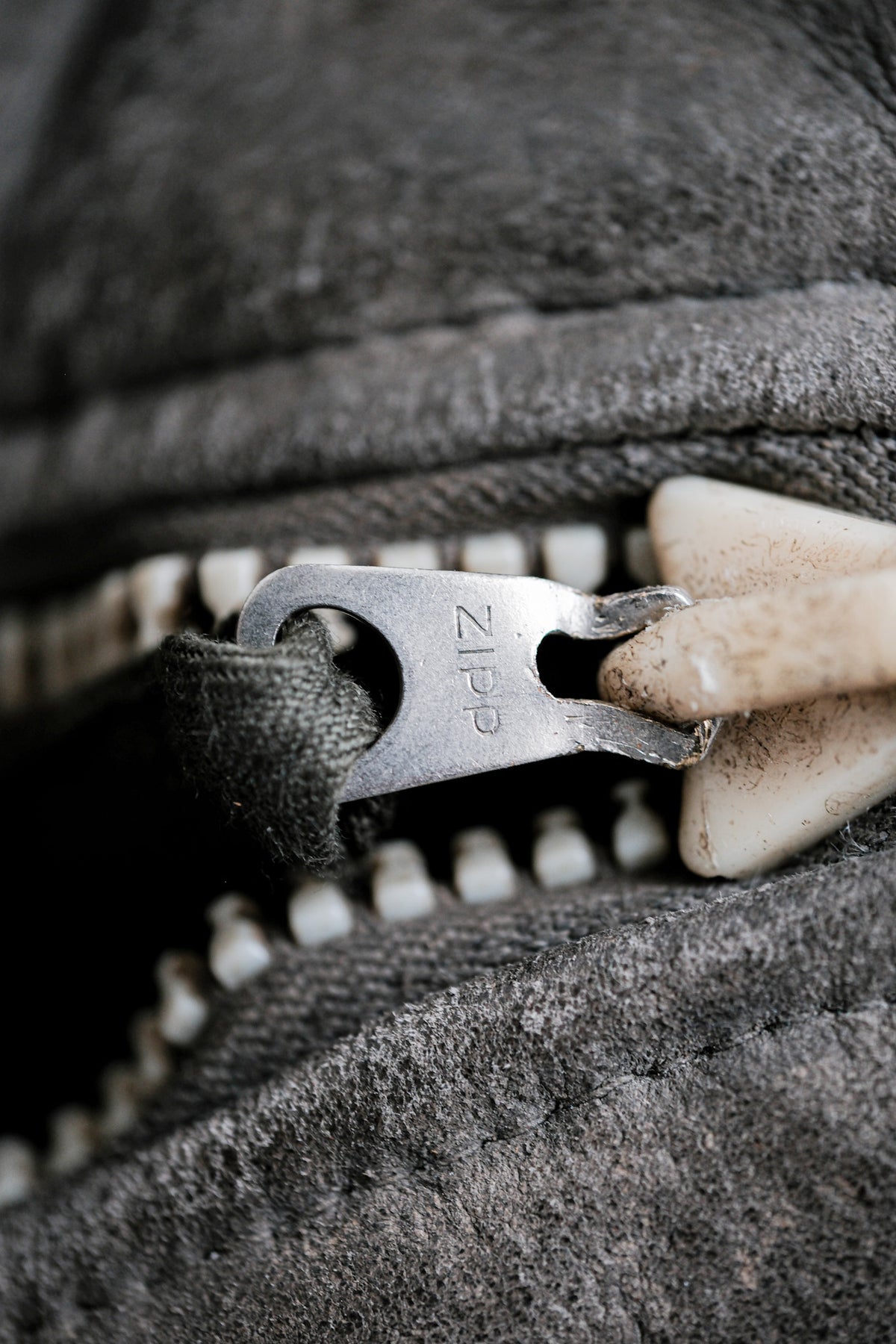
The sleeve zip sliders differ between arms—the right sleeve features a riri slider, while the left bears a ZIPP slider.
The cuff incorporates snap buttons and an operable zipper—details unique to this example—with a doubled lining visible at the interior. The design reflects characteristically German precision.
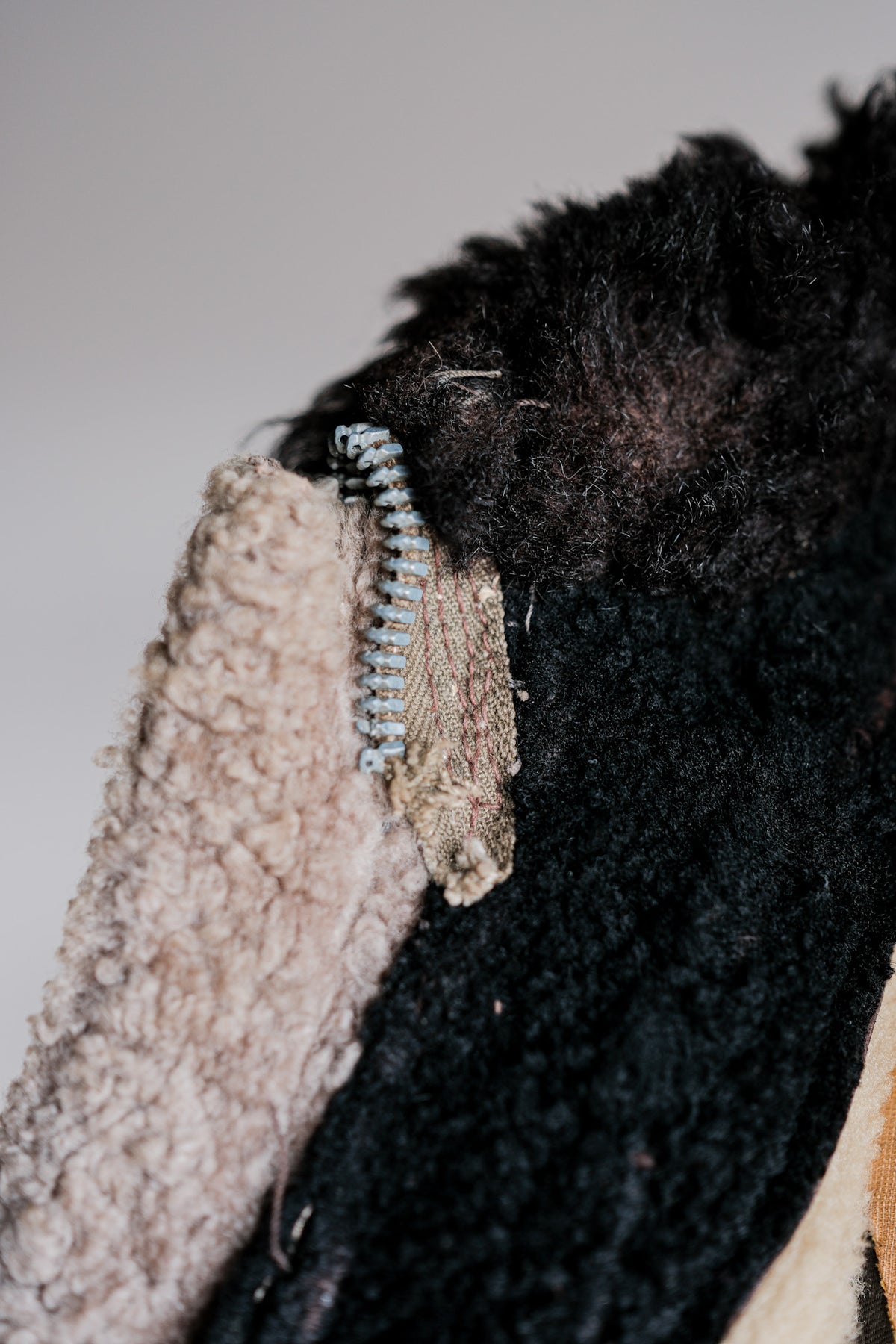
The collar features a button-fastened chin strap designed to prevent wind penetration and accommodate an upturned collar. This button configuration is unusual; examples typically feature snap buttons, marking this piece as irregular.
A buckled belt ordinarily appears inside the waistband; this example lacks it.
The body likely utilizes sheepskin.
The lining employs synthetic fur.
Sheepskin is leather derived from sheep at least one year of age.
Among leathers, it is the lightest and softest. While its tensile strength and abrasion resistance fall below those of other animal hides, its distinctive grip against skin provides exceptional comfort and adherence to the body.
Synthetic fur—developed to emulate genuine fur and introduced to market in 1929—is a man-made fiber typically blended from acrylic, modacrylic, and polyester.
It has gained popularity for its ability to deliver aesthetic results without animal harm.
The lavish materials employed in construction would be unthinkable in a contemporary garment—a testament to the craftsmanship philosophy of the era.
No size marking is evident, though the garment appears to correspond to a contemporary L to XL.
Actual measurements indicate a generous fit, suitable for larger frames without concern.
Worn in the military tradition—thrown loosely over the shoulders—it carries considerable presence.
The piece shows patina consistent with wear—soiling, creasing, repair marks, and the absence of the waist belt—yet bears no damage that compromises its wearability. It remains entirely serviceable.
German military artifacts have attracted particular attention recently, yet extant examples remain profoundly scarce, with demand far outpacing supply owing to historical attrition.
A dedicated collector base ensures that significant Luftwaffe pieces seldom surface—this is unmistakably an archive item of considerable desire.
Given the two-year production window of 1943 to 1945, scarcity is inevitable.
Beyond rarity, when considered as a garment, this jacket possesses undeniable presence. It deserves to be worn without hesitation.
Such pieces cannot be procured merely through expenditure, nor can future acquisition be assured.
It serves equally as wardrobing, collection, or design reference with no compromise.
Pieces of this caliber are rarely encountered domestically. Those who have sought such an item, or those drawn to the exceptional, should not overlook this opportunity.