1963 issue, Royal Canadian Navy 'Intermediate Cold Weather Deck Jacket'.
A special item arrival.
The Royal Canadian Navy has served as the maritime force of the Canadian Armed Forces, bearing responsibility for national sovereignty, sea lanes, and coastal defence. Its institutional foundation rests in the 'Naval Service Act' established in 1910.
This maritime force began as the 'Naval Service of Canada' and on August 16th, 1911, King George V approved the designation of Canada's naval forces as the 'Royal Canadian Navy' (RCN).
During the Second World War, the RCN's significance expanded decisively.
The 'Battle of the Atlantic'—the protection of supply lines crossing the ocean—became the lifeline determining whether the Allied powers could sustain the war effort itself. The RCN engaged deeply in this struggle through convoy escort and patrol operations.
As a result, the force that numbered merely 6 vessels and 3,500 personnel at the war's outset had expanded to 95,000 personnel and 434 commissioned vessels by its close, reaching a status as 'the world's third-largest navy'.
In the postwar period, the RCN continued Canada's international engagement and maritime operations—as exemplified by Canadian destroyers undertaking naval blockade, carrier protection, and coastal bombardment during the Korean War. However, within the currents of Canadian Armed Forces reorganisation in the late 1960s, by 1968 the RCN ceased to exist as an independent service, with maritime forces transitioning to the Canadian Forces Maritime Command.
Yet historical designation and tradition remained unbroken. On August 16th, 2011, Maritime Command recovered the name 'Royal Canadian Navy', and RCN was officially restored.
The distinctive authority emanating from Royal Canadian Navy military items derives not from design alone, but from the accumulated substance of time invested in the practical tasks of maritime transport, convoy escort, and coastal security.
We present the 'Intermediate Cold Weather Deck Jacket'—issued and worn as shipboard working apparel by the Royal Canadian Navy.
Among the category of 'deck jacket' as discussed in military vintage contexts, this remains a notably distinctive piece of Canadian-issue equipment.
The interior tag reads 'JACKET, INTERMEDIATE COLD WEATHER / AUG. 1963 / HOLDEN MFG. CO. LTD.'—a Royal Canadian Navy garment of August 1963 issue for 'intermediate cold weather' conditions.
It establishes itself as singular through its hooded construction, drawing on the austere shipboard character evoked by the American Navy's 'N-1 Deck Jacket' whilst functioning as an integrated hood jacket.
What first commands attention is the corduroy facing applied across the hood interior and collar region.
Executed in harmonising deep navy to near-black tones, the inherent ribbed texture of corduroy creates dimensional shadow, rendering the 'surface expression of material' the protagonist despite its functional military role. The hood area experiences considerable friction, so the raised nap of corduroy encounters skin effectively—serving both tactile comfort and wind resistance.
The pocket detailing observes the N-1 vernacular whilst demonstrating distinctly Canadian restraint.
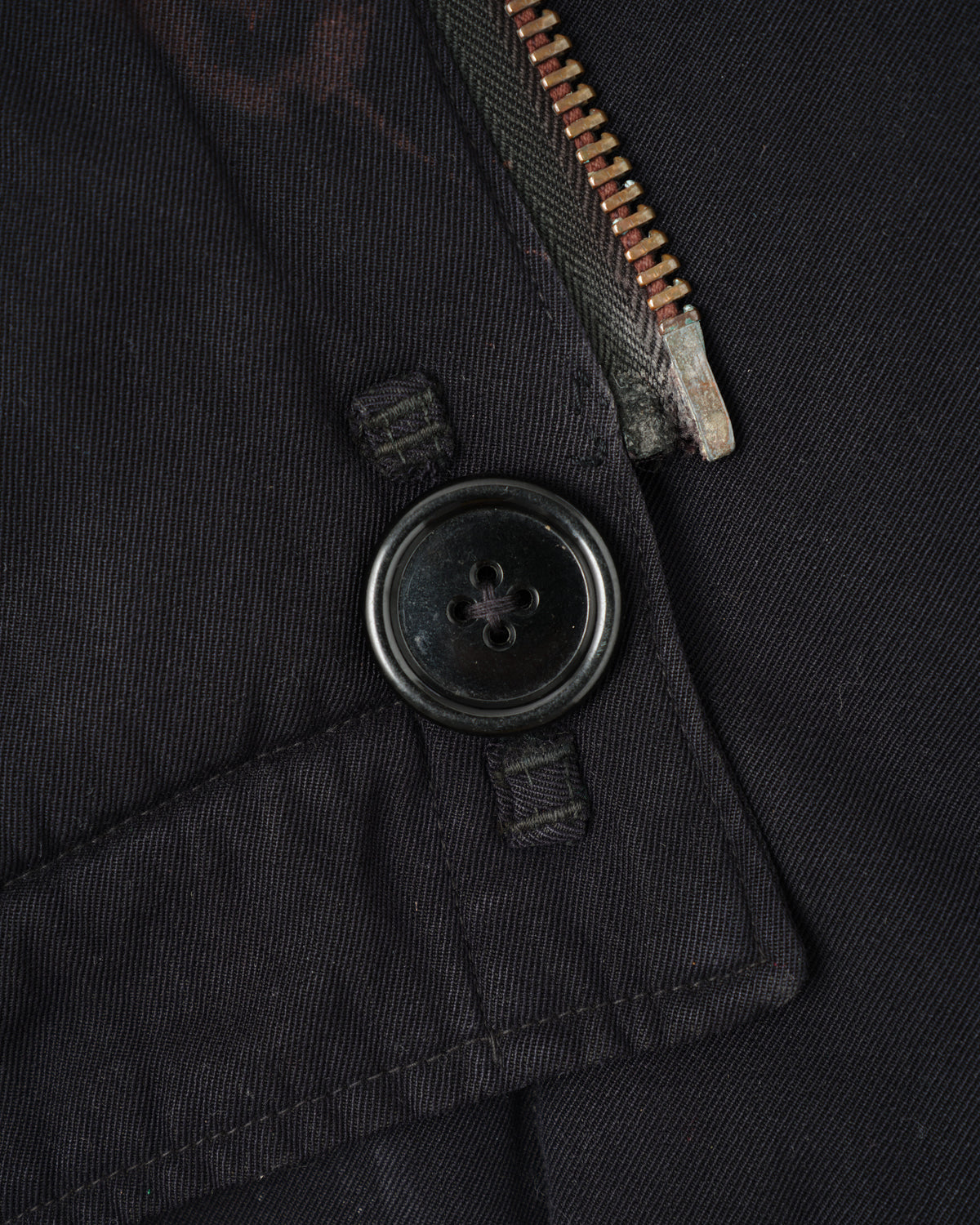
Buttonable flap hand-warmer pockets occupy the jacket's mid-section. The flap form sits compactly—a balance favouring the composed elegance of functional equipment rather than visual heaviness.
The cuffs employ a dual-wall structure, with knit ribbing sewn to the interior face.
This restrains wind intrusion whilst accommodating arm movement during labour—a 'luxury of practicality'. Metal eyelets beneath the underarm provide ventilation relief, a consideration entirely fitting for shipboard, action-oriented apparel.
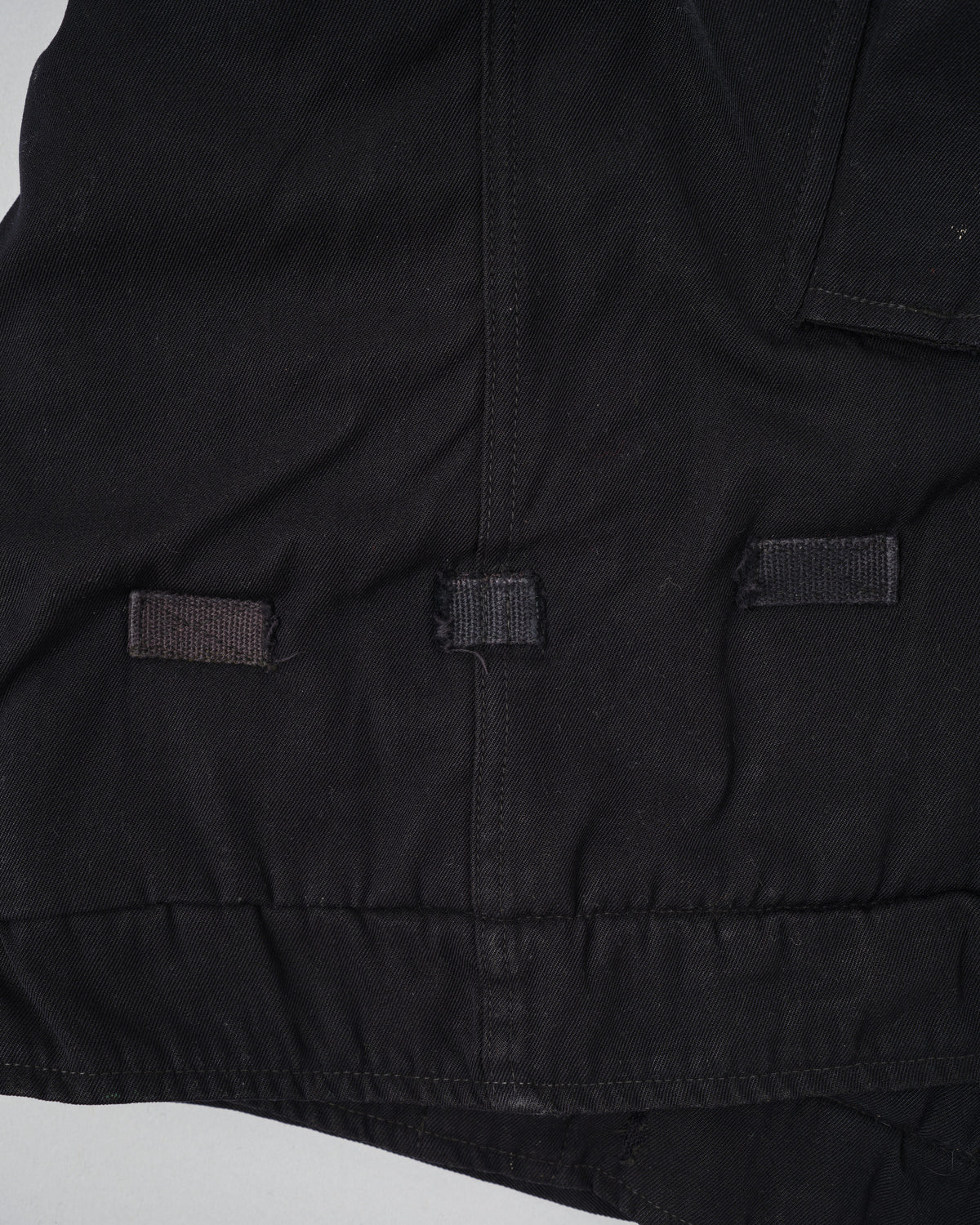
This example originally carried side adjusters at both hem ends, though these have been lost. Their traces remain as loops, and the departed function exists as vintage authenticity—a truth of time passed.
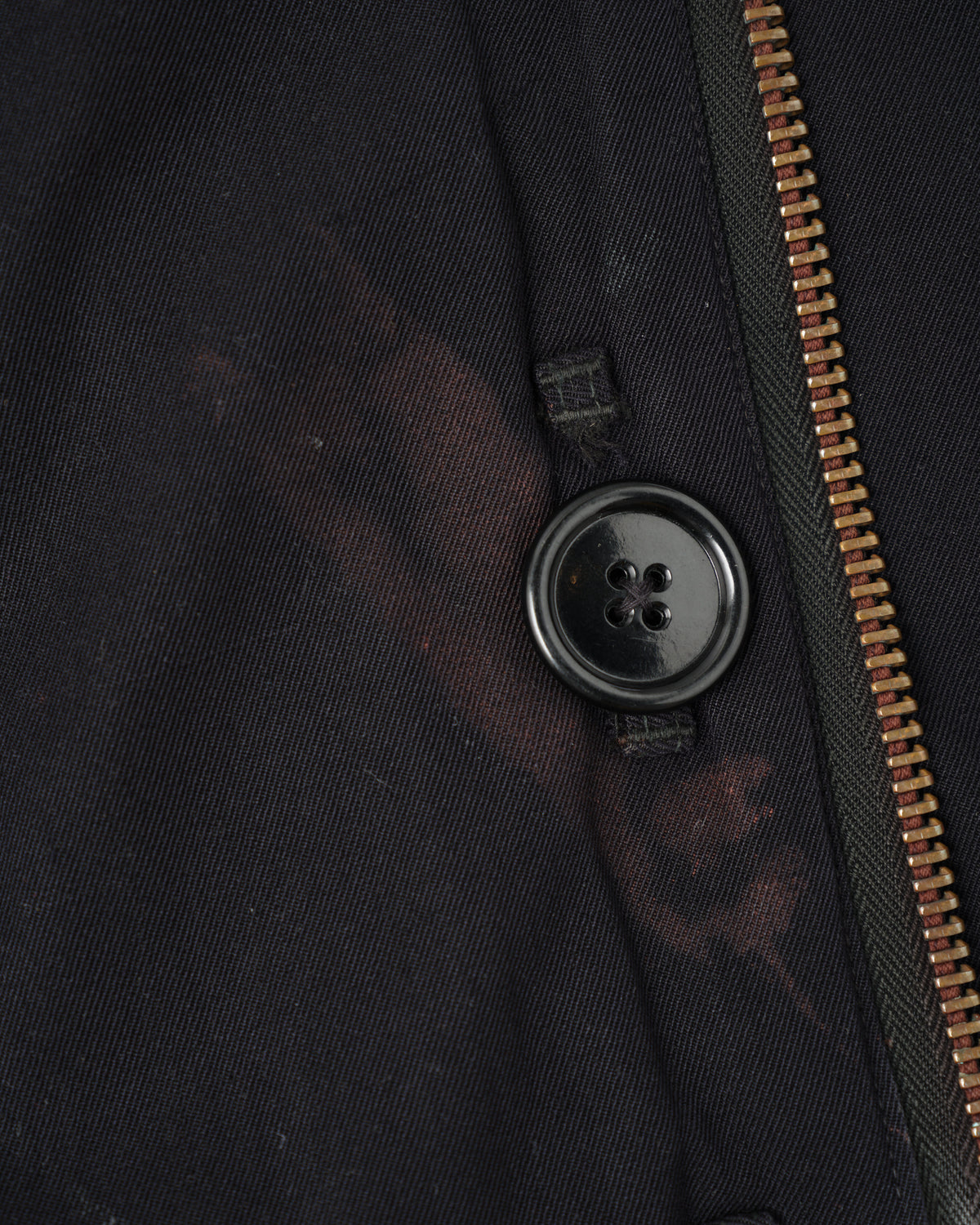
The closure employs dual structure: zip fastener paired with button retention. The zip slider bears a CLIX fastener, the heavy-duty metal hardware befitting shipboard equipment.
The body presents, as photographs confirm, exceptionally dense shell fabric—a 'wall' receiving and arresting wind.
Material content remains undocumented, though theory suggests wind- and water-treated, high-density two-ply cotton enclosing a heavy wool layer. This example presents, through tactile impression, characteristics suggestive of 'wool gabardine' (all assessment based on direct observation).
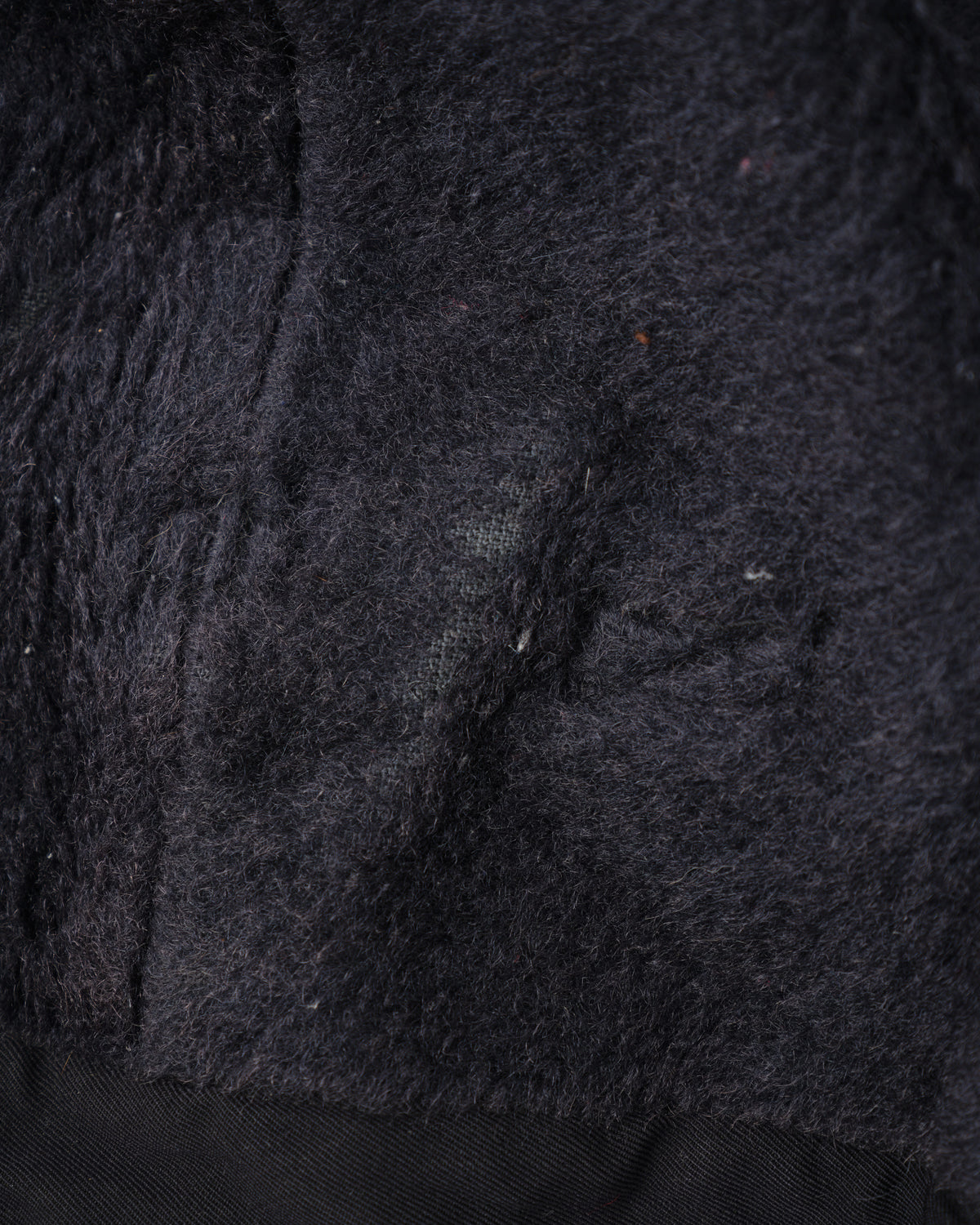
The lining comprises dense, pile-finish fabric across the entirety—tactile and visual evidence of 'warmth'. With wool-acrylic tonality, it addresses the shipboard chill with practical insulation befitting the 'Intermediate' designation.
The colour presents as dark navy—navy drawing toward black.
Not the lightness typical of standard navy, but profound darkening toward black itself. Yet pure black cannot contain it—a remaining whisper of blue resides within, creating three-dimensional tonal subtlety that shifts with light's angle.
This depth proves advantageous precisely because it operates as 'black' whilst remaining military. It functions as receptive foundation for denim, chinos, and wool slacks alike, tightening silhouette without demanding colour concession.
Size marking reads '44', corresponding approximately to Japanese 'L'.
Given the actual measurements, this represents a proportionate scale for the Japanese physique—accommodating varied body types. In military fashion, wearing it generously oversized retains full presence.
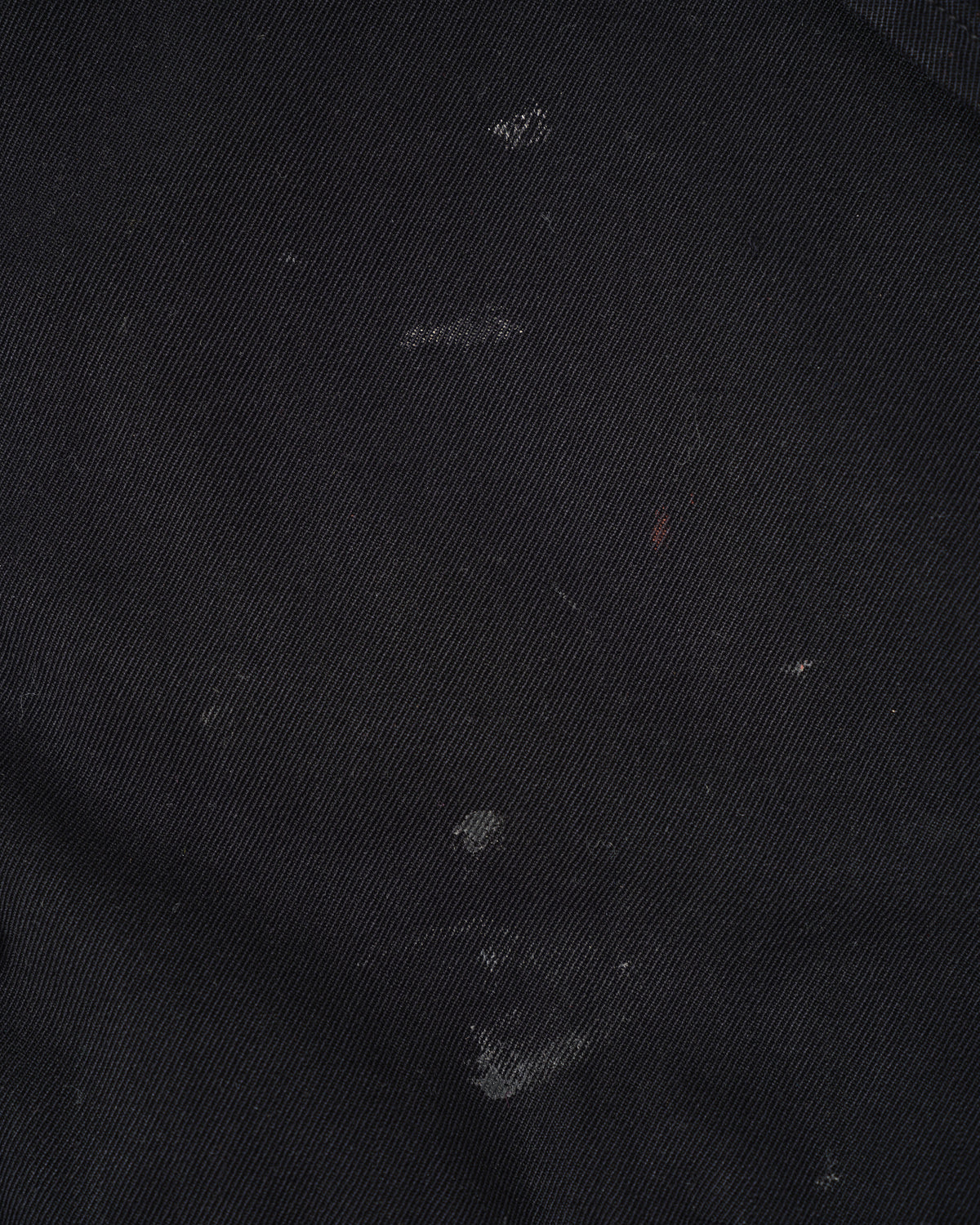
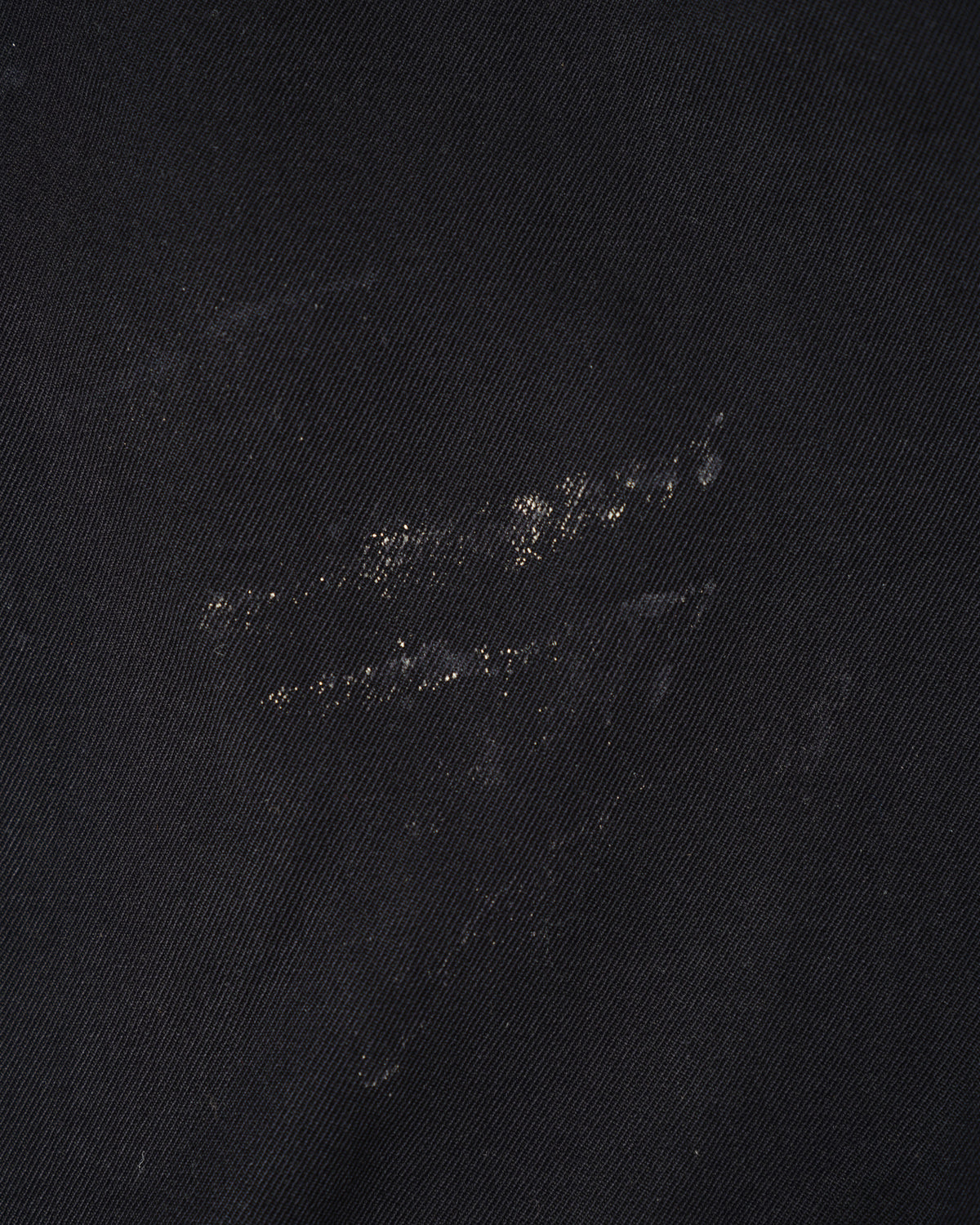
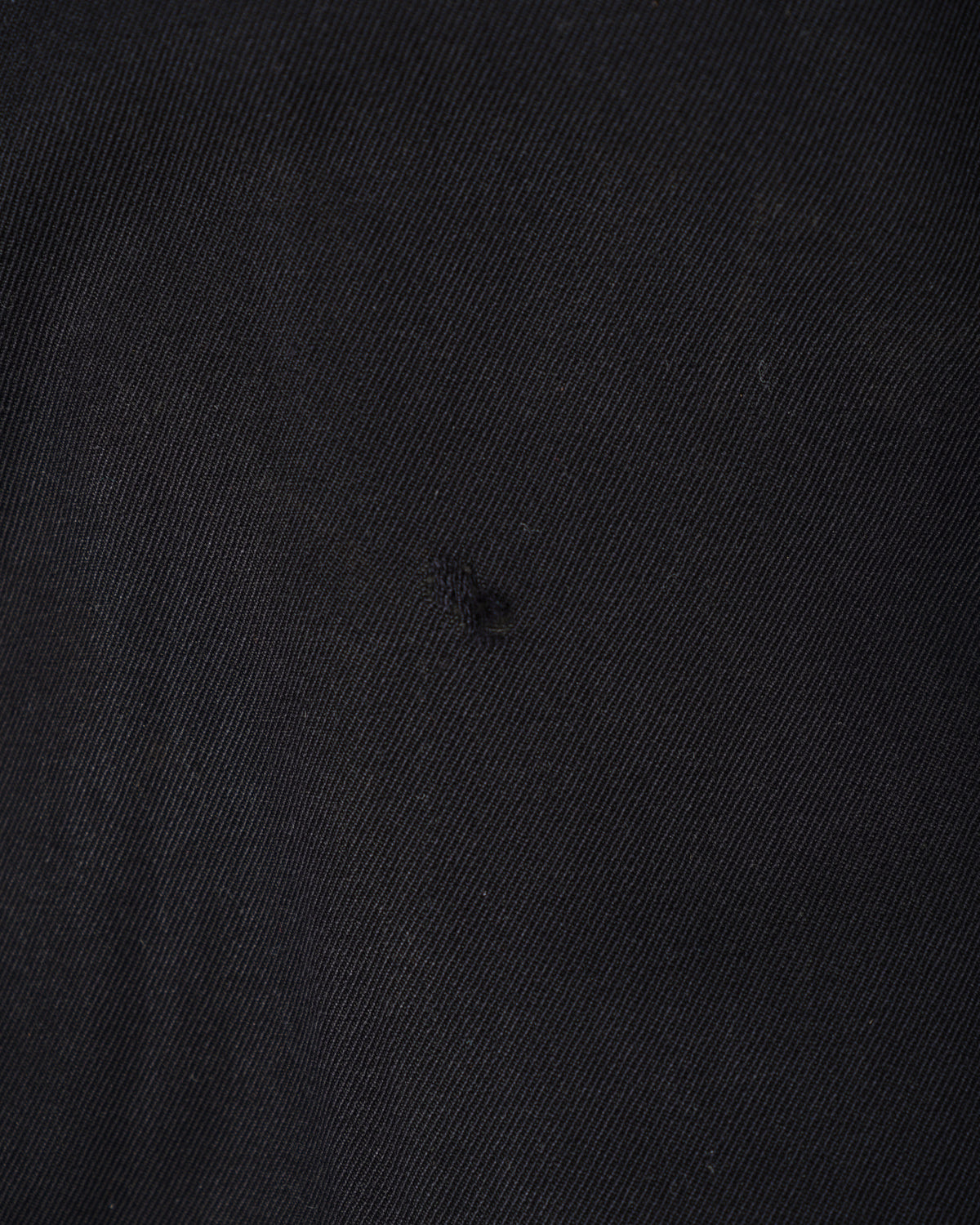
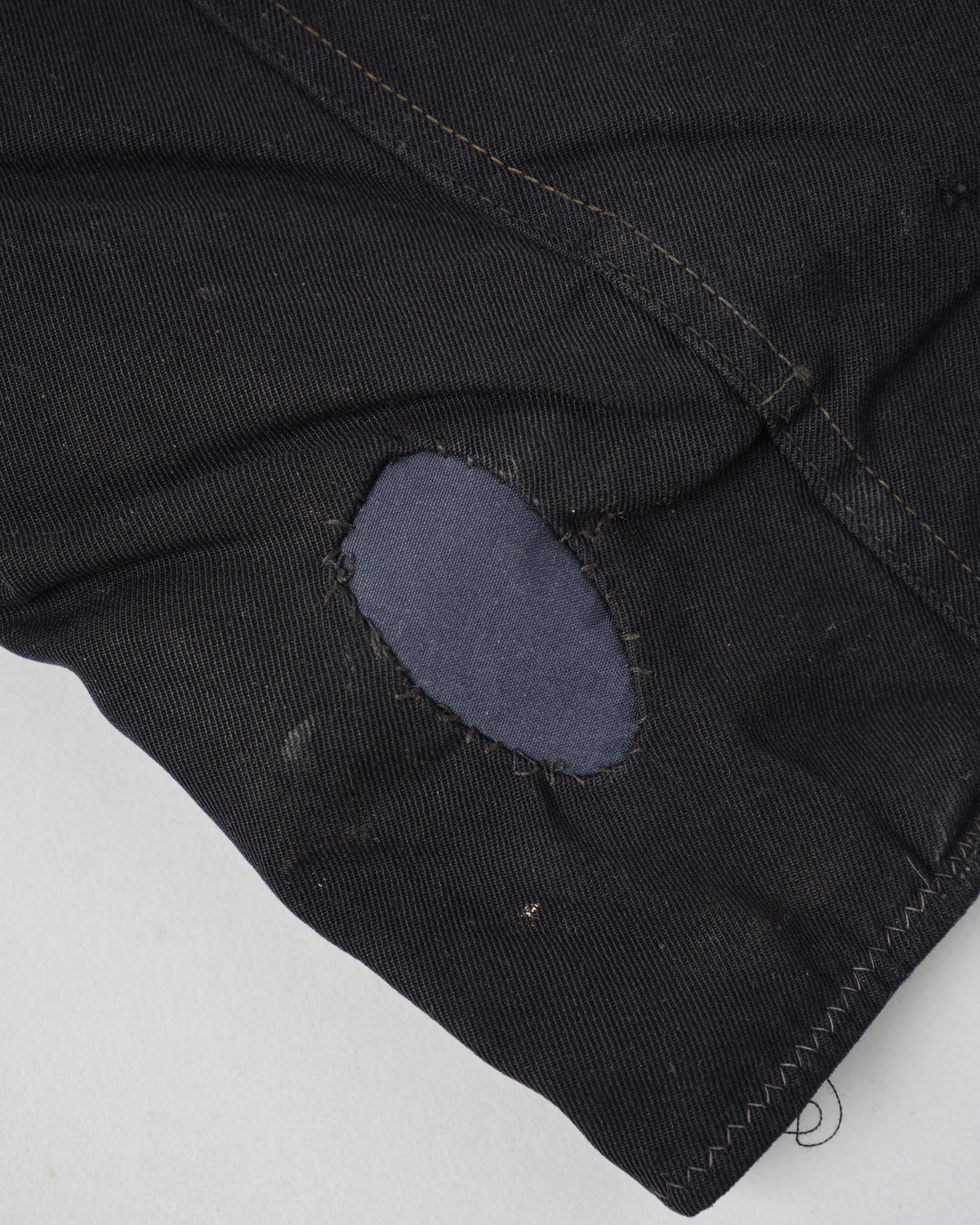
The piece exhibits usage: soiling, loose threads, small holes, repair traces, button replacement, lining hair loss, and side adjuster absence. The zip tape's lower edge shows loose stitching, though the fastener currently functions without impediment. Careful handling without force will extend its serviceable life considerably.
From its 1910 institutional inception through Atlantic convoy expansion to the accumulated shipboard refinement of equipment, the Royal Canadian Navy embodies maritime practice. Official-issue apparel optimised for the unforgiving shipboard environment carries authority not of design, but of necessity.
Canadian-issue deck garments remain obscured by the US counterpart's prominence, occupying a market segment of inherent scarcity. An individual from 1963 issue is still more rarely encountered.
As wardrobe piece or collection object alike, this represents an uncompromising entry. A specimen seldom witnessed domestically or internationally—those who have sought such items or harbour affection for the uncommon should not forgo this opportunity.