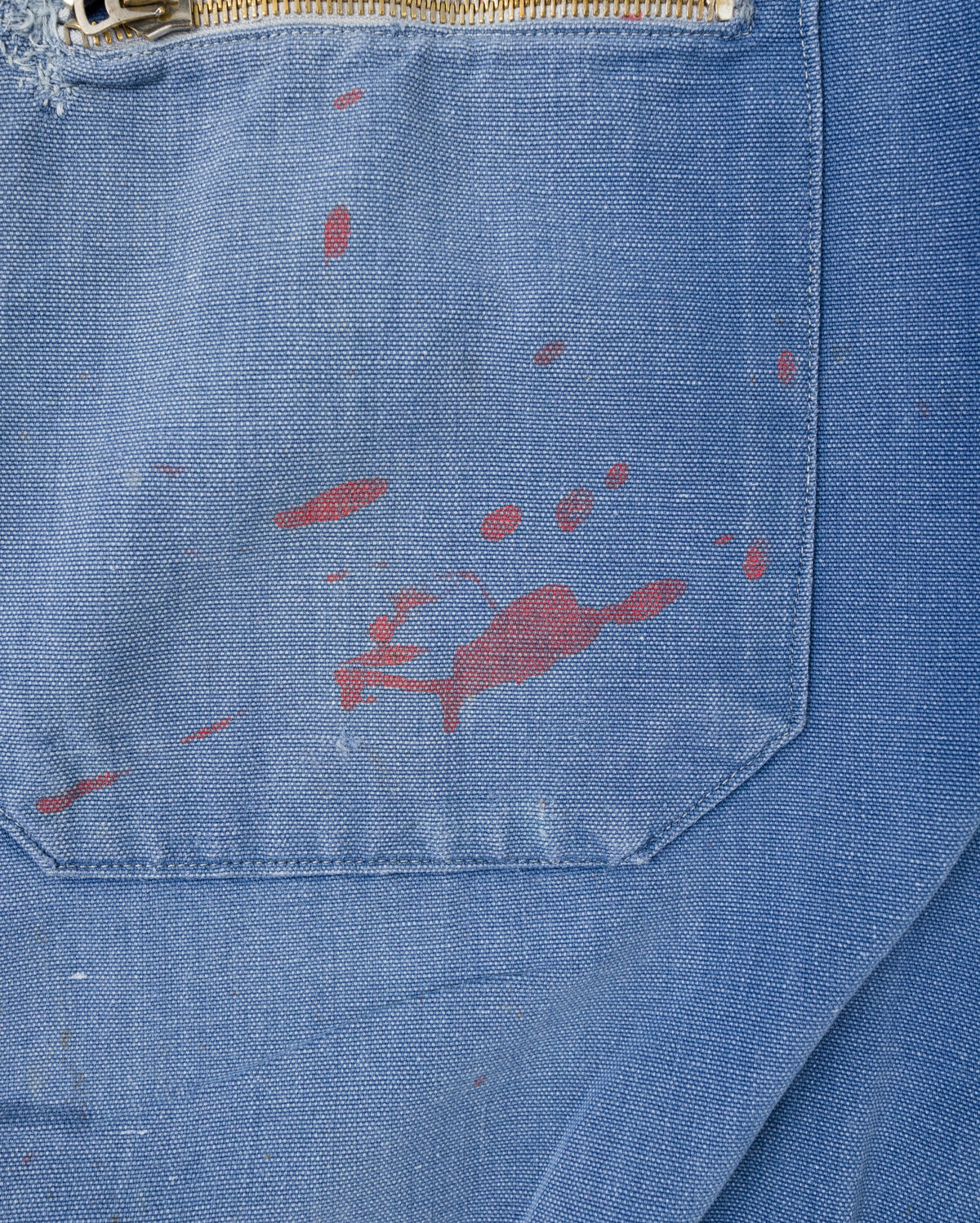
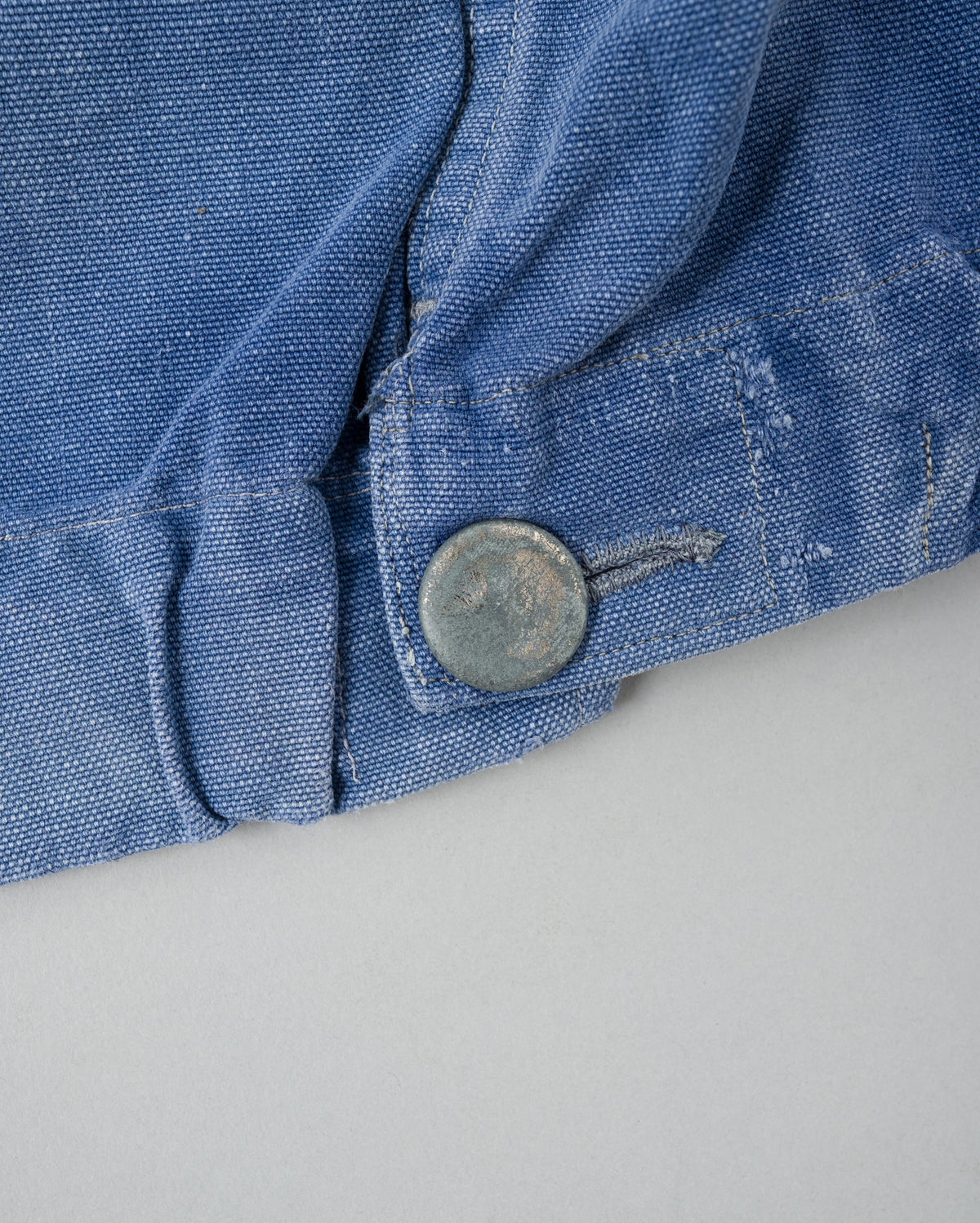
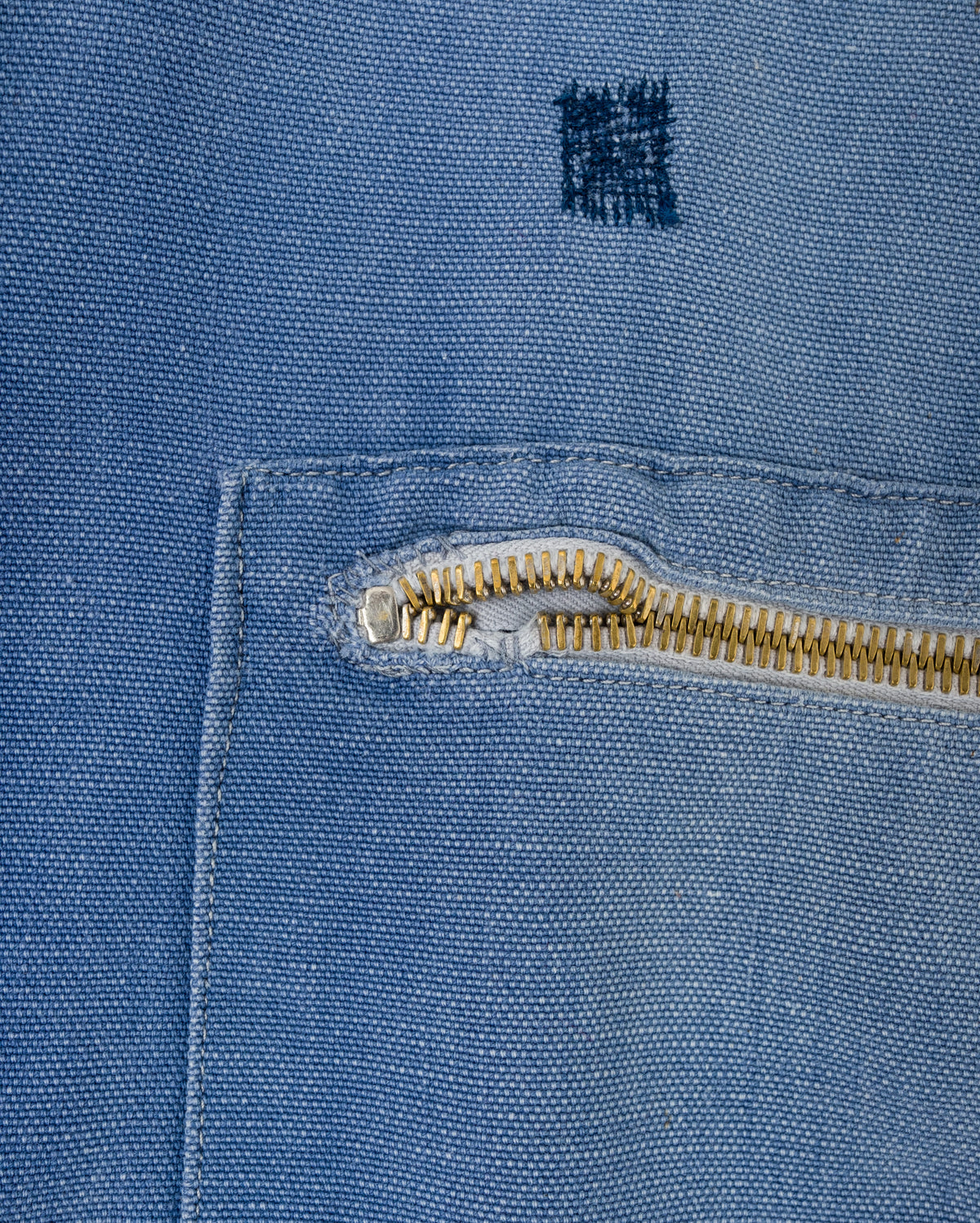
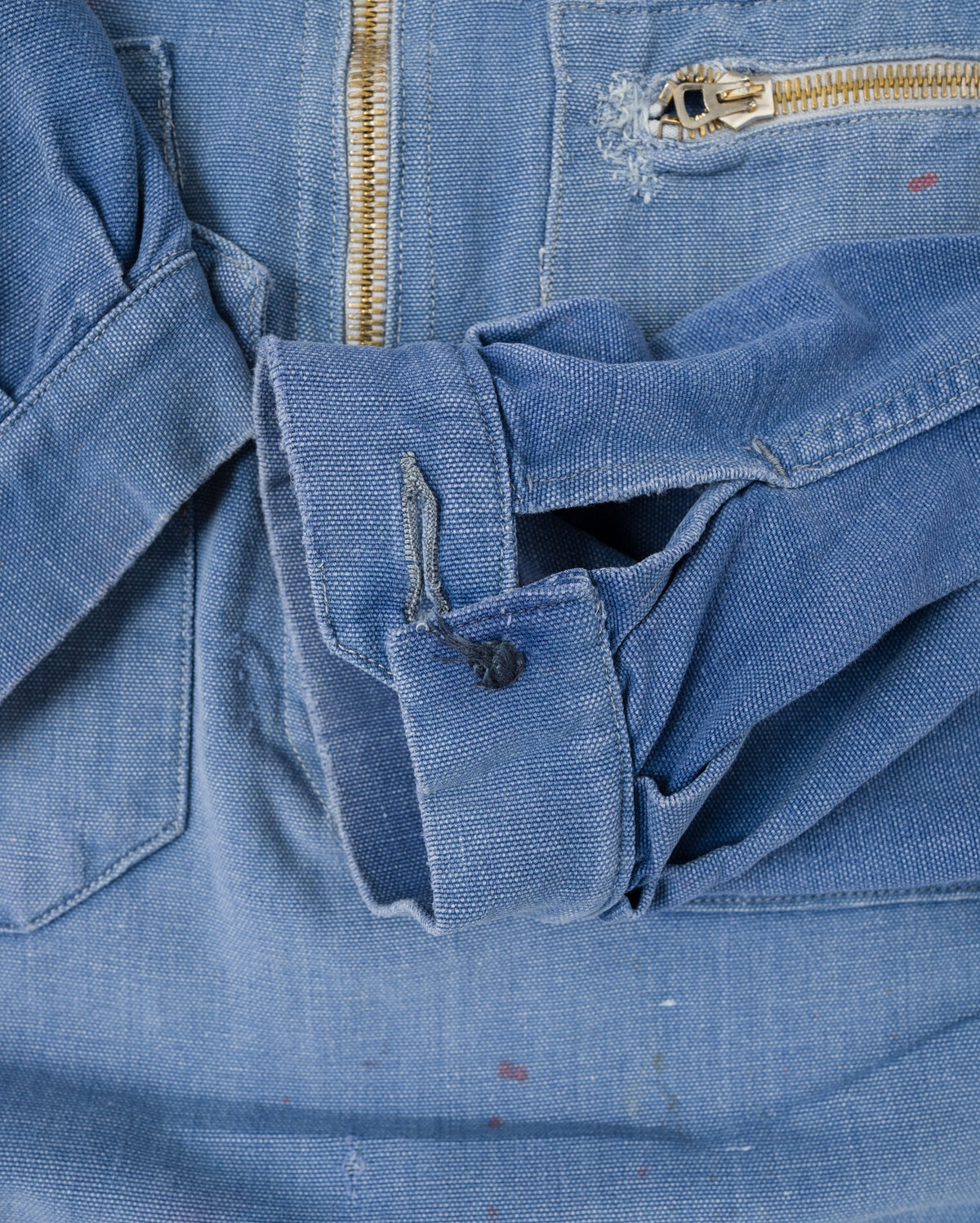
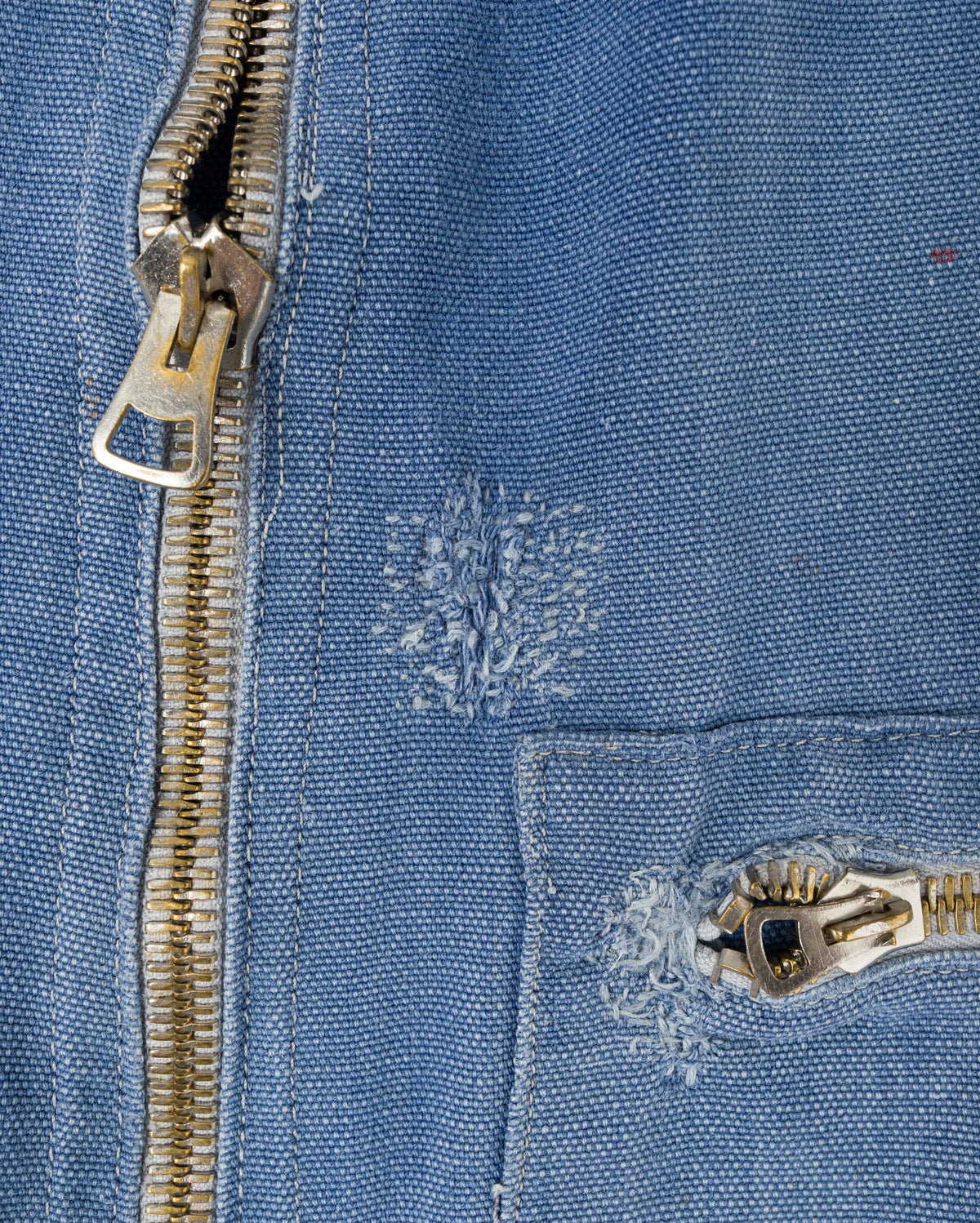
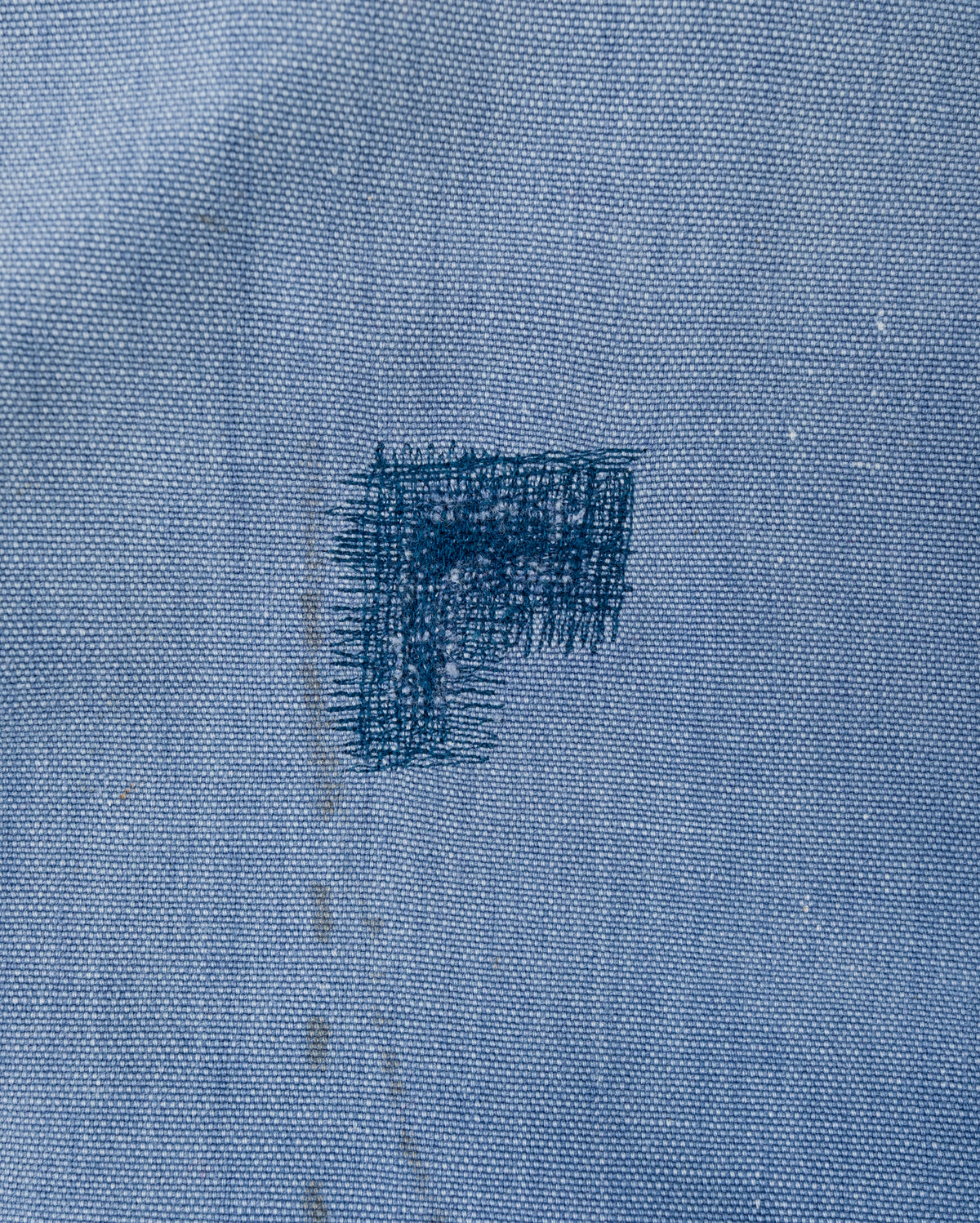
褪色 污漬,磨損,小洞,撕裂和修補痕跡遍布整件夾克,雖然它飽經歲月洗禮,卻也完美地展現了復古,我很喜歡這件夾克。
SKU · J0927
·SOLD
![[~40's]French Vintage Blue Metis Half Zip Pullover Work Short Jacket](http://vieuxetnouveau-shop.com/cdn/shop/files/DSCF1637_1cc3046f-d3d2-4e17-9655-a9fb4d9baeac.jpg?v=1742830719&width=2400)
![[~40's]French Vintage Blue Metis Half Zip Pullover Work Short Jacket](http://vieuxetnouveau-shop.com/cdn/shop/files/DSCF1640.jpg?v=1742830719&width=2400)
![[~40's]French Vintage Blue Metis Half Zip Pullover Work Short Jacket](http://vieuxetnouveau-shop.com/cdn/shop/files/DSCF1642_6de01e02-1b54-4025-8968-3f6e29b8145f.jpg?v=1742830761&width=2400)
![[~40's]French Vintage Blue Metis Half Zip Pullover Work Short Jacket](http://vieuxetnouveau-shop.com/cdn/shop/files/DSCF1641_1f10bc61-f1db-4828-96d9-224788dfbadf.jpg?v=1742830761&width=2400)
![[~40's]French Vintage Blue Metis Half Zip Pullover Work Short Jacket](http://vieuxetnouveau-shop.com/cdn/shop/files/DSCF1643_908265c5-a747-480d-b0ef-ebd1b09915b8.jpg?v=1742830761&width=2400)
![[~40's]French Vintage Blue Metis Half Zip Pullover Work Short Jacket](http://vieuxetnouveau-shop.com/cdn/shop/files/DSCF1646_c2d0fa68-bf94-459f-bb99-024269ba6d94.jpg?v=1742830761&width=2400)
![[~40's]French Vintage Blue Metis Half Zip Pullover Work Short Jacket](http://vieuxetnouveau-shop.com/cdn/shop/files/DSCF1645_ab306cc5-7405-487a-9692-ac3ff47d3adc.jpg?v=1742830761&width=2400)
![[~40's]French Vintage Blue Metis Half Zip Pullover Work Short Jacket](http://vieuxetnouveau-shop.com/cdn/shop/files/DSCF1644.jpg?v=1742830761&width=2400)
![[~40's]French Vintage Blue Metis Half Zip Pullover Work Short Jacket](http://vieuxetnouveau-shop.com/cdn/shop/files/DSCF1647_d67b6f18-bdae-41a1-abbe-8ed5abc443df.jpg?v=1742830761&width=2400)
![[~40's]French Vintage Blue Metis Half Zip Pullover Work Short Jacket](http://vieuxetnouveau-shop.com/cdn/shop/files/DSCF1655_bd125519-a70a-468e-a0d9-aab00c694455.jpg?v=1742830761&width=2400)
![[~40's]French Vintage Blue Metis Half Zip Pullover Work Short Jacket](http://vieuxetnouveau-shop.com/cdn/shop/files/DSCF1651_478339f3-bab0-41db-a574-095e2eb803c8.jpg?v=1742830761&width=2400)
![[~40's]French Vintage Blue Metis Half Zip Pullover Work Short Jacket](http://vieuxetnouveau-shop.com/cdn/shop/files/DSCF1658_bb529878-2c7d-4d7c-9347-6f28cd80ee55.jpg?v=1742830761&width=2400)
![[~40's]French Vintage Blue Metis Half Zip Pullover Work Short Jacket](http://vieuxetnouveau-shop.com/cdn/shop/files/DSCF1654.jpg?v=1742830761&width=2400)
![[~40's]French Vintage Blue Metis Half Zip Pullover Work Short Jacket](http://vieuxetnouveau-shop.com/cdn/shop/files/DSCF1913_cf4eae05-dea1-4a84-b648-4d0f64db497b.jpg?v=1743000694&width=2400)
![[~40's]French Vintage Blue Metis Half Zip Pullover Work Short Jacket](http://vieuxetnouveau-shop.com/cdn/shop/files/DSCF1914_02b66625-d6a2-4003-a8f6-5f87263fd87c.jpg?v=1743000694&width=2400)
![[~40's]French Vintage Blue Metis Half Zip Pullover Work Short Jacket](http://vieuxetnouveau-shop.com/cdn/shop/files/DSCF1915_17168bda-9ccd-462c-b6c6-aaeacb0a9170.jpg?v=1743000694&width=2400)
![[~40's]French Vintage Blue Metis Half Zip Pullover Work Short Jacket](http://vieuxetnouveau-shop.com/cdn/shop/files/DSCF1916.jpg?v=1743000694&width=2400)
![[~40's]French Vintage Blue Metis Half Zip Pullover Work Short Jacket](http://vieuxetnouveau-shop.com/cdn/shop/files/DSCF1917_d645be25-4563-4e2f-a2d6-2ccc9a358bee.jpg?v=1743000694&width=2400)
![[~40's]French Vintage Blue Metis Half Zip Pullover Work Short Jacket](http://vieuxetnouveau-shop.com/cdn/shop/files/DSCF1921_41467a04-790c-4d13-8f95-6835218d8a42.jpg?v=1743000708&width=2400)
![[~40's]French Vintage Blue Metis Half Zip Pullover Work Short Jacket](http://vieuxetnouveau-shop.com/cdn/shop/files/DSCF1918_e3af68b5-09aa-4aeb-abce-6eff8c4ca32f.jpg?v=1743000708&width=2400)
![[~40's]French Vintage Blue Metis Half Zip Pullover Work Short Jacket](http://vieuxetnouveau-shop.com/cdn/shop/files/DSCF1919_92364c6e-3696-4f54-9a9a-f93651939efa.jpg?v=1743000708&width=2400)
![[~40's]French Vintage Blue Metis Half Zip Pullover Work Short Jacket](http://vieuxetnouveau-shop.com/cdn/shop/files/DSCF1920_c41b6eb2-9c36-4321-8fda-6234773de078.jpg?v=1743000708&width=2400)
Close to this piece, available now
STYLING WITH THIS ITEM
REVIEWS
4.9
- (139)
- (3)
- (1)
- (0)
- (1)
5
- (19)
- (0)
- (0)
- (0)
- (0)

Fast shipping right after purchase, careful packaging, a message card, and the quality of the item - everything was great! When I actually tried it on, I was convinced this is something I'll have for life. Thank you so much. I'd love to shop with you again next time.

SULKA is the best. The leather is soft and supple, with an incredible drape you wouldn't expect from leather. I'll take good care of it. Thank you.

I got a great deal. Shipping was handled the next day too.

Vintage selected by VIEUX ET NOUVEAU
They answered my inquiry politely, so I could shop with peace of mind. The packaging was also very careful, and I could feel their consideration.
Thanks!
Perfect selection. Smooth transaction.