A 1940s Wehrmacht sheepskin fur-lined winter greatcoat.
A special acquisition.
The Wehrmacht, the unified German military of the Nazi era from 1935 to 1945, comprised three branches: the Heer (Army), Kriegsmarine (Navy), and Luftwaffe (Air Force).
The name Wehrmacht replaced the previously used Reichswehr, marking the Nazi regime's efforts to rearm Germany beyond the limits permitted by the Treaty of Versailles.
After Adolf Hitler seized power in 1933, one of his most deliberate and audacious acts was the establishment of the Wehrmacht.
Following Germany's unconditional surrender on May 8, 1945, Allied occupation commenced and the Wehrmacht underwent dissolution.
Following the dissolution of the Wehrmacht, Germany became a nation without military power. The subsequent remilitarization of West Germany (Federal Republic) and East Germany (Democratic Republic) proceeded separately within the context of the Cold War.
These new military organizations were established as distinct from the traditions and structures of the Wehrmacht.
We present the Sheepskin Fur Lined Winter Greatcoat, issued and worn as winter outerwear by the German military during the Second World War.
Coats crafted from animal hides were worn across numerous divisions of the Wehrmacht during harsh winter conditions of the Second World War.
Some were manufactured in factories within the Reich and occupied territories, while others were produced locally by tailoring units operating in theater.
Weighing just under 4.0 kilograms, this is a decidedly substantial overcoat, its presence palpable even before wearing.
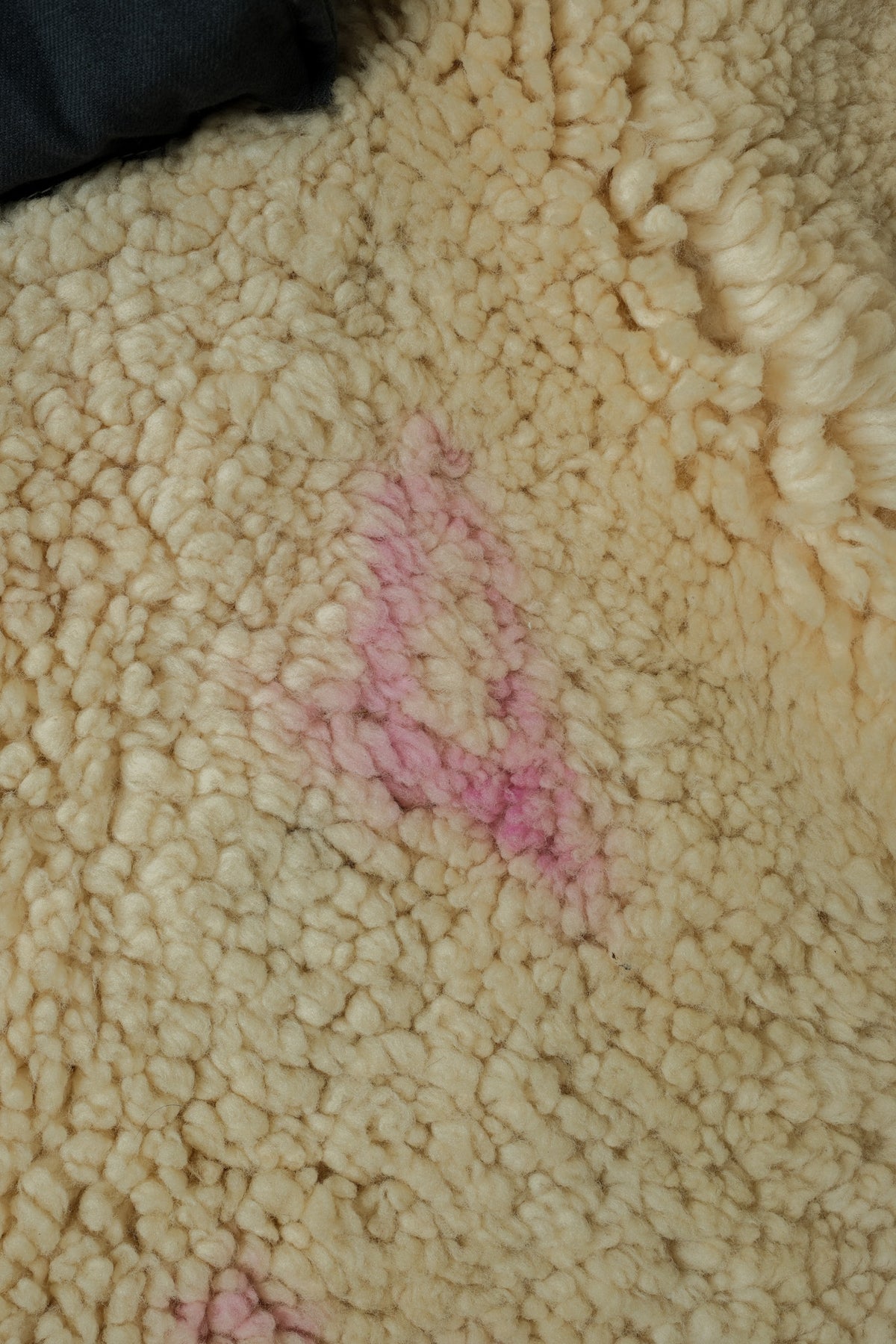
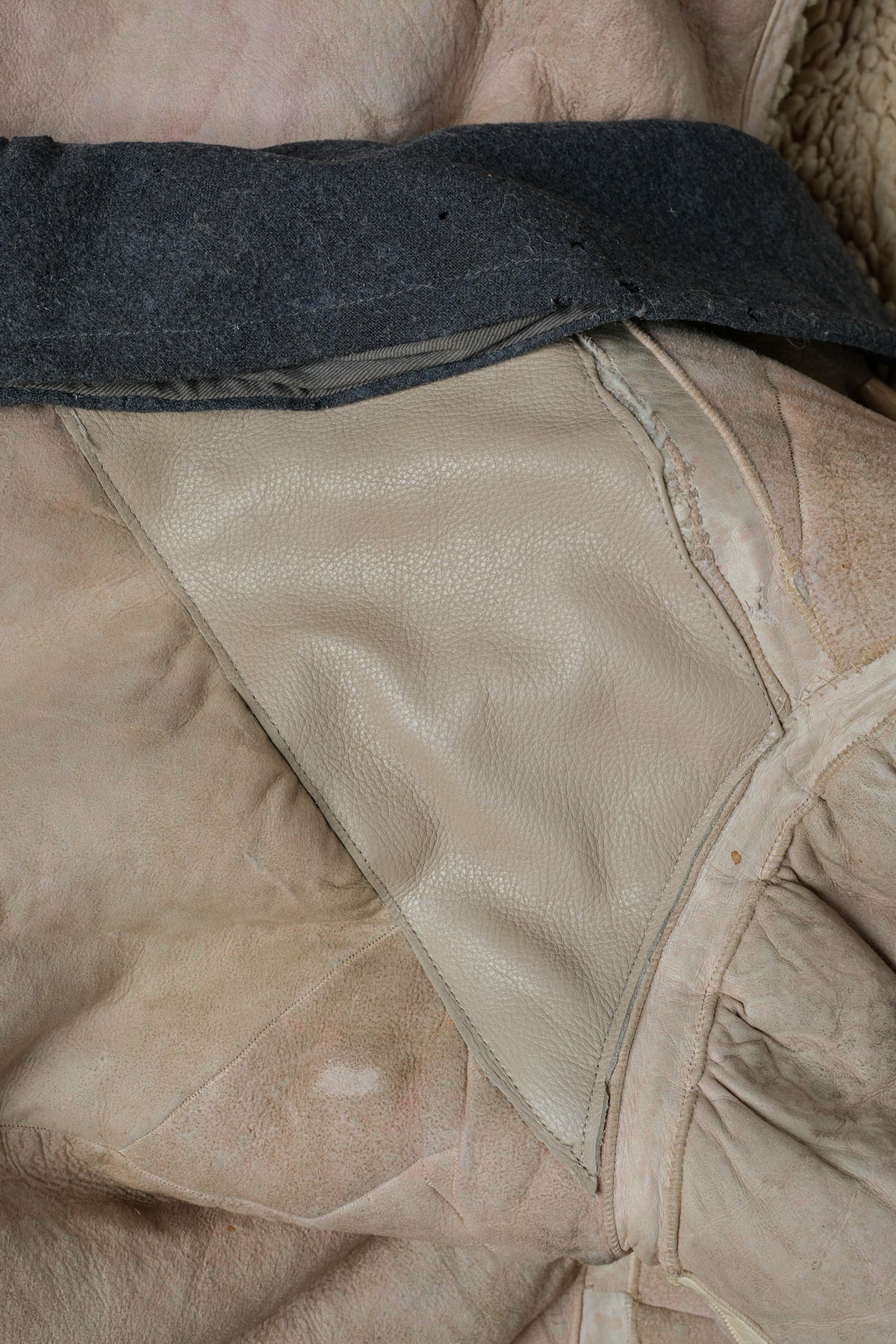
The shell is crafted from sheepskin, with a wool fabric collar panel as contrast. Naturally, the lining features genuine fur, providing thermal performance that exceeds civilian needs—remarkably comprehensive insulation and warmth retention for any application.
A button-fastened tab on the collar allows for a detachable hood, adjustable according to weather conditions.
The left front closure overlaps in a protective manner, minimizing wind penetration and preventing drafts from entering the coat's interior.
The cuff openings are fitted with buttons and tabs for adjustment, allowing the wearer to tailor the fit.
The front closure utilizes toggle buttons—a system shared with duffle coats—designed for ease of operation even while wearing gloves.
A chin strap is included, intended to anchor the collar when raised and to shield against wind infiltration. A detail worthy of note.
The presence or absence of a chin strap makes a tangible difference.
Interior stamps remain distinctly visible, bearing the hallmarks of Wehrmacht manufacture. Five digits appear on most examples, each positioned to denote specific measurements:
• Upper left: length to waist or hem.
All measurements are rendered in centimeters.
The body employs sheepskin generously.
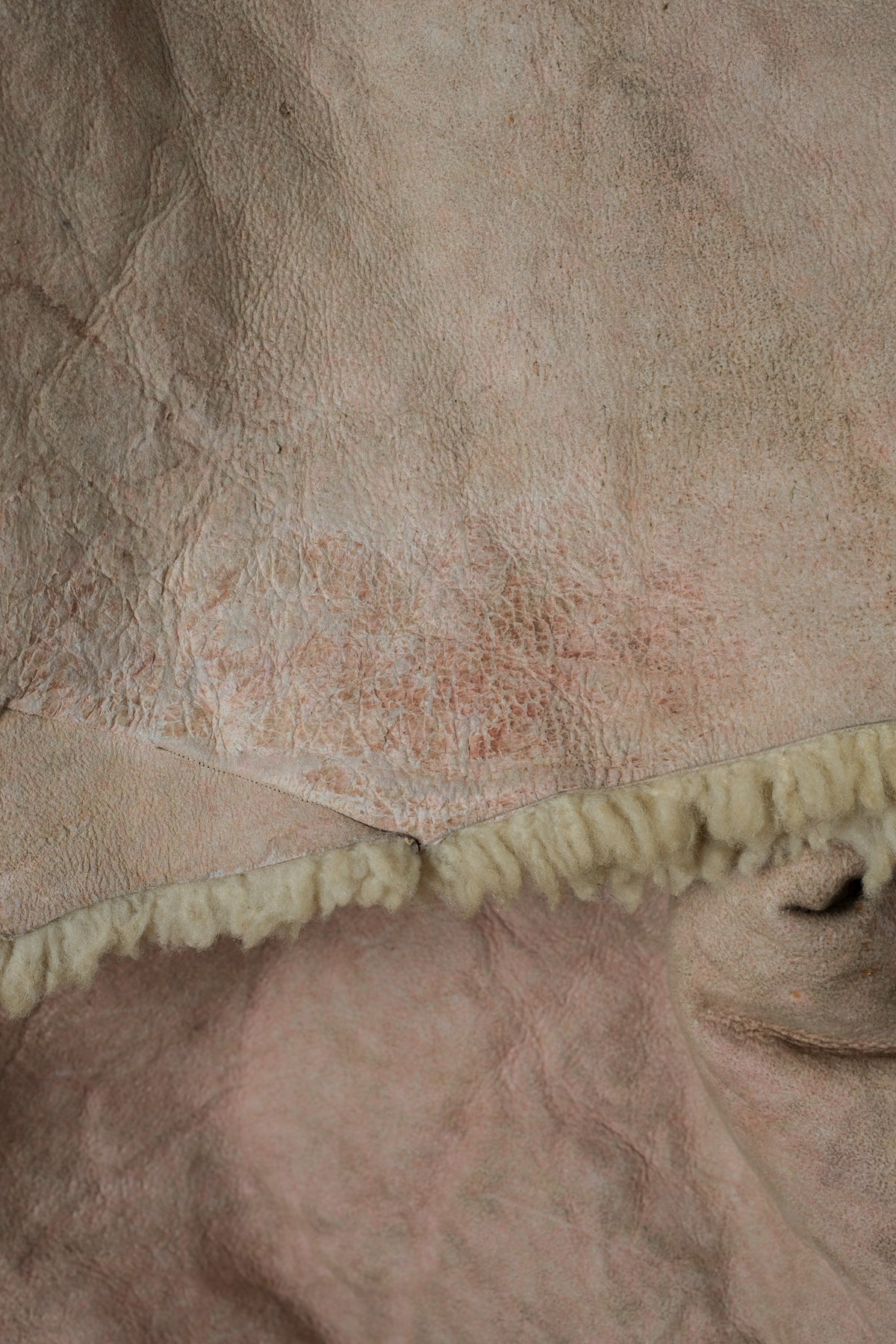
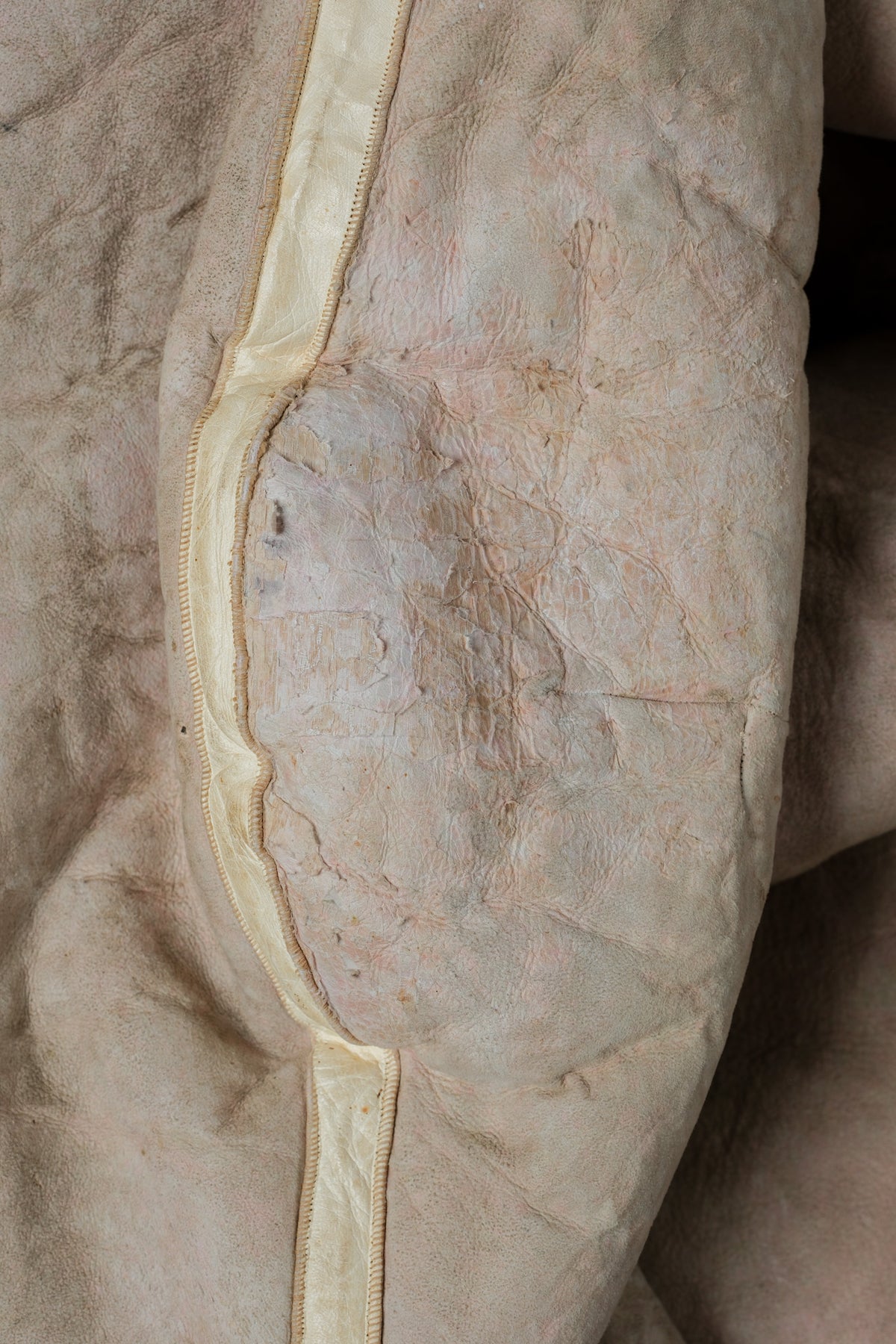
Sheepskin—leather from sheep over one year in age—is among the lightest and softest leathers available. While it sacrifices the durability and abrasion resistance of other hides, its intimate surface creates an exceptional conformity to the body, a tactile quality difficult to achieve elsewhere.
Genuine fur is produced from animal pelts, typically utilizing or processing the hair that naturally grows upon the skin.
The lavish materials employed in this piece—unthinkable by contemporary standards—speak to the era's commitment to craftsmanship.
The original size marking is indecipherable, though it appears to correspond roughly to a European L to XL.
Based on actual measurements, this is a generous fit, accommodating larger builds without constraint.
Designed as an overcoat to be worn over a uniform, these pieces invariably feature ample proportions.
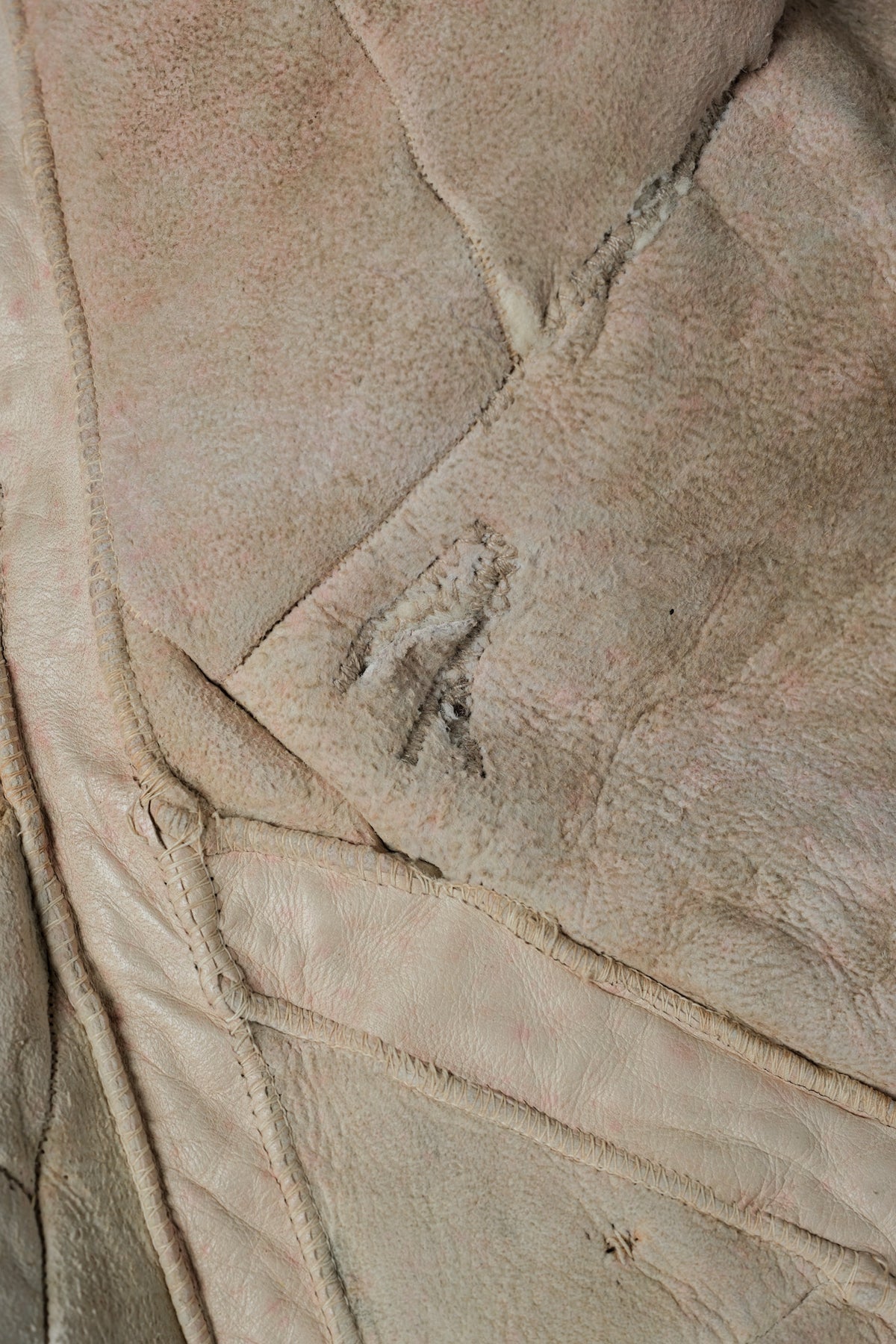
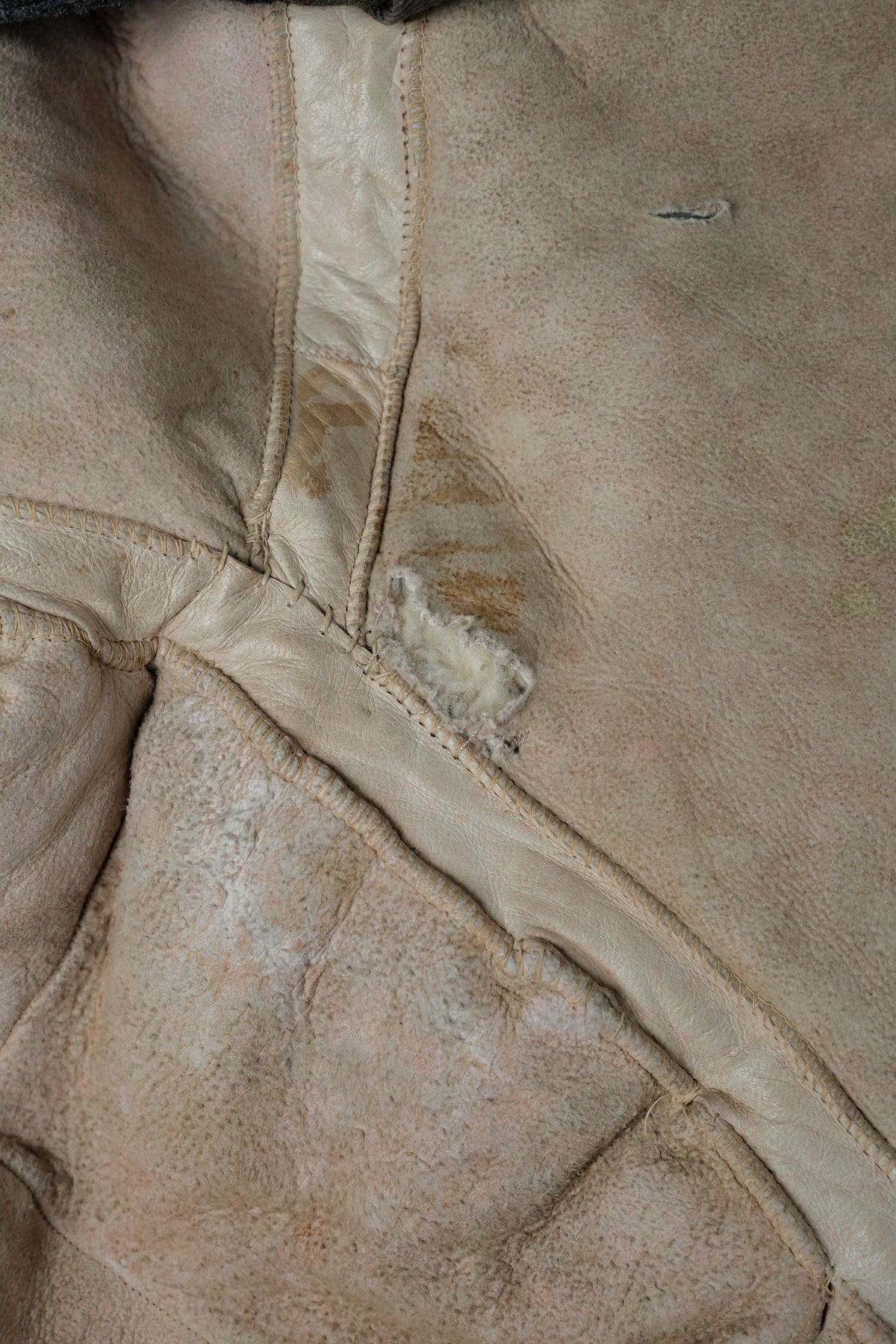
The piece shows signs of wear—soiling, discoloration, abrasion, scuffs, small tears, possible insect damage, and repair marks—yet contains no significant damage impeding wear. Still entirely serviceable.
Wehrmacht pieces have garnered increasing attention in recent years, yet original examples remain remarkably scarce due to historical circumstances. Supply has consistently failed to meet demand.
With a devoted following, Wehrmacht items represent archival pieces collectors are reluctant to relinquish.
Equally valid as active wardrobe, collection, or design reference. A rare specimen, seldom encountered domestically or abroad. Worth consideration.
ADD TO CART

![[~40's]WWⅡ German Army Sheepskin Fur Lined Winter Greatcoat "Wehrmacht"](http://vieuxetnouveau-shop.com/cdn/shop/files/DSCF2419.jpg?v=1728477783&width=2400)
![[~40's]WWⅡ German Army Sheepskin Fur Lined Winter Greatcoat "Wehrmacht"](http://vieuxetnouveau-shop.com/cdn/shop/files/DSCF2414_7d765b67-aaa0-4cc6-9787-78bd5ed1beec.jpg?v=1728477782&width=2400)
![[~40's]WWⅡ German Army Sheepskin Fur Lined Winter Greatcoat "Wehrmacht"](http://vieuxetnouveau-shop.com/cdn/shop/files/DSCF2436_472dd5d8-6315-40c7-91a0-19ef7cdfcb09.jpg?v=1728477783&width=2400)
![[~40's]WWⅡ German Army Sheepskin Fur Lined Winter Greatcoat "Wehrmacht"](http://vieuxetnouveau-shop.com/cdn/shop/files/DSCF2421.jpg?v=1728477783&width=2400)
![[~40's]WWⅡ German Army Sheepskin Fur Lined Winter Greatcoat "Wehrmacht"](http://vieuxetnouveau-shop.com/cdn/shop/files/DSCF2423.jpg?v=1728477782&width=2400)
![[~40's]WWⅡ German Army Sheepskin Fur Lined Winter Greatcoat "Wehrmacht"](http://vieuxetnouveau-shop.com/cdn/shop/files/DSCF2424.jpg?v=1728477782&width=2400)
![[~40's]WWⅡ German Army Sheepskin Fur Lined Winter Greatcoat "Wehrmacht"](http://vieuxetnouveau-shop.com/cdn/shop/files/DSCF2437_15eeb4f9-c218-4881-9970-0b9e5006d90f.jpg?v=1728477783&width=2400)
![[~40's]WWⅡ German Army Sheepskin Fur Lined Winter Greatcoat "Wehrmacht"](http://vieuxetnouveau-shop.com/cdn/shop/files/DSCF2439_240f5cf0-eac4-47fb-bb64-7e5d3afad3f7.jpg?v=1728477782&width=2400)
![[~40's]WWⅡ German Army Sheepskin Fur Lined Winter Greatcoat "Wehrmacht"](http://vieuxetnouveau-shop.com/cdn/shop/files/DSCF2427.jpg?v=1728477782&width=2400)
![[~40's]WWⅡ German Army Sheepskin Fur Lined Winter Greatcoat "Wehrmacht"](http://vieuxetnouveau-shop.com/cdn/shop/files/DSCF2428_1d99a0c3-c5e1-4a33-b9c3-1b6d526e98f5.jpg?v=1728477782&width=2400)
![[~40's]WWⅡ German Army Sheepskin Fur Lined Winter Greatcoat "Wehrmacht"](http://vieuxetnouveau-shop.com/cdn/shop/files/DSCF2429.jpg?v=1728477783&width=2400)
![[~40's]WWⅡ German Army Sheepskin Fur Lined Winter Greatcoat "Wehrmacht"](http://vieuxetnouveau-shop.com/cdn/shop/files/DSCF2415_b1ea6179-47d1-4545-956f-e7f97230f141.jpg?v=1728477782&width=2400)
![[~40's]WWⅡ German Army Sheepskin Fur Lined Winter Greatcoat "Wehrmacht"](http://vieuxetnouveau-shop.com/cdn/shop/files/DSCF2416.jpg?v=1728477782&width=2400)
![[~40's]WWⅡ German Army Sheepskin Fur Lined Winter Greatcoat "Wehrmacht"](http://vieuxetnouveau-shop.com/cdn/shop/files/DSCF2417_033c444a-41ac-44b1-b80e-8a240e54d975.jpg?v=1728477782&width=2400)
![[~40's]WWⅡ German Army Sheepskin Fur Lined Winter Greatcoat "Wehrmacht"](http://vieuxetnouveau-shop.com/cdn/shop/files/DSCF2431_4edce474-0a1f-45df-bcbf-512a37901bf7.jpg?v=1728477782&width=2400)
![[~40's]WWⅡ German Army Sheepskin Fur Lined Winter Greatcoat "Wehrmacht"](http://vieuxetnouveau-shop.com/cdn/shop/files/DSCF2432.jpg?v=1728477783&width=2400)
![[~40's]WWⅡ German Army Sheepskin Fur Lined Winter Greatcoat "Wehrmacht"](http://vieuxetnouveau-shop.com/cdn/shop/files/DSCF2433_60bc3042-2f6d-47bd-863a-61969bb5d34f.jpg?v=1728477783&width=2400)
![[~40's]WWⅡ German Army Sheepskin Fur Lined Winter Greatcoat "Wehrmacht"](http://vieuxetnouveau-shop.com/cdn/shop/files/DSCF2455_fa3cb03c-4855-446a-ac77-89f822a4c44b.jpg?v=1728477783&width=2400)
![[~40's]WWⅡ German Army Sheepskin Fur Lined Winter Greatcoat "Wehrmacht"](http://vieuxetnouveau-shop.com/cdn/shop/files/DSCF2425.jpg?v=1728477782&width=2400)
![[~40's]WWⅡ German Army Sheepskin Fur Lined Winter Greatcoat "Wehrmacht"](http://vieuxetnouveau-shop.com/cdn/shop/files/DSCF2440.jpg?v=1728477783&width=2400)
![[~40's]WWⅡ German Army Sheepskin Fur Lined Winter Greatcoat "Wehrmacht"](http://vieuxetnouveau-shop.com/cdn/shop/files/DSCF2442.jpg?v=1728477783&width=2400)
![[~40's]WWⅡ German Army Sheepskin Fur Lined Winter Greatcoat "Wehrmacht"](http://vieuxetnouveau-shop.com/cdn/shop/files/DSCF2080_31fc32da-f9a7-4883-8956-72e580187268.jpg?v=1728477782&width=2400)
![[~40's]WWⅡ German Army Sheepskin Fur Lined Winter Greatcoat "Wehrmacht"](http://vieuxetnouveau-shop.com/cdn/shop/files/DSCF2082_61ffe350-1e61-4da8-a019-a8c1ae1709c1.jpg?v=1728477782&width=2400)
![[~40's]WWⅡ German Army Sheepskin Fur Lined Winter Greatcoat "Wehrmacht"](http://vieuxetnouveau-shop.com/cdn/shop/files/DSCF2085.jpg?v=1728477782&width=2400)
![[~40's]WWⅡ German Army Sheepskin Fur Lined Winter Greatcoat "Wehrmacht"](http://vieuxetnouveau-shop.com/cdn/shop/files/DSCF2086_8c6772f6-a59b-4842-8711-a2f07148439c.jpg?v=1728477782&width=2400)
![[~40's]WWⅡ German Army Sheepskin Fur Lined Winter Greatcoat "Wehrmacht"](http://vieuxetnouveau-shop.com/cdn/shop/files/DSCF2083_78ab1e44-69d9-40be-9ecc-d5994597ec25.jpg?v=1728477782&width=2400)
![[~40's]WWⅡ German Army Sheepskin Fur Lined Winter Greatcoat "Wehrmacht"](http://vieuxetnouveau-shop.com/cdn/shop/files/DSCF2769_6d9adc15-390e-4b3c-b553-5bb28e5e29f1.jpg?v=1728477783&width=2400)
![[~40's]WWⅡ German Army Sheepskin Fur Lined Winter Greatcoat "Wehrmacht"](http://vieuxetnouveau-shop.com/cdn/shop/files/DSCF2777_dba5a96c-1777-483d-bd01-5a77968995b4.jpg?v=1728477783&width=2400)
![[~40's]WWⅡ German Army Sheepskin Fur Lined Winter Greatcoat "Wehrmacht"](http://vieuxetnouveau-shop.com/cdn/shop/files/DSCF2778_4d74d247-357c-4fd6-aad2-4a88404da213.jpg?v=1728477783&width=2400)
![[~40's]WWⅡ German Army Sheepskin Fur Lined Winter Greatcoat "Wehrmacht"](http://vieuxetnouveau-shop.com/cdn/shop/files/DSCF2770_c48af7d8-1baa-49eb-aadc-71a9081e0364.jpg?v=1728477783&width=2400)
![[~40's]WWⅡ German Army Sheepskin Fur Lined Winter Greatcoat "Wehrmacht"](http://vieuxetnouveau-shop.com/cdn/shop/files/DSCF2773_fd44e72f-3c38-4ab4-a543-07fb6cb25295.jpg?v=1728477783&width=2400)
![[~40's]WWⅡ German Army Sheepskin Fur Lined Winter Greatcoat "Wehrmacht"](http://vieuxetnouveau-shop.com/cdn/shop/files/DSCF2775_1ce72d1b-629f-4389-b6ad-054ee6b8e8b7.jpg?v=1728477783&width=2400)
![[~40's]WWⅡ German Army Sheepskin Fur Lined Winter Greatcoat "Wehrmacht"](http://vieuxetnouveau-shop.com/cdn/shop/files/DSCF2774_8d43fc36-9092-4796-b28f-1aea345d2110.jpg?v=1728477782&width=2400)
![[~40's]WWⅡ German Army Sheepskin Fur Lined Winter Greatcoat "Wehrmacht"](http://vieuxetnouveau-shop.com/cdn/shop/files/DSCF2776_746e6741-e080-4eb7-a206-7691b9058d17.jpg?v=1728477783&width=2400)
![[~40's]WWⅡ German Army Sheepskin Fur Lined Winter Greatcoat "Wehrmacht"](http://vieuxetnouveau-shop.com/cdn/shop/files/DSCF2771_0b39e854-72b3-4bb5-927e-cffc5d2d20bd.jpg?v=1728477783&width=2400)
![[~40's]WWⅡ German Army Sheepskin Fur Lined Winter Greatcoat "Wehrmacht"](http://vieuxetnouveau-shop.com/cdn/shop/files/DSCF2768_a7d98c5d-8a91-45b2-9e11-eea82c12f177.jpg?v=1728477783&width=2400)
![[~40's]WWⅡ German Army Sheepskin Fur Lined Winter Greatcoat "Wehrmacht"](http://vieuxetnouveau-shop.com/cdn/shop/files/DSCF2766_3884f633-3e2f-47a3-bb67-c06e75294a21.jpg?v=1728477782&width=2400)
![[~40's]WWⅡ German Army Sheepskin Fur Lined Winter Greatcoat "Wehrmacht"](http://vieuxetnouveau-shop.com/cdn/shop/files/DSCF2767_9aaf7b70-1fad-4ab1-a4fa-19ccf0ff0b94.jpg?v=1728477782&width=2400)
![[~40's]WWⅡ German Army Sheepskin Fur Lined Winter Greatcoat "Wehrmacht"](http://vieuxetnouveau-shop.com/cdn/shop/files/DSCF2783_55eba72f-50a4-4c20-9ed4-100a539b1e01.jpg?v=1728477783&width=2400)
![[~40's]WWⅡ German Army Sheepskin Fur Lined Winter Greatcoat "Wehrmacht"](http://vieuxetnouveau-shop.com/cdn/shop/files/DSCF2779_c0069ff9-7413-4b04-8260-6d619217cfd7.jpg?v=1728477783&width=2400)
![[~40's]WWⅡ German Army Sheepskin Fur Lined Winter Greatcoat "Wehrmacht"](http://vieuxetnouveau-shop.com/cdn/shop/files/DSCF2772_b45ba6a0-6533-49e7-9c56-fca01c231ead.jpg?v=1728477783&width=2400)
![[~40's]WWⅡ German Army Sheepskin Fur Lined Winter Greatcoat "Wehrmacht"](http://vieuxetnouveau-shop.com/cdn/shop/files/DSCF2764.jpg?v=1728477783&width=2400)
![[~40's]WWⅡ German Army Sheepskin Fur Lined Winter Greatcoat "Wehrmacht"](http://vieuxetnouveau-shop.com/cdn/shop/files/DSCF2780_66607cab-45ad-43b5-a237-f4b037165d69.jpg?v=1728477783&width=2400)
![[~40's]WWⅡ German Army Sheepskin Fur Lined Winter Greatcoat "Wehrmacht"](http://vieuxetnouveau-shop.com/cdn/shop/files/DSCF2782_541fcbbc-d9f8-4acb-b0a7-8320a0a0914b.jpg?v=1728477783&width=2400)