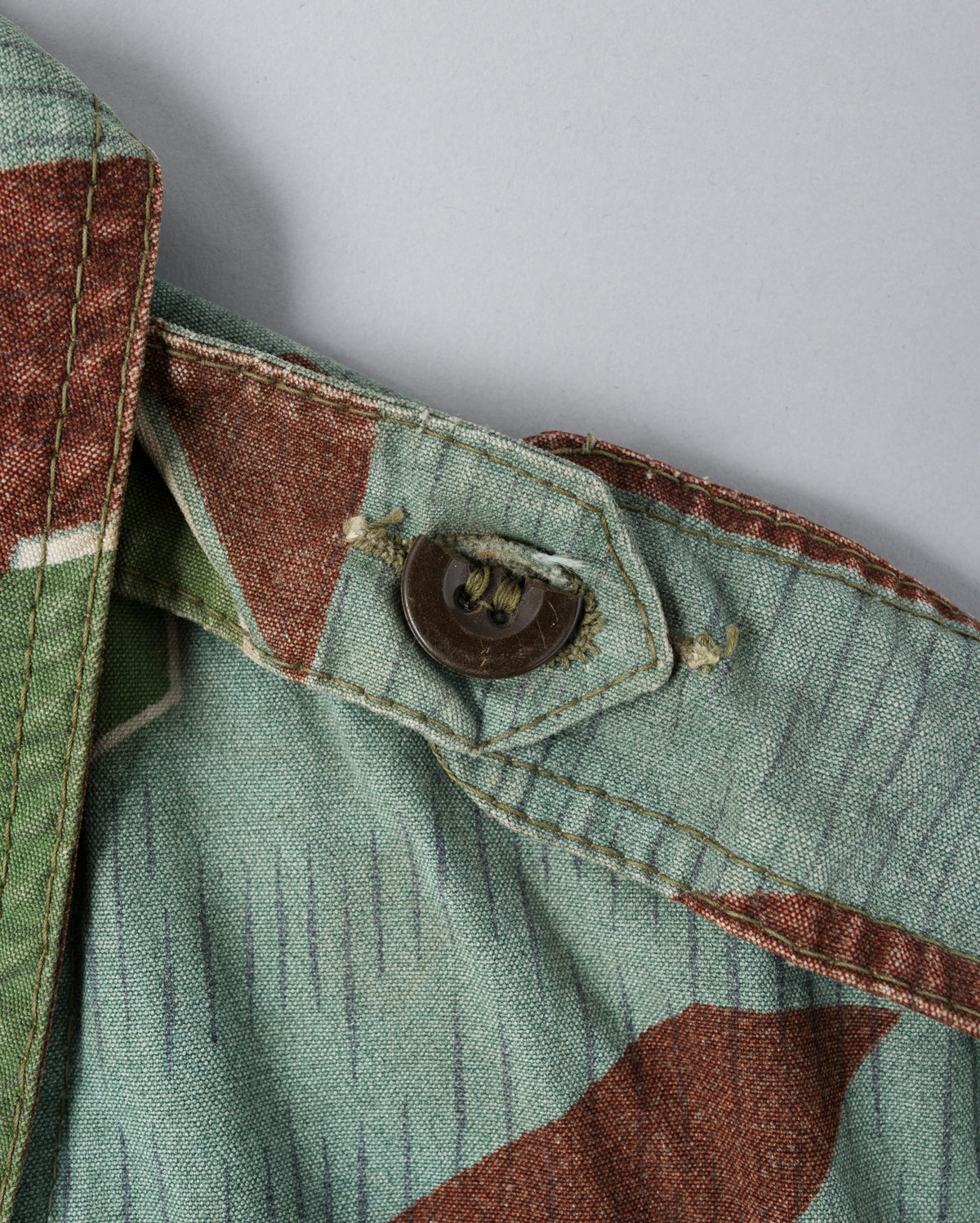
1956 issue, Bundeswehr "Splittermuster" Paratrooper Jacket.
A special acquisition.
The Bundeswehr, West Germany's armed forces during the Cold War following the Second World War, was formally established in 1955 to ensure security and cooperation with Western nations.
Initially, neighbouring nations such as France approached German rearmament with caution. However, in response to the Soviet threat, strengthening West Germany's defensive capacity became essential.
Following the London and Paris Agreements of 1954, West Germany's accession to NATO was determined, with formal membership taking effect in 1955.
The founding of the Bundeswehr symbolised West Germany's security assurance during the Cold War and its return to the international community.
This particular example was produced alongside matching trousers of the same design, worn as a complete set.
The defining characteristic of this piece is undoubtedly its distinctly German camouflage pattern.
Known colloquially as the "Splittermuster," this camouflage design was a four-colour military pattern developed by Germany in the late 1920s and first adopted by the Reichswehr in 1931—Germany's earliest military camouflage pattern.
Formally designated "Buntfarbenaufdruck 31," the pattern was later renamed "Splittermuster 31".
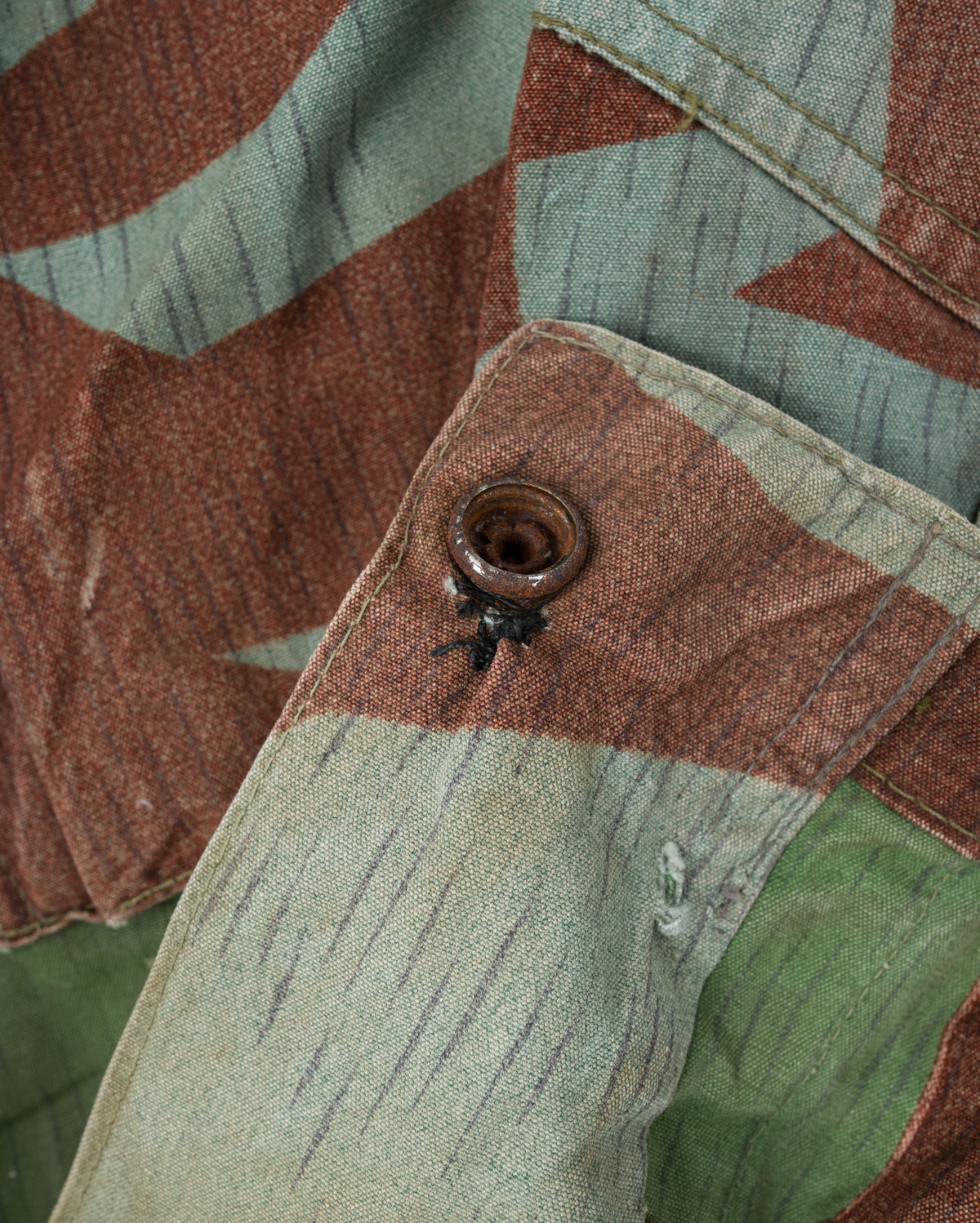
This example employs the "1956 Pattern"—a camouflage adopted that year for Bundeswehr uniforms, drawing inspiration from the Splittermuster referenced above.
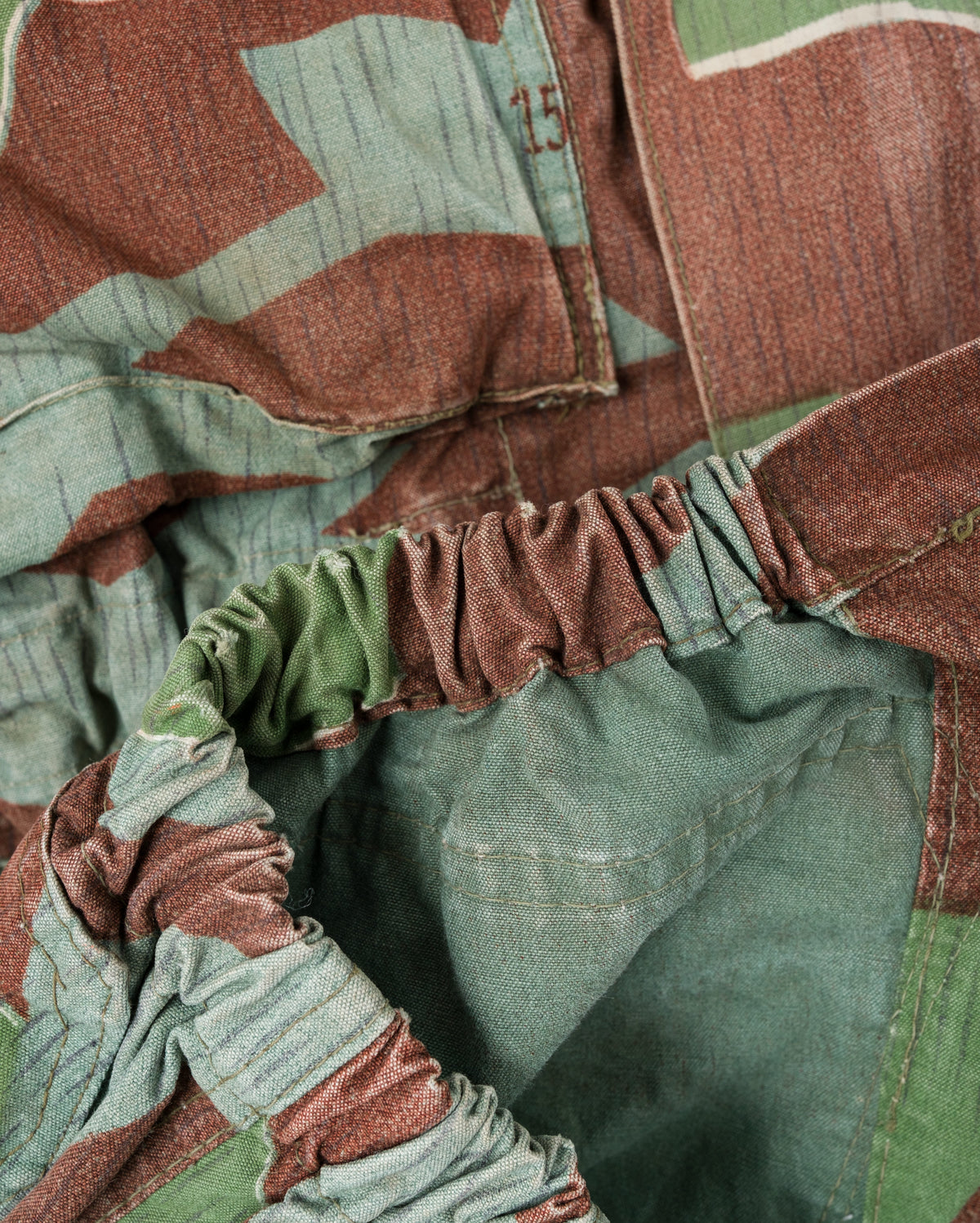
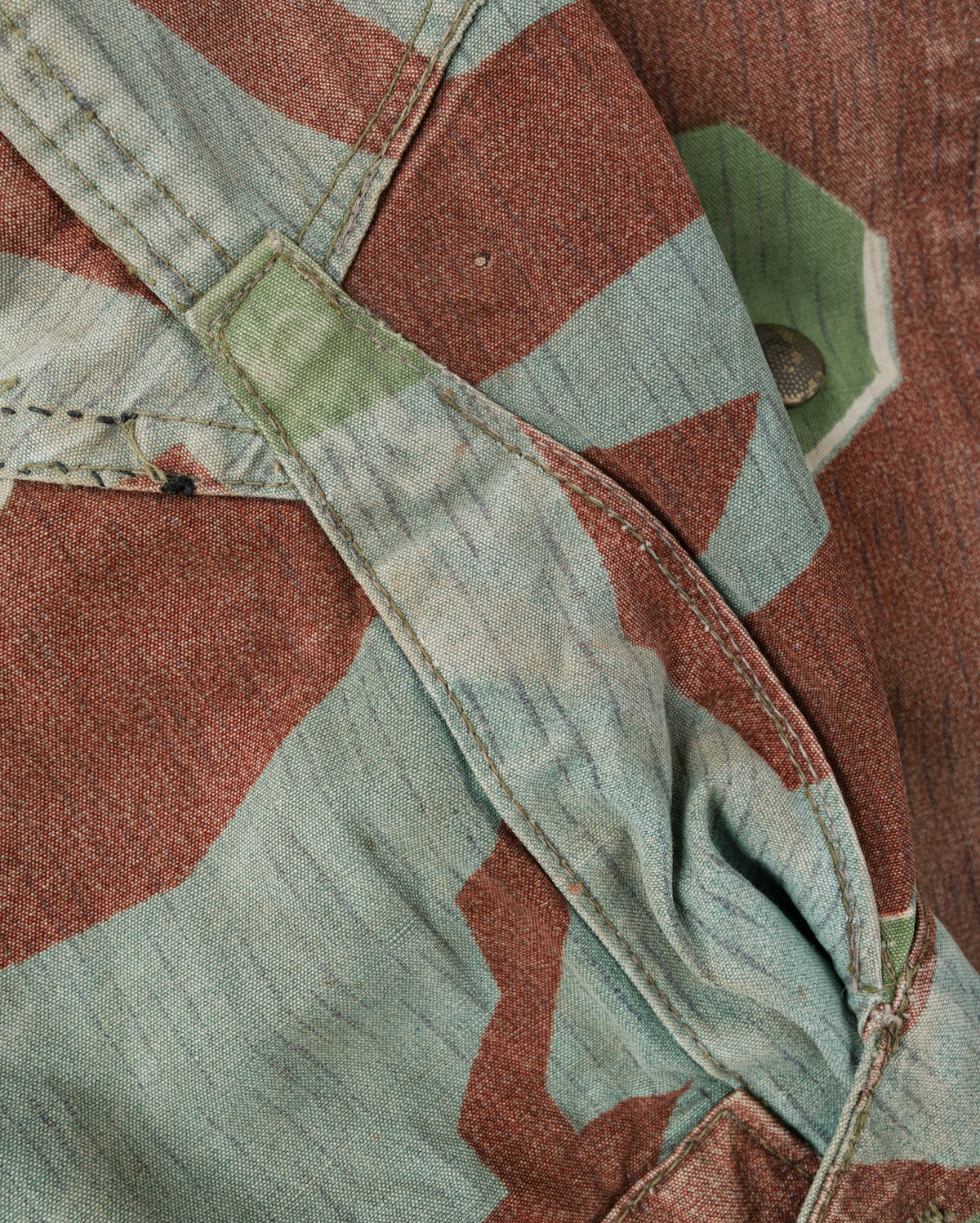
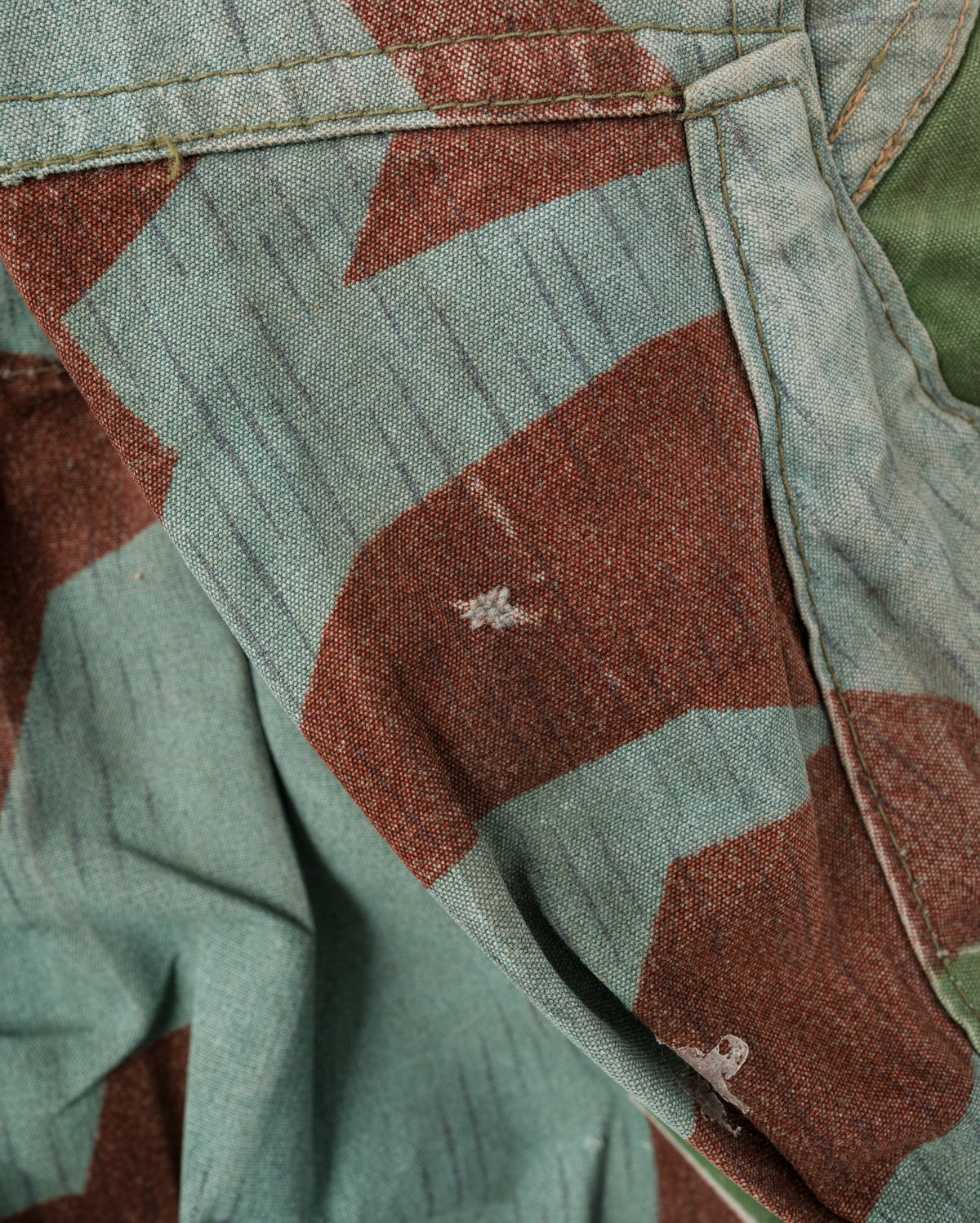
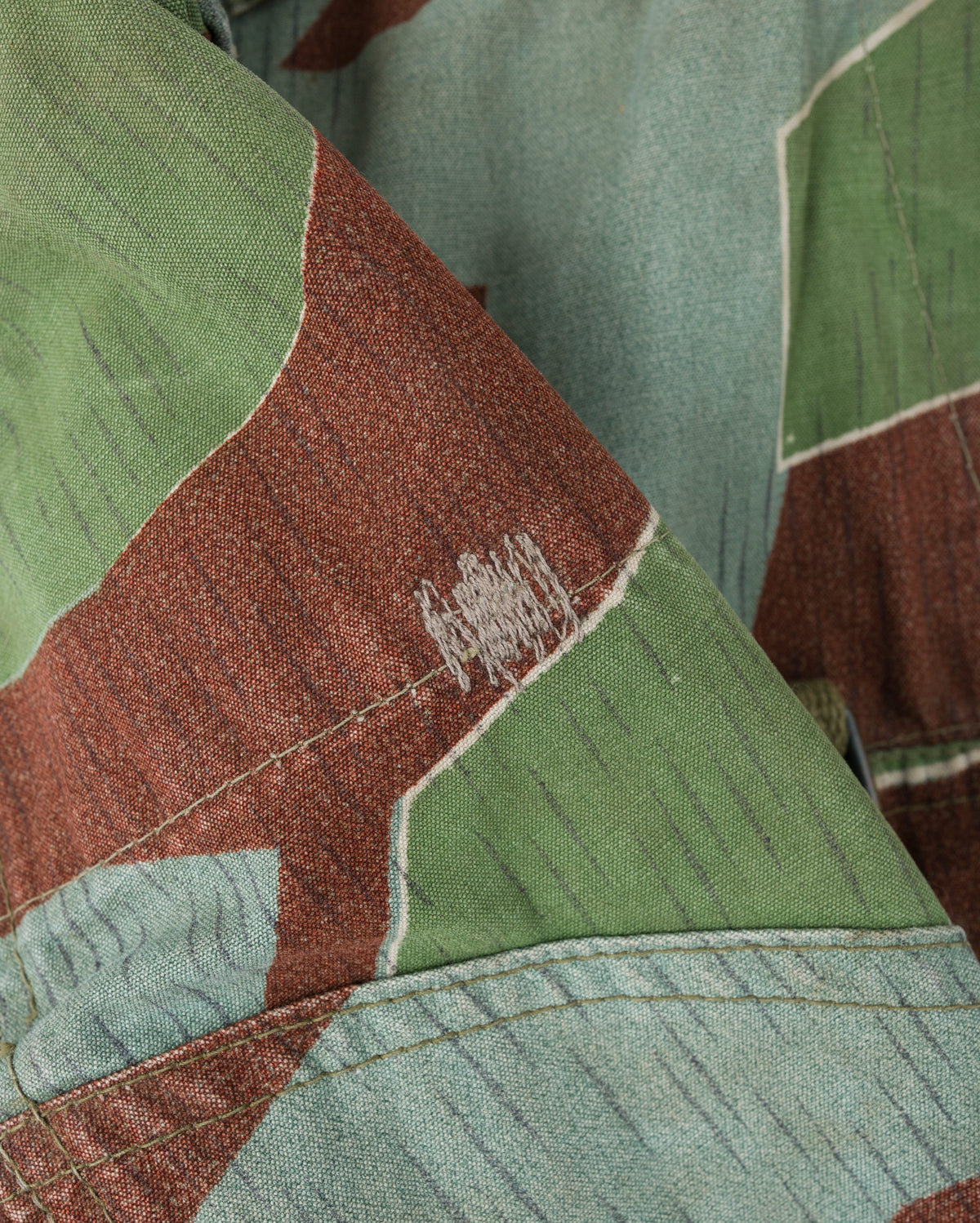
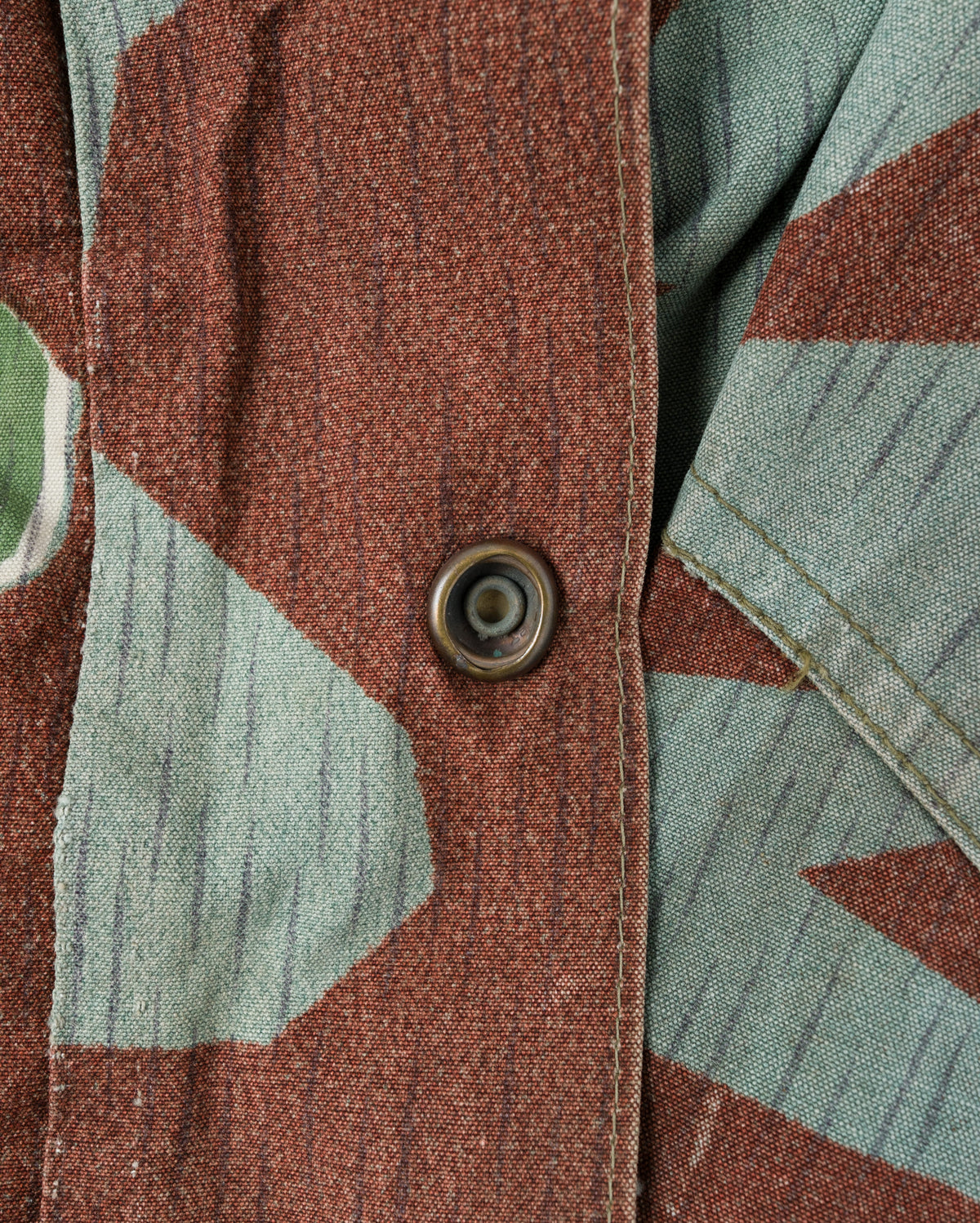
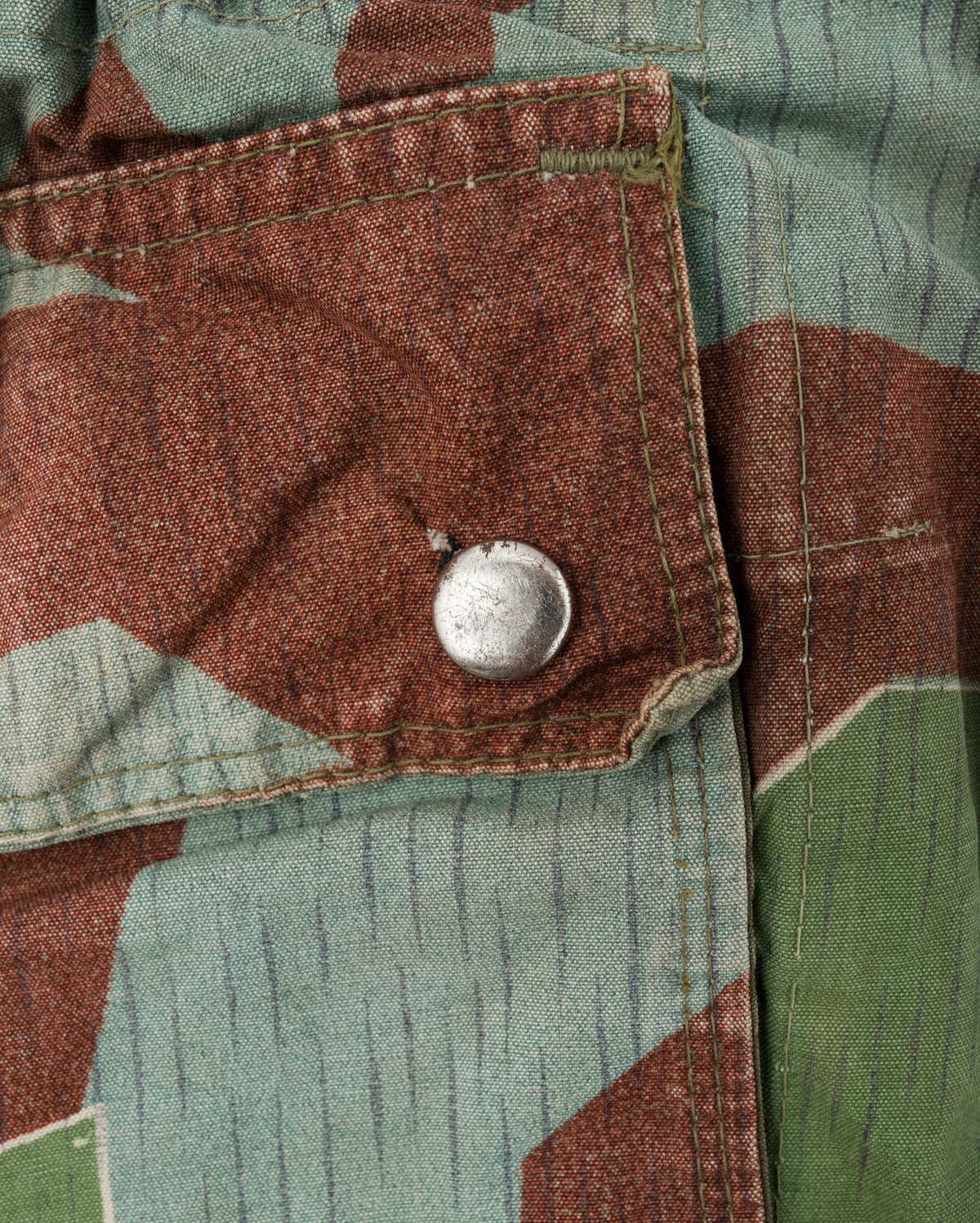
Despite differing production eras, the distinctive destructive zigzag pattern characteristic of the Splittermuster is retained, with raindrop dash patterns applied throughout to enhance camouflage efficacy.Intentional white stippling distinguishes this postwar design from its wartime predecessors.
Examples from this period are documented in at least two characteristic colour variations—pale blue or pale green grounds.
Manufactured between 1956 and 1960, this pattern was never adopted across the entire Bundeswehr. Primarily issued to infantry and airborne units, most examples were withdrawn from service by year's end 1960.
Few examples survive domestically or internationally, making this piece unfamiliar to many.
Beyond the camouflage, the detailing reflects military practicality—purposefully austere in character.
Snap-button flap pockets, reminiscent of the French airborne troops' TAP47, appear at both the torso and hem—four in total.
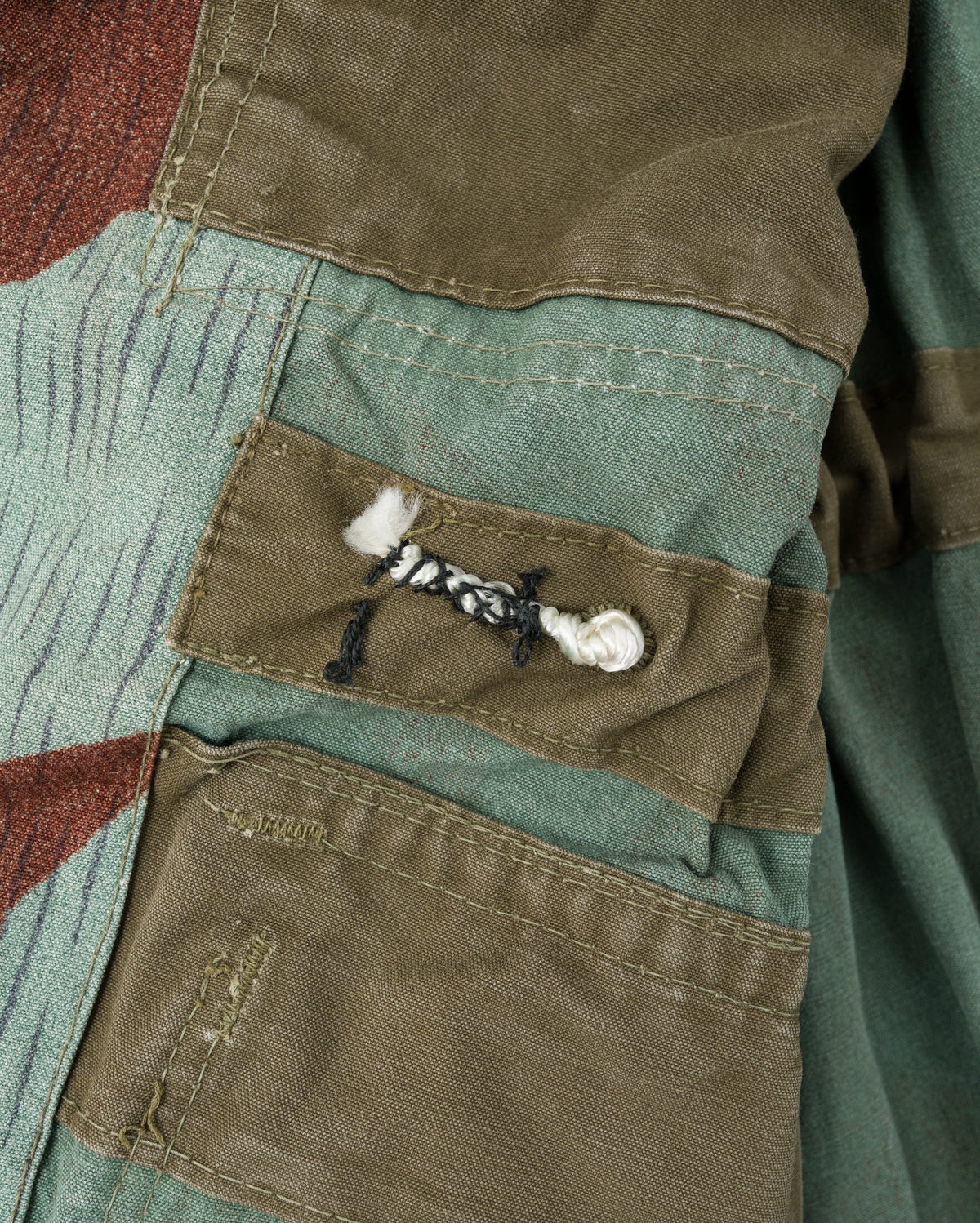
Ventilation holes at the sides prevent moisture accumulation.
The front closure traditionally employs a dual system: concealed snap buttons paired with a zip fastener, both distinctly German military design. However, this example has been modified by a previous owner, with the zip removed entirely. The front now closes with snap buttons alone.
A tall, rounded collar with chin strap—designed high to seal wind infiltration and enhance insulation—allows for a striking standup collar presentation.
Interior pockets bear a tag recording size and issue date.
Beyond its rarity, this piece merits consideration as a genuinely compelling garment. Wear it without hesitation.
Size marking reads "177 / 100 / 50 / 45 / 63," corresponding approximately to Japanese M to L.
The actual measurements suggest a golden size for Japanese proportions, accommodating a broad range of builds.
Originally conceived as an overjacket worn atop uniform layers, these pieces invariably cut generous in fit.
Surface wear, soiling, abrasion, repair marks, button damage, and minor losses are evident, yet no structural impairment prevents extended wear.
German military pieces have gained particular attention in recent years. Yet, given their history, very few German military pieces survive, and supply seems unable to keep pace with demand.
With a devoted collector base, this remains an archive piece few relinquish—one commanding quiet reverence.
Equally compelling as wardrobe element, archive reference, or design source. Rarely encountered domestically or abroad, this piece warrants serious consideration from those actively seeking it or drawn to exceptional rarity.
ADD TO CART