A French "Black Moleskin Hunting Jacket", estimated to date from around the 1930s.
A truly exceptional piece has arrived.
The "Hunting Jacket", a staple of French work clothing
Though it bears the name "Hunting", it was in fact a piece combining function and standing, worn mainly by the upper classes when shooting in France from the late nineteenth to the mid-twentieth century.
In France at the time, hunting was not merely a means of livelihood; for the "privileged classes", aristocrats, landowners and wealthy factory owners, it was widely enjoyed as part of social life and recreation.
Across France, particularly in cities such as Lyon, Limoges and Toulouse, there were then skilled tailors and workshops, and among pieces up to the early 1900s, many were made to order for the customer's build and purpose.
As ready-to-wear was not yet common, mass production by brands was very limited; many pieces have no label, and the craftsman's handwork shows throughout: a luxurious garment.
The fabrics varied widely too: heavyweight cotton canvas, cotton piqué, corduroy, linen, wool and moleskin were chosen to meet the harsh conditions of hunting.
They combined wind resistance, durability and ease of movement, pursuing the practicality to withstand use in forest and open country while carrying a refined bearing that reflected the wearer's class.
Among the many kinds of French workwear, the "Hunting Jacket", distinct in purpose and position, is still highly regarded as an unusual piece combining practicality and standing.
Even within French workwear that is still spoken of today, the chance to come across a piece like this one is, it is fair to say, extremely rare.
The first thing to note is the choice of fabric.
Moleskin is known as a tough cloth: cotton, yet with a smooth, brushed hand and real resistance to abrasion, and one of the classics of French workwear .
For hunting jackets, however, cotton piqué and corduroy were the norm, and examples in black moleskin are very few indeed.
Next, the "traces of the hand" this jacket carries.
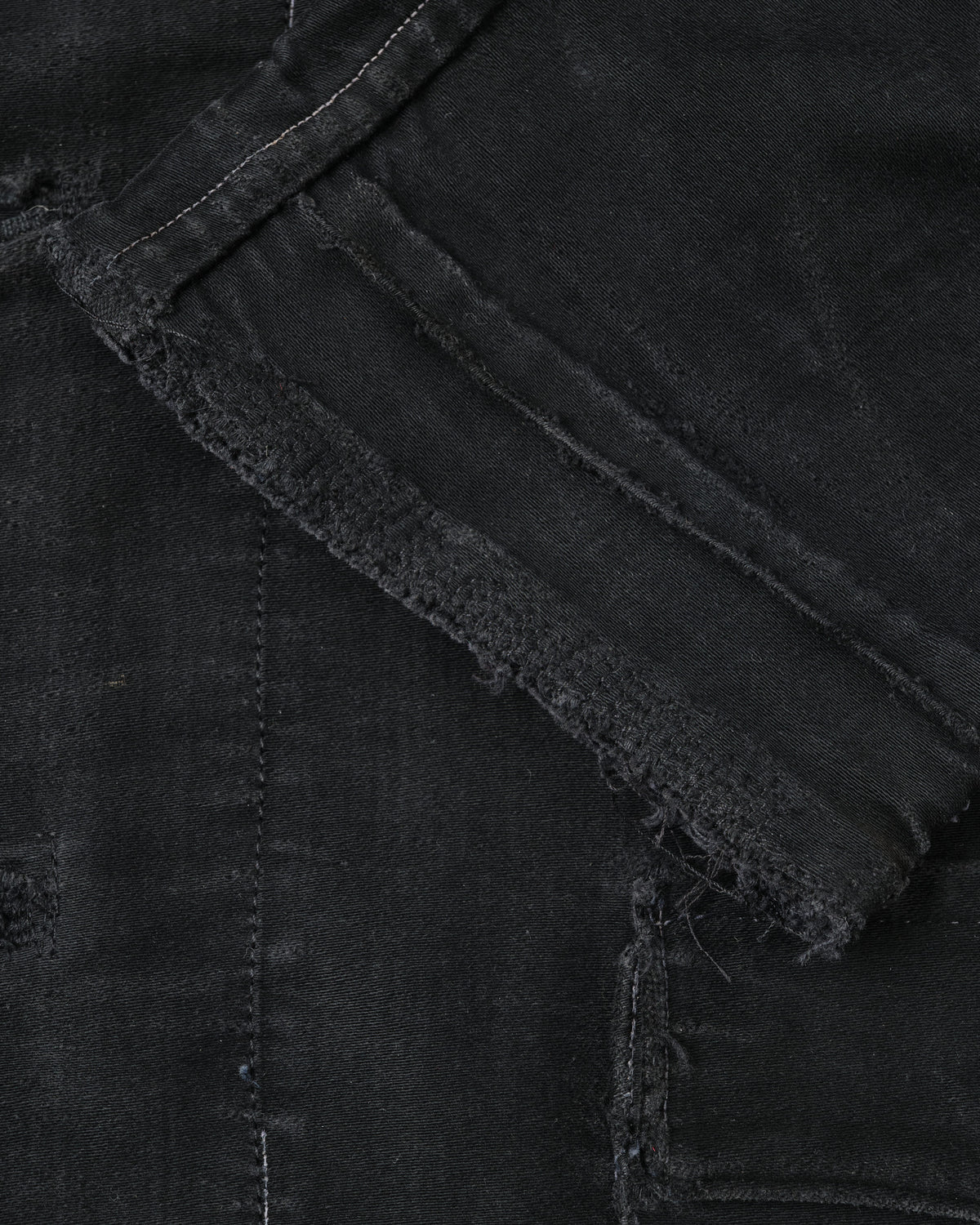
There is no brand label of any kind inside, and the very fine stitching and the seam lines that wander, almost as if on purpose, speak strongly of an individual's own sewing rather than of machine-made mass production.
The stitching in particular shows an unevenness, as though it was sewn with only the purpose in mind, and that unpolished beauty carries a "human warmth" that ready-made garments never have.
At the same time, the details themselves are remarkably well resolved, which is just as interesting.
Four flap pockets, large and small, on the front, and on the back the game pocket peculiar to hunting jackets: a construction that pursues practicality to the end.
Behind the placket you will also find a careful finish using the "selvedge" of the cloth, confirming that the fabric of the time, woven on an old loom, was used.
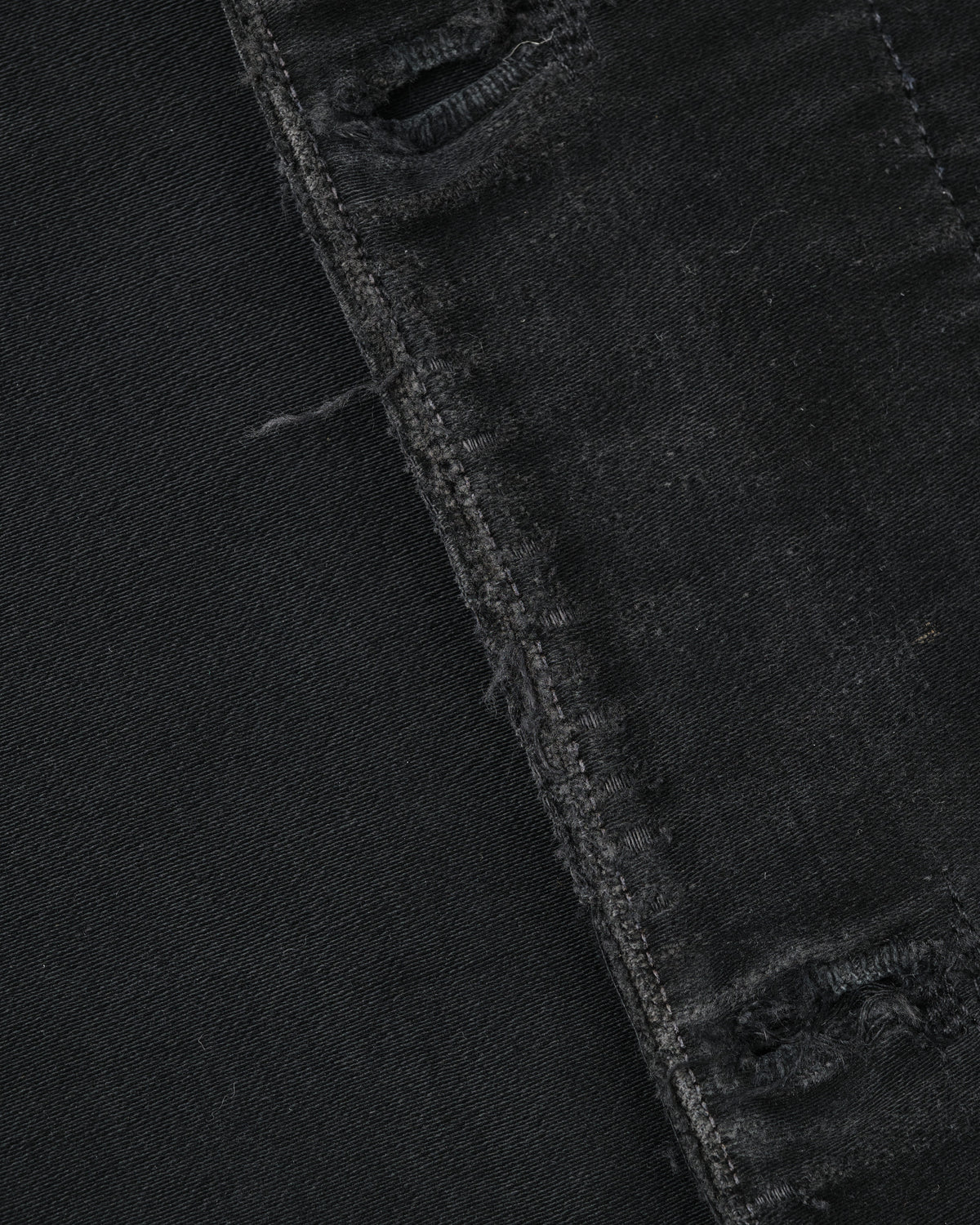
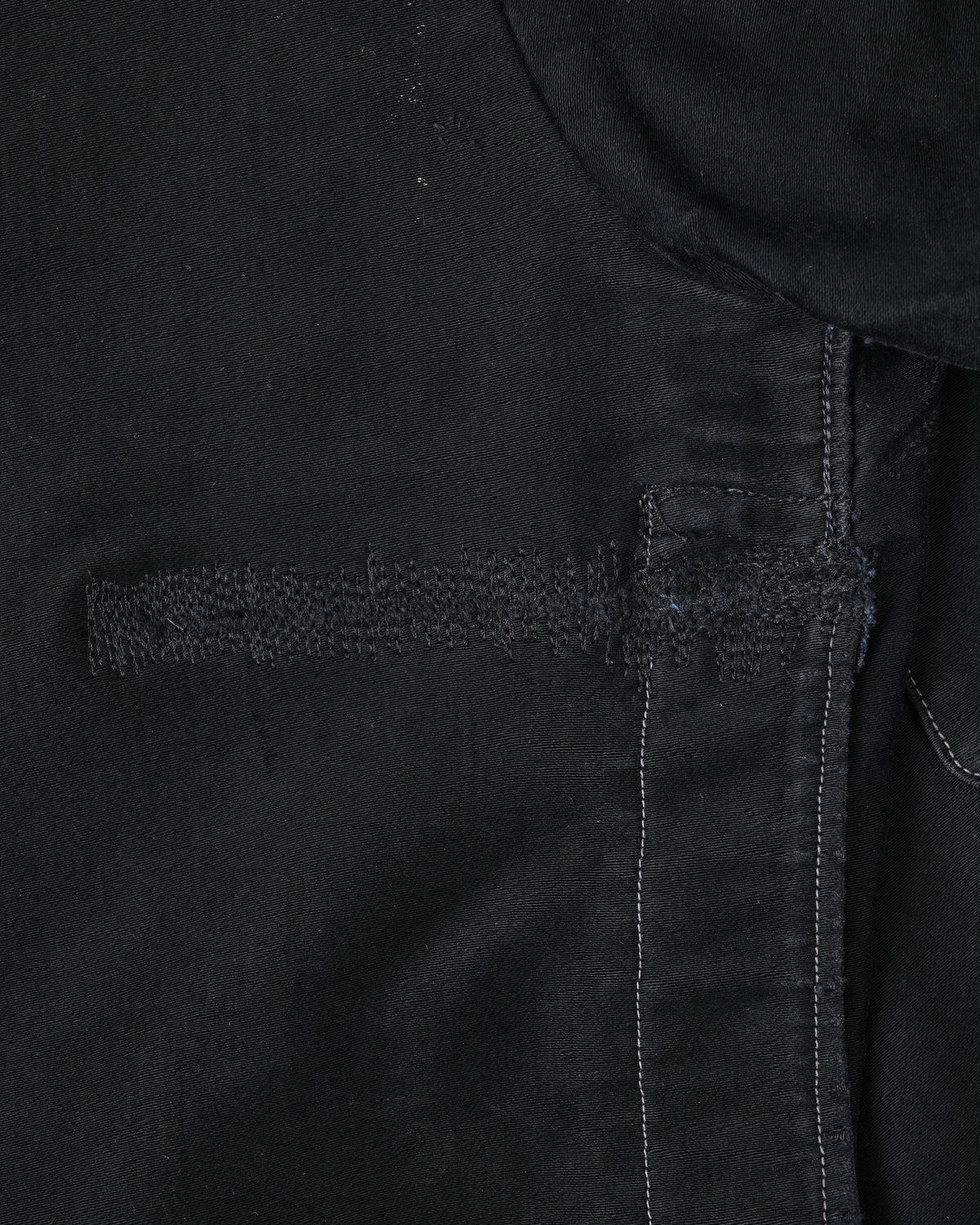
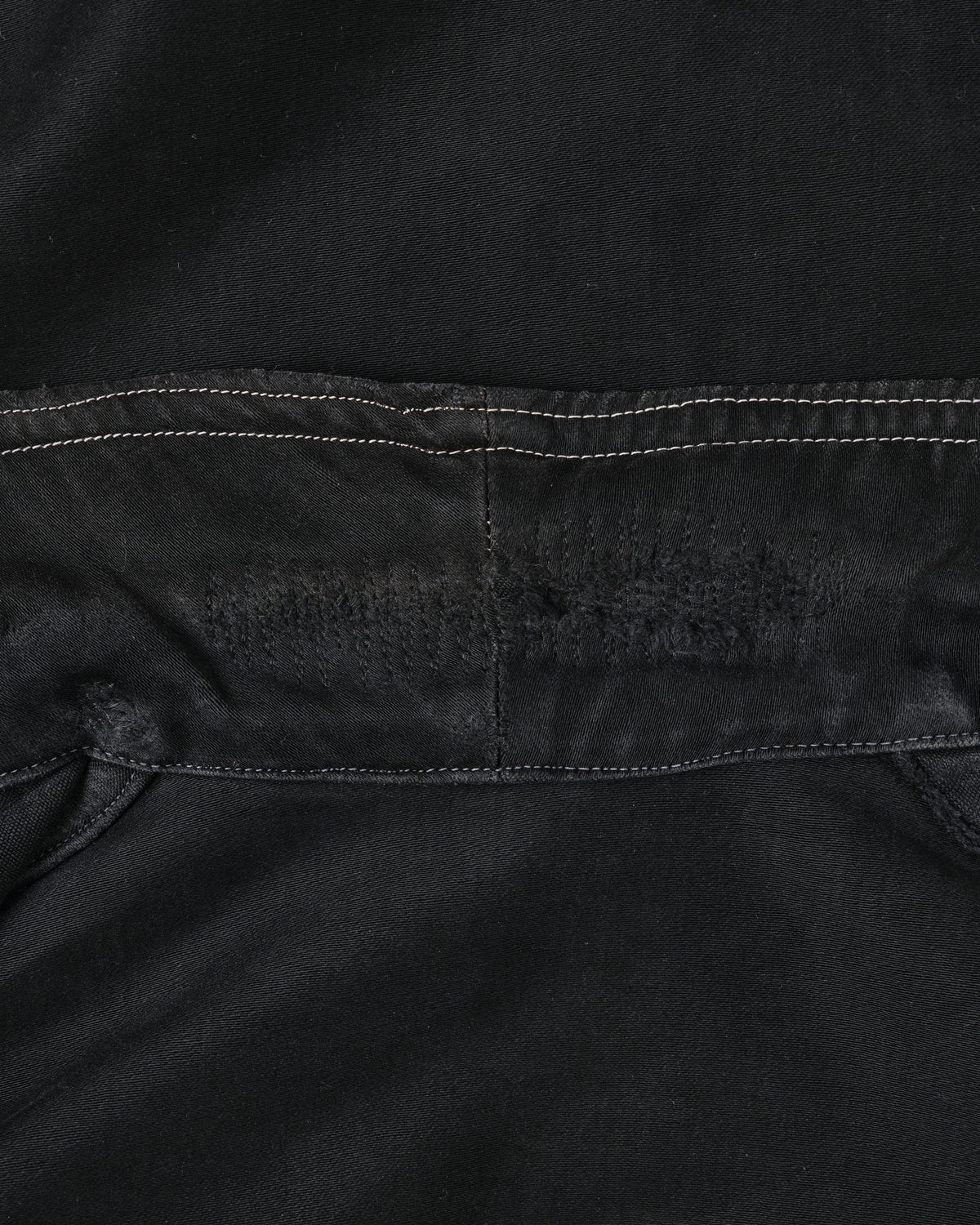
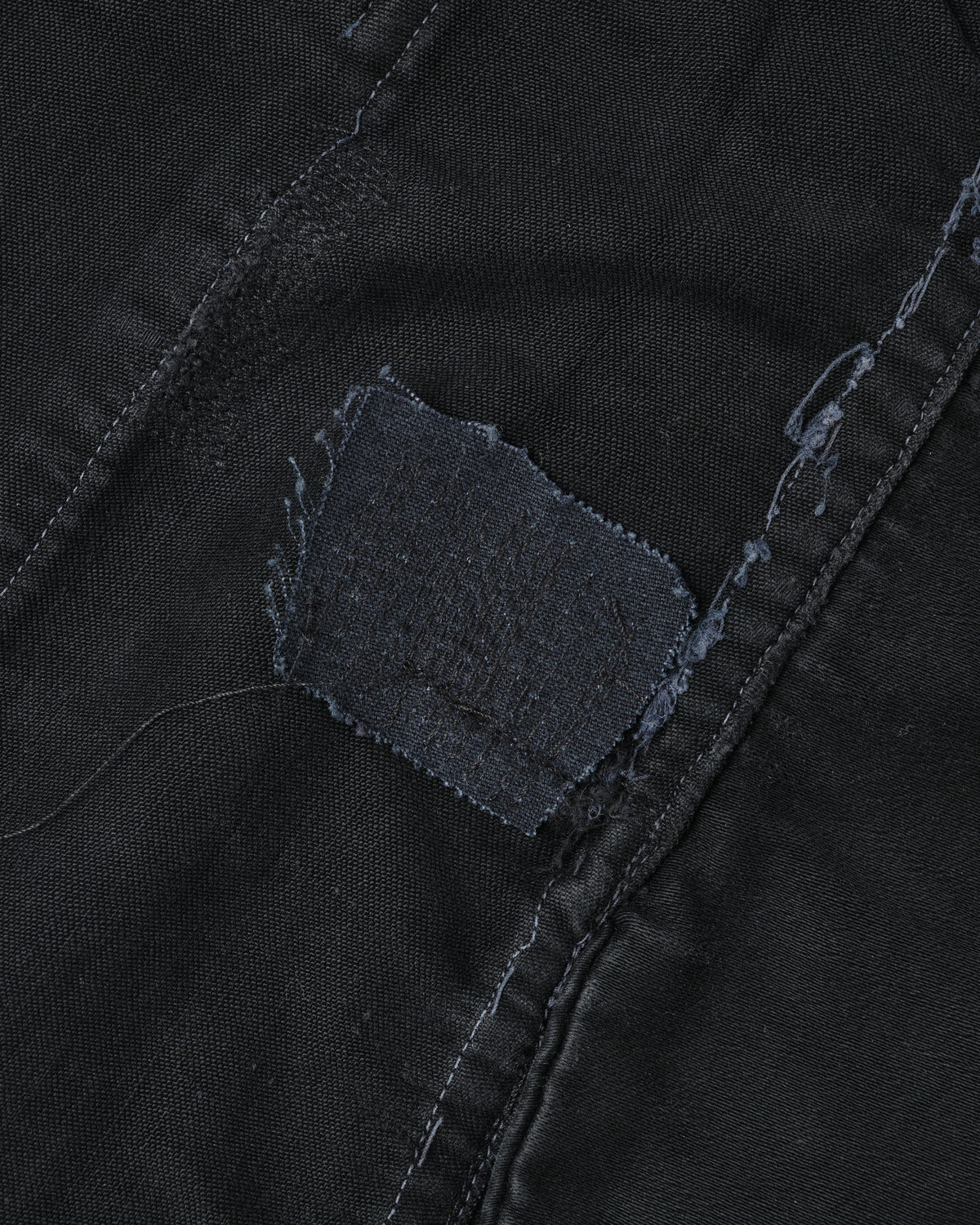
What tells most of the time this jacket has lived through are the repairs that remain here and there.
The hand darning beside the right chest in particular shows an "aesthetic of mending" that clearly goes beyond mere necessity, and the owner's deep attachment and willingness to take trouble come through.
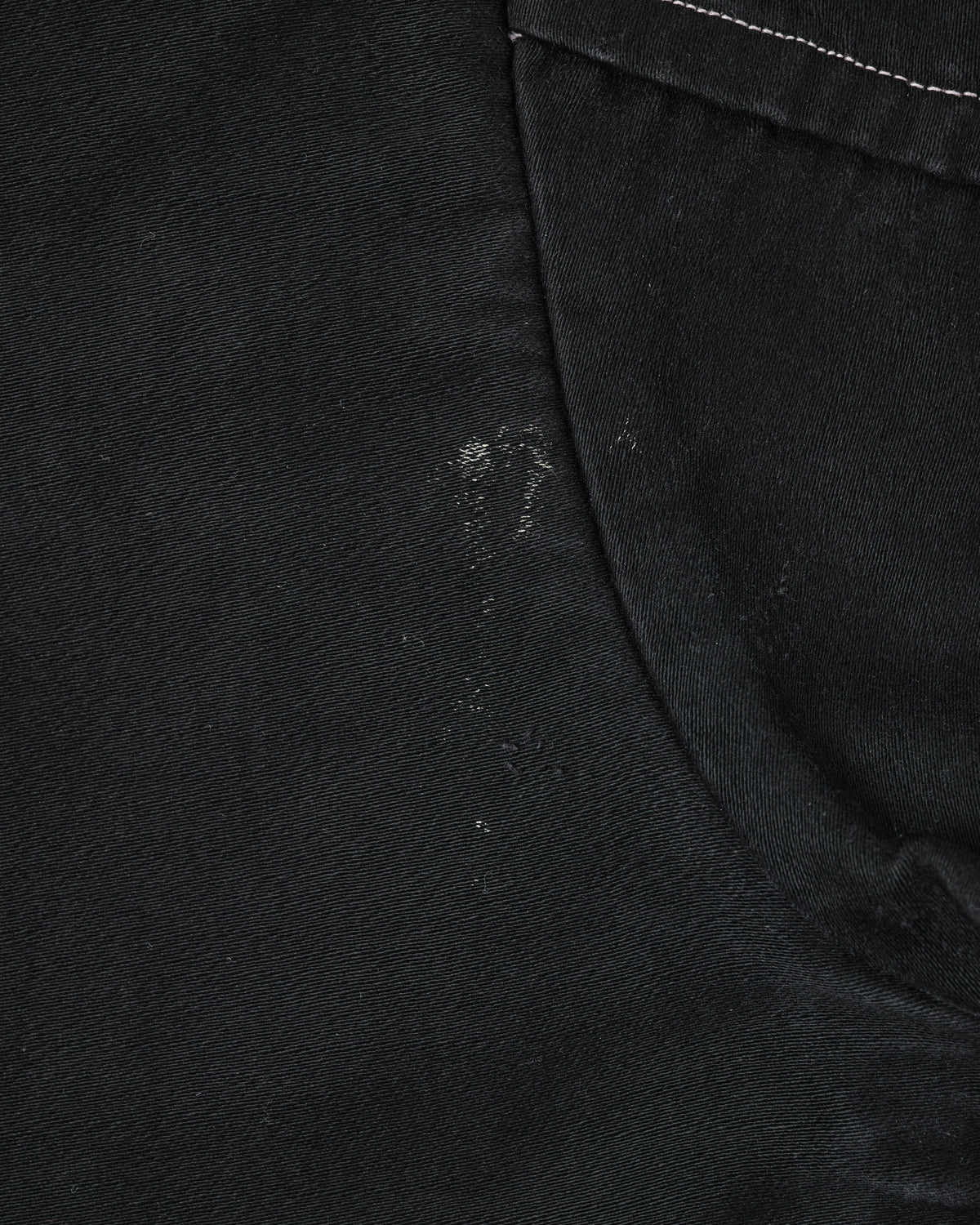
White contrast stitching stands out against the black body, giving it a truly strong visual presence.
Abrasion, fading along the seams and edges, loose threads, replaced buttons.
A single garment that is more than clothing, reflecting the very human work of labour, daily life and mending.
A remarkable piece, the shape of an "accumulation of chance and necessity" that no product made today could ever reproduce.
With a silk-like sheen and iron-like toughness, this cloth is emblematic of French workwear.
The moment you pick it up, you feel its substantial density and the soft smoothness of the brushed face.
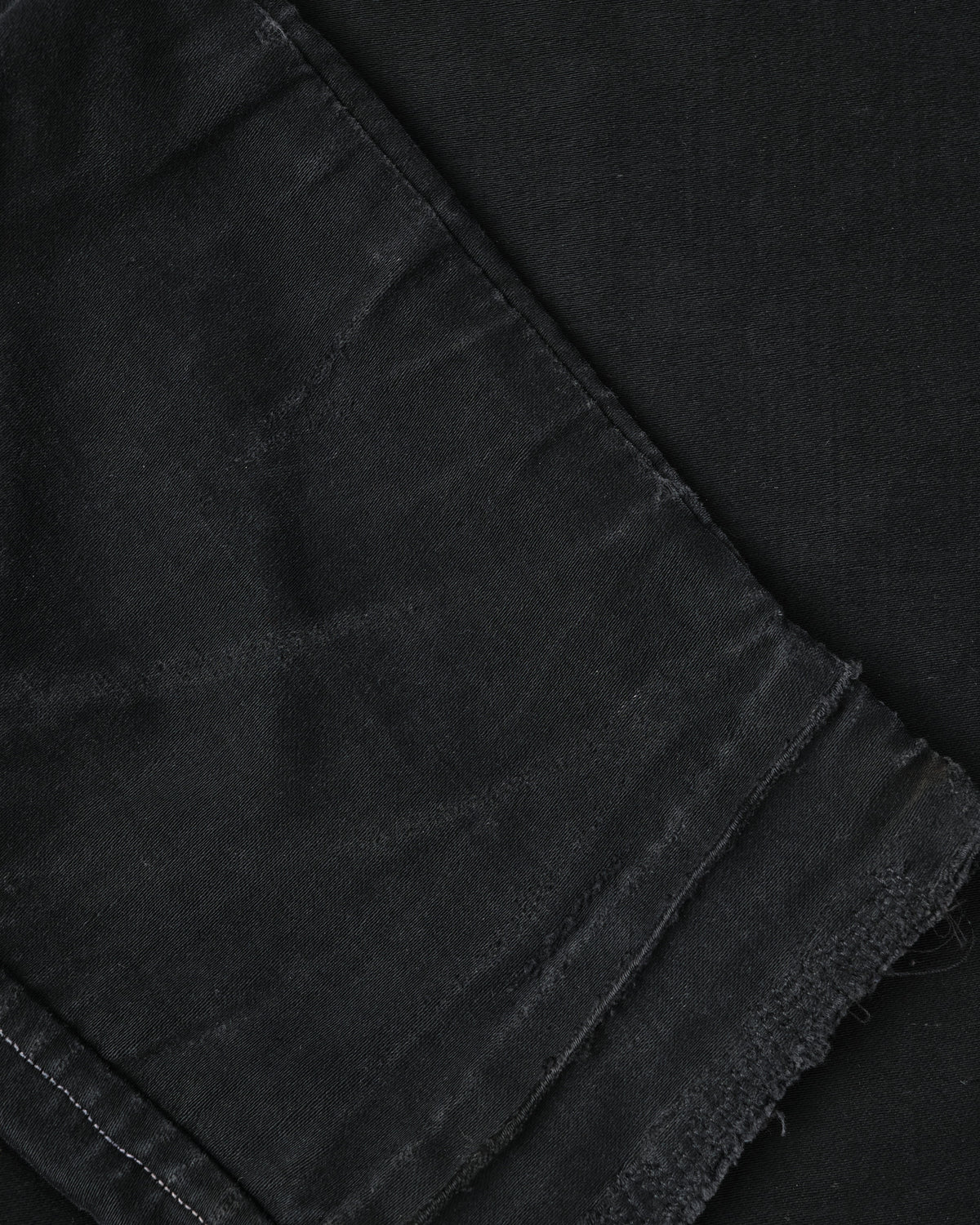
The fading along the seams and edges that emerges with age is a beauty particular to black moleskin.
The colour is
A deep, sinking black that holds a quiet strength at its core.
Especially in moleskin that has aged like this piece, the brushed surface has worn softly, letting grey show through in places and creating a gradation like an ink-wash painting drawn with a brush.
This "black" has nothing to do with industrial uniformity.
The size label cannot be confirmed, but it should correspond to roughly "M".
There are signs of use, including the fading along the seams and edges that is characteristic of the fabric, soiling, abrasion, loose threads, repairs and replaced buttons, but no major damage that would get in the way of wearing it, so it still has plenty of wear left in it.
The "Hunting Jacket", an essential piece in any conversation about French vintage
Rare black moleskin, combined with an unusual "Homemade" make, inferred from the absence of a brand label, the fine stitching and the deliberate irregularities in the sewing.
We wholeheartedly recommend it to those looking for the real thing, complete in material, tailoring and history.
A piece that more than earns its place, whether in the wardrobe or in a collection. Something like this seldom surfaces, in Japan or abroad, so for those who have been searching, or who simply love unusual things, this is an opportunity not to miss.
ADD TO CART