Estimated early 1930s, French-made brown chambray hunting jacket.
A special acquisition.
The "Hunting Jacket"—a staple of French workwear.
Despite bearing the name "Hunting" in its designation, this garment was in fact worn primarily by the upper classes during hunting expeditions in France from the late nineteenth century through the mid-twentieth century, representing a piece that seamlessly joined function with formality.
In France of that era, hunting was never merely a means of livelihood. Rather, for the aristocracy, landowners, and wealthy industrialists—the "privileged classes"—it constituted a form of social engagement and leisure. Consequently, this jacket was not tailored for farmers or ordinary laborers, but rather was crafted for those of elevated station.
Throughout France, particularly in the metropolitan regions of Lyon, Limoges, and Toulouse, skilled tailors and workshops were scattered about. Many specimens from the early 1900s onward were custom-made pieces, each adapted to the client's physique and intended use.
In those days, ready-made clothing had yet to become a widespread concept. Mass production by established brands remained exceedingly limited, and many pieces bear no label at all—luxurious garments throughout which the artisan's hand is evident at every turn.
The fabrics employed were equally varied: heavy cotton canvas, cotton piqué, corduroy, linen, wool, and moleskin were each selected to withstand the demands of the hunt.
These materials united wind resistance, durability, and freedom of movement, pursuing utility suited to forest and field, while simultaneously bearing the refined bearing befitting the wearer's station.
Among the many specimens of French workwear, the "Hunting Jacket" stands apart—its purpose and positioning distinctly its own—and continues to command high regard as a piece that marries practicality with propriety.
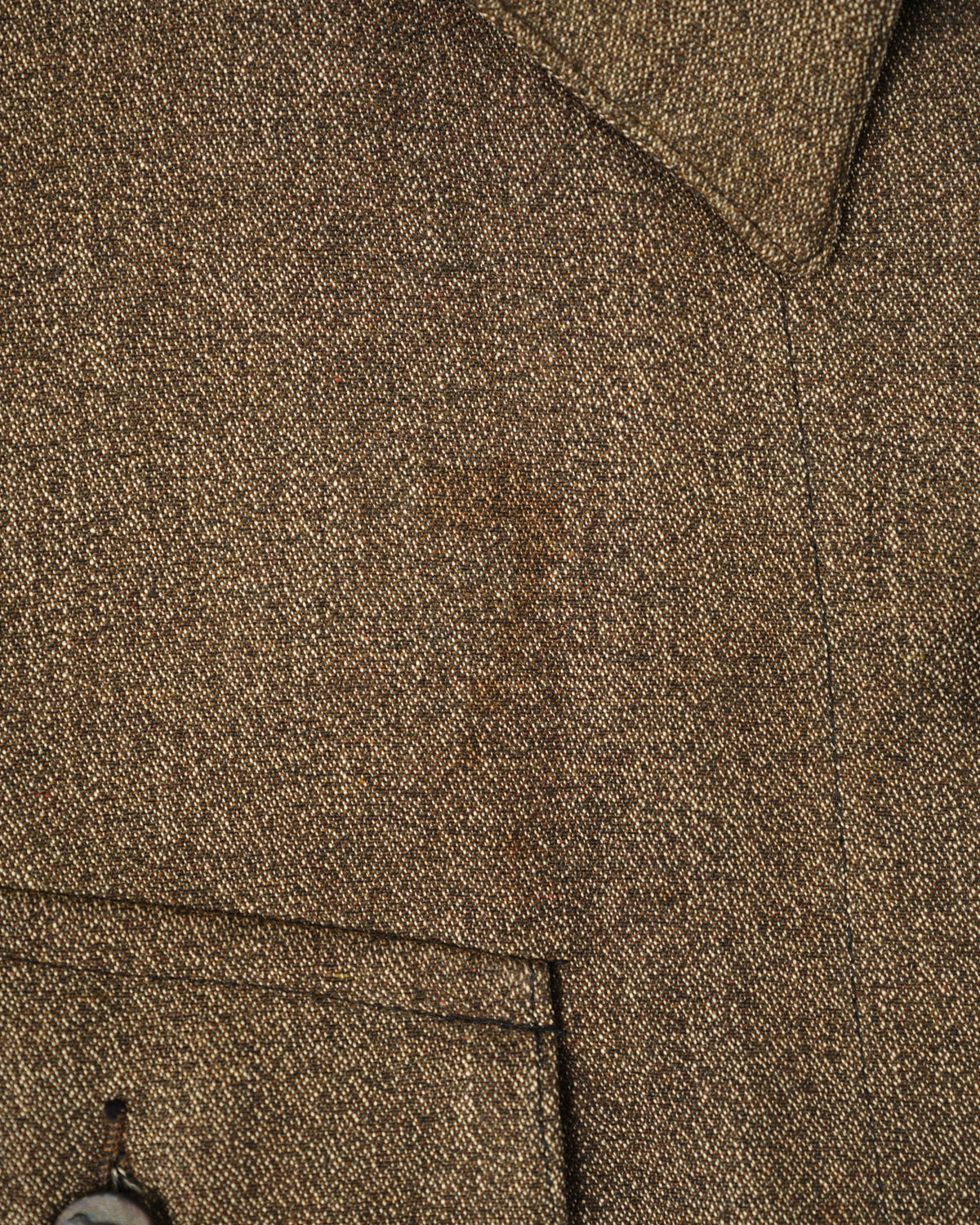
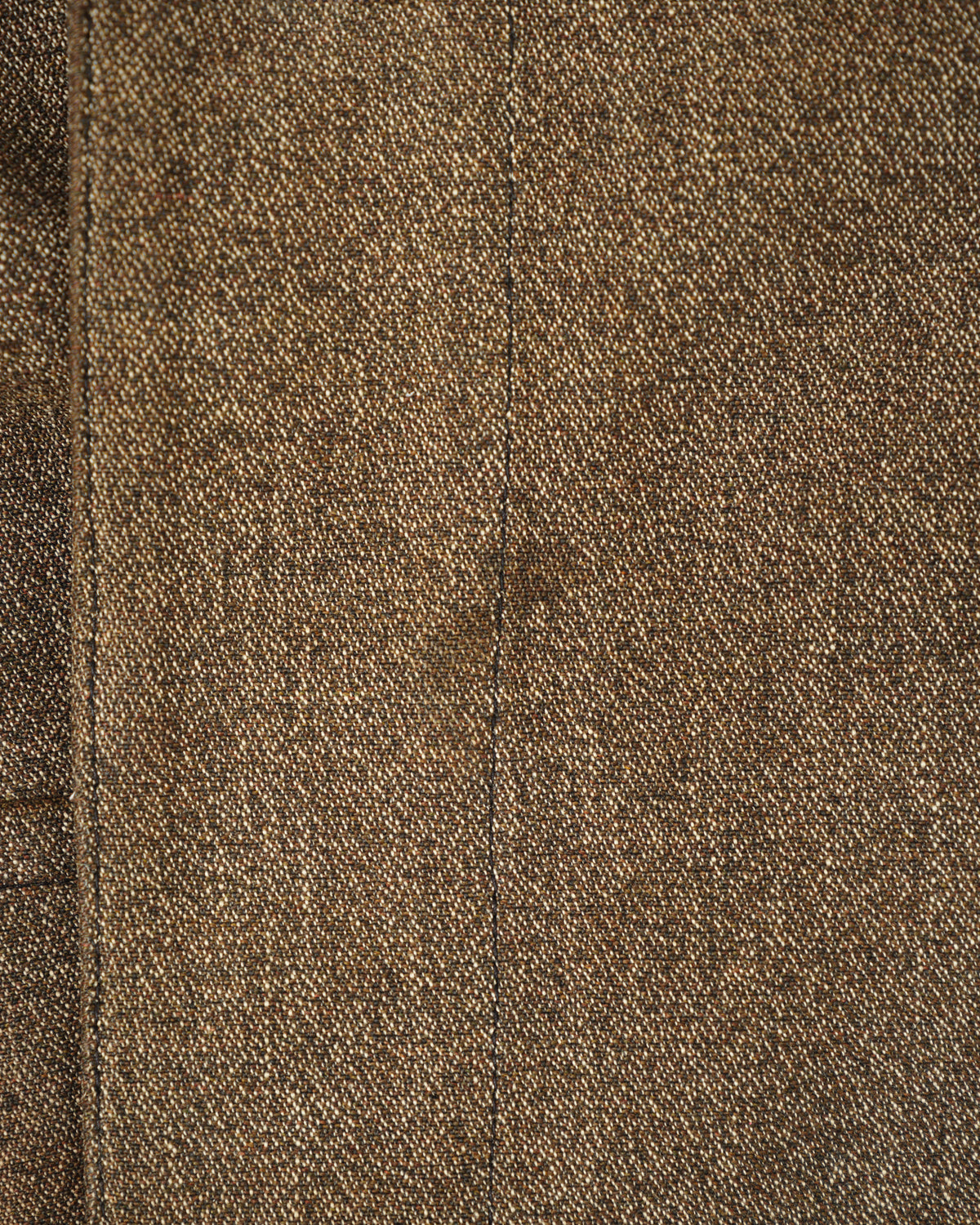
This particular example employs chambray fabric, itself a rarity among French workwear materials. The pronounced salt-and-pepper character, the plain weave construction that defines chambray—these elements render it singular, and uncommonly so.
The strong frost-like texture is characteristic, appearing understated when viewed at a distance, yet revealing ever greater depth the closer one draws. The plain weave lends the fabric a relative lightness; rather than rigidity, one perceives a suppleness that moves naturally with the body.
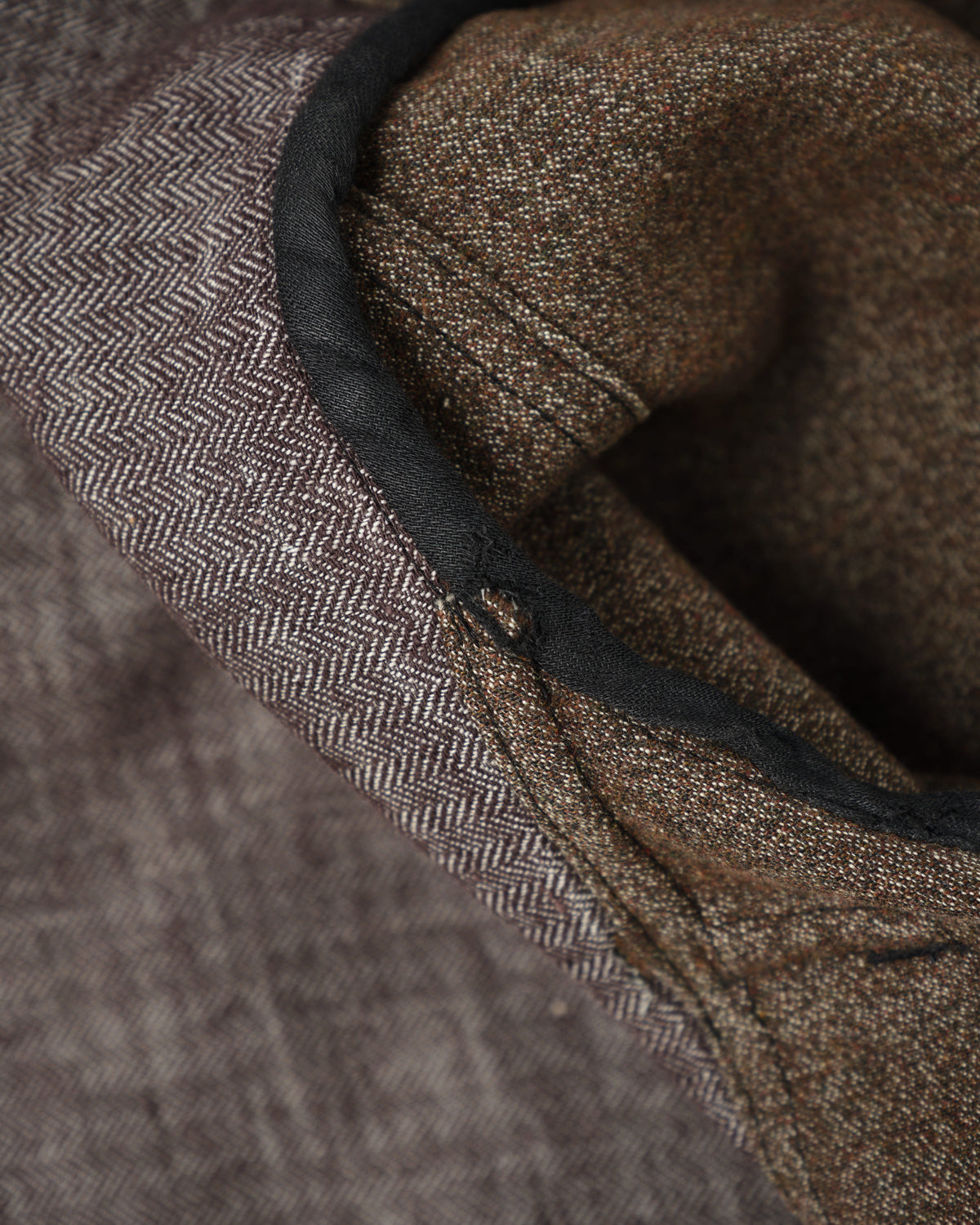
Of particular note is the herringbone twill lining.
Few hunting jackets feature HBT as their interior; this reveals how thoroughly the logic of practical dress extends even to unseen places. The shadowed interplay of the herringbone, glimpsed from within, creates contrast against the chambray exterior, elevating the garment's dimensionality in a manner entirely characteristic of vintage pieces.
The cuffs are not tubular, but rather feature button tabs—a detail seen on hunting jackets of earlier vintage. This alone shifts the appearance at the wrist toward the decidedly classical.
The rear incorporates a capacious game pocket—the hallmark of the hunting jacket—designed to accommodate one's quarry.
The color is a light brown with a subtle yellow undertone.
A hue that transcends simple description, possessing both clarity and depth. This light brown—carrying the nuance of aged paper—gains its shadow and dimension when paired with the salt-and-pepper character intrinsic to chambray, a tonal complexity impossible in a solid weave.
No size marking is visible, though Japanese sizing would suggest this corresponds to approximately M to L.
The actual measurements indicate a sizing that suits the Japanese frame exceptionally well—a golden proportion that should accommodate a wide range of builds.
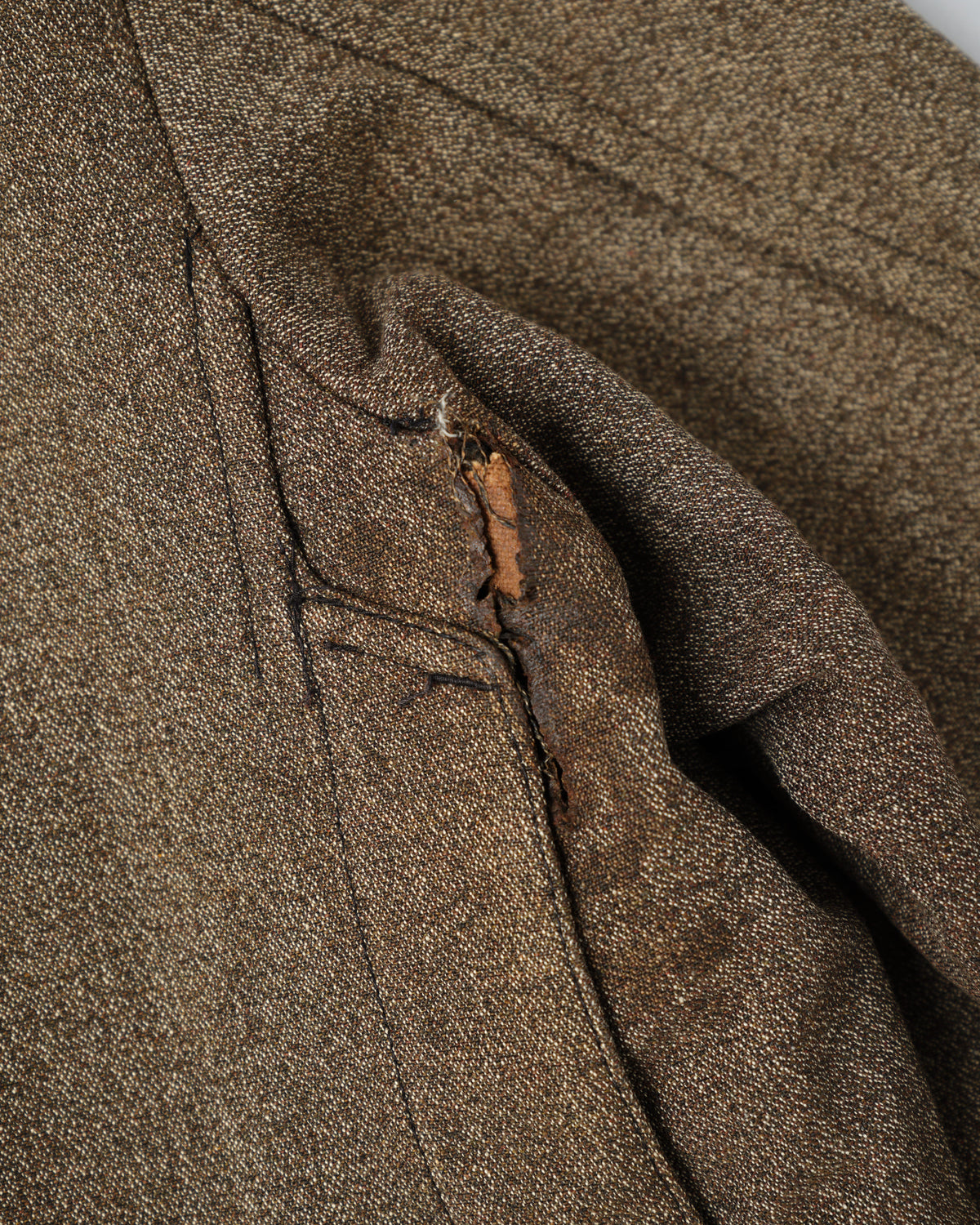
The piece bears the expected patina of use—soil marks, wear, creasing, repair traces, and some button loss—yet exhibits no damage so significant as to impede wearing. It remains entirely wearable.
A piece equally at home in active rotation or as a collection specimen. Given how rarely such examples pass through our doors, those who have sought one would be wise not to overlook this opportunity.
ADD TO CART