Estimated 1940s French vintage 'Indigo Metis Grandpa Shirt'.
The "Grandpa Shirt" — an essential presence in French vintage style.
The Grandpa Shirt, also known as the Grandfather Shirt, is a general term for shirts characterized by their extended length and pullover construction. The name is said to derive from the image of an old shirt that one's grandfather might have worn.
Beyond workwear of that era, these shirts served as everyday garments—pajamas, undergarments—across a diverse range of uses. The fabrics themselves varied considerably: cotton, flannel, chambray, linen, wool—each selected according to the labor environment, season, and historical moment.
This particular example employs the rare and sought-after Metis (cotton-linen blend) fabric, uncommon even among French vintage pieces.
From its hand-feel, the cotton proportion appears predominant, which is why the characteristically supple, undulating quality of French linen is scarcely evident. Instead, the texture reads clean and dry to the touch—one might estimate the composition at roughly eighty percent cotton, twenty percent linen.
Metis fabric alone is a rarity, but this piece possesses something further: an exceptional indigo coloration that sets it apart. Market availability of true indigo-dyed work shirts is significantly limited compared to ink-blue variants, and their value remains immeasurable. The indigo that France produces is, quite simply, breathtaking.
While corduroy and wool winter fabrics restrict seasonal wear, Metis affords year-round versatility, opening possibilities for extended use across the calendar.
A rare two-tone treatment: the collar and body employ distinct indigo shades.
A deep, complex purple-indigo suffuses the whole, while a lighter indigo at the collar generates a striking contrast, serving as a subtle visual anchor throughout.
The left chest bears a simple patch pocket—modest in function, yet rich in the aesthetics of an earlier working era.
The front employs pullover construction, fastened with naturally lustrous shell buttons. Each button's unique character, inherent to the material, imparts a quiet refinement across the entire garment.
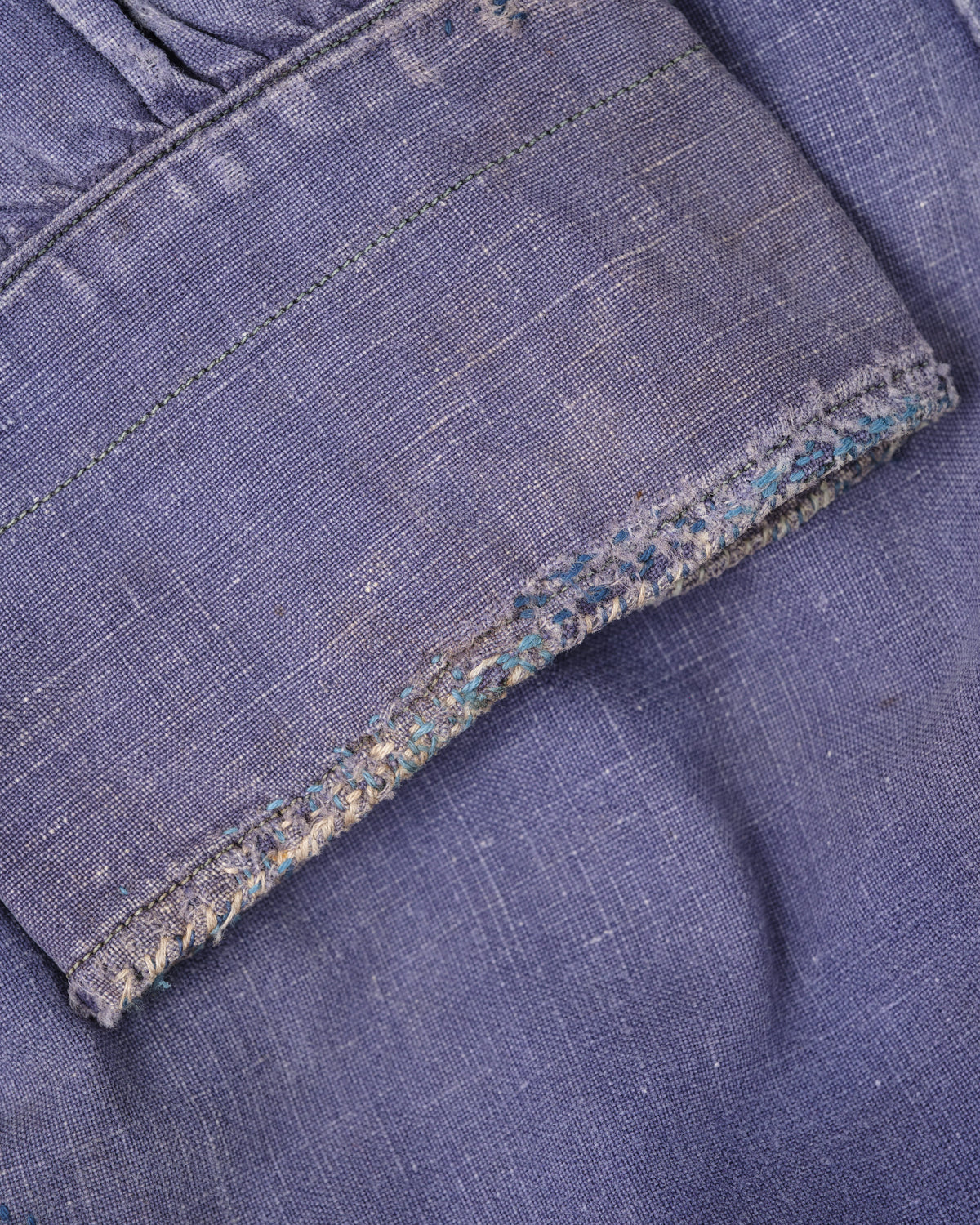
The cuffs are gathered into a gathered design. The volume born from full sleeves creates a distinctive silhouette—one that conveys ease and a measured sense of openness.
Both side seams feature slits without gussets.
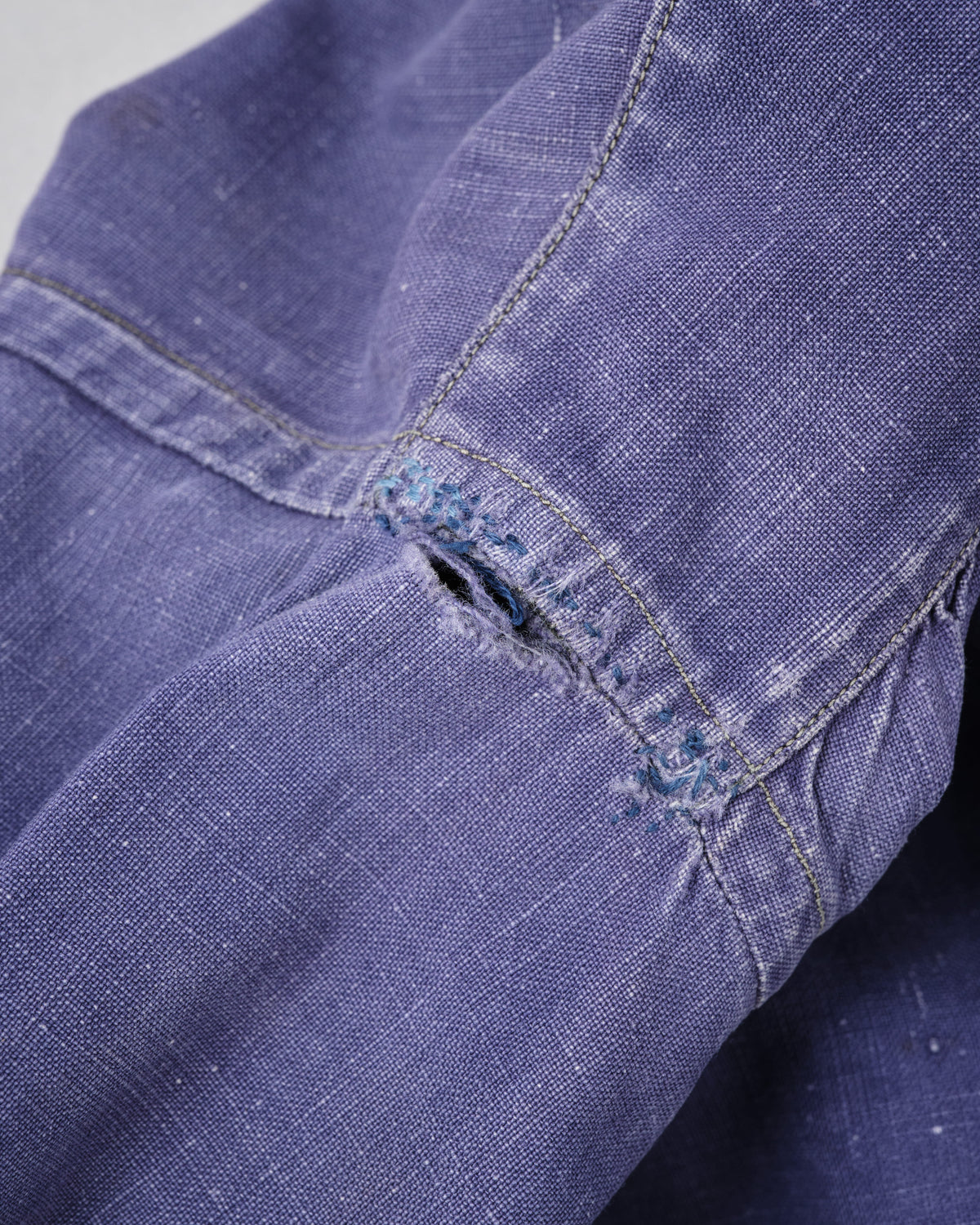
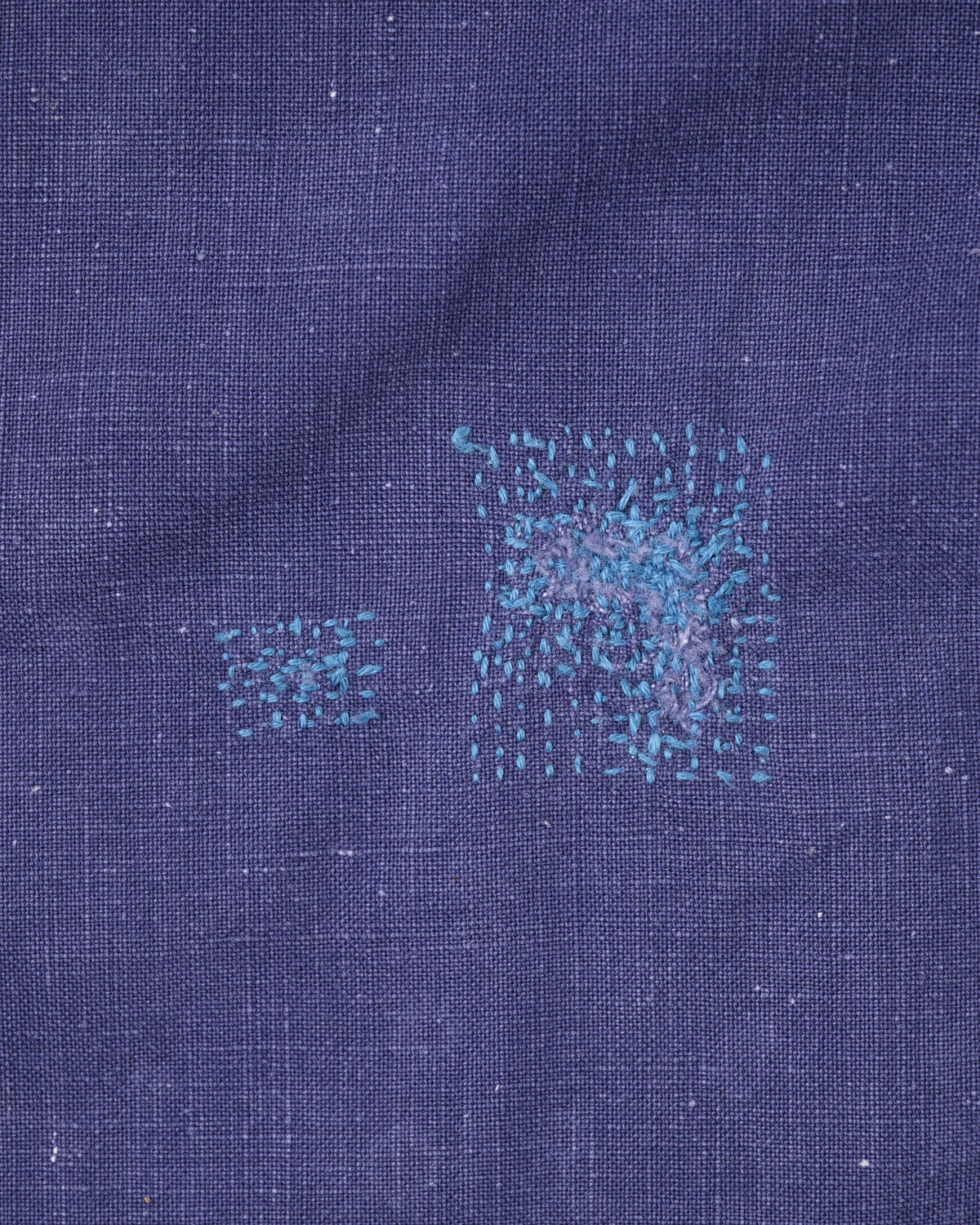
The darning repairs visible throughout the piece were executed by hand, not machine—a direct reflection of French domestic tradition. The color of the mending thread, the subtle irregularities in the stitching, all of these elements underscore its singular nature as a true individual object.
Paired simply with work trousers, it speaks to French workwear in its most unadorned form. Yet styled with slacks or wide trousers, it carries an unexpected modish sensibility.
The traces of life lived in this garment constitute its deepest appeal—it will reveal further dimensions of character through the sensibility of whoever wears it.
No size marking is evident, though it appears to correspond to a Japanese medium.
Given the actual measurements, this would be considered a golden size for the Japanese frame, accessible to a broad range of proportions.
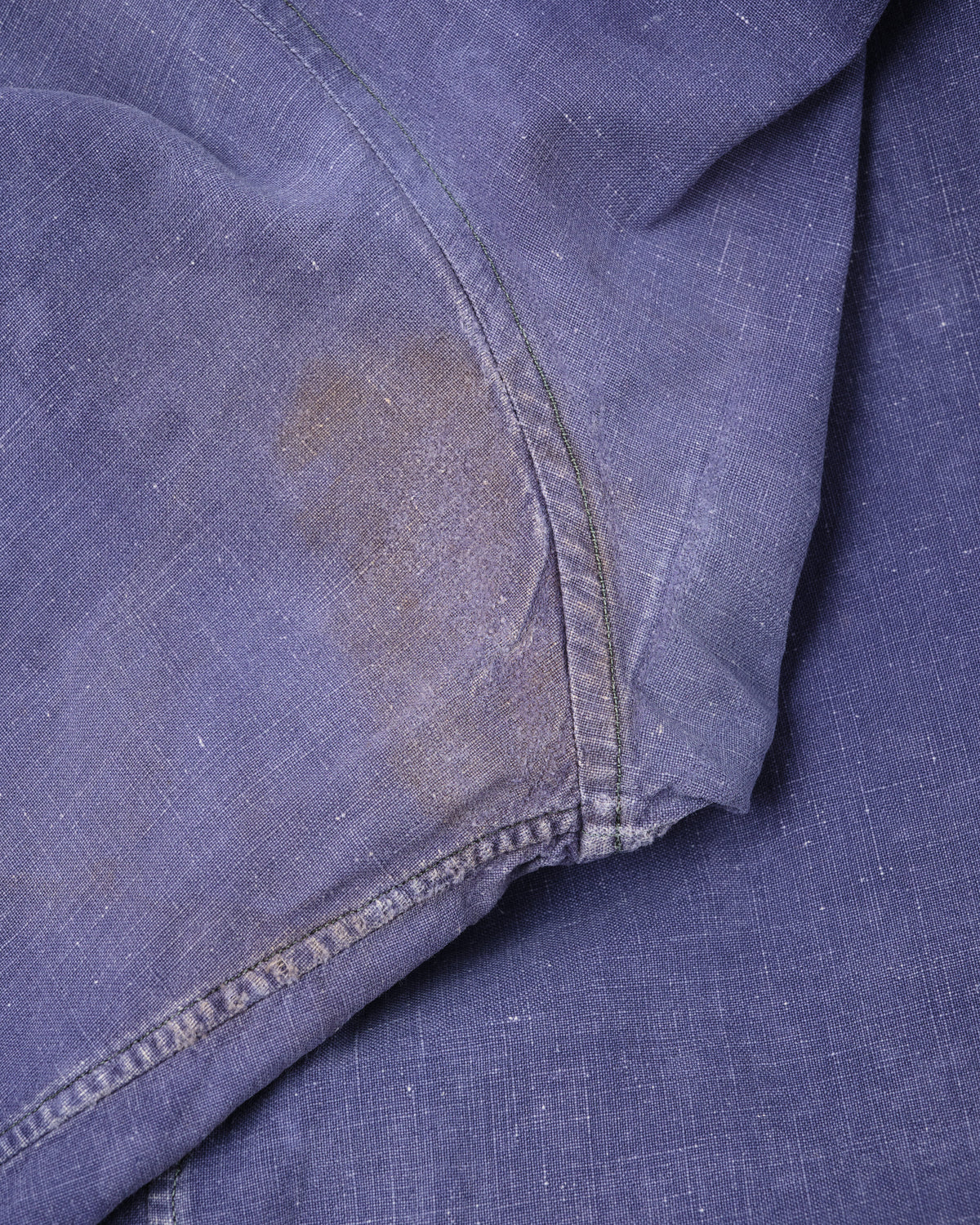
Fading, soiling, small tears, and repair marks are present as expected from genuine use, though no damage impedes wearing. For those with understanding, these qualities read not as defect, but as character.
For those drawn to French workwear, this indigo Metis grandpa shirt merits serious consideration.
Whether as a functional piece or as part of a considered collection, it stands uncompromised. Garments in such rare fabrics surface infrequently; should you be seeking this particular piece, this opportunity warrants attention.
ADD TO CART

![[~40’s]French Vintage Indigo Metis Grandpa Shirt](http://vieuxetnouveau-shop.com/cdn/shop/files/202505030393.jpg?v=1751298018&width=2400)
![[~40’s]French Vintage Indigo Metis Grandpa Shirt](http://vieuxetnouveau-shop.com/cdn/shop/files/202505030395.jpg?v=1751298018&width=2400)
![[~40’s]French Vintage Indigo Metis Grandpa Shirt](http://vieuxetnouveau-shop.com/cdn/shop/files/DSCF5480_63728f78-a1c4-4bfa-bf2e-0a5ae0d0fdef.jpg?v=1751300261&width=2400)
![[~40’s]French Vintage Indigo Metis Grandpa Shirt](http://vieuxetnouveau-shop.com/cdn/shop/files/DSCF5481_4877ac93-ea08-418d-ba1b-60b347aef362.jpg?v=1751300261&width=2400)
![[~40’s]French Vintage Indigo Metis Grandpa Shirt](http://vieuxetnouveau-shop.com/cdn/shop/files/DSCF5482_0ff40ca3-8463-4354-92a5-9da6d4d6dc54.jpg?v=1751300261&width=2400)
![[~40’s]French Vintage Indigo Metis Grandpa Shirt](http://vieuxetnouveau-shop.com/cdn/shop/files/DSCF5483_6beb8145-d8cf-4f52-9b52-26a3ba6e47b1.jpg?v=1751300261&width=2400)
![[~40’s]French Vintage Indigo Metis Grandpa Shirt](http://vieuxetnouveau-shop.com/cdn/shop/files/DSCF5484_284ee768-ca2a-4c77-a65c-89a2c9075042.jpg?v=1751300261&width=2400)
![[~40’s]French Vintage Indigo Metis Grandpa Shirt](http://vieuxetnouveau-shop.com/cdn/shop/files/DSCF5485_2ebd5ebe-dd94-46f6-9eb3-a1bf2bcde208.jpg?v=1751300261&width=2400)
![[~40’s]French Vintage Indigo Metis Grandpa Shirt](http://vieuxetnouveau-shop.com/cdn/shop/files/DSCF5486_dbf2da21-9389-4d1d-ad5c-6b8aad4a33f7.jpg?v=1751300261&width=2400)
![[~40’s]French Vintage Indigo Metis Grandpa Shirt](http://vieuxetnouveau-shop.com/cdn/shop/files/DSCF5487.jpg?v=1751300261&width=2400)
![[~40’s]French Vintage Indigo Metis Grandpa Shirt](http://vieuxetnouveau-shop.com/cdn/shop/files/DSCF5488_815d2c8f-184f-4e3f-aa31-b4133566e1bd.jpg?v=1751300261&width=2400)
![[~40’s]French Vintage Indigo Metis Grandpa Shirt](http://vieuxetnouveau-shop.com/cdn/shop/files/DSCF5495_96e53775-74af-4bea-93f1-7da26e153c7c.jpg?v=1751300262&width=2400)
![[~40’s]French Vintage Indigo Metis Grandpa Shirt](http://vieuxetnouveau-shop.com/cdn/shop/files/DSCF5655.jpg?v=1752655369&width=2400)
![[~40’s]French Vintage Indigo Metis Grandpa Shirt](http://vieuxetnouveau-shop.com/cdn/shop/files/DSCF5656_f5e66996-af3b-4253-a7de-7b622ffd161f.jpg?v=1752655368&width=2400)
![[~40’s]French Vintage Indigo Metis Grandpa Shirt](http://vieuxetnouveau-shop.com/cdn/shop/files/DSCF5657_b9ebc24c-20c8-4bac-a082-0eb536e29685.jpg?v=1752655369&width=2400)
![[~40’s]French Vintage Indigo Metis Grandpa Shirt](http://vieuxetnouveau-shop.com/cdn/shop/files/DSCF5658_44485e95-b8de-41f8-89a4-8b95600be740.jpg?v=1752655369&width=2400)
![[~40’s]French Vintage Indigo Metis Grandpa Shirt](http://vieuxetnouveau-shop.com/cdn/shop/files/DSCF5659_6b566bfd-cad9-4442-8e53-313be8fec853.jpg?v=1752655369&width=2400)
![[~40’s]French Vintage Indigo Metis Grandpa Shirt](http://vieuxetnouveau-shop.com/cdn/shop/files/DSCF5664_728fa179-a1ba-406e-aa0e-71280fc77883.jpg?v=1752655399&width=2400)
![[~40’s]French Vintage Indigo Metis Grandpa Shirt](http://vieuxetnouveau-shop.com/cdn/shop/files/DSCF5663.jpg?v=1752655399&width=2400)
![[~40’s]French Vintage Indigo Metis Grandpa Shirt](http://vieuxetnouveau-shop.com/cdn/shop/files/DSCF5660_950c03fb-c1ff-48fc-9e34-3f6132c6aa61.jpg?v=1752655399&width=2400)
![[~40’s]French Vintage Indigo Metis Grandpa Shirt](http://vieuxetnouveau-shop.com/cdn/shop/files/DSCF5661_ed3318be-13b4-42e7-bd46-c005dc06230e.jpg?v=1752655399&width=2400)
![[~40’s]French Vintage Indigo Metis Grandpa Shirt](http://vieuxetnouveau-shop.com/cdn/shop/files/DSCF5662_b7e66a52-681f-4859-9d80-20a5731f9720.jpg?v=1752655399&width=2400)