Estimated 1940s, German military M42 reversible Windbluse.
A truly exceptional acquisition.
Our first in-stock Windbluse 42—a piece worn by Gebirgsjäger mountain troops over their uniforms as protection against the elements. A garment born from necessity, refined through function.
Given the scarcity of surviving examples, many will encounter this piece for the first time.
Gebirgsjäger—mountain rifleman—merges the German words for mountain and rifleman. These were alpine specialists, forged for terrain others could not navigate.
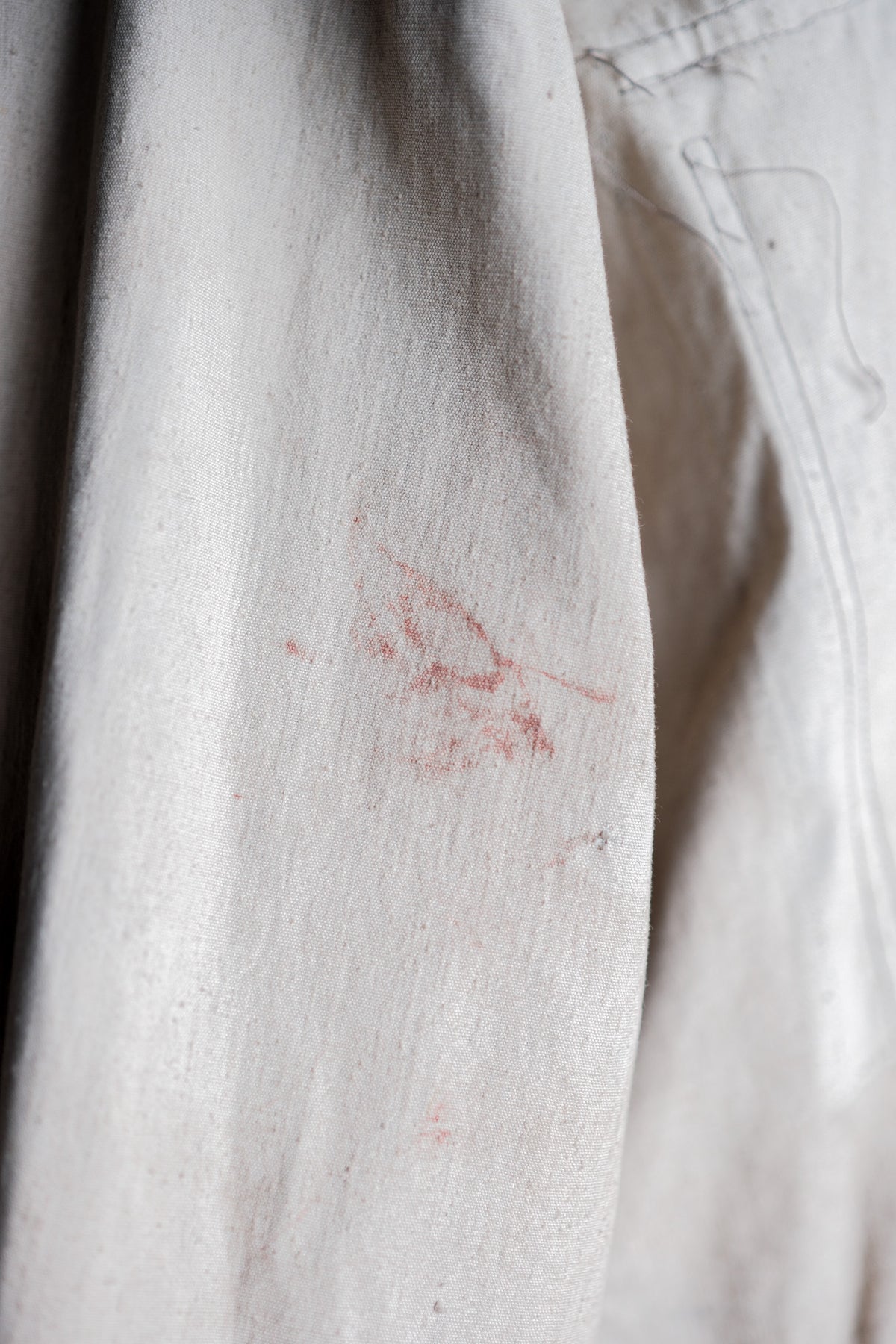
The Windbluse 42 employed both cotton and rayon fabrics, with rayon predominating in the war's final years. This example is reversible: mocha brown on one side, ecru snow camouflage on the reverse.
Two types exist—differentiated by the snow camouflage side's material.
1st Type = ecru in the same fabric as the obverse
2nd Type = white rubber-coated material with water resistance
This piece exhibits cotton throughout, confirming it as a 1st Type.
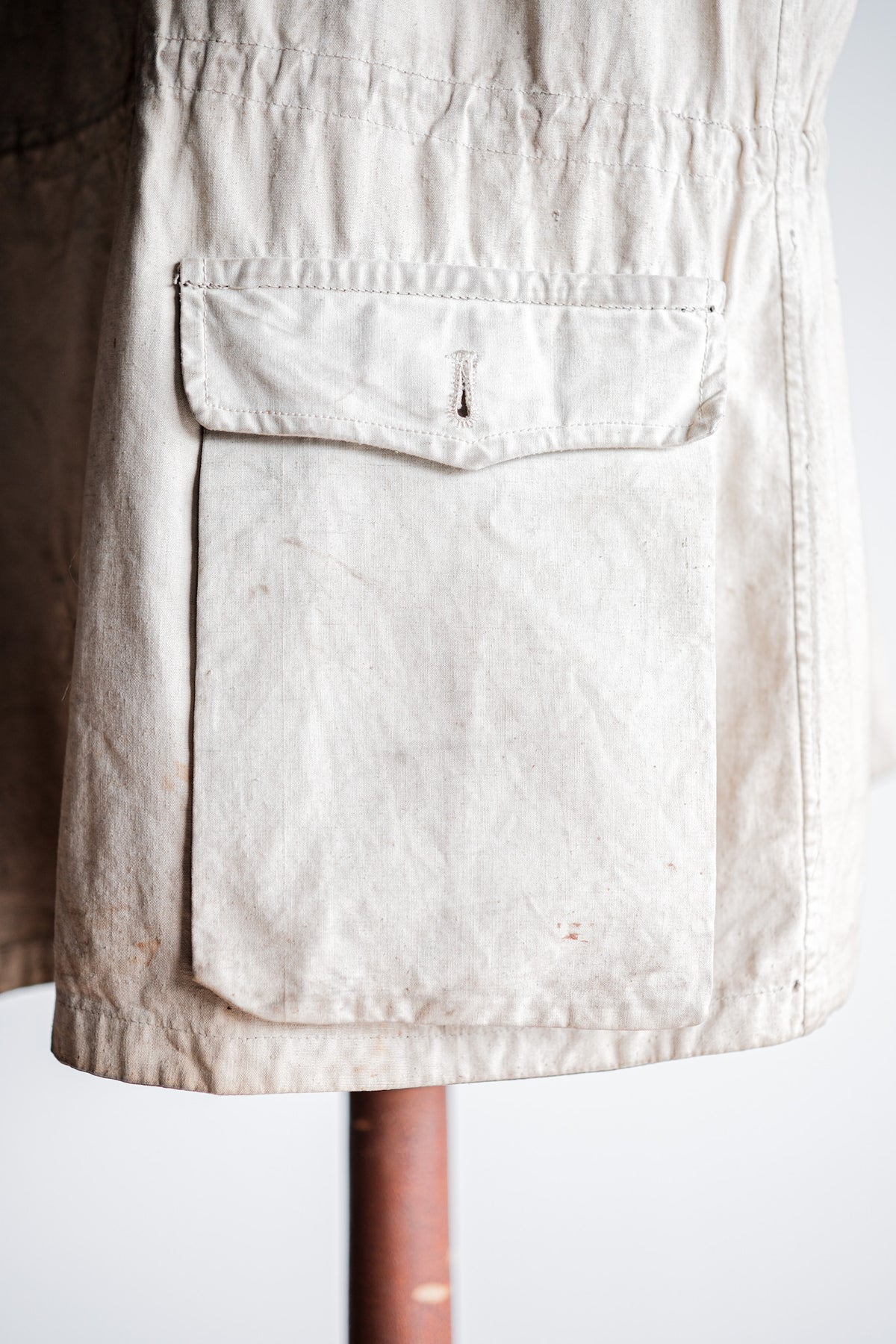
The hood and collar feature draw cords for adjustment. Overlapping neck wind flaps provide layered protection. Three patch pockets span the chest. Aluminum buckles cinch the sleeve straps. Flapped pockets sit at the lower back—details characteristic of the period.
Minor variations exist between the obverse and reverse—the back pocket on the reverse is bagged—but the construction logic remains consistent throughout.
All buttons are original German military paper buttons, characteristic of the era.
The neck wind flap was sometimes removed by individual soldiers according to personal preference. The British Denison smock experienced similar modifications—men converting half-zips to full openings for easier wear. Across all armies, practicality trumped regulation.
This example bears witness to that pragmatism.
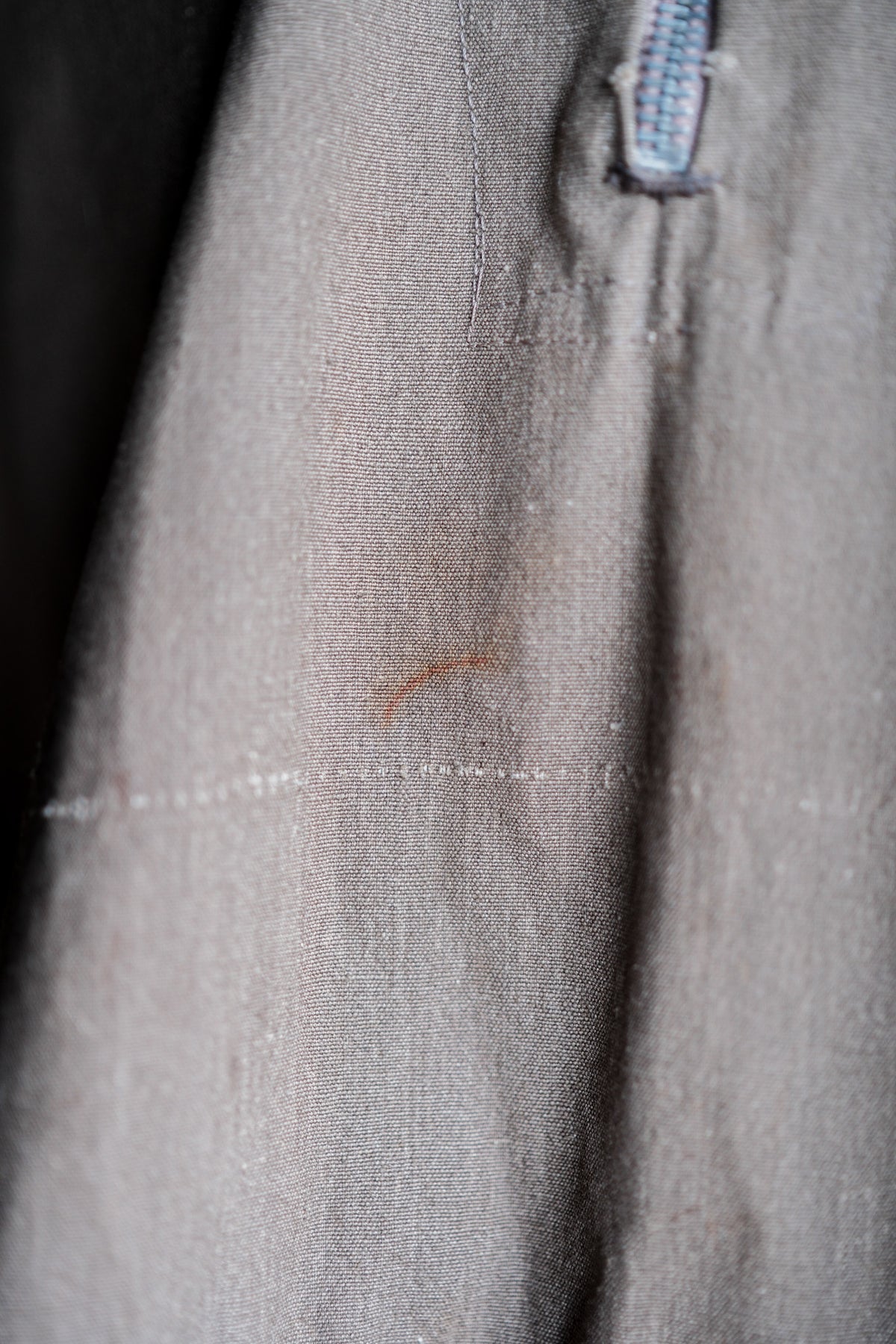
The wind flaps and three-pocket assembly have been removed and the neck modified to a half-zip—a conversion undertaken in period, for ease of wear and removal. The stitching, thread, and U-shaped zip configuration all suggest this modification occurred contemporaneously, not as a modern alteration.
The zip slider is RITZ manufacture.
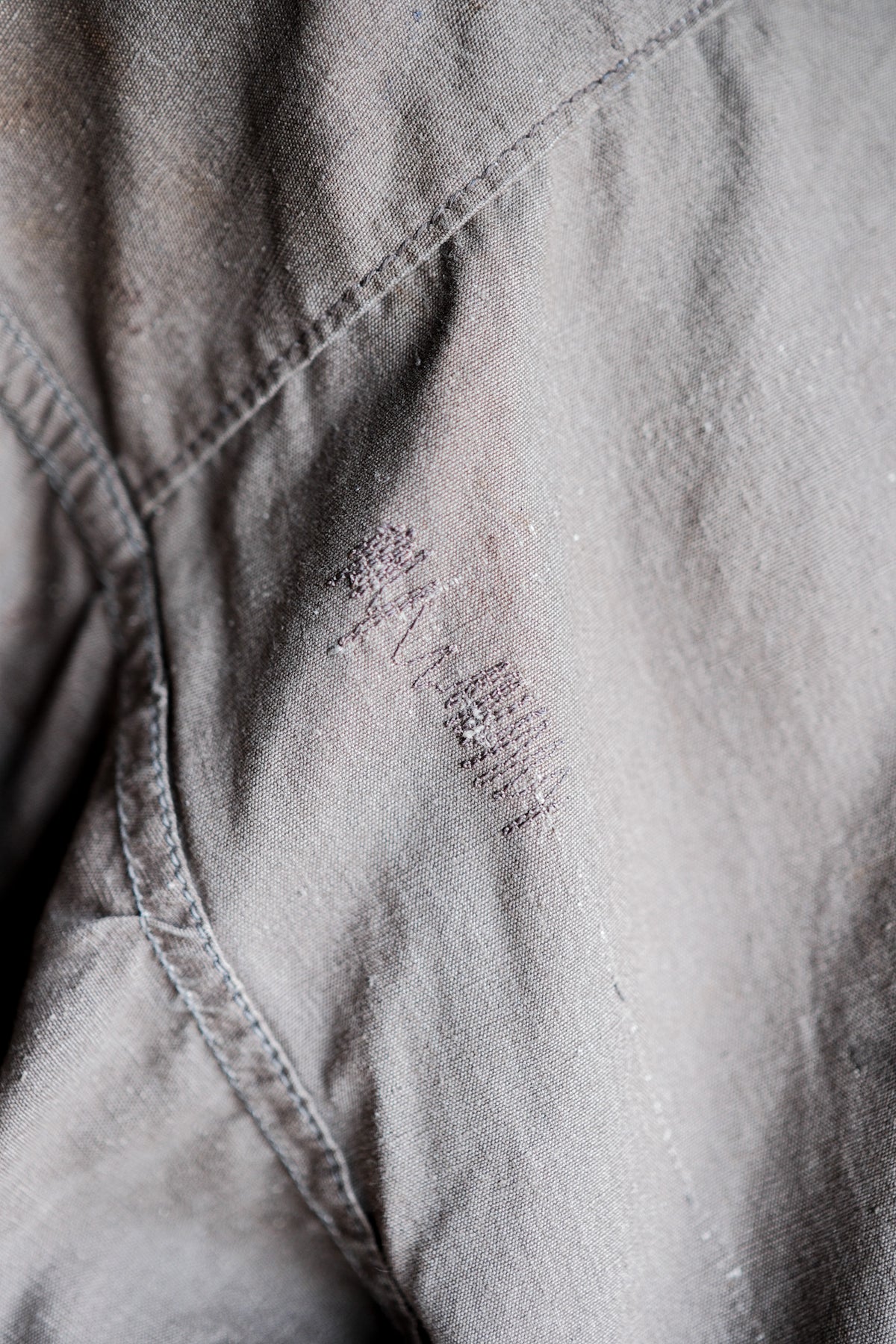
The German military stamp that typically appears inside the wind flaps is no longer visible, lost to the period modification of the neck.
Beyond its rarity,this piece reads as genuinely compelling from a design perspective. We encourage its use, not its sequestration.
No size marking survives, but the proportions suggest Japanese L to XL.
The measurements confirm a generous cut—suitable for larger frames and equally apposite worn oversized.
It accommodates both approaches with equal grace.
Wear is evident—fading, repair marks, button loss—but no substantial damage impedes use. That it survives in wearable condition approaches the miraculous.
This is a garment that has already earned its scars in service.
German military pieces command attention currently, yet their scarcity is not recent. These items are exceedingly rare by historical necessity, and demand routinely outpaces supply.
A dedicated collector base ensures such pieces rarely surface. This is archival territory.
Whether for wardrobe, collection, or design reference, this warrants serious consideration. Museum-quality examples of this caliber seldom appear in the Japanese market. For those who have sought it, or those drawn to the exceptional, the opportunity is now.