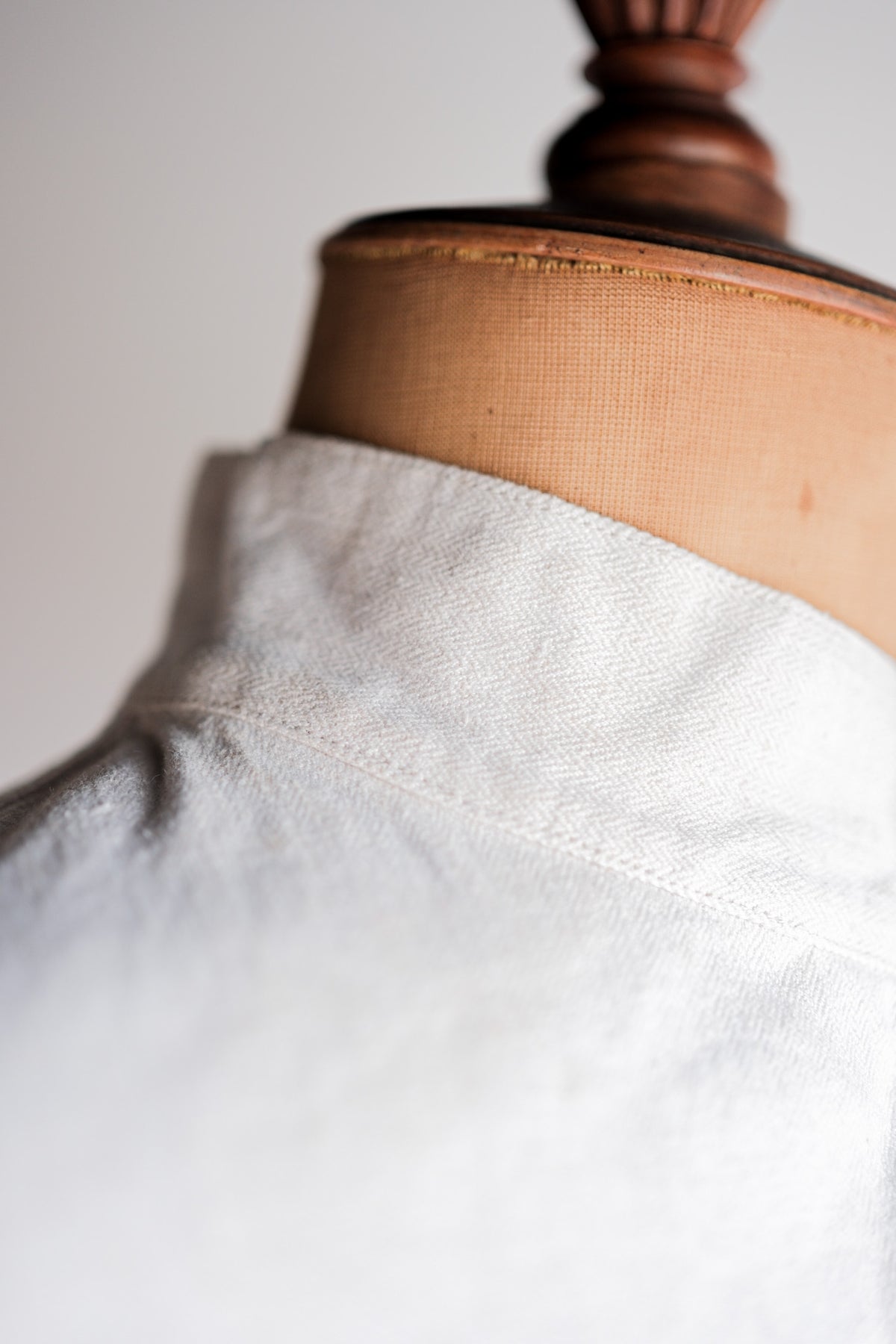
Estimated 1940s Kriegsmarine Drillich Herringbone Twill Linen Smock.
A special acquisition.
The Kriegsmarine, or German Navy, was the naval branch of the Reichswehr during the Nazi era, established in 1935 and active until 1945.
It served as one of three military divisions of the National Socialist German state, alongside the Army and Air Force.
We present the "Drillich HBT Linen Smock," a working garment worn by personnel on the decks of Kriegsmarine vessels.
The Kriegsmarine's Drillich Jacket is said to have been produced with reference to the French Bourgeron jacket, and both detail and fabric character bear striking resemblance.
Like its French counterpart, the Drillich appears in both front-buttoned and pullover configurations, with fabrics ranging from pure cotton to cotton-linen blends to pure linen.
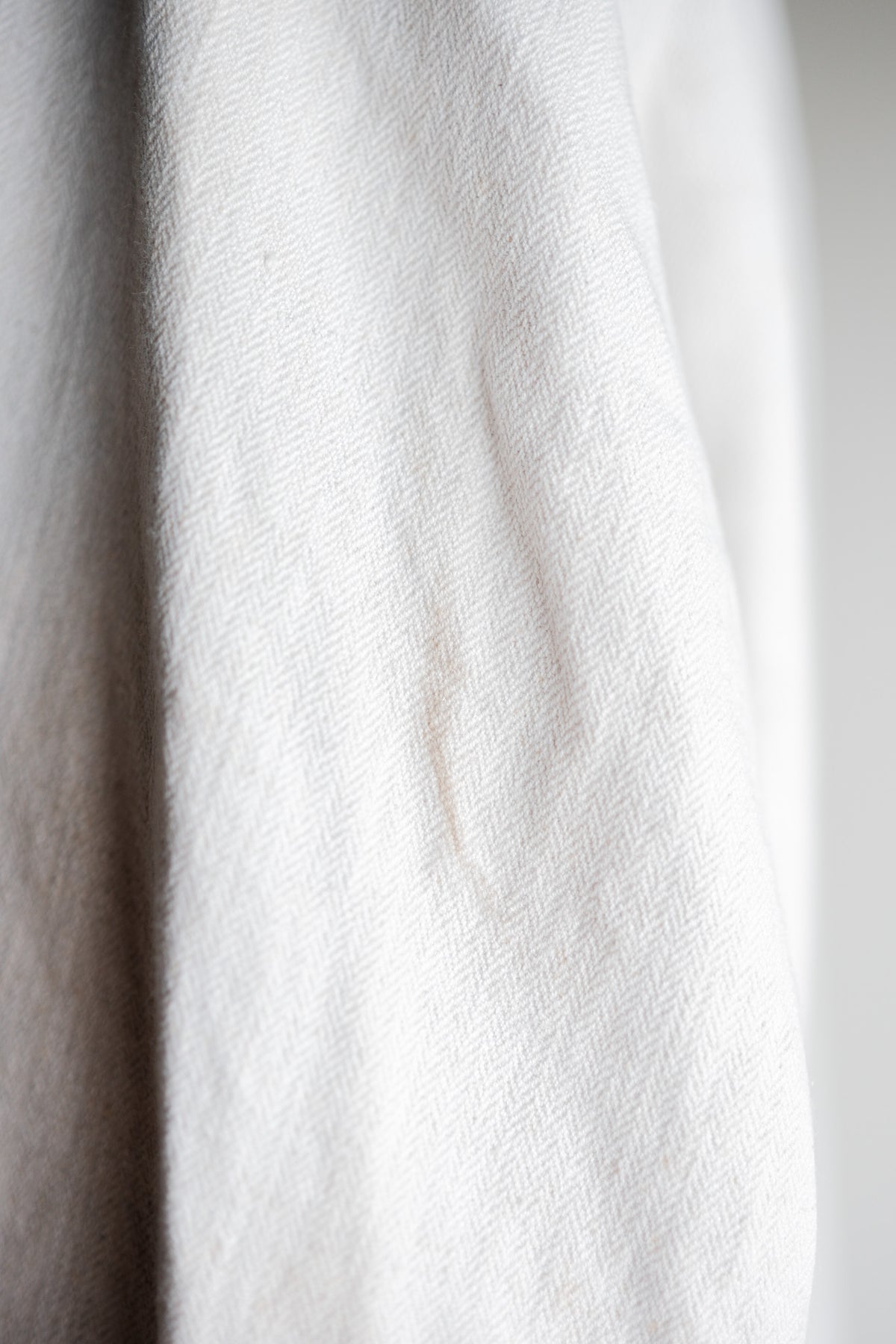
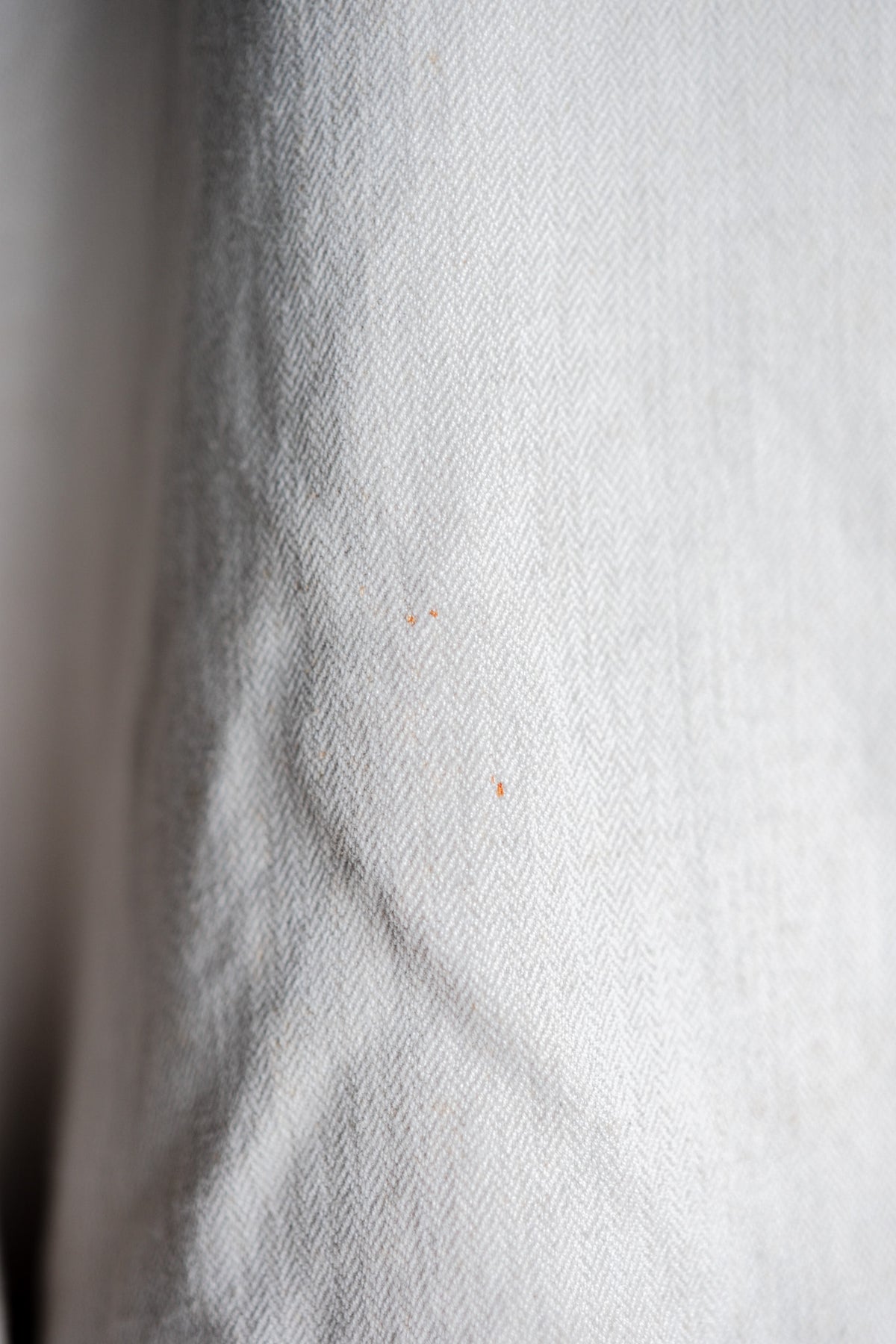
The substantial weight and distinctive drape of the fabric—a quality that rivals French linen—accounts for much of its appeal.
Linen of this era was demonstrably superior, evident even to the untrained touch, and is now considered impossible to replicate. The fabric alone possesses considerable value.
The Drillich Jacket remains scarce in the market.
White working garments and training wear of this type were first introduced by the Königlich Preußische Marine (Royal Prussian Navy), which operated from 1701 to 1867, then carried forward with minor modifications through the Kaiserliche Marine (Imperial German Navy, 1871–1918), and finally inherited by the Kriegsmarine.
This example is a pullover smock, a configuration increasingly sought after and commanding rising prices among collectors of Kriegsmarine artifacts.
An écru variant exists in identical construction, though the present example is rendered in white.
Two front buttons, a patch pocket placed only on the left chest, and a drawcord for hem adjustment (absent on this piece)—the detailing is simple and austere.
Despite its military origin, the design possesses a timelessness that resonates with contemporary sensibilities.
No size marking is visible, though proportions suggest a Japanese size S to M.
The actual measurements indicate this is a golden size for Japanese body types, likely to suit a wide range of frames.
It will wear equally well fitted or oversized.
There is evidence of use—minor soiling and the absent drawcord—yet no significant damage that would impair wearing. The garment remains very serviceable.
Faint period stamps remain visible on the interior.
Kriegsmarine items have drawn increased attention in recent years, though examples remain exceptionally scarce. Supply has not kept pace with demand.
A devoted collector base ensures these pieces rarely change hands. This is, without question, a coveted archive piece.
Equally valid as everyday wear, as a collection object, or as design reference.
Kriegsmarine items arrive at our shop rarely. Should you be searching, this opportunity merits consideration.