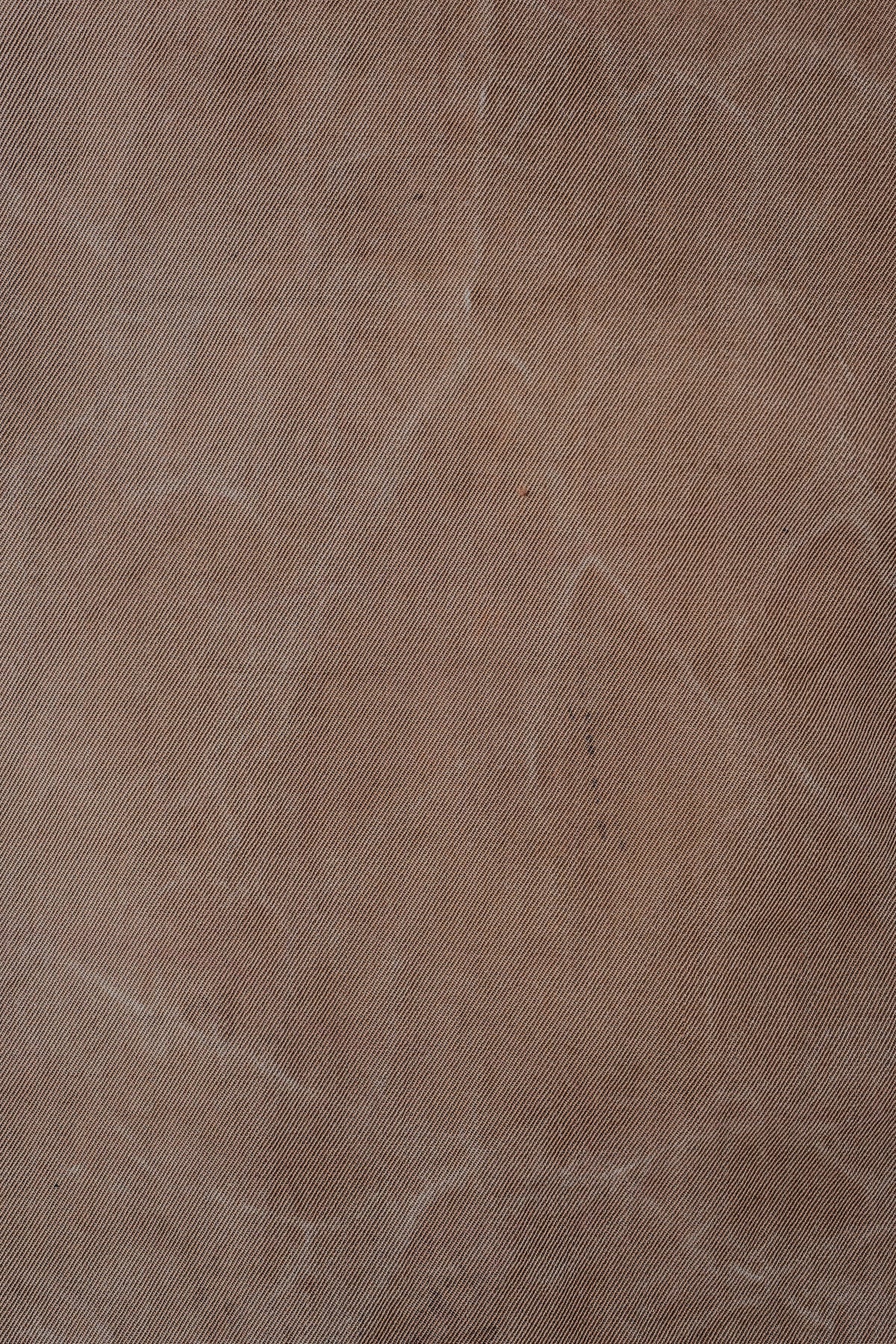
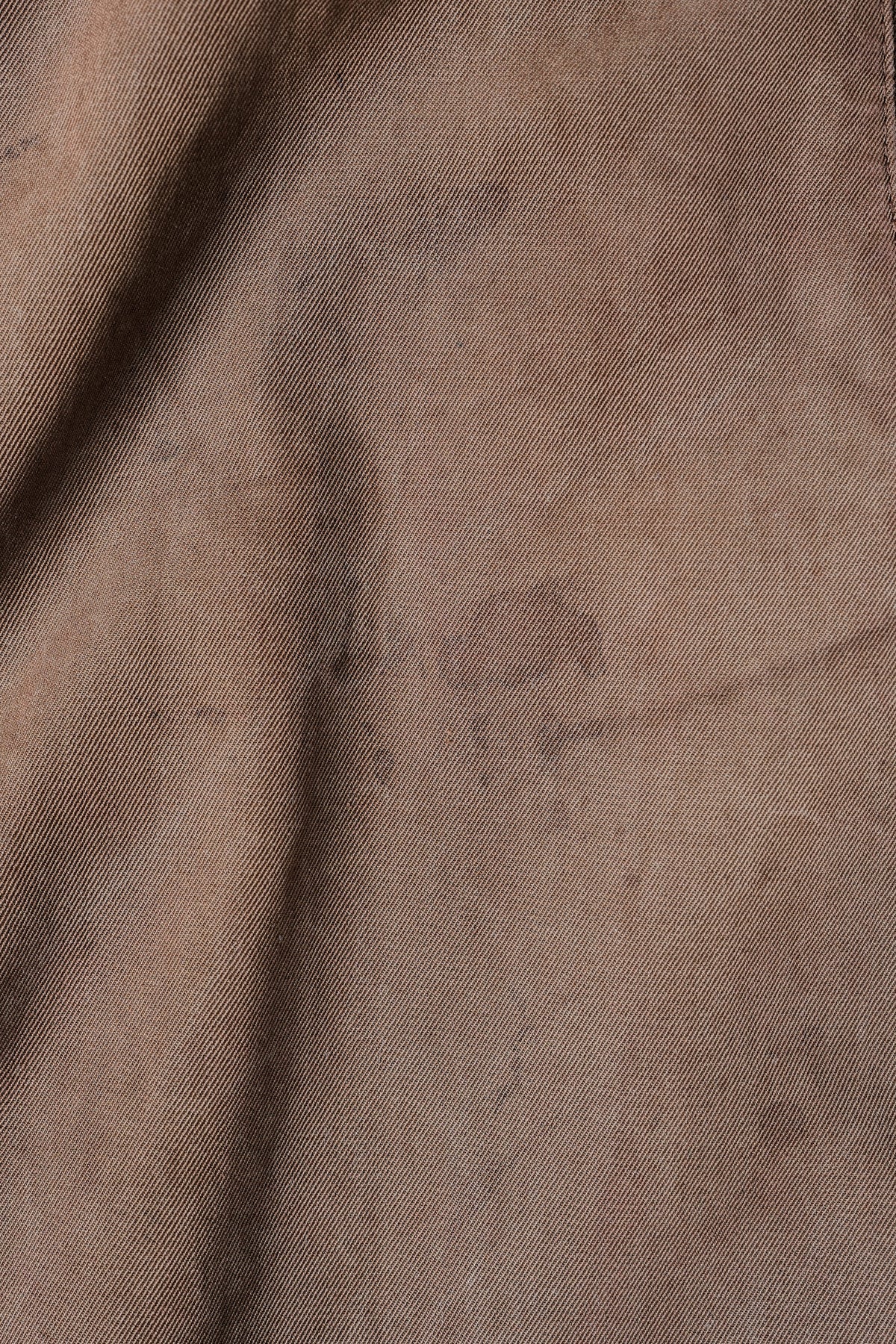
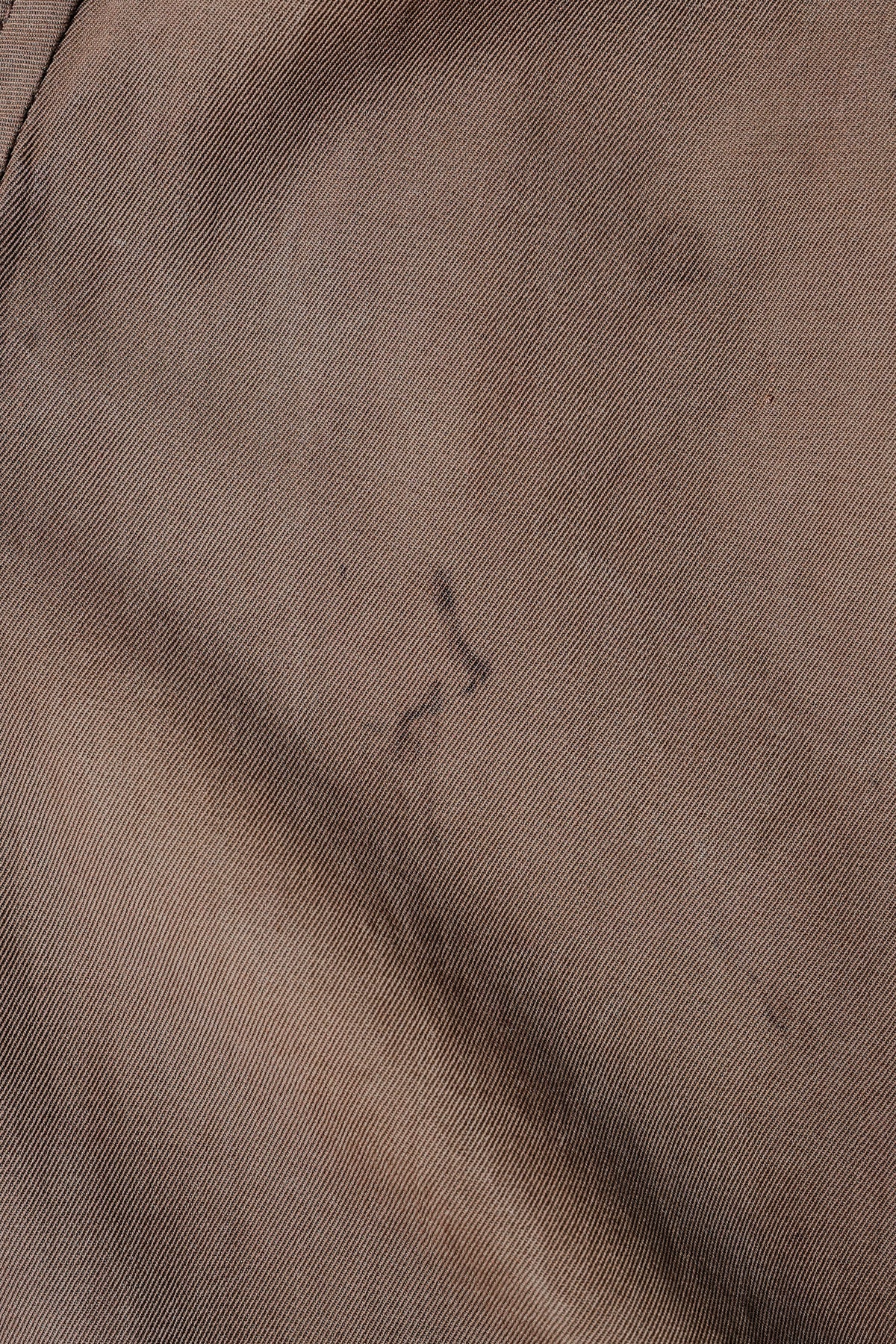
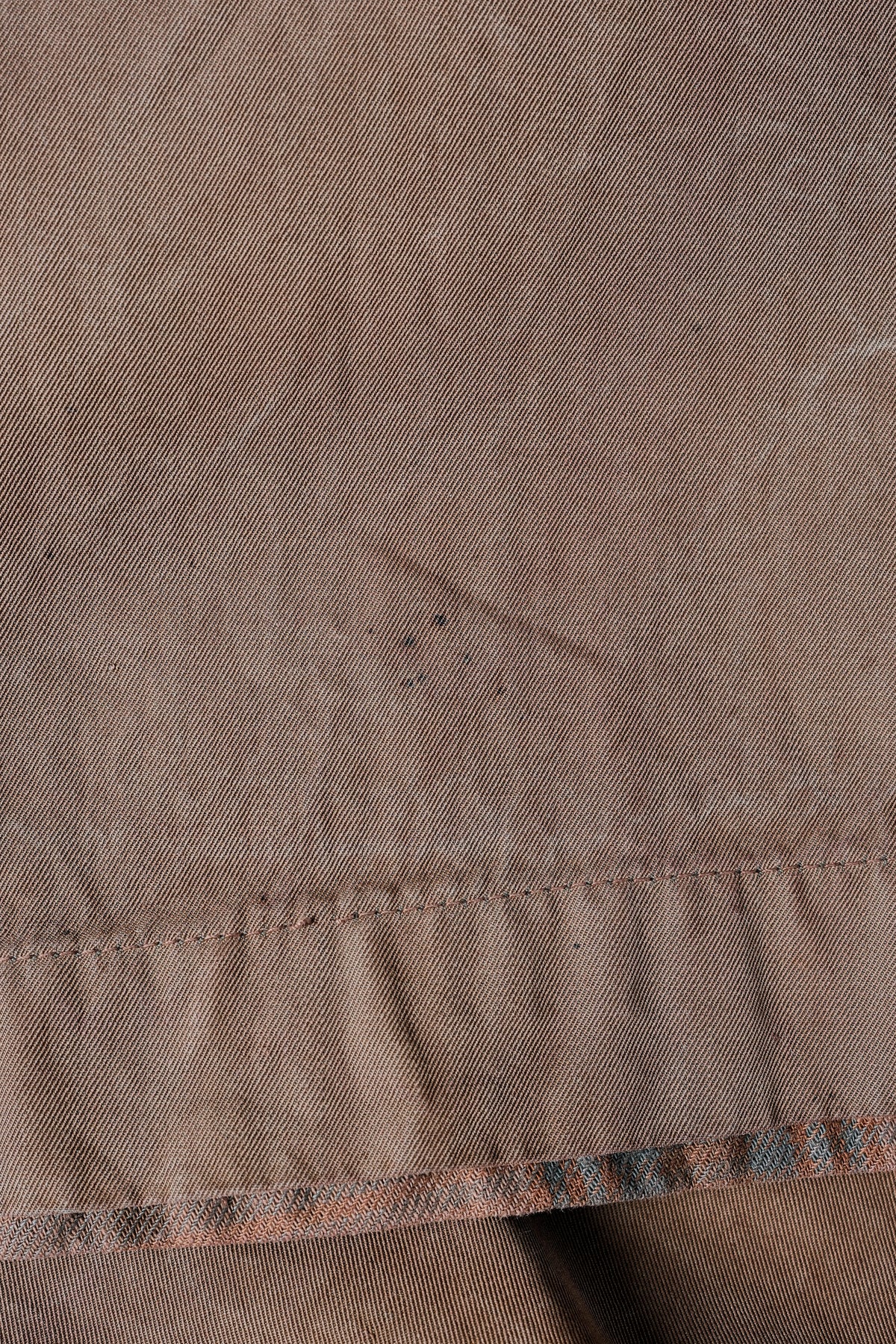
Estimated 1940s, Burberrys Paris single raglan balmacaan coat.
A superb acquisition.
French manufacture.
Burberrys, established in 1856 in Basingstoke, England, by Thomas Burberry, stands as a cornerstone of British heritage in outerwear.
In 1879, observing how farmers protected their garments with simple overcoats, the house innovated a revolutionary fabric—Gabardine—distinguished by its durability and water resistance.
The Tielocken, patented in 1912, would become an enduring silhouette.
In 1901, the Equestrian Knight logo emerged from public competition—a mounted knight in repose, embodying classical refinement and unwavering commitment to excellence.
The knight's raised banner bears the inscription Prorsum—"forward"—symbolising the house's progressive spirit and relentless innovation.
By 1924, the now-iconic Burberry check first appeared as lining in Burberrys's rainwear, a distinction it maintains to this day.
This French example commands considerable market regard, sought after by discerning collectors.
Burberrys Paris—made exclusively for French clientele of considerable means.
French origin alone confers rarity; the one-piece sleeve elevates this piece into the realm of the exceptional.
Conventional Burberrys coats employ either set-in or two-piece raglan sleeves. Without precise sizing, the shoulder seam often sits awkwardly, creating an unintended padded effect.
By contrast, the one-piece sleeve is universally praised for its elegant shoulder line—a singular continuity of fabric. Standard raglan construction requires two seams: one at the top of the sleeve, another beneath the arm. The one-piece construction, wrapping the arm in continuous fabric, requires only one seam at the underarm.
The difference appears marginal; the effect is profound.
Worn generously, it achieves the contemporary ease of oversized proportion without sacrifice of form—a quality that explains its continued desirability.
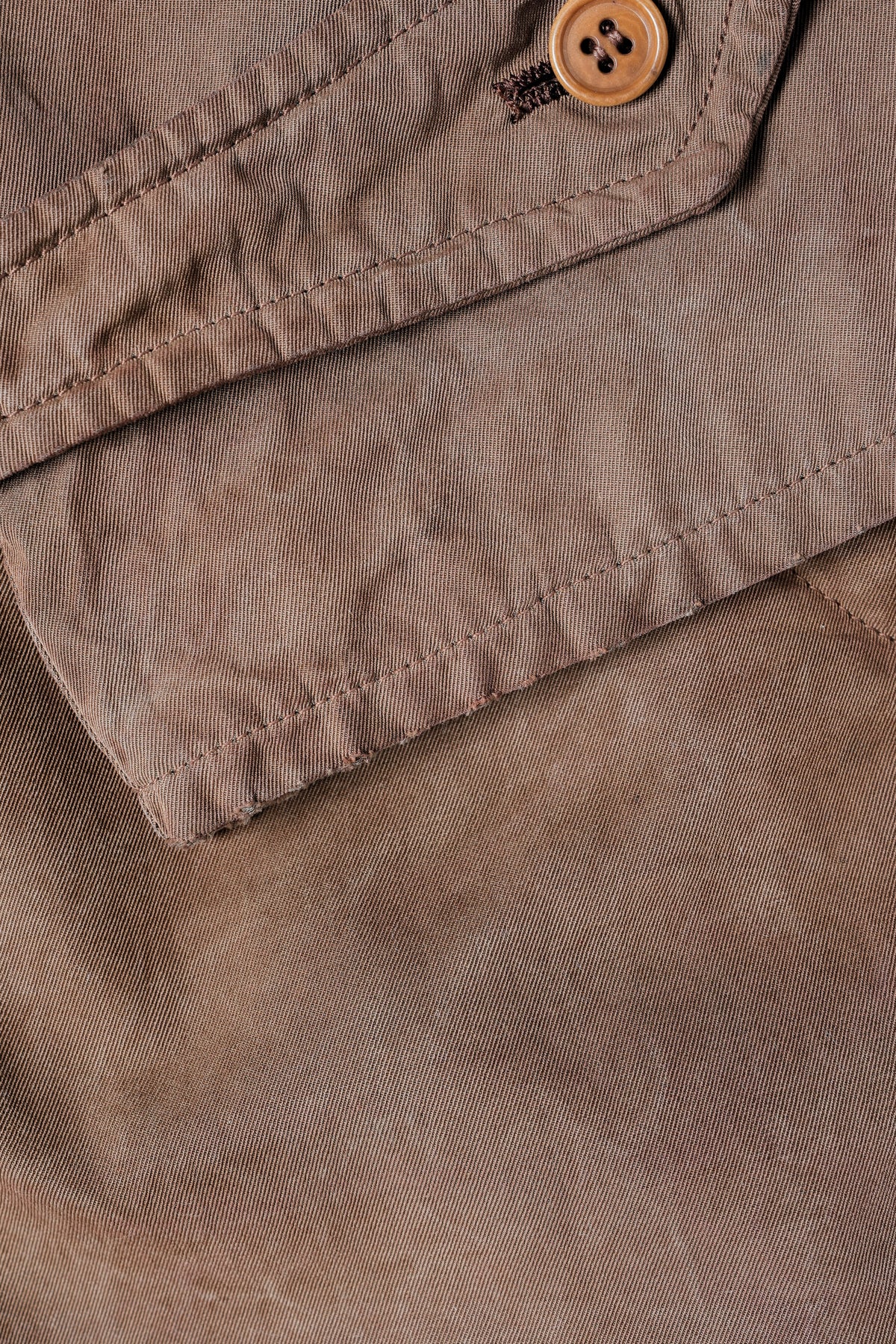
The front closure employs a concealed button placket—a detail that provides both visual refinement and functional advantage. The doubled fabric layer resists wind penetration whilst protecting the buttons from external wear.
The effect of a raised collar carries its own particular resonance.
The interior neck bears a branded label reading Burberrys Paris, confirming French manufacture.
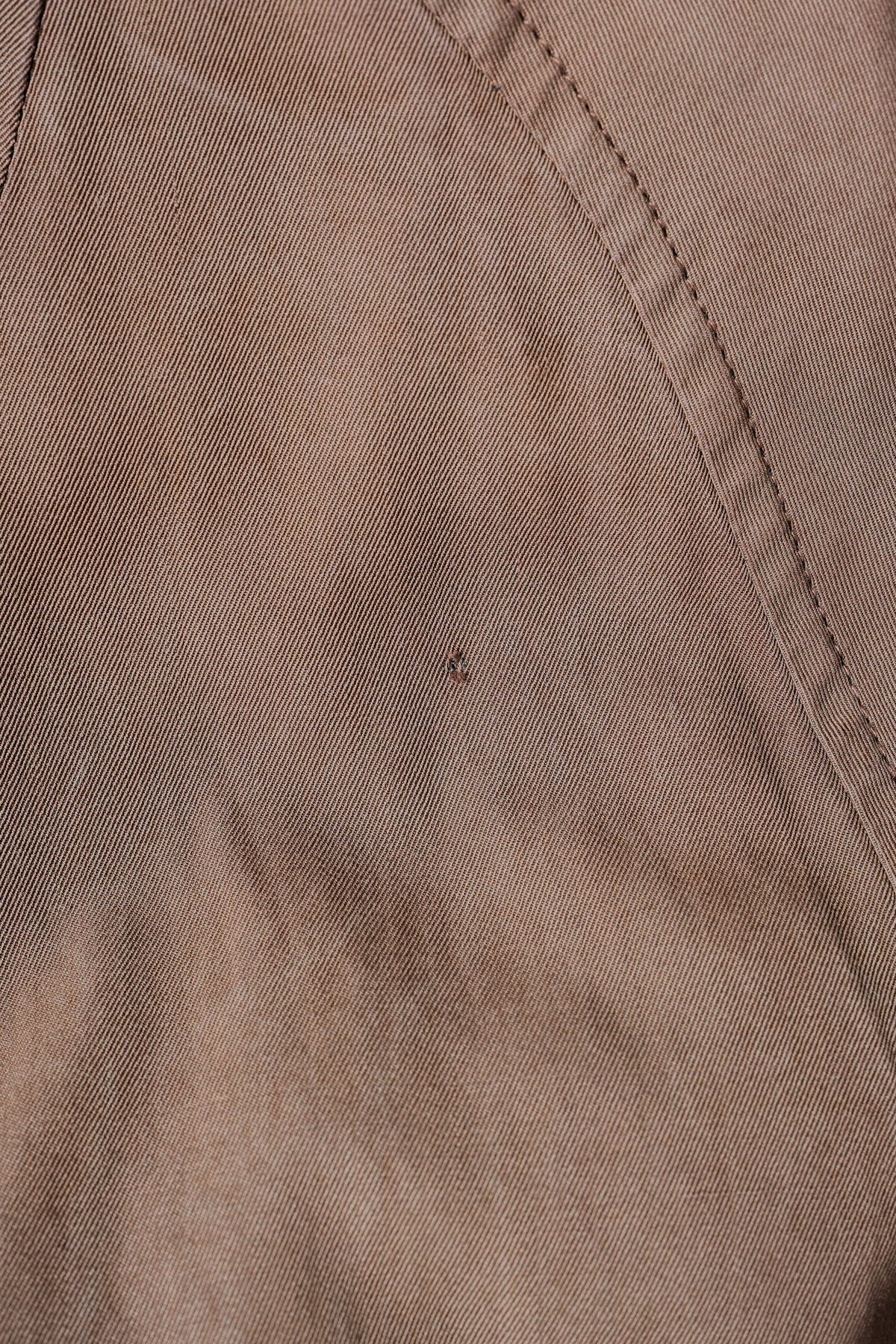
This coat has been constructed throughout in cotton, one hundred percent.
Pure cotton demonstrates a crispness of hand and visual presence that cotton-synthetic blends cannot achieve.
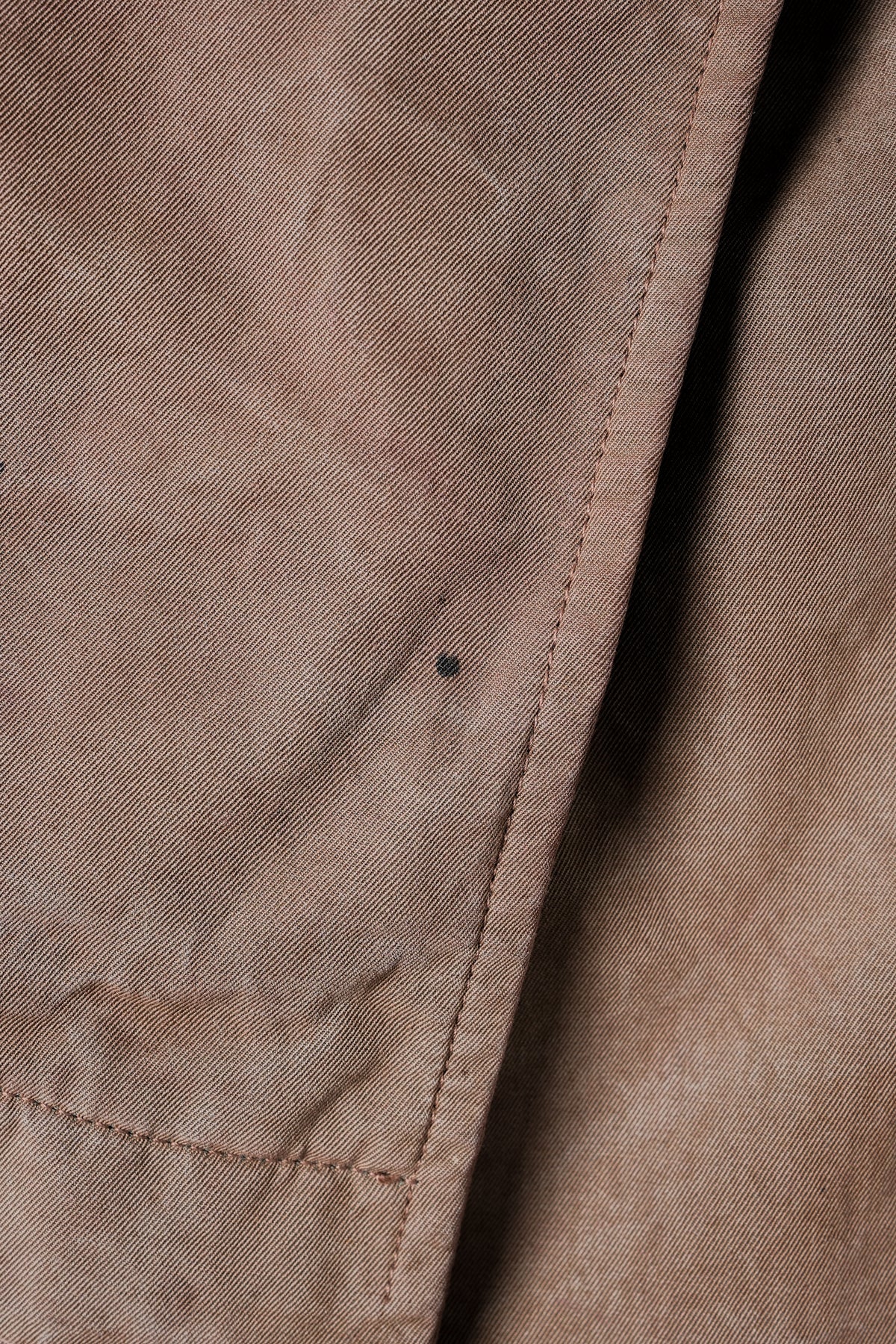
Cotton of this construction develops character through wear. The subtle surface patina that accumulates appears across the piece naturally.
The coat presents in brown, achieved through overdyeing.
The current tone reads as a warm, slightly reddish brown—suggestive of radicchio—with the patina of age woven throughout. The effect is entirely compelling.
I ordinarily resist pieces where the original finish has been altered through redyeing; this example proved irresistible. The coat already possesses considerable atmosphere, yet its future evolution remains uncertain and filled with possibility—qualities that speak to potential.
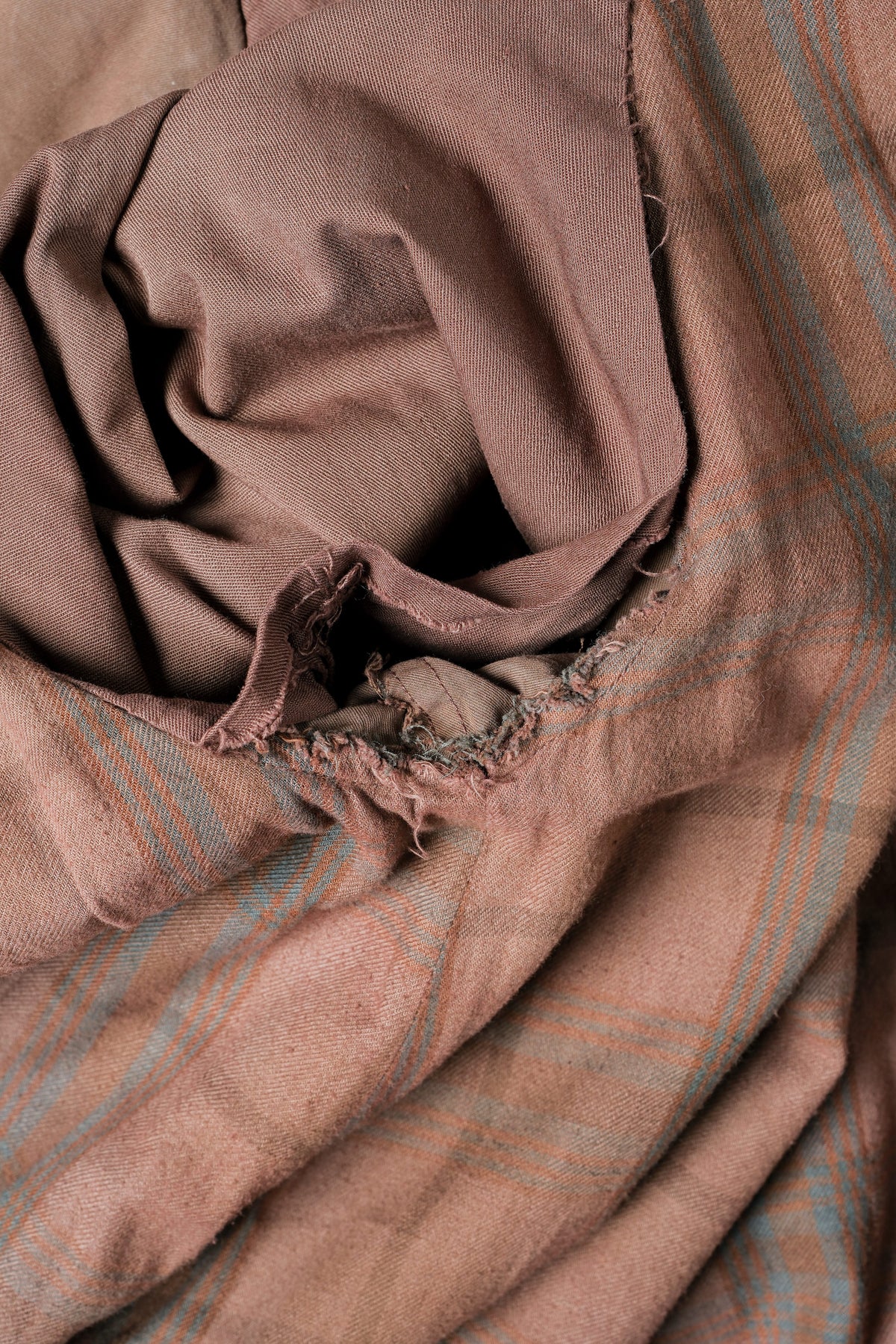
The lining eschews the recognisable Burberry check, instead employing a subtle checked pattern in tones carefully selected to complement the outer fabric—restrained, worldly, without excess.
No size marking is present, though proportions suggest an equivalent to Japanese medium.
The measurements correspond to what might be considered a golden size for Japanese proportions—accessible to varied frames.
Surface wear—subtle fading, marks of use, thread looseness, minor holes, button loss—is evident throughout, as expected of a coat of this age and history. No structural damage impedes wearing.
When seeking a vintage coat, Burberrys emerges as the first and last consideration.
This is not an object money alone secures. Future availability cannot be assured.
As wardrobe foundation or collection piece, it stands without compromise.
ADD TO CART

![[~40's]Vintage Burberrys Paris Single Raglan Balmacaan Coat C100 for Ladies "Overdyed" "Made in France"](http://vieuxetnouveau-shop.com/cdn/shop/files/DSCF7303.jpg?v=1731411746&width=2400)
![[~40's]Vintage Burberrys Paris Single Raglan Balmacaan Coat C100 for Ladies "Overdyed" "Made in France"](http://vieuxetnouveau-shop.com/cdn/shop/files/DSCF7305.jpg?v=1731411746&width=2400)
![[~40's]Vintage Burberrys Paris Single Raglan Balmacaan Coat C100 for Ladies "Overdyed" "Made in France"](http://vieuxetnouveau-shop.com/cdn/shop/files/DSCF7325_2c37998d-0e12-4666-b065-fd3024e24c82.jpg?v=1731411746&width=2400)
![[~40's]Vintage Burberrys Paris Single Raglan Balmacaan Coat C100 for Ladies "Overdyed" "Made in France"](http://vieuxetnouveau-shop.com/cdn/shop/files/DSCF7310_1d8becbd-23c8-4325-9140-28f2439781e5.jpg?v=1731411746&width=2400)
![[~40's]Vintage Burberrys Paris Single Raglan Balmacaan Coat C100 for Ladies "Overdyed" "Made in France"](http://vieuxetnouveau-shop.com/cdn/shop/files/DSCF7312_e8d1845a-440d-494a-8425-0dfad96a9792.jpg?v=1731411746&width=2400)
![[~40's]Vintage Burberrys Paris Single Raglan Balmacaan Coat C100 for Ladies "Overdyed" "Made in France"](http://vieuxetnouveau-shop.com/cdn/shop/files/DSCF7313.jpg?v=1731411746&width=2400)
![[~40's]Vintage Burberrys Paris Single Raglan Balmacaan Coat C100 for Ladies "Overdyed" "Made in France"](http://vieuxetnouveau-shop.com/cdn/shop/files/DSCF7327.jpg?v=1731411746&width=2400)
![[~40's]Vintage Burberrys Paris Single Raglan Balmacaan Coat C100 for Ladies "Overdyed" "Made in France"](http://vieuxetnouveau-shop.com/cdn/shop/files/DSCF7315_88b7fbd5-e4f3-489b-be38-22652dc2e78b.jpg?v=1731411746&width=2400)
![[~40's]Vintage Burberrys Paris Single Raglan Balmacaan Coat C100 for Ladies "Overdyed" "Made in France"](http://vieuxetnouveau-shop.com/cdn/shop/files/DSCF7316.jpg?v=1731411746&width=2400)
![[~40's]Vintage Burberrys Paris Single Raglan Balmacaan Coat C100 for Ladies "Overdyed" "Made in France"](http://vieuxetnouveau-shop.com/cdn/shop/files/DSCF7317.jpg?v=1731411746&width=2400)
![[~40's]Vintage Burberrys Paris Single Raglan Balmacaan Coat C100 for Ladies "Overdyed" "Made in France"](http://vieuxetnouveau-shop.com/cdn/shop/files/DSCF7306_43482ace-b17e-40d0-b64e-ebb43f0e8324.jpg?v=1731411746&width=2400)
![[~40's]Vintage Burberrys Paris Single Raglan Balmacaan Coat C100 for Ladies "Overdyed" "Made in France"](http://vieuxetnouveau-shop.com/cdn/shop/files/DSCF7307_0680eeab-8306-4642-809b-c6c2a16f212e.jpg?v=1731411746&width=2400)
![[~40's]Vintage Burberrys Paris Single Raglan Balmacaan Coat C100 for Ladies "Overdyed" "Made in France"](http://vieuxetnouveau-shop.com/cdn/shop/files/DSCF7319_94402c5a-f165-4e04-af1c-e6553f34074b.jpg?v=1731411746&width=2400)
![[~40's]Vintage Burberrys Paris Single Raglan Balmacaan Coat C100 for Ladies "Overdyed" "Made in France"](http://vieuxetnouveau-shop.com/cdn/shop/files/DSCF7318.jpg?v=1731411746&width=2400)
![[~40's]Vintage Burberrys Paris Single Raglan Balmacaan Coat C100 for Ladies "Overdyed" "Made in France"](http://vieuxetnouveau-shop.com/cdn/shop/files/DSCF7322_3912a8ea-40fc-4638-9f92-c734d5a2dec1.jpg?v=1731411746&width=2400)
![[~40's]Vintage Burberrys Paris Single Raglan Balmacaan Coat C100 for Ladies "Overdyed" "Made in France"](http://vieuxetnouveau-shop.com/cdn/shop/files/DSCF7320.jpg?v=1731411746&width=2400)
![[~40's]Vintage Burberrys Paris Single Raglan Balmacaan Coat C100 for Ladies "Overdyed" "Made in France"](http://vieuxetnouveau-shop.com/cdn/shop/files/DSCF7321_198dd8ed-f388-4a1b-8e00-128574daff3e.jpg?v=1731411746&width=2400)
![[~40's]Vintage Burberrys Paris Single Raglan Balmacaan Coat C100 for Ladies "Overdyed" "Made in France"](http://vieuxetnouveau-shop.com/cdn/shop/files/DSCF7314_0a433d8d-ca2e-41a5-8b85-f6581ffe1bd9.jpg?v=1731411746&width=2400)
![[~40's]Vintage Burberrys Paris Single Raglan Balmacaan Coat C100 for Ladies "Overdyed" "Made in France"](http://vieuxetnouveau-shop.com/cdn/shop/files/DSCF7328_9f6262d6-1fa7-4623-b172-a7056f4edfd7.jpg?v=1731411746&width=2400)
![[~40's]Vintage Burberrys Paris Single Raglan Balmacaan Coat C100 for Ladies "Overdyed" "Made in France"](http://vieuxetnouveau-shop.com/cdn/shop/files/DSCF7362.jpg?v=1731411746&width=2400)
![[~40's]Vintage Burberrys Paris Single Raglan Balmacaan Coat C100 for Ladies "Overdyed" "Made in France"](http://vieuxetnouveau-shop.com/cdn/shop/files/DSCF7358.jpg?v=1731411746&width=2400)
![[~40's]Vintage Burberrys Paris Single Raglan Balmacaan Coat C100 for Ladies "Overdyed" "Made in France"](http://vieuxetnouveau-shop.com/cdn/shop/files/DSCF7359_6e110666-52c5-4f07-8b6f-f7393a4b945f.jpg?v=1731411746&width=2400)
![[~40's]Vintage Burberrys Paris Single Raglan Balmacaan Coat C100 for Ladies "Overdyed" "Made in France"](http://vieuxetnouveau-shop.com/cdn/shop/files/DSCF7001.jpg?v=1731411746&width=2400)
![[~40's]Vintage Burberrys Paris Single Raglan Balmacaan Coat C100 for Ladies "Overdyed" "Made in France"](http://vieuxetnouveau-shop.com/cdn/shop/files/DSCF7004_6379c34b-2008-44f3-8328-d43009854b97.jpg?v=1731411746&width=2400)
![[~40's]Vintage Burberrys Paris Single Raglan Balmacaan Coat C100 for Ladies "Overdyed" "Made in France"](http://vieuxetnouveau-shop.com/cdn/shop/files/DSCF7011_fbe2bdf9-a01a-4829-8637-c7ac8da5e94f.jpg?v=1731411746&width=2400)
![[~40's]Vintage Burberrys Paris Single Raglan Balmacaan Coat C100 for Ladies "Overdyed" "Made in France"](http://vieuxetnouveau-shop.com/cdn/shop/files/DSCF7012.jpg?v=1731411746&width=2400)
![[~40's]Vintage Burberrys Paris Single Raglan Balmacaan Coat C100 for Ladies "Overdyed" "Made in France"](http://vieuxetnouveau-shop.com/cdn/shop/files/DSCF7007_70f175d2-4618-40c7-93ed-13af17fff859.jpg?v=1731411746&width=2400)
![[~40's]Vintage Burberrys Paris Single Raglan Balmacaan Coat C100 for Ladies "Overdyed" "Made in France"](http://vieuxetnouveau-shop.com/cdn/shop/files/DSCF7910_bd2b12c6-961e-4a7b-813d-a51ebe376bcc.jpg?v=1731675079&width=2400)
![[~40's]Vintage Burberrys Paris Single Raglan Balmacaan Coat C100 for Ladies "Overdyed" "Made in France"](http://vieuxetnouveau-shop.com/cdn/shop/files/DSCF7917_0aaf7d4b-aee8-4bdb-b325-2a077d23b83d.jpg?v=1731675079&width=2400)
![[~40's]Vintage Burberrys Paris Single Raglan Balmacaan Coat C100 for Ladies "Overdyed" "Made in France"](http://vieuxetnouveau-shop.com/cdn/shop/files/DSCF7918_33816d9d-dff4-4e44-a771-f2b0e696c931.jpg?v=1731675079&width=2400)
![[~40's]Vintage Burberrys Paris Single Raglan Balmacaan Coat C100 for Ladies "Overdyed" "Made in France"](http://vieuxetnouveau-shop.com/cdn/shop/files/DSCF7919_e1ca3c40-9b05-495b-ad49-36f481188073.jpg?v=1731675079&width=2400)
![[~40's]Vintage Burberrys Paris Single Raglan Balmacaan Coat C100 for Ladies "Overdyed" "Made in France"](http://vieuxetnouveau-shop.com/cdn/shop/files/DSCF7911_d0988a20-5476-4a9b-a03c-a23aed241251.jpg?v=1731675079&width=2400)
![[~40's]Vintage Burberrys Paris Single Raglan Balmacaan Coat C100 for Ladies "Overdyed" "Made in France"](http://vieuxetnouveau-shop.com/cdn/shop/files/DSCF7914_6a5680a6-ed43-47fa-b815-dda6eb1e7cfd.jpg?v=1731675079&width=2400)
![[~40's]Vintage Burberrys Paris Single Raglan Balmacaan Coat C100 for Ladies "Overdyed" "Made in France"](http://vieuxetnouveau-shop.com/cdn/shop/files/DSCF7915_42ffc9d3-fead-44c4-b809-f9f6d353adba.jpg?v=1731675079&width=2400)
![[~40's]Vintage Burberrys Paris Single Raglan Balmacaan Coat C100 for Ladies "Overdyed" "Made in France"](http://vieuxetnouveau-shop.com/cdn/shop/files/DSCF7912_83cc0aab-124d-46b5-a07a-fa091717db2c.jpg?v=1731675079&width=2400)
![[~40's]Vintage Burberrys Paris Single Raglan Balmacaan Coat C100 for Ladies "Overdyed" "Made in France"](http://vieuxetnouveau-shop.com/cdn/shop/files/DSCF7909_0ca7972e-b4e0-42d4-aeb0-c9b1179714fd.jpg?v=1731675079&width=2400)
![[~40's]Vintage Burberrys Paris Single Raglan Balmacaan Coat C100 for Ladies "Overdyed" "Made in France"](http://vieuxetnouveau-shop.com/cdn/shop/files/DSCF7908_f0fc82ea-c2dd-40cf-8d80-d08f10ac5fc6.jpg?v=1731675079&width=2400)
![[~40's]Vintage Burberrys Paris Single Raglan Balmacaan Coat C100 for Ladies "Overdyed" "Made in France"](http://vieuxetnouveau-shop.com/cdn/shop/files/DSCF7906_655820a5-9cf9-42a8-8215-3730ee7b71ea.jpg?v=1731675079&width=2400)
![[~40's]Vintage Burberrys Paris Single Raglan Balmacaan Coat C100 for Ladies "Overdyed" "Made in France"](http://vieuxetnouveau-shop.com/cdn/shop/files/DSCF7907_d2e065fc-ceff-4792-b558-2cd8e4853ba9.jpg?v=1731675079&width=2400)
![[~40's]Vintage Burberrys Paris Single Raglan Balmacaan Coat C100 for Ladies "Overdyed" "Made in France"](http://vieuxetnouveau-shop.com/cdn/shop/files/DSCF7923_bea07e8e-b3bf-48ef-9251-5bcb91c9b61e.jpg?v=1731675079&width=2400)
![[~40's]Vintage Burberrys Paris Single Raglan Balmacaan Coat C100 for Ladies "Overdyed" "Made in France"](http://vieuxetnouveau-shop.com/cdn/shop/files/DSCF7927_bb75193f-1c13-4b37-b748-a77fcea9e3a4.jpg?v=1731675079&width=2400)
![[~40's]Vintage Burberrys Paris Single Raglan Balmacaan Coat C100 for Ladies "Overdyed" "Made in France"](http://vieuxetnouveau-shop.com/cdn/shop/files/DSCF7928_947d7cc0-25a2-4971-8f39-b103036ea66a.jpg?v=1731675079&width=2400)
![[~40's]Vintage Burberrys Paris Single Raglan Balmacaan Coat C100 for Ladies "Overdyed" "Made in France"](http://vieuxetnouveau-shop.com/cdn/shop/files/DSCF7920_d43d4ed9-93b9-475b-b009-f602e562fd69.jpg?v=1731675079&width=2400)
![[~40's]Vintage Burberrys Paris Single Raglan Balmacaan Coat C100 for Ladies "Overdyed" "Made in France"](http://vieuxetnouveau-shop.com/cdn/shop/files/DSCF7916_dfb04a3f-1f60-450b-88da-9aee6b99cf52.jpg?v=1731675079&width=2400)
![[~40's]Vintage Burberrys Paris Single Raglan Balmacaan Coat C100 for Ladies "Overdyed" "Made in France"](http://vieuxetnouveau-shop.com/cdn/shop/files/DSCF7903_2a64a28b-ca48-4907-a0ad-ddbc8476faa5.jpg?v=1731675079&width=2400)
![[~40's]Vintage Burberrys Paris Single Raglan Balmacaan Coat C100 for Ladies "Overdyed" "Made in France"](http://vieuxetnouveau-shop.com/cdn/shop/files/DSCF7921_7b2d82cb-f54b-4882-a63b-fff6978c6579.jpg?v=1731675079&width=2400)
![[~40's]Vintage Burberrys Paris Single Raglan Balmacaan Coat C100 for Ladies "Overdyed" "Made in France"](http://vieuxetnouveau-shop.com/cdn/shop/files/DSCF7922_45238714-62b6-4a46-8527-c566a4eef471.jpg?v=1731675079&width=2400)