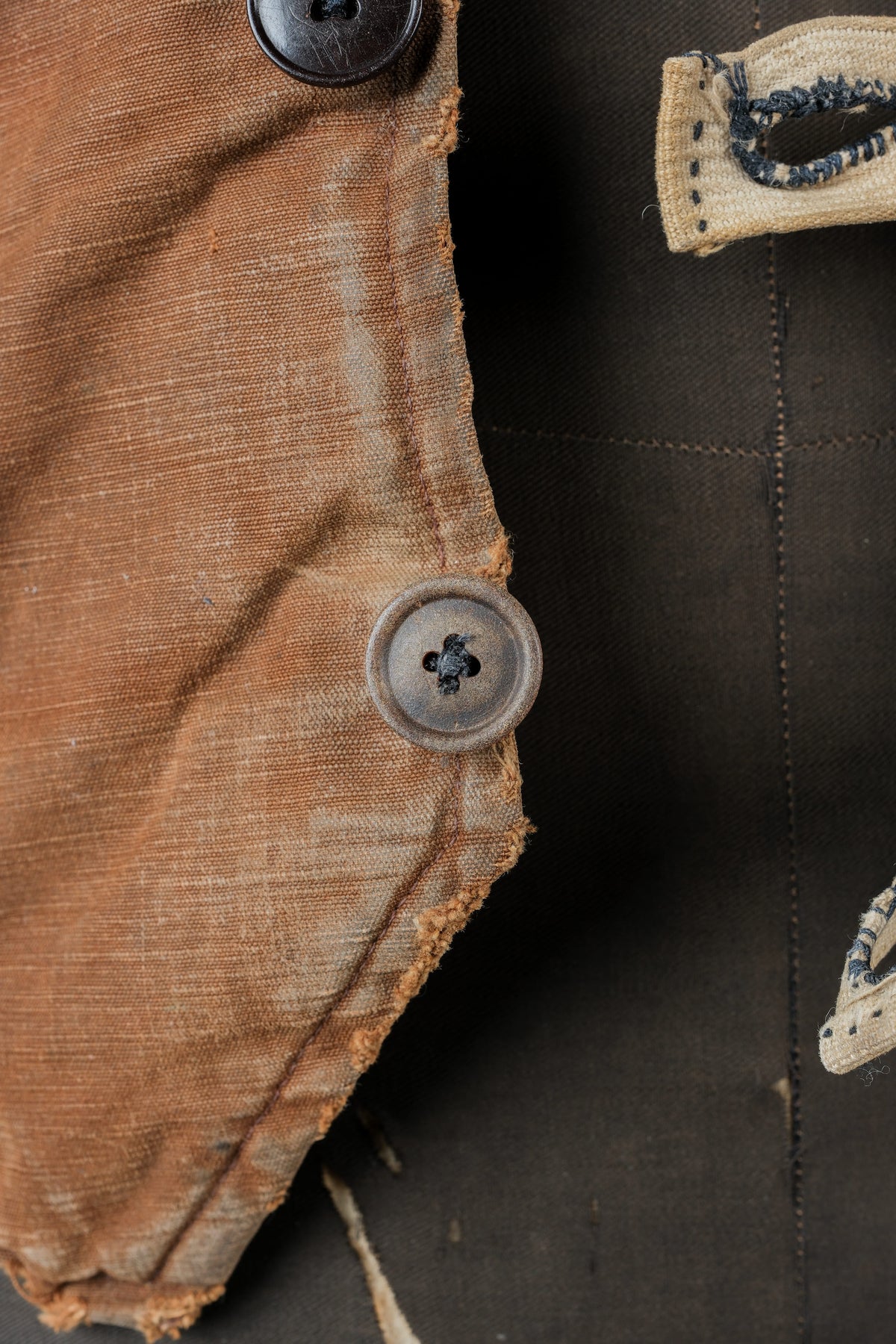
Circa 1940s French Resistance Cotton Canvas Fur-Lined Winter Vest.
A special acquisition.
French Resistance refers to the collective and resistance movement that fought against Nazi occupation and the Vichy regime—the collaborationist government—during World War II in France.
The Resistance was composed of groups with diverse political backgrounds.
Its principal organizations included the FFI (French Forces of the Interior), led by Communists, and the Free French organized by General Charles de Gaulle in London.
These organizations, at times cooperating and at times at odds, stood unified against their common adversary: Nazi Germany.
The activities of the Resistance were extensive, encompassing intelligence gathering and transmission, sabotage, propaganda, the rescue of Jews and prisoners of war, and armed combat.
The resistance movement against the Vichy regime, both within France and abroad, played a critical role in weakening German control and securing French liberation.
Notably, the Resistance assumed a leading role in the liberation of Paris in August 1944.
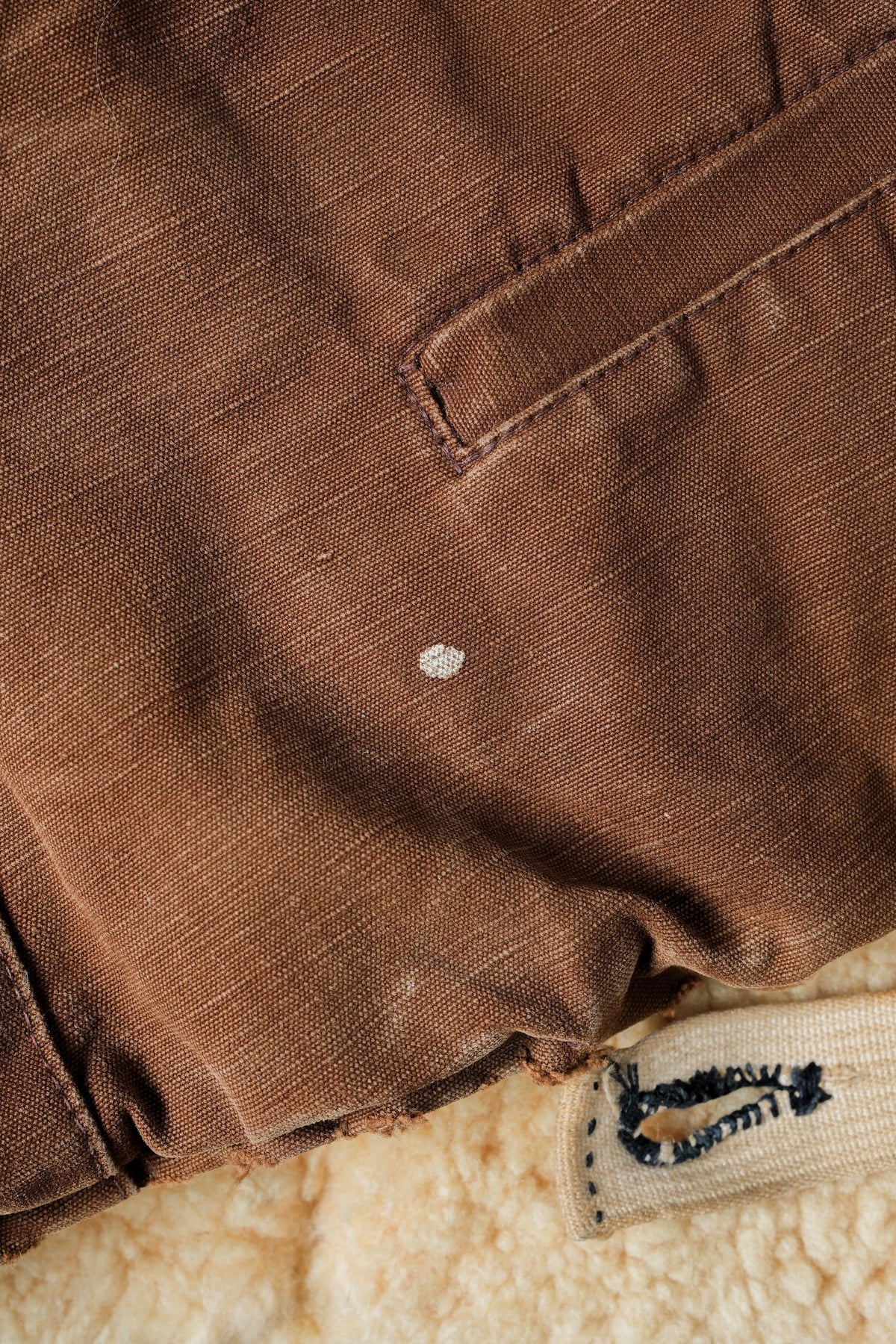
We present a Cotton Canvas Fur-Lined Winter Vest—worn by members of the French Resistance during the winter months.
The design is remarkably austere: four front buttons and modest pockets at the hem, nothing more.
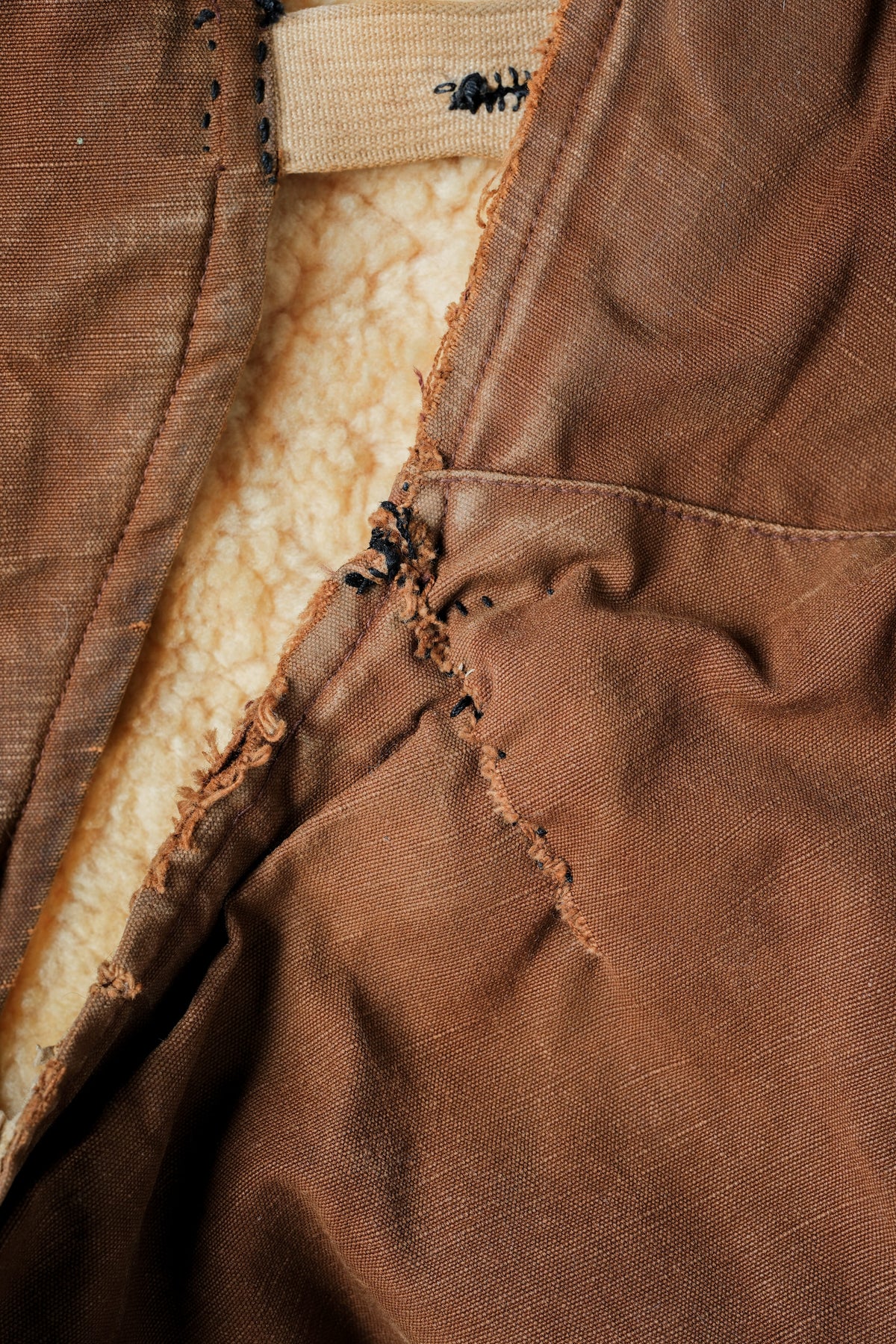
The buttonholes themselves are entirely hand-stitched—a detail that speaks volumes to those who appreciate vintage garments.
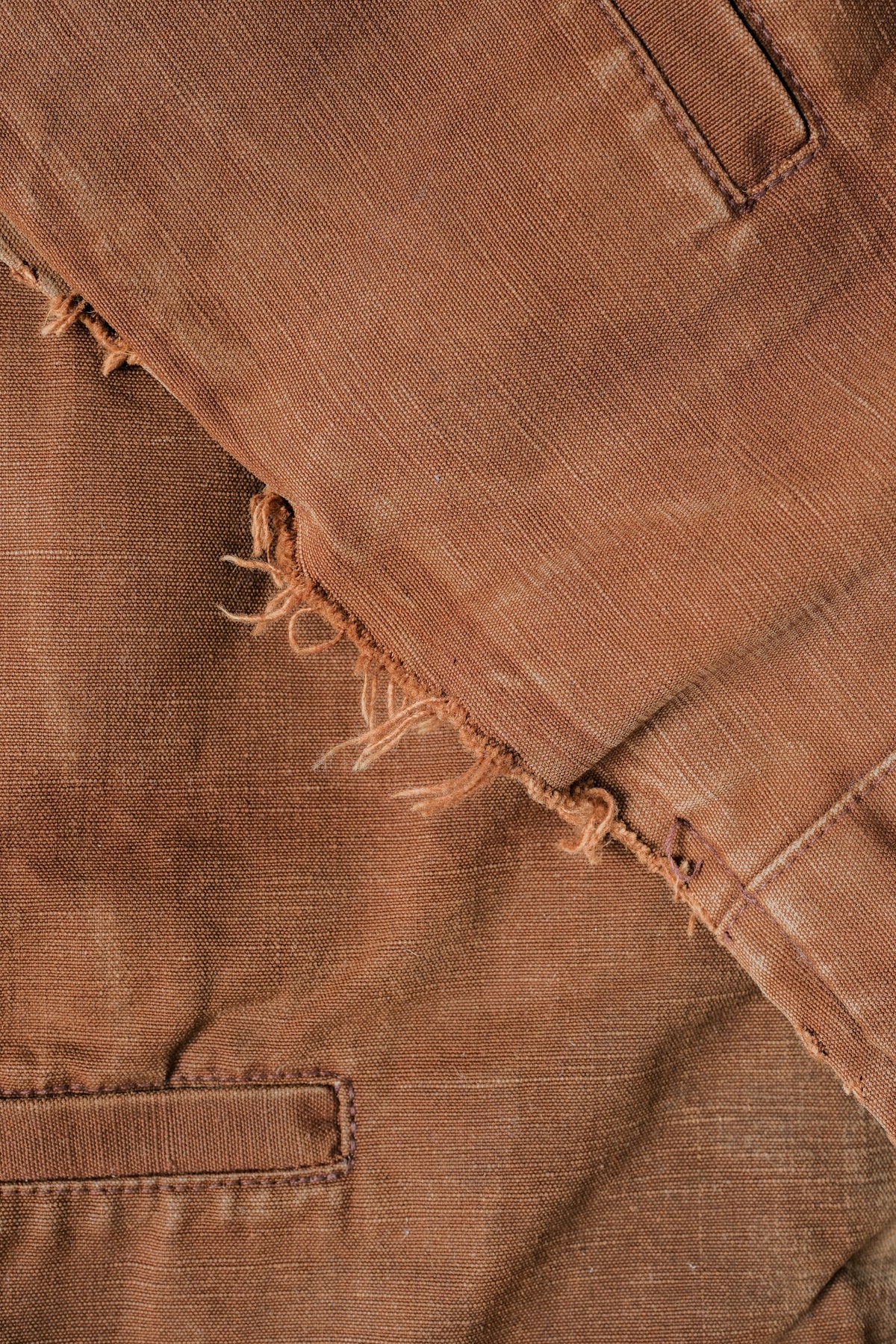
The shell employs 100% cotton canvas, a natural fiber that develops character through time, acquiring the patina particular to its kind.
Woven from substantial yarn, this canvas is resilient against moisture and wear, and the aging that accumulates with use becomes a defining beauty of the piece.
The fabric already displays subtle marks of handling—the kind of surface weathering that speaks to authenticity.
Many assume cotton canvas to be rigid and uncomfortable, but this piece has softened considerably through the decades, offering ease of wear without compromise.
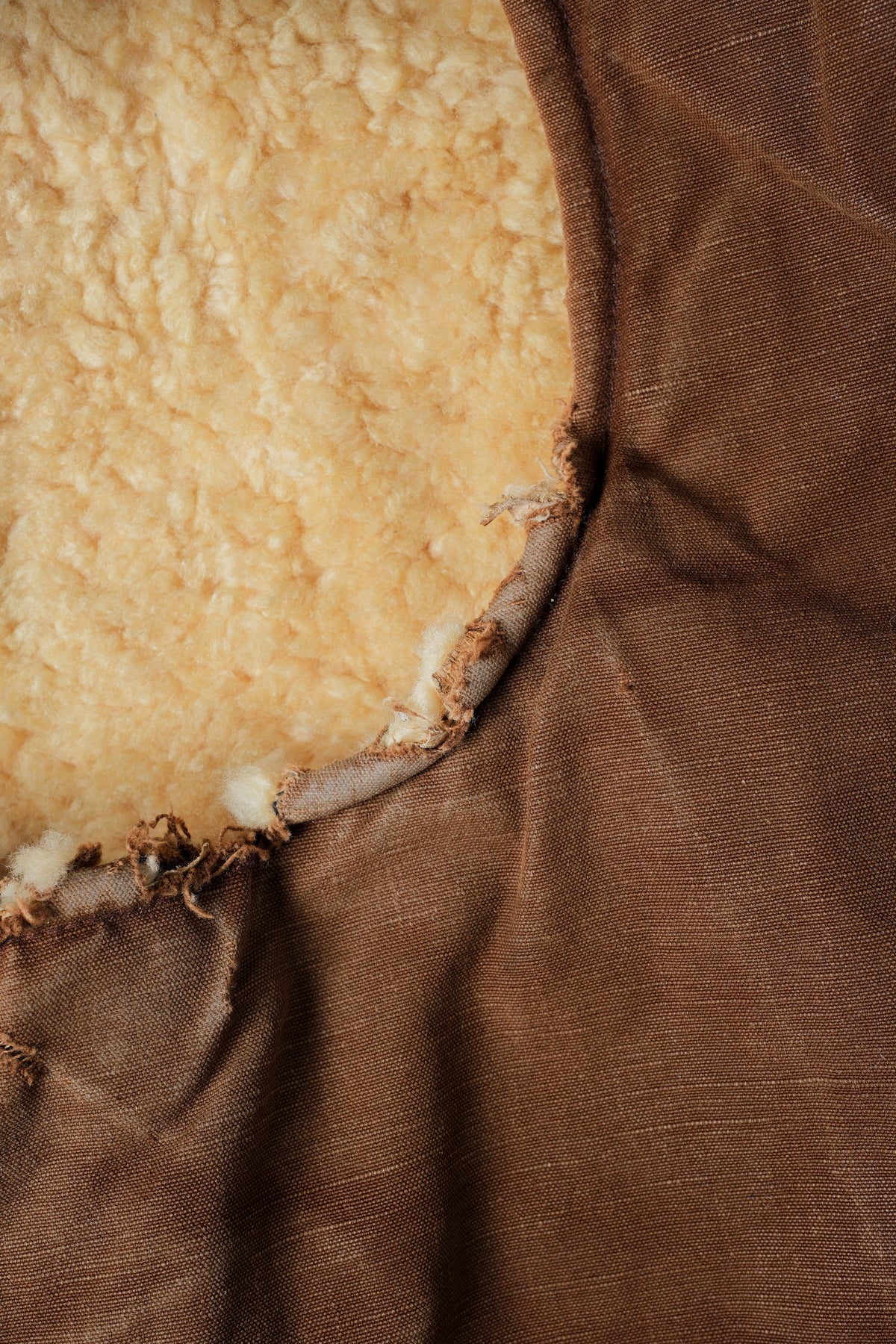
The lining is genuine fur.
Real fur is crafted from animal hides, utilizing the natural coat either as-is or through minimal processing.
Its superior insulation and inherent luxury have long associated it with fine garments—a choice that speaks to an earlier era's devotion to quality.
This degree of material indulgence—unthinkable by today's standards—reflects the manufacturing philosophy of its time, an uncompromising commitment to the craft.
Beyond its rarity, this vest possesses genuine sartorial presence—a piece that commands respect as a wearable garment, not merely as a relic.
No size marking is visible, though the proportions suggest an equivalent to M–L in contemporary Japanese sizing.
The measurements align well with Japanese proportions, offering a generous fit across a range of builds.
The piece bears expected marks of use—soiling, abrasion, minor fraying, small punctures, evidence of repair, button replacement, and some fur loss—yet nothing that compromises wearability. It remains a functional garment.
Equally suited to active wardrobe or collected as a design reference, this vest exemplifies its moment.
Rarely encountered in any market, it warrants consideration from those pursuing authentic historical garments or pieces of genuine distinction.