A Luftwaffe Winter Flight Jacket, estimated to date from the 1940s.
A truly exceptional arrival.
The Luftwaffe, or German Air Force, was established in 1935 and operated throughout the Nazi era until 1945, functioning as one of three principal military branches alongside the Wehrmacht's ground and naval forces within the framework of the National Socialist German state.
Throughout the Second World War, the Luftwaffe served as Germany's primary instrument of aerial warfare.
At its inception, the service rapidly expanded by adopting the world's most advanced aviation technologies and tactical doctrines.
Yet the defeat at the Battle of Britain marked a strategic inflection point. Thereafter, mounting superiority in Allied air power and the exhaustion of resources gradually eroded its effectiveness.
This piece is a Winter Flight Jacket, issued to and worn by Luftwaffe pilots and aircrew during winter operations.
This particular example appears to have originated as a Winter Fliegerkombi—a winter flying suit for flights over land—which was subsequently modified.
The term Fliegerkombi is a German compound: "Flieger" (pilot or aviator) combined with "Kombi" (combination or set), denoting specialised workwear and uniforms worn by pilots and aviation personnel.
Initially, the Fliegerkombi was constructed from high-quality dark brown leather with a substantial pile fleece lining—practical but inevitably cumbersome. Its weight led to the gradual adoption of lighter sheepskin alternatives, and the original specification was phased out.
Despite its considerable heft and bulk, it proved exceptionally warm and comfortable, earning particular favour among bomber and reconnaissance aircrew who endured the unheated fuselages of combat aircraft—hence its informal designation as the "Bavarian Suit."
The left chest bears a snap-button closure resembling a flap pocket, yet this conceals an emergency ring-pull release rather than functioning as storage.
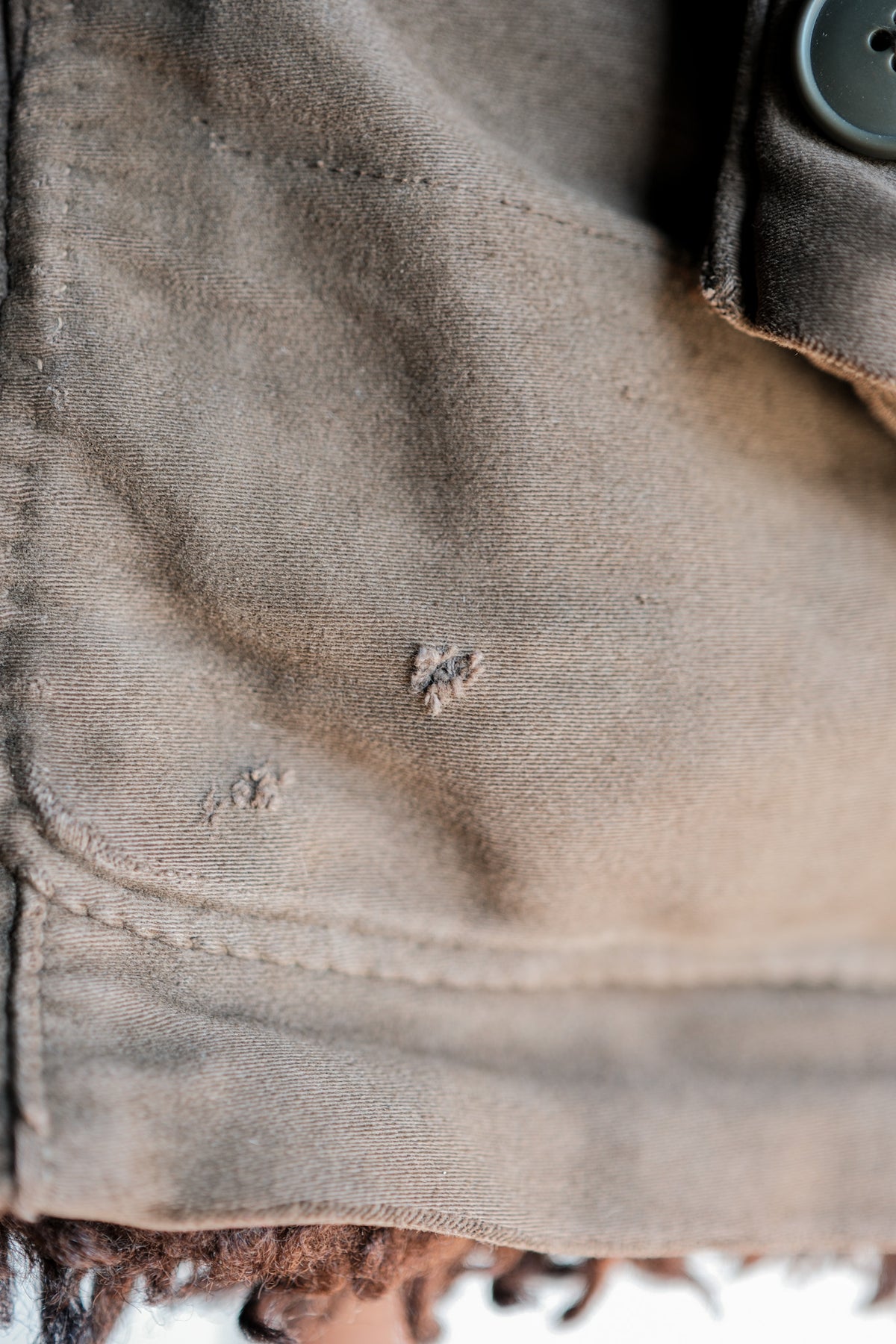
The hem is furnished with substantial flap pockets of considerable capacity.
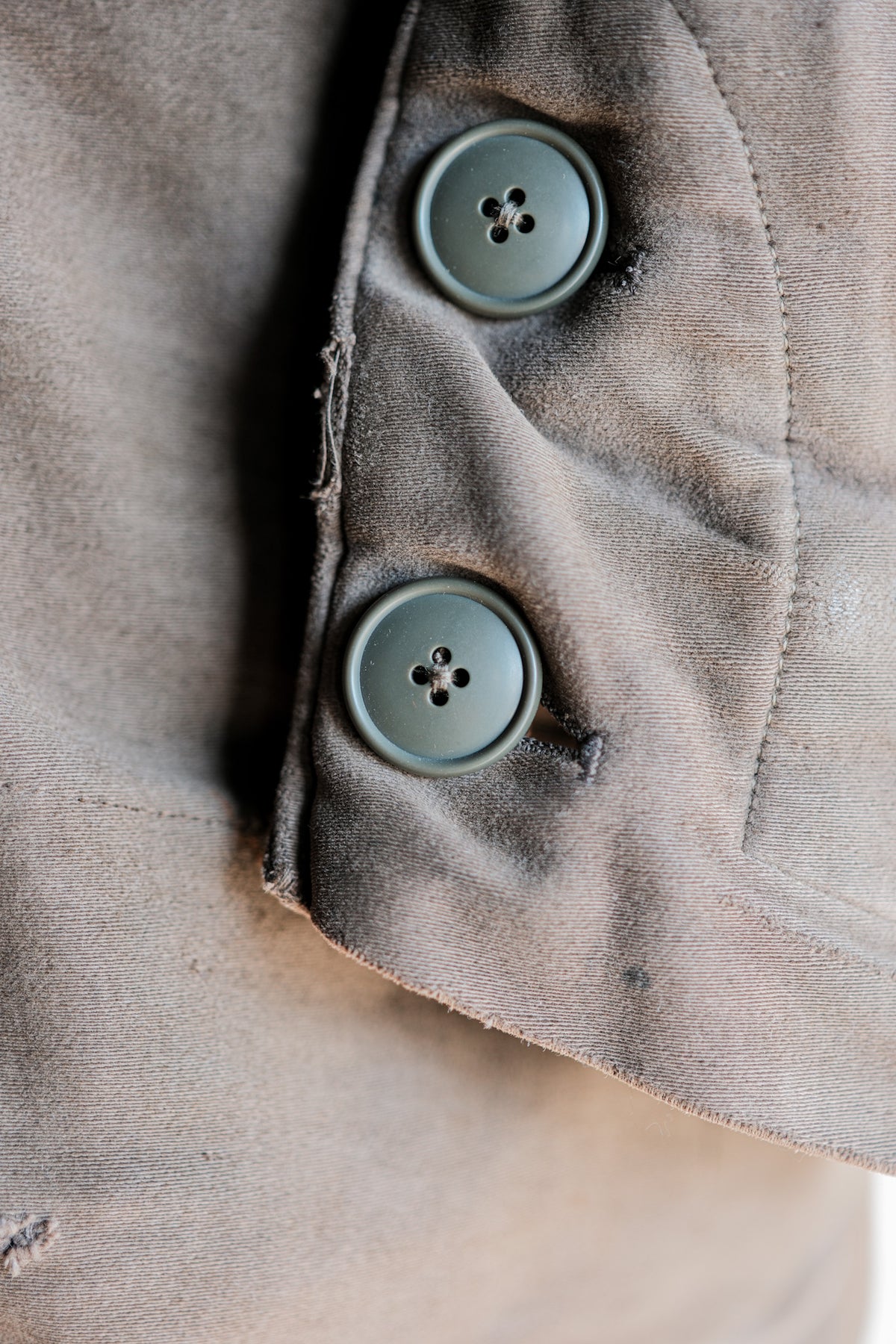
The front closure employs a distinctive double-layer construction, fastened with eight buttons. practical solution.
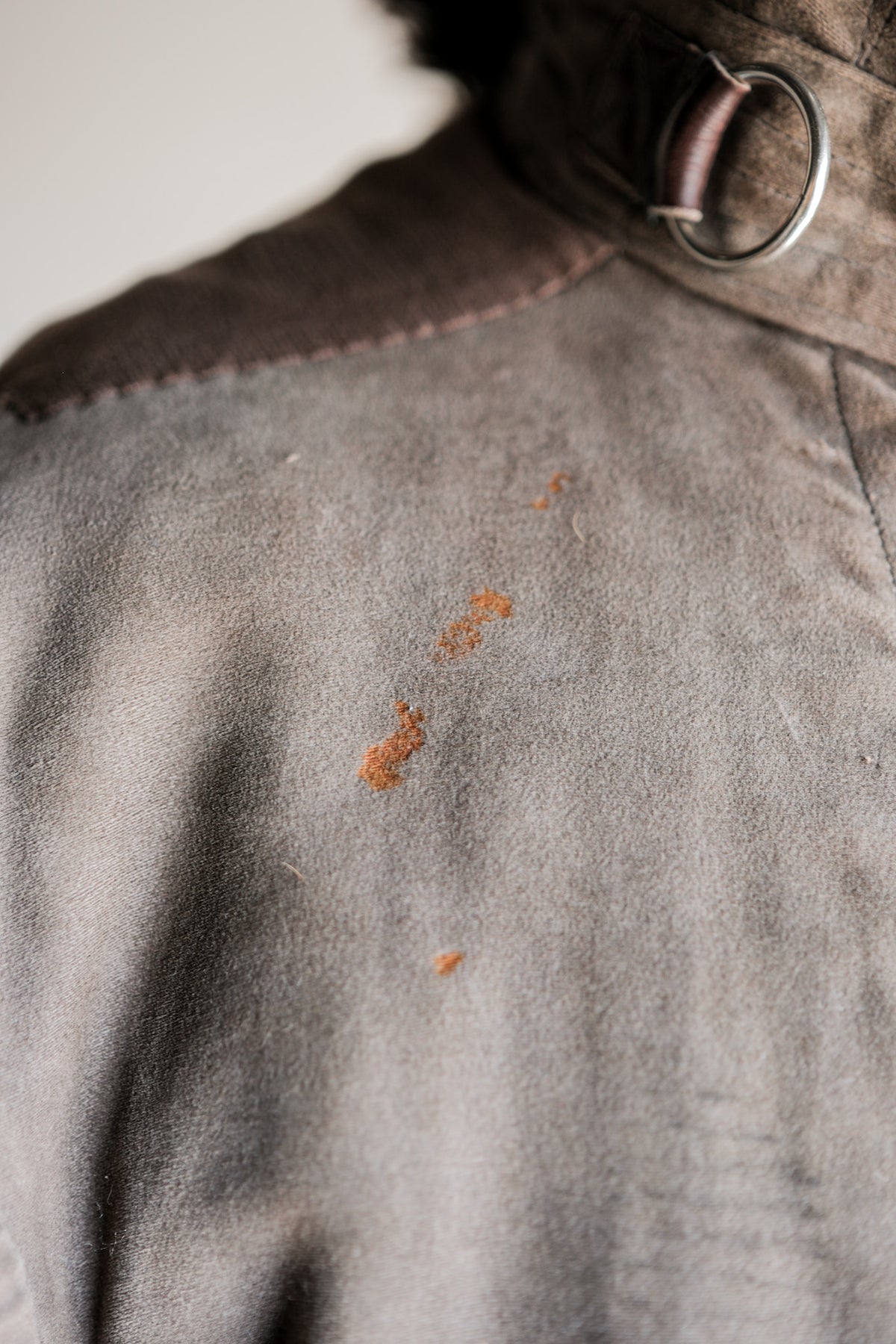
At the collar sits a snap-button chin strap fashioned from double leather, designed to seal wind at the neck when the collar is raised.
The manufacturer's label, Karl Heisler, remains clearly visible on the interior front facing.
Period documentation references both "Velvet" and "Wool" in its specifications, though the outer layer most likely employs Brown Moleskin.
Real fur is derived from animal hides, typically utilising the pelt with its original hair intact, or processed variants.
The lavishness of materials employed in this piece—virtually inconceivable by contemporary standards—reflects the rigorous material philosophy that characterised this era of manufacturing.
No size marking is apparent, though proportions suggest correspondence to a modern M to L.
The measured dimensions align with an ideal fit across diverse body types, likely accommodating a broad spectrum of wearers. In the tradition of military wear, it assumes an authoritative presence when worn with a generous silhouette.
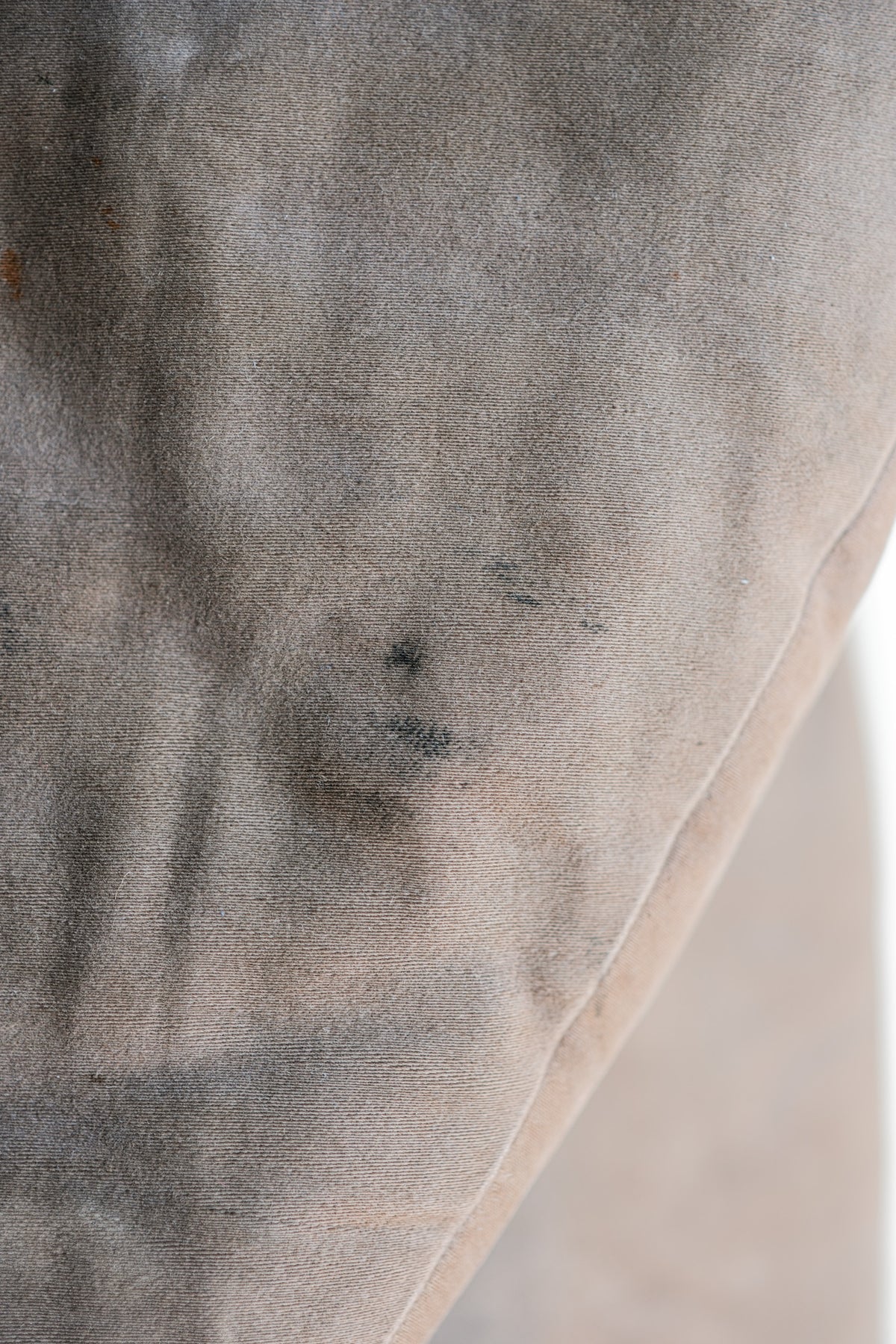
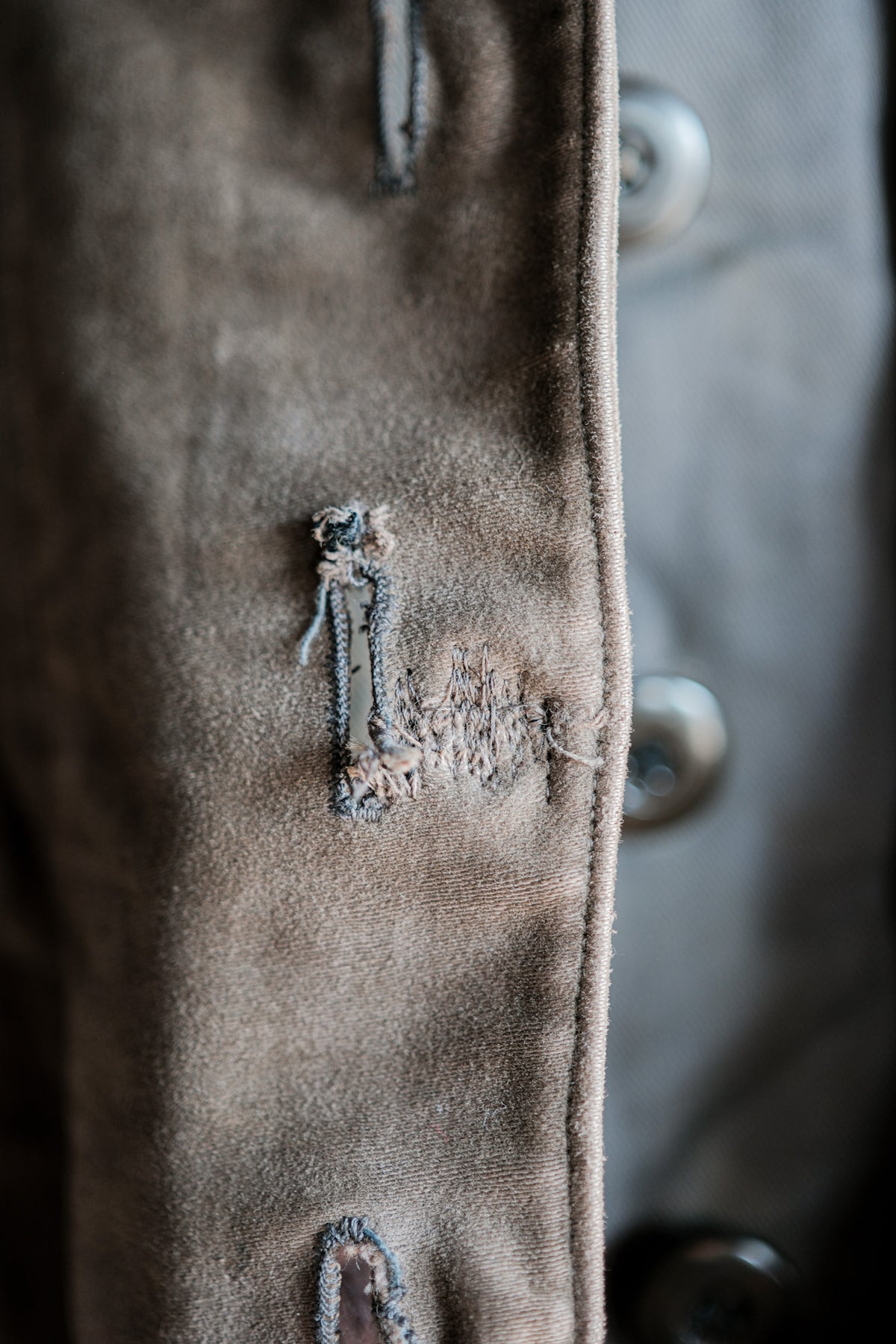
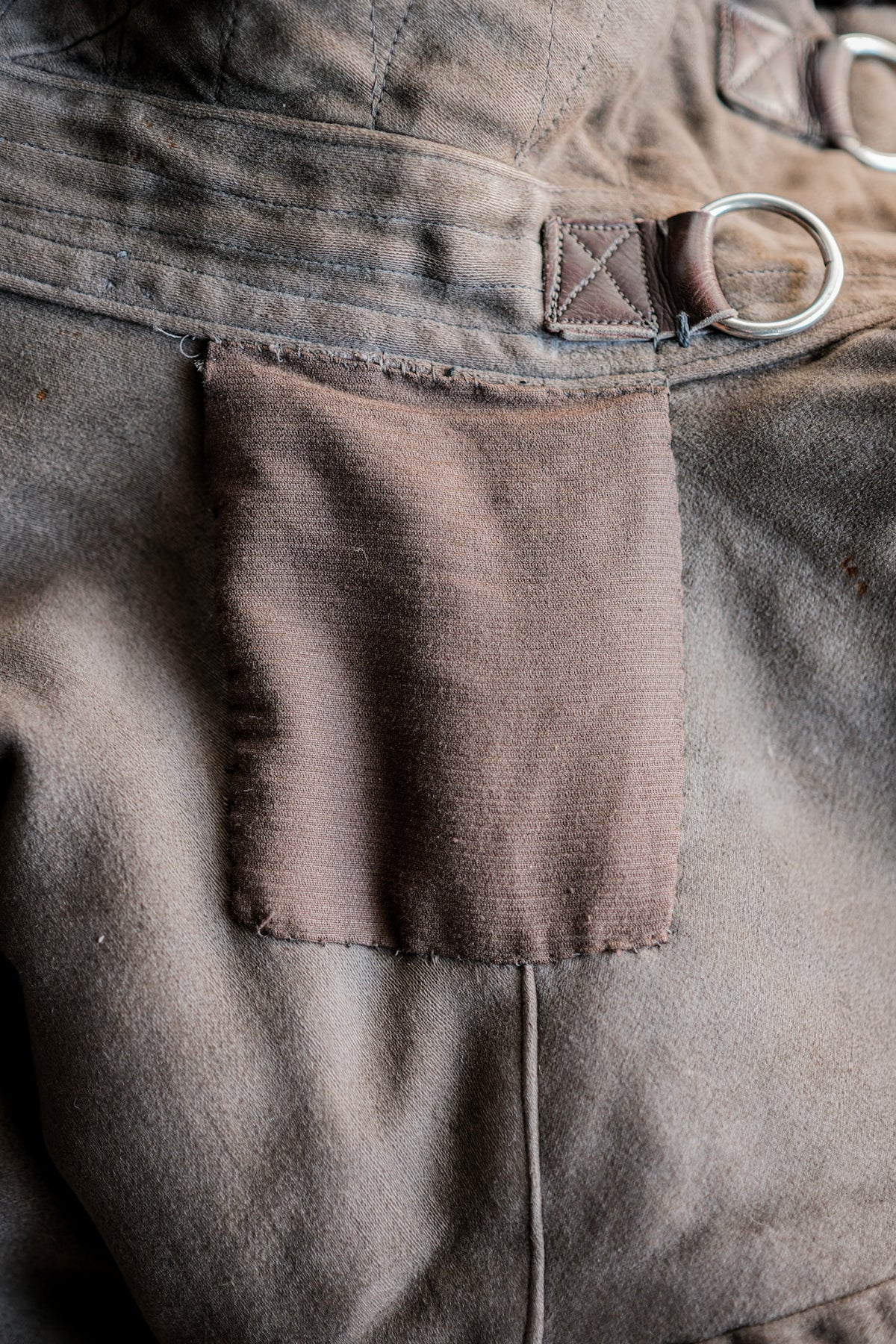
Evidence of use is visible—marks, abrasion, repair, minor fur shedding, button replacement—yet no damage of consequence to wearability is present, leaving this piece entirely serviceable.
German military artefacts have commanded particular attention in recent years, though surviving examples remain scarce given their historical significance, and supply struggles to meet collector demand.
With its devoted following, German military pieces represent the kind of archive material collectors are reluctant to relinquish.
This is not the sort of thing one simply purchases; future acquisition is far from assured.
Whether as an addition to a working wardrobe or as a research specimen and design reference, it stands without compromise.A piece of considerable scarcity domestically—if you have been in search of something of this character, this opportunity merits serious consideration.
ADD TO CART