Estimated 1940s Wehrmacht Grey and White Reversible Quilted Winter Parka.
A truly exceptional piece.
The Wehrmacht—the unified armed forces of Nazi Germany spanning 1935 to 1945—comprised three branches: the Heer (Army), Kriegsmarine (Navy), and Luftwaffe (Air Force).
The Wehrmacht designation replaced the earlier Reichswehr, embodying the Nazi regime's efforts to rearm Germany beyond the constraints of the Treaty of Versailles.
Following Adolf Hitler's consolidation of power in 1933, the establishment of the Wehrmacht stands among his most explicit and ambitious undertakings.
It signified the creation of a modern, offensively capable military apparatus designed to realize the regime's long-term objectives: reclamation of lost territories, acquisition of new lands, and domination of neighbouring states.
This necessitated the reinstatement of conscription and substantial investment in military manufacturing and defence expenditure.
Following Germany's unconditional surrender on 8 May 1945, Allied occupation commenced and the systematic dissolution of the Wehrmacht proceeded.
On 20 August 1946, the Wehrmacht and all its constituent branches were formally disbanded by the Allied High Command.
This encompassed the Heer, Kriegsmarine, and Luftwaffe.
In the aftermath of the Wehrmacht's dissolution, Germany became a demilitarised state. The subsequent military reconstitution of West Germany (the Federal Republic) and East Germany (the Democratic Republic) proceeded along separate trajectories within Cold War geopolitics.
West Germany established the Bundeswehr (Federal Armed Forces) in 1955, becoming part of NATO.
Conversely, East Germany formed the Nationale Volksarmee (National People's Army) in 1956, joining the Warsaw Pact.
These successor military organisations were constituted as distinct entities, separate from Wehrmacht tradition and structure.
We present here a winter service garment from the Wehrmacht: the Reversible Quilted Winter Parka, issued and worn during the Second World War.
Surviving examples are extraordinarily scarce, both domestically and internationally, which suggests many have yet encountered this piece.
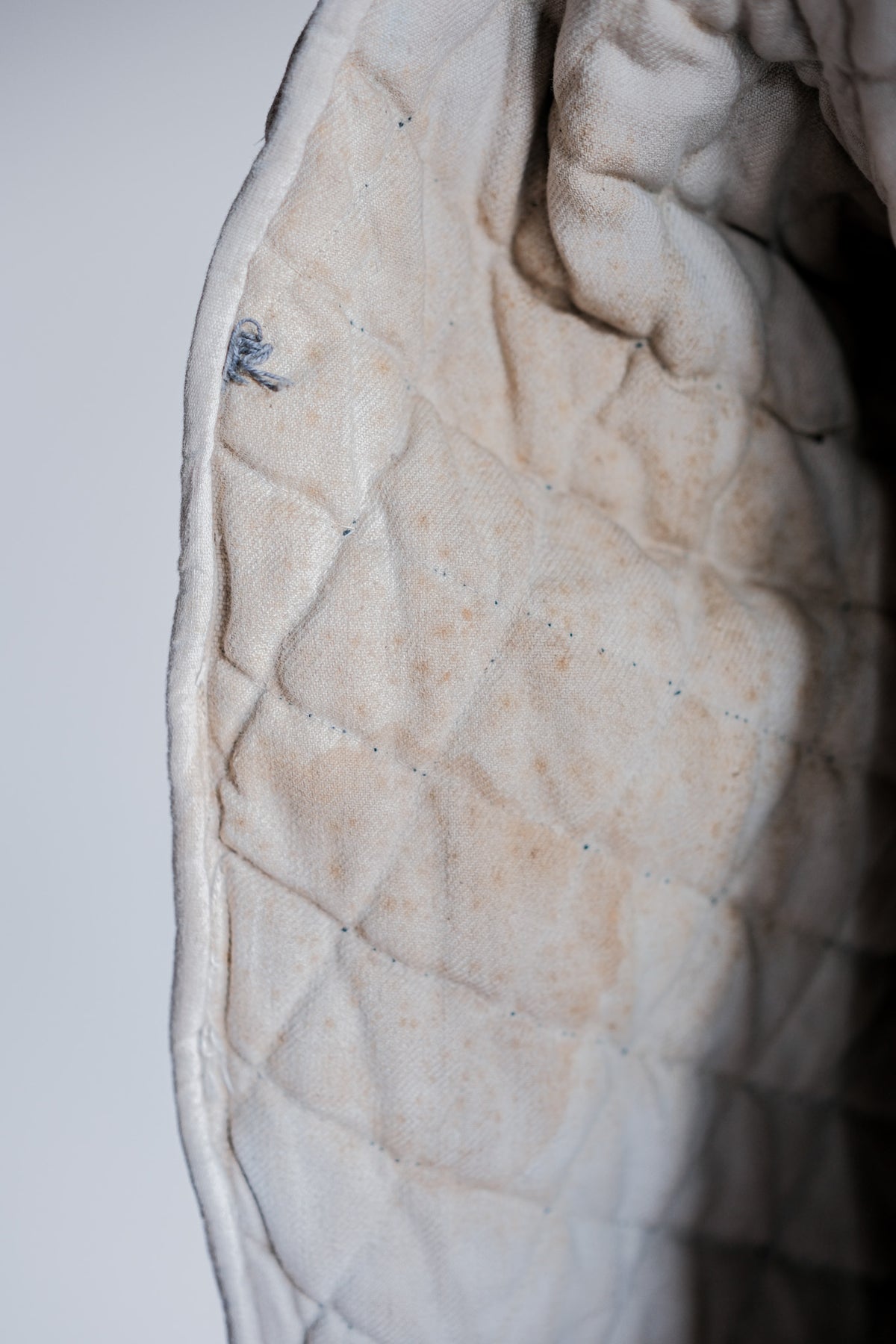
This example is constructed entirely of cotton, both face and reverse, rendered in fully reversible configuration.
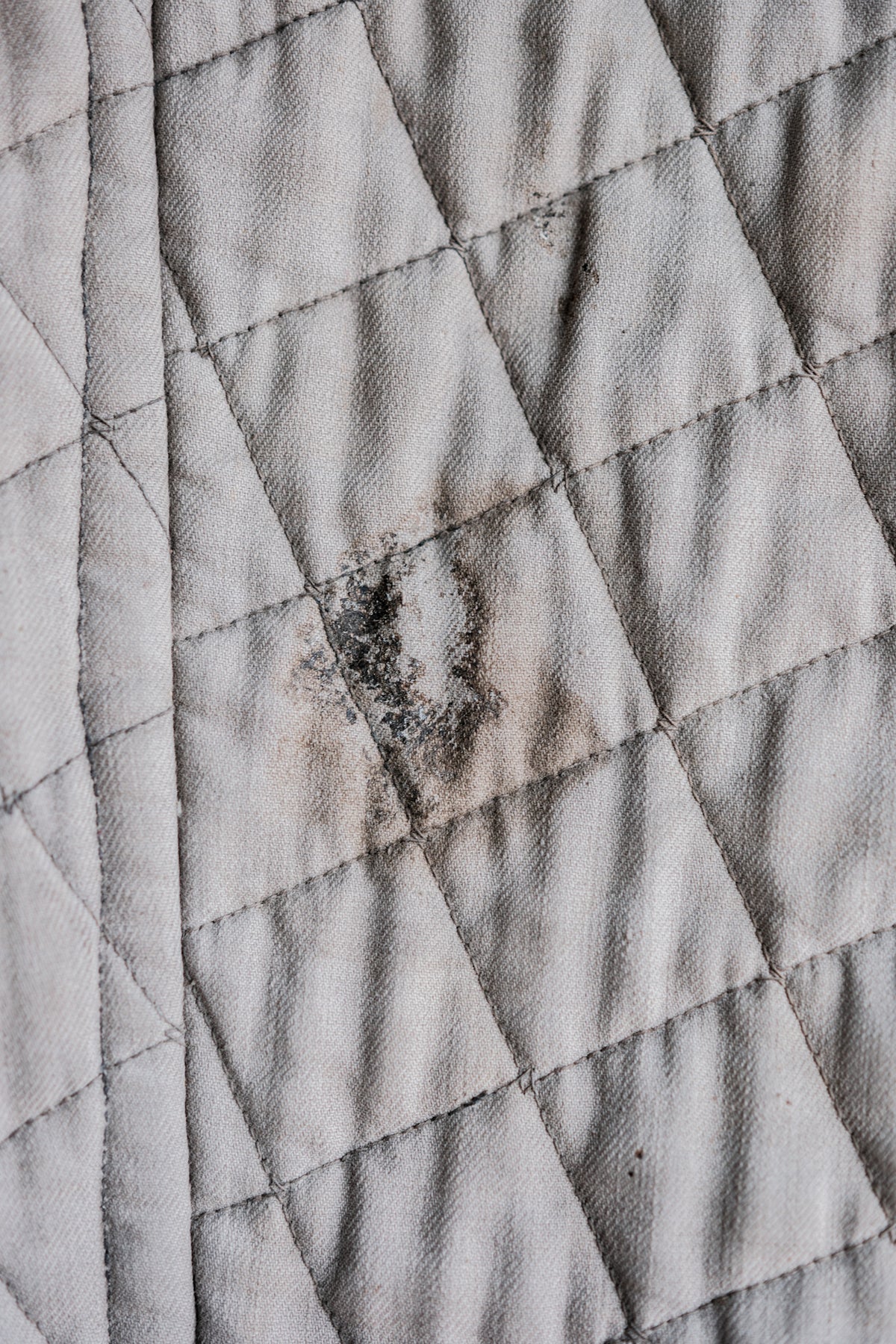
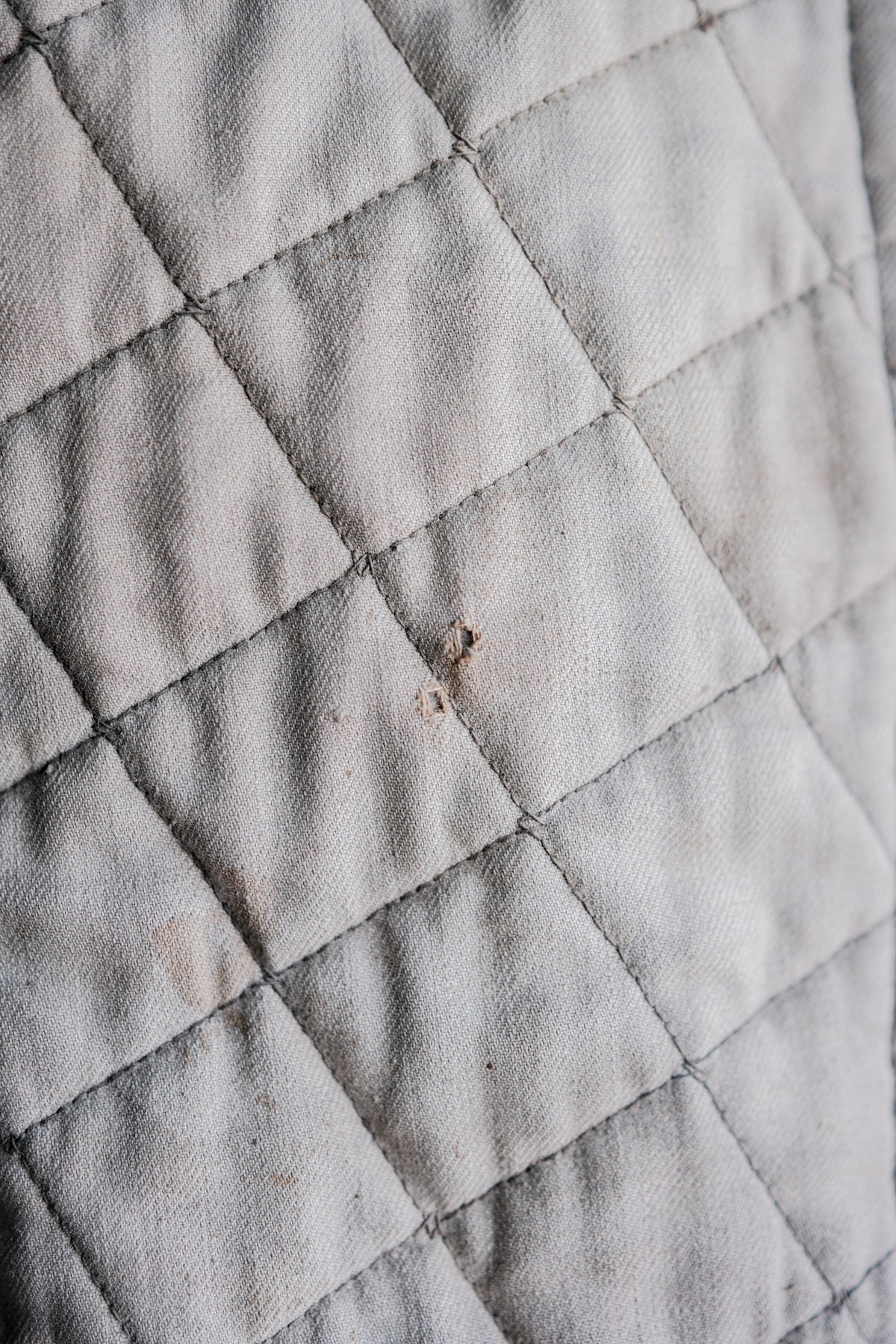
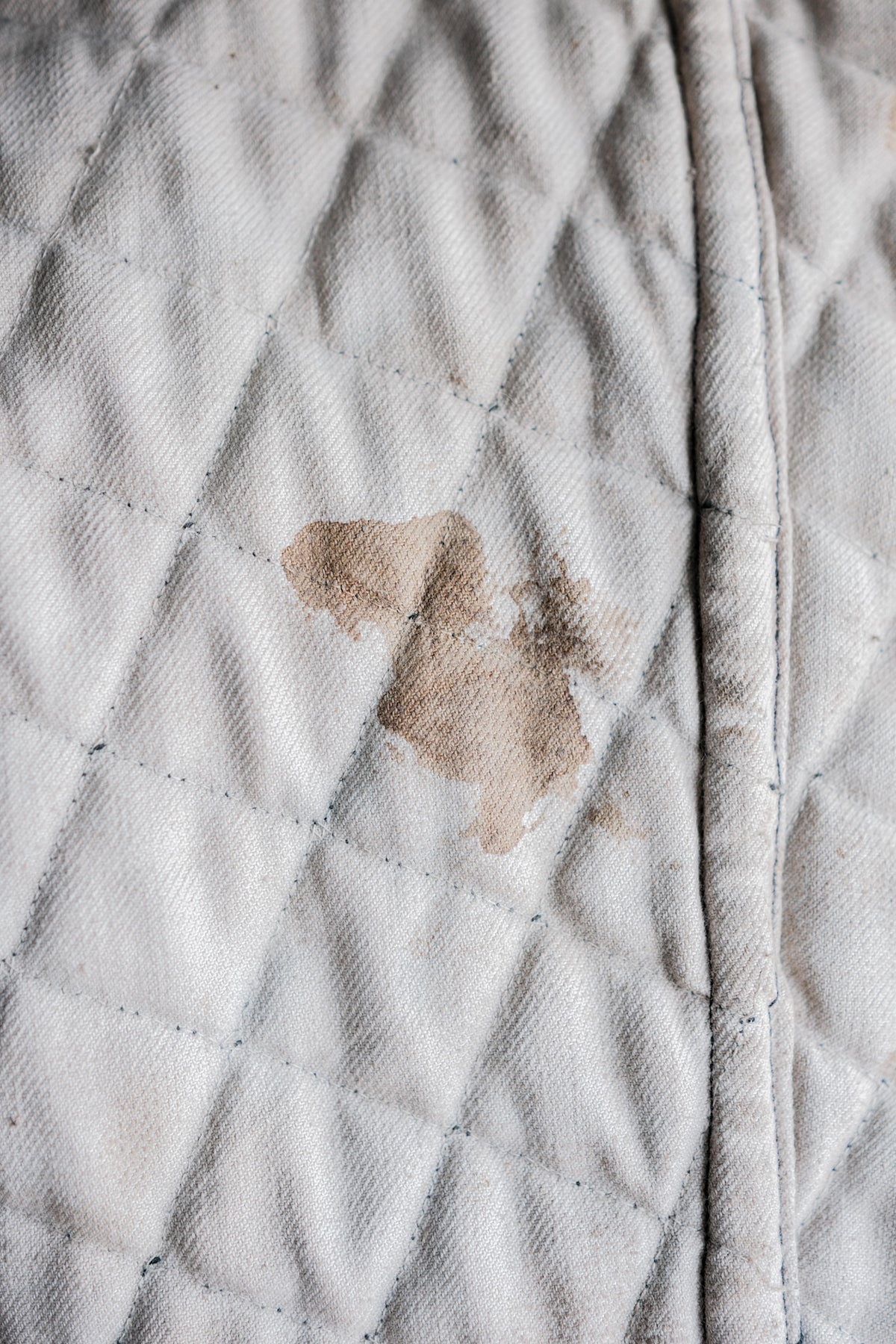
The defining characteristic lies in its diamond-pattern quilting—a construction frequently adopted by Wehrmacht and Hungarian forces.
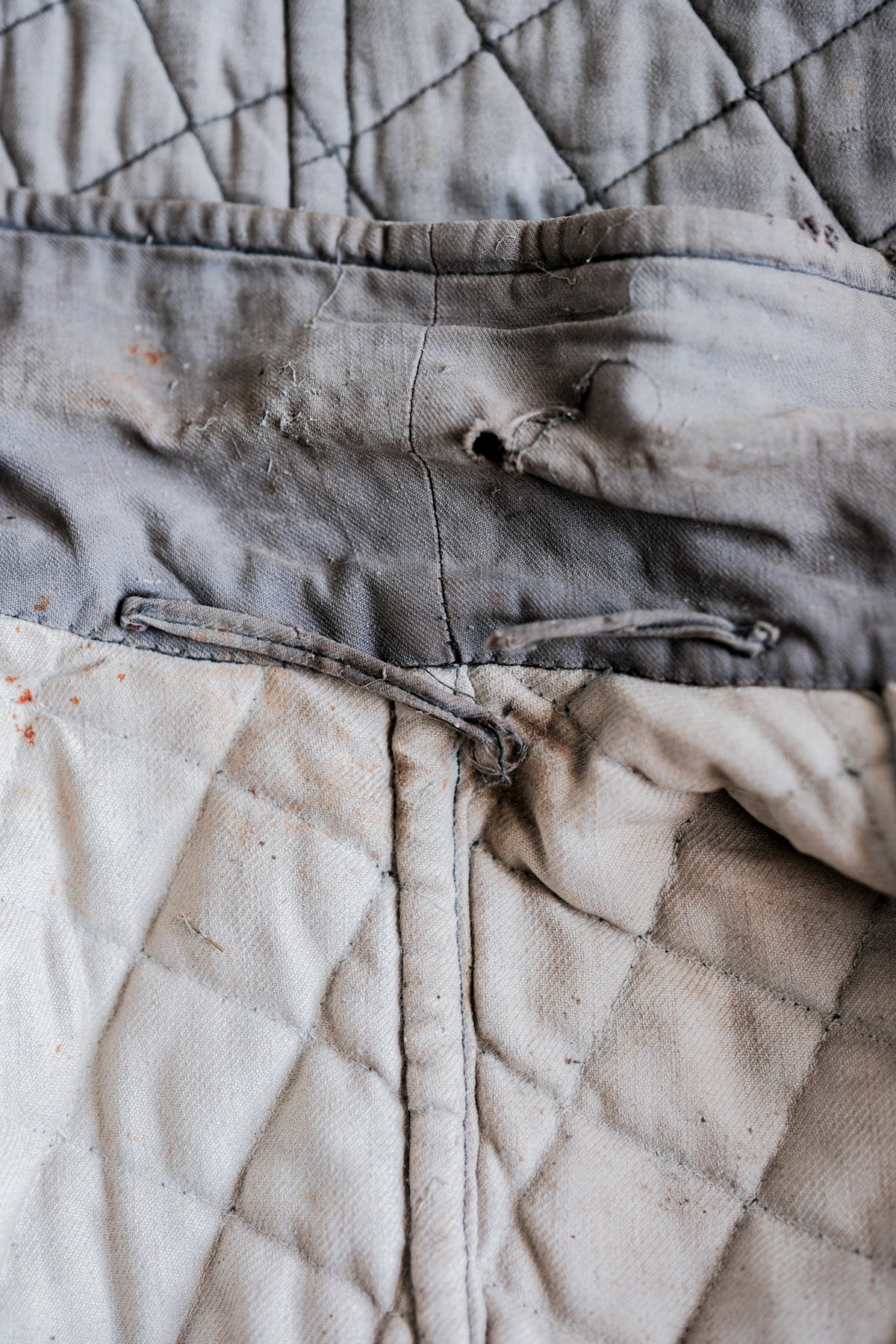
The exterior presents grey; the reverse, white. This dual-sided functionality permits the wearer to select according to circumstance and preference.
The front closure employs a dual-layered construction, secured by six buttons—a purposeful design that forestalls wind penetration and thermal escape, remarkably rational in its engineering.
The logic of this approach proves admirably functional.
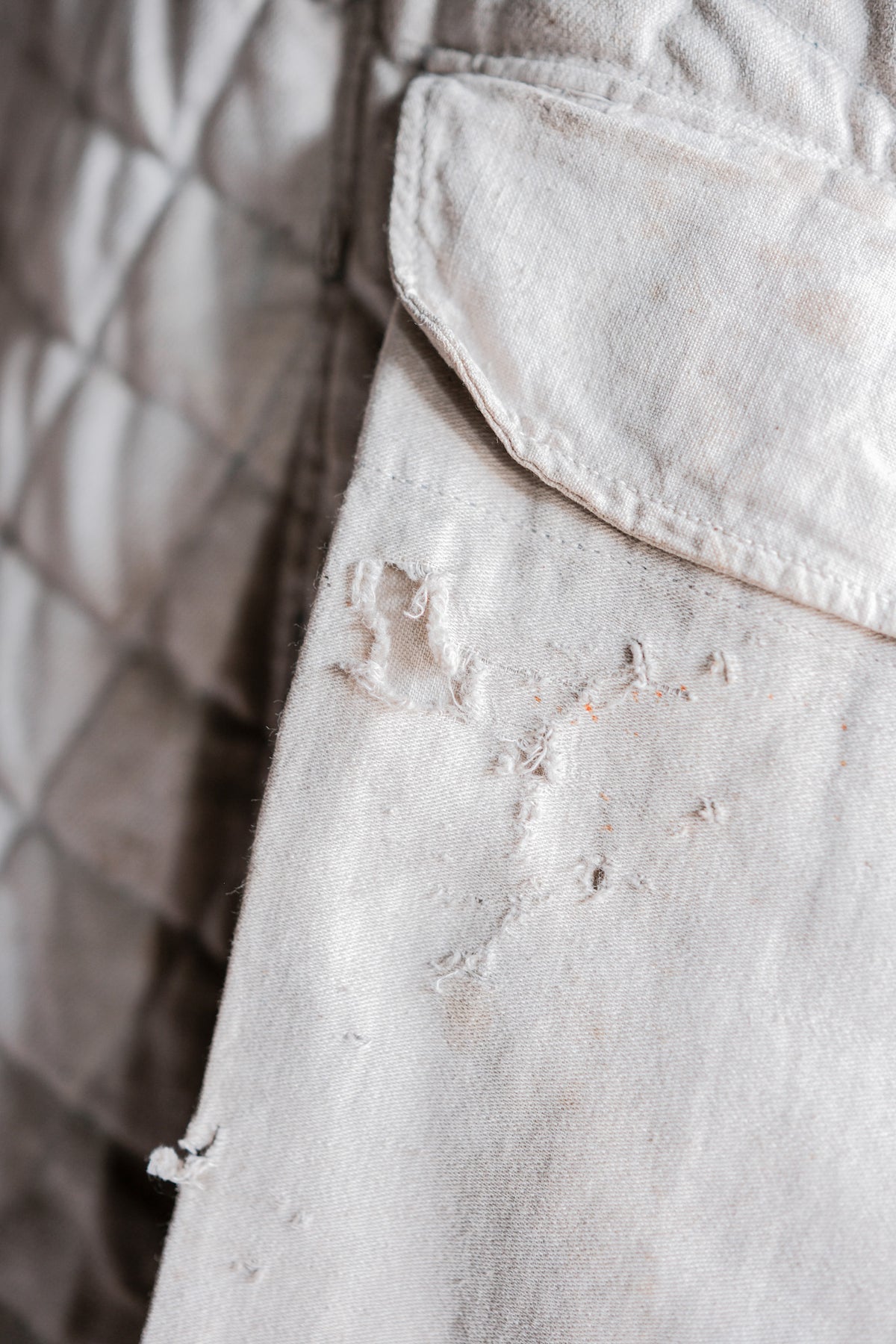
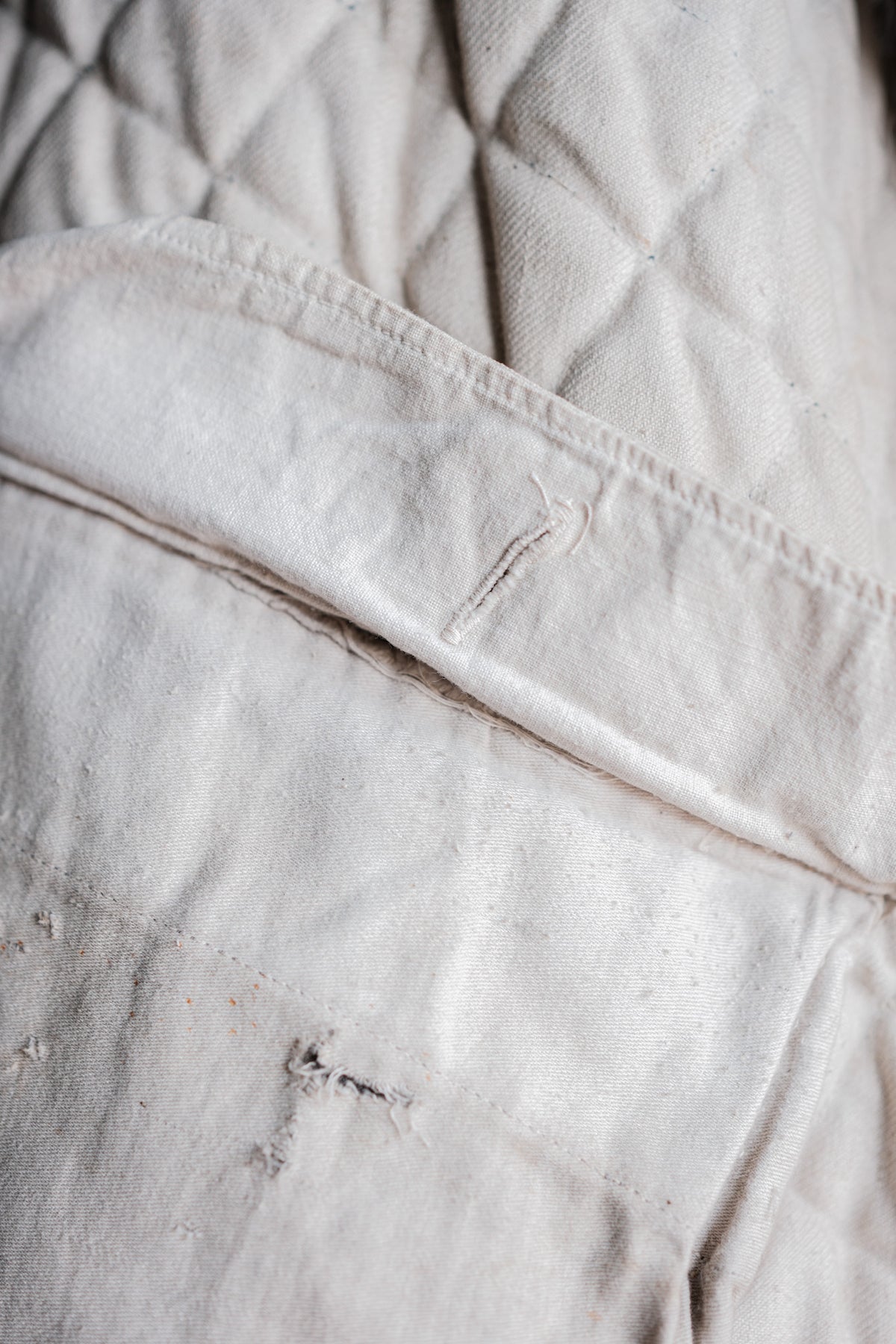
Flap pockets with exposed buttons are positioned at the hem; adjustable button tabs appear at each cuff.
The original specification included a hood; this example has been modified—the hood removed and replaced with a collar—a modification almost certainly executed by the serviceman himself for practicality rather than aesthetic revision.
Such field modifications were entirely consonant with period use.
The British Denison smock underwent similar transformation in soldiers' hands, converted from half-zip to fully opening fronts as personal preference dictated. Military practice across nations prioritised individual wear over original specification.
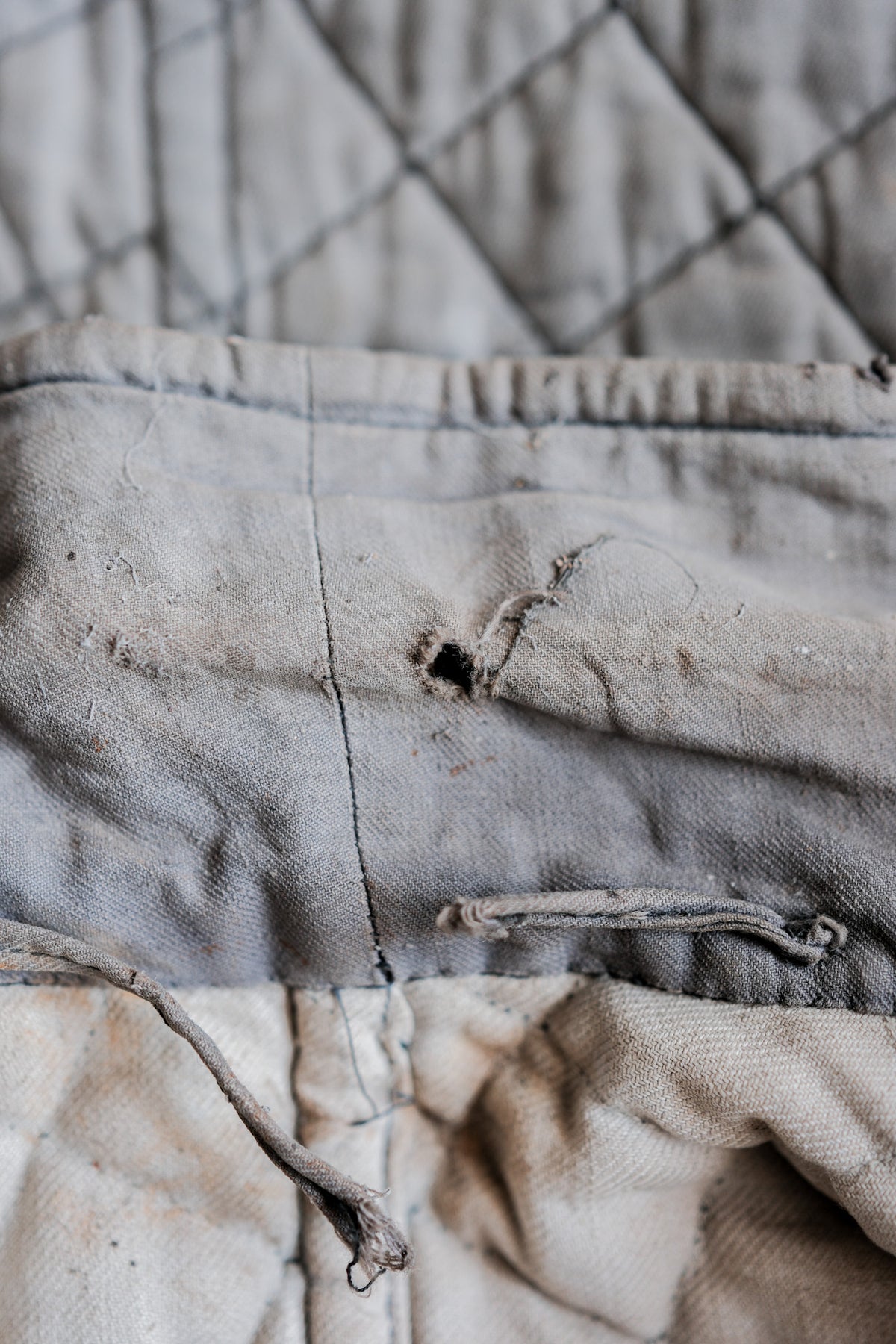
Faint Wehrmacht stamps remain visible on the interior right side of the front placket.
Beyond its historical significance, this garment possesses undeniable visual force as a contemporary fashion piece. Wear it without hesitation.
No size marking is visible; dimensions suggest equivalence to Japanese M to L.
The actual measurements align with proportions that accommodate a broad range of physiques—a true golden size for most wearers.
The military overgarment character translates easily; worn loosely over layering, it carries considerable presence.
Originally conceived as an outer layer—to be worn over clothing—all examples possess generous proportions by design.
Fading, soiling, abrasion, loose threads, small punctures, tears, and button loss are evident throughout, yet no damage prohibits wear. The piece remains serviceable.
Wehrmacht material has gained considerable attention recently, yet availability has never matched demand. Such pieces remain vanishingly rare.
A devoted collecting community exists around Wehrmacht garments, and this constitutes an archival piece collectors seldom relinquish.
This is not an item purchased readily; future availability cannot be assured.
Whether as functional wardrobe or as collection and design reference, this piece merits consideration.
Museum-grade in domestic context—seldom encountered. If you have sought such a thing, or collect the uncommon, this warrants serious attention.
Sophisticated replicas circulate widely in this model. Those committed to authenticity should not delay.