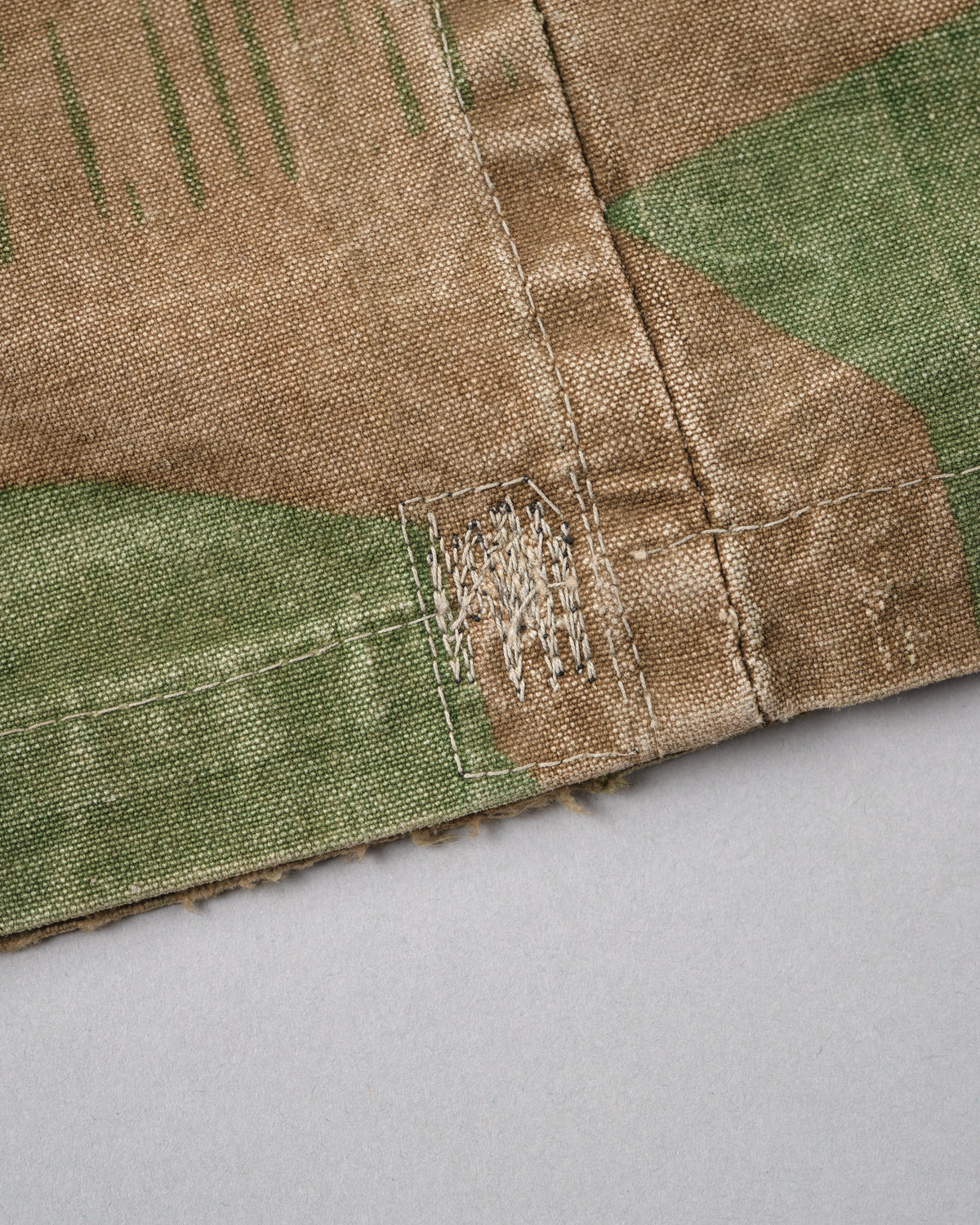
A German military Splittermuster camouflage hooded jacket, estimated to date from the 1940s.
A truly exceptional arrival.
The Wehrmacht, the unified military force of Nazi Germany spanning 1935 to 1945, comprised three branches: the Heer (Army), Kriegsmarine (Navy), and Luftwaffe (Air Force).
The term Wehrmacht replaced the earlier "Reichswehr," reflecting the Nazi regime's efforts to rearm Germany beyond the limits permitted by the Treaty of Versailles.
Following Adolf Hitler's consolidation of power in 1933, the establishment of the Wehrmacht represented one of his most explicit and audacious undertakings.
Following Germany's unconditional surrender on May 8, 1945, Allied occupation of Germany commenced, initiating the dismantling of the Wehrmacht.
In the aftermath of the Wehrmacht's dissolution, Germany emerged as a nation without military force. The subsequent remilitarization of West Germany (the Federal Republic) and East Germany (the German Democratic Republic) proceeded separately within the context of the Cold War.
These new military organizations were regarded as distinct from the Wehrmacht's traditions and structures.
We present a "Hooded Jacket" believed to have been tailored individually during the Second World War by a member of the German military.
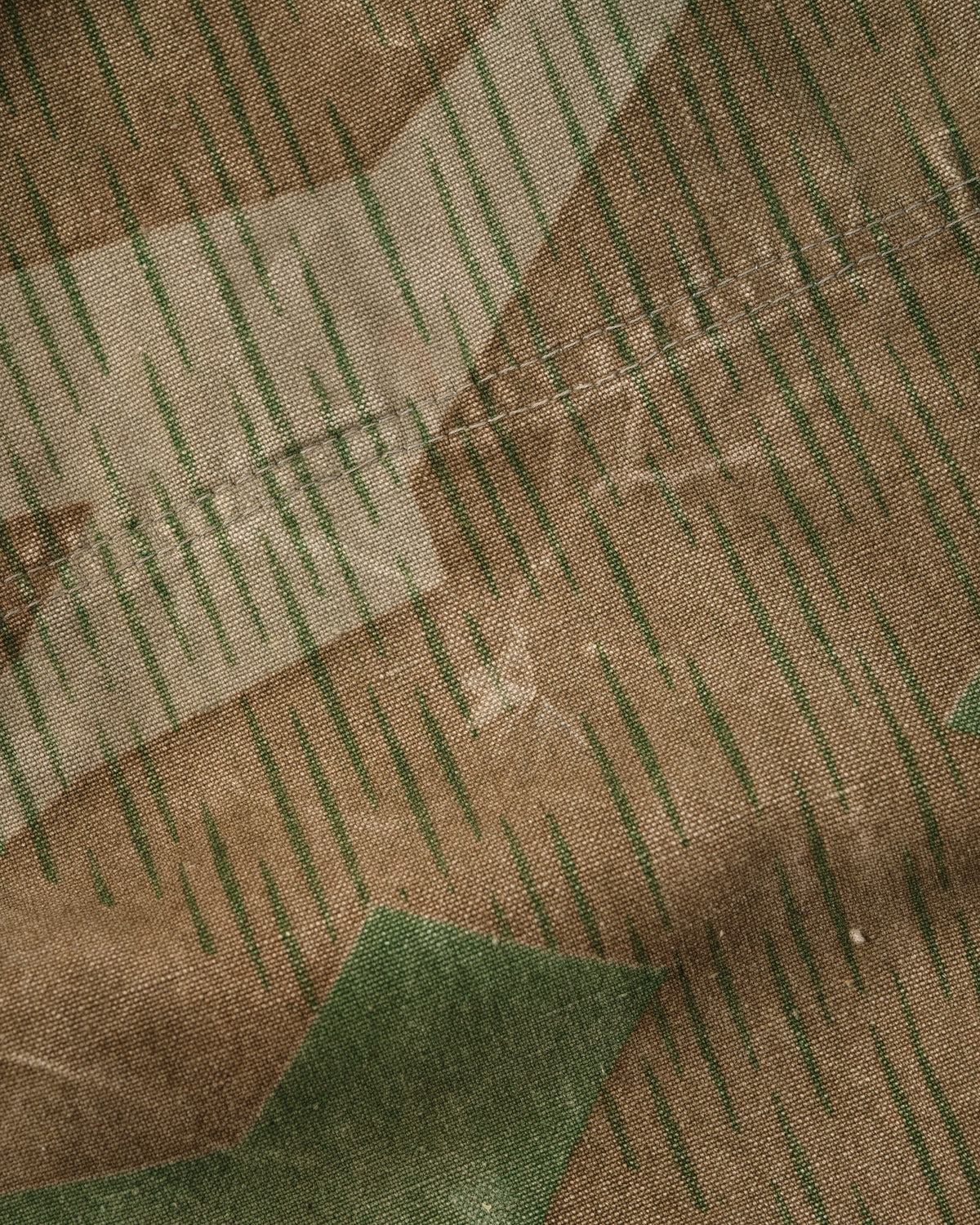
The defining characteristic of this piece is undoubtedly the distinctive German military camouflage pattern.
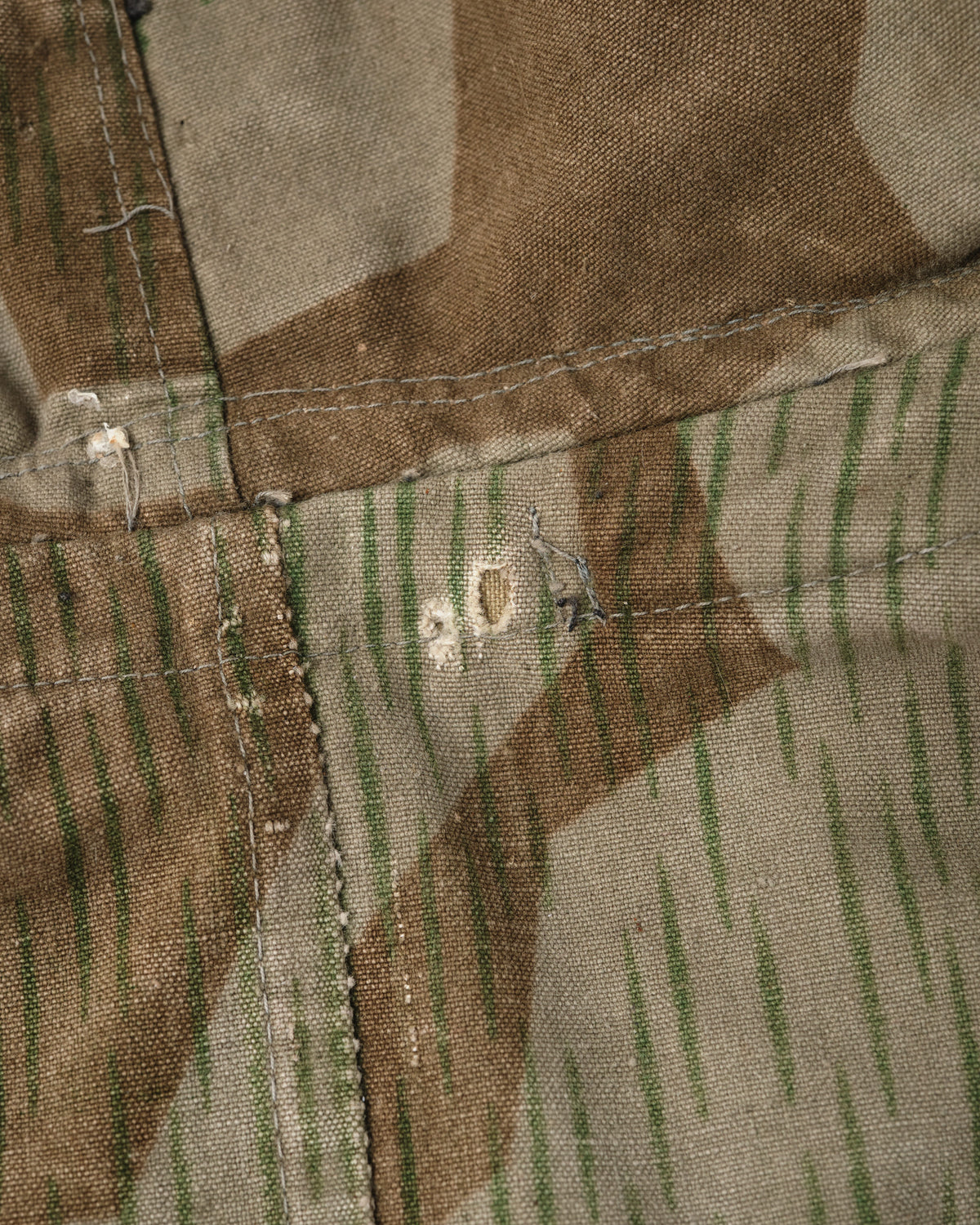
The camouflage pattern commonly known as "Splittermuster" (splinter pattern) is a four-color military camouflage developed by Germany in the late 1920s. First adopted by the German military in 1931, it represents Germany's inaugural military camouflage pattern.
These patterns carried the formal designation "Buntfarbendruck 31" and were redesignated as "Splittermuster 31" in 1935.
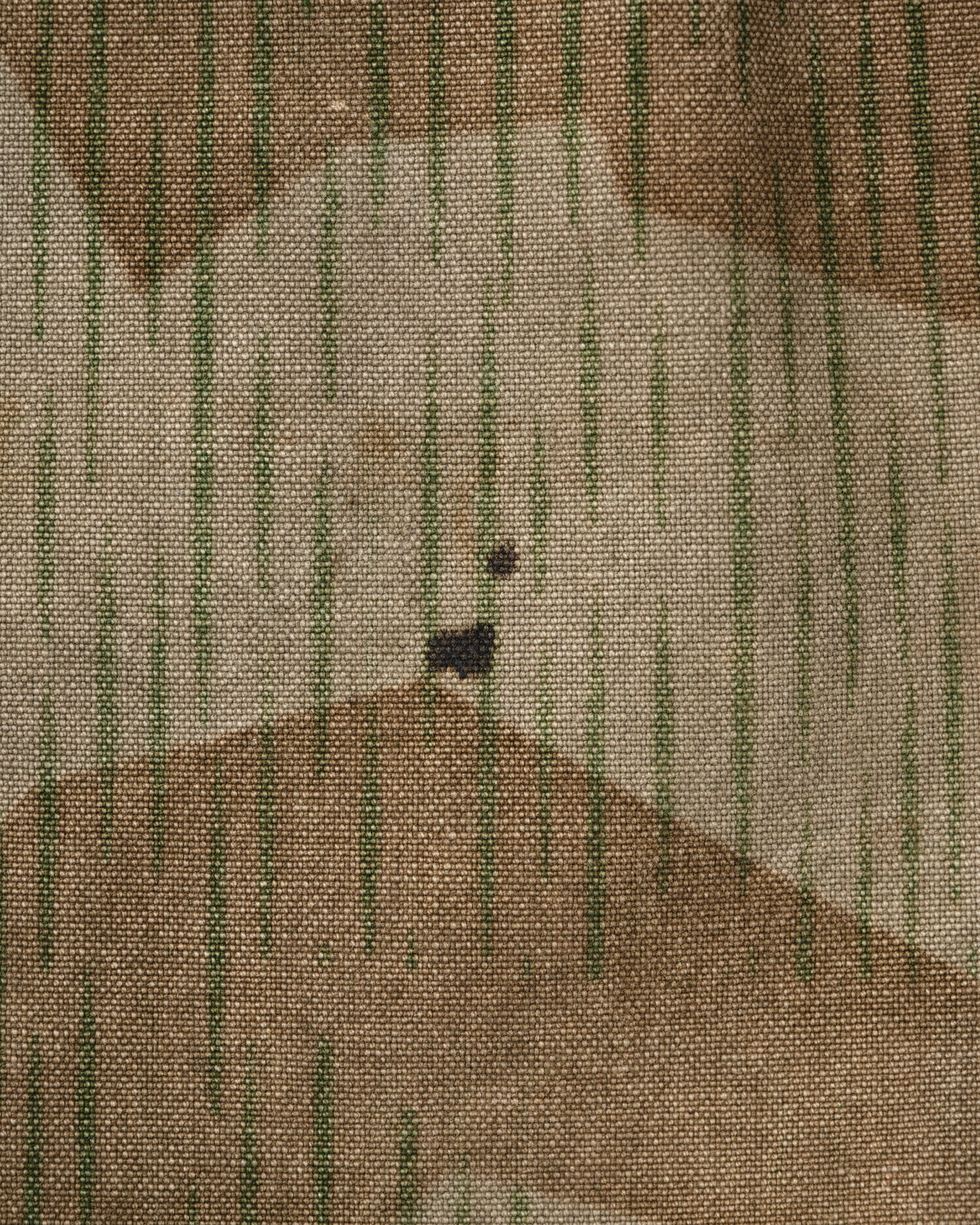
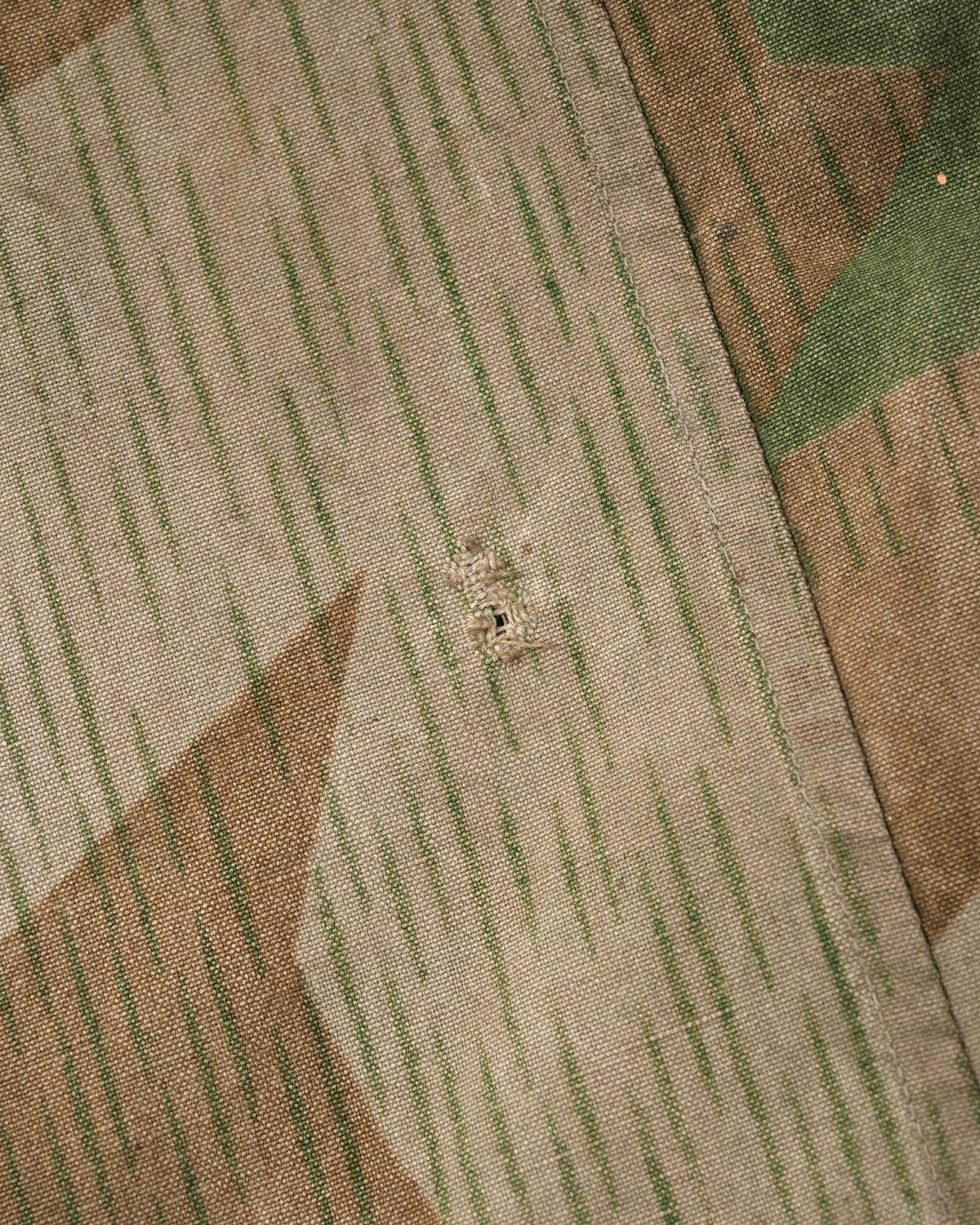
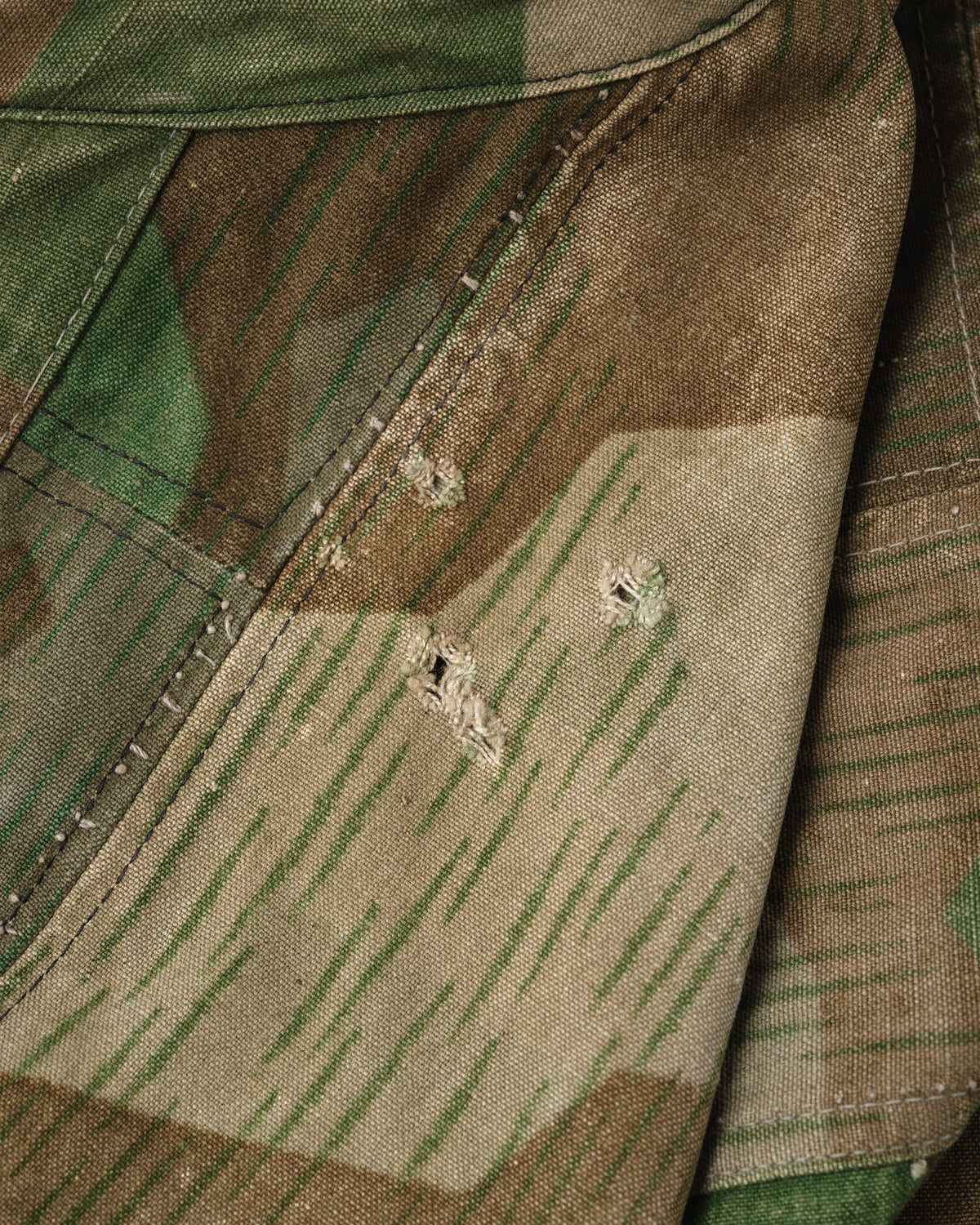
This particular example incorporates the Splittermuster 31, exhibiting a distinctly different chromatic composition and aesthetic presence from the Splittermuster variants of the post-1950s era—commanding an altogether formidable presence.
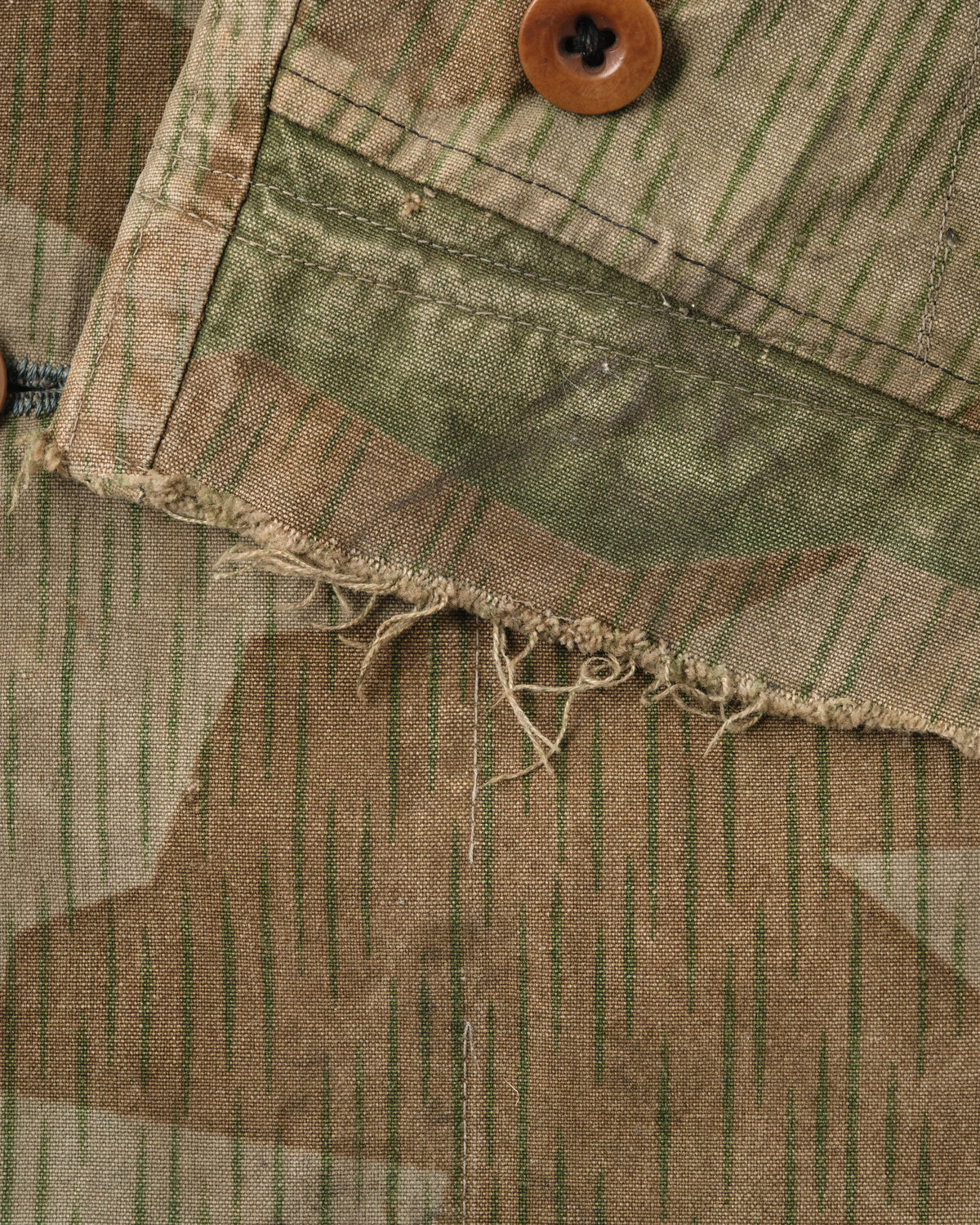
Notably, this piece represents what is termed "Localmade," distinguished from factory mass-production. Rather, the fabric, pattern, and tailoring were individually sourced and constructed—a bespoke production characteristic of field-made garments.
Considering the construction details, stitching, and overall execution, this jacket was likely tailored during the 1940s, within the Second World War period itself.
While the bold camouflage pattern presents a visually striking impression, the detailing remains notably restrained.
The construction is distinguished by its intentional minimalism—stripped to essentials.
Pockets have been deliberately omitted, resulting in a clean, streamlined silhouette.
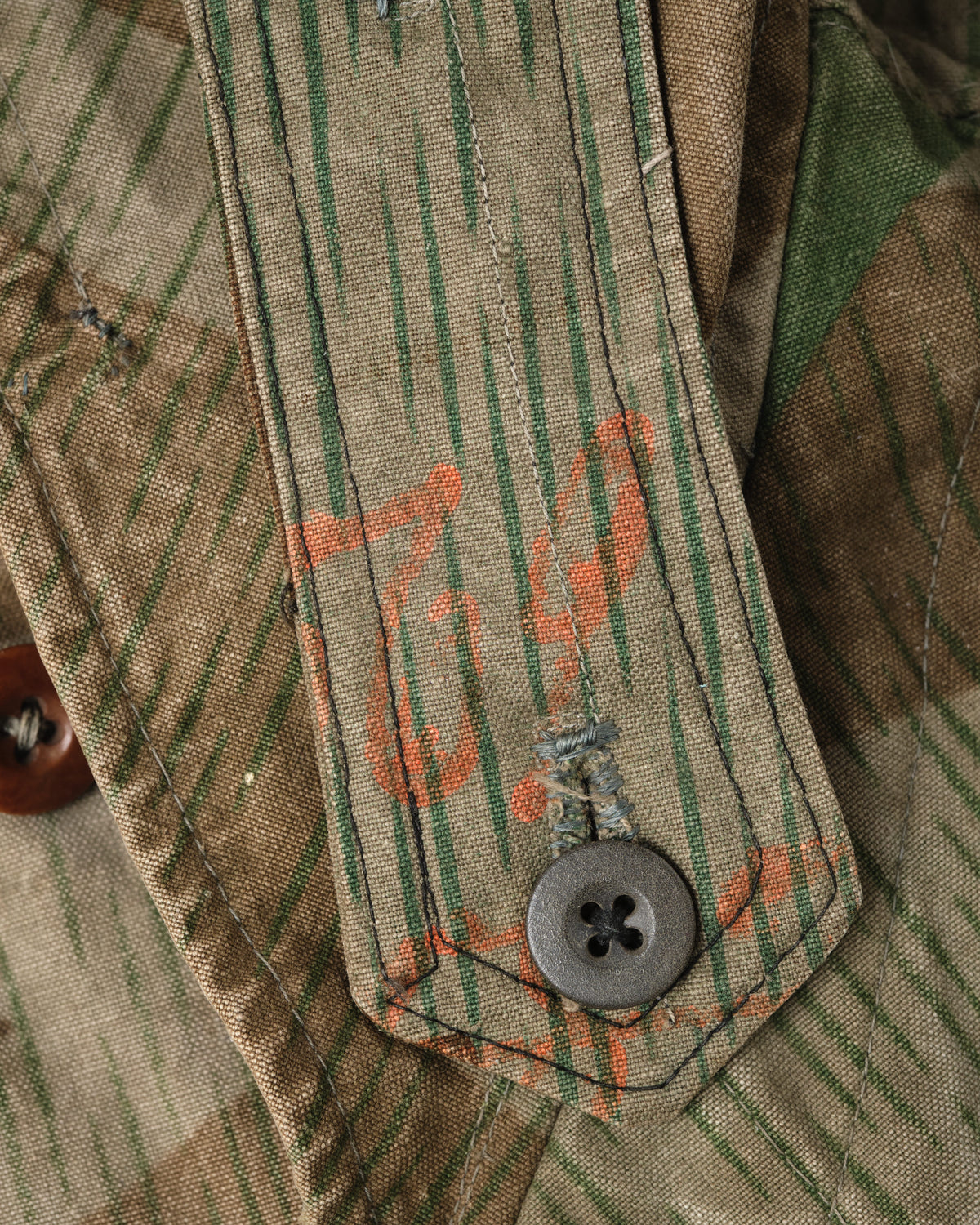
The front closure employs a button-fastening system for straightforward operation.
The button-front design offers ease of adjustment, making this piece exceptionally versatile as a mid-layer garment beneath outer wear.
While German military pieces documented in archival references possess undeniable appeal, field-made items such as this exhibit an individuality that merits genuine appreciation.
Beyond its rarity, from a purely sartorial perspective, this remains a remarkably compelling garment—one we believe warrants genuine, unguarded wear.
While no size marking is discernible, the proportions suggest alignment with a Japanese M to L designation.
Viewing the actual measurements, this represents a golden sizing for the Japanese frame, accommodating a broad range of physiques.
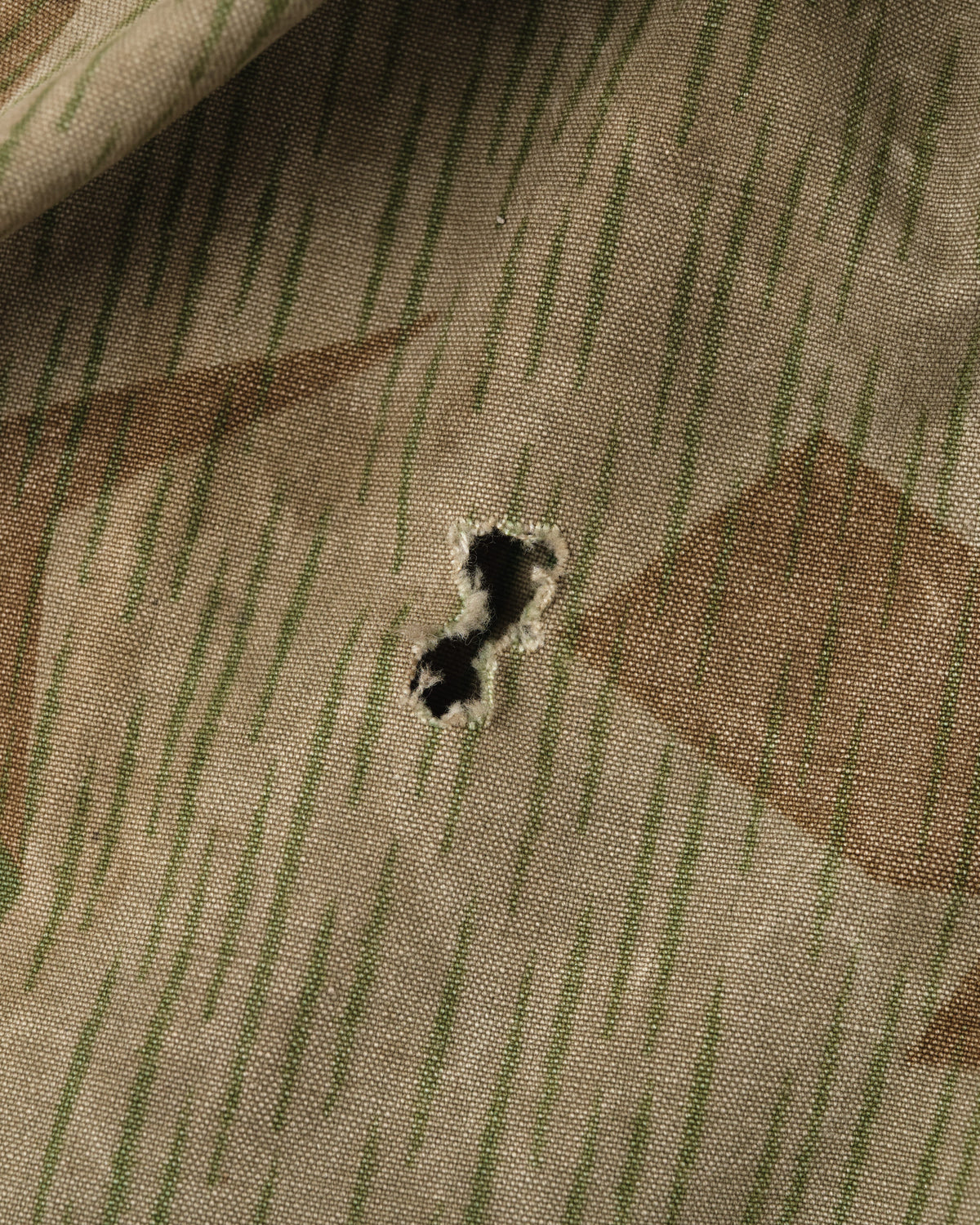
The fabric exhibits natural aging—patina, soiling, abrading, fraying at edges, minor punctures, and evidence of repair—consistent with authentic wear. No damage of consequence impedes wear, and the piece remains entirely serviceable.
German military items have attracted particular attention in recent years, though historically, surviving examples remain extraordinarily scarce. Demand substantially exceeds available supply.
German military pieces maintain a dedicated collector base, and this represents precisely the sort of archive piece that collectors rarely relinquish—an object of genuine desire.
This is not the sort of piece one simply acquires through expenditure; future availability cannot be assured.
Whether as functional wardrobe or as a collection piece and design reference, this warrants serious consideration. A rare find domestically and internationally, this is an opportunity best seized by those who have sought such items or harbor affection for the exceptional and uncommon.
ADD TO CART

![[~40's]WWII German Army Splinter Camouflage Hooded Jacket "Localmade" "Wehrmacht"](http://vieuxetnouveau-shop.com/cdn/shop/files/Pro-CaptureOne0121_d3173610-b23c-4b44-8890-7d9db87c239c.jpg?v=1746279810&width=2400)
![[~40's]WWII German Army Splinter Camouflage Hooded Jacket "Localmade" "Wehrmacht"](http://vieuxetnouveau-shop.com/cdn/shop/files/Pro-CaptureOne0122_c9afadfc-fccf-49c2-93e3-7c8f67fcec1f.jpg?v=1746279810&width=2400)
![[~40's]WWII German Army Splinter Camouflage Hooded Jacket "Localmade" "Wehrmacht"](http://vieuxetnouveau-shop.com/cdn/shop/files/Pro-CaptureOne0124_89c1ecb2-18ad-41f4-8359-b4f62fab06e9.jpg?v=1746279810&width=2400)
![[~40's]WWII German Army Splinter Camouflage Hooded Jacket "Localmade" "Wehrmacht"](http://vieuxetnouveau-shop.com/cdn/shop/files/Pro-CaptureOne0125_81365330-659e-4d4e-9e34-3cbaa977a03c.jpg?v=1746279810&width=2400)
![[~40's]WWII German Army Splinter Camouflage Hooded Jacket "Localmade" "Wehrmacht"](http://vieuxetnouveau-shop.com/cdn/shop/files/DSCF3291_54dc9093-0995-4b0d-b281-0f8aaa22a986.jpg?v=1746279810&width=2400)
![[~40's]WWII German Army Splinter Camouflage Hooded Jacket "Localmade" "Wehrmacht"](http://vieuxetnouveau-shop.com/cdn/shop/files/DSCF3300_7d9d80ad-fa96-49a4-ae3b-397a159ed783.jpg?v=1746279810&width=2400)
![[~40's]WWII German Army Splinter Camouflage Hooded Jacket "Localmade" "Wehrmacht"](http://vieuxetnouveau-shop.com/cdn/shop/files/DSCF3292_e05ff3b0-5ecc-425b-9a5e-9697cf4776a3.jpg?v=1746279810&width=2400)
![[~40's]WWII German Army Splinter Camouflage Hooded Jacket "Localmade" "Wehrmacht"](http://vieuxetnouveau-shop.com/cdn/shop/files/DSCF3293_2f3c069c-9329-4634-b564-816c66599acc.jpg?v=1746279810&width=2400)
![[~40's]WWII German Army Splinter Camouflage Hooded Jacket "Localmade" "Wehrmacht"](http://vieuxetnouveau-shop.com/cdn/shop/files/DSCF3294_8dc1bb34-b8f4-4d5b-af78-ade0fbb28bd5.jpg?v=1746279810&width=2400)
![[~40's]WWII German Army Splinter Camouflage Hooded Jacket "Localmade" "Wehrmacht"](http://vieuxetnouveau-shop.com/cdn/shop/files/DSCF3295_3dfcd4b2-6a3f-43ec-9955-3f9f26d2675b.jpg?v=1746279810&width=2400)
![[~40's]WWII German Army Splinter Camouflage Hooded Jacket "Localmade" "Wehrmacht"](http://vieuxetnouveau-shop.com/cdn/shop/files/DSCF3297_ae23db2e-db87-449c-9d1c-2b5210f15d57.jpg?v=1746279810&width=2400)
![[~40's]WWII German Army Splinter Camouflage Hooded Jacket "Localmade" "Wehrmacht"](http://vieuxetnouveau-shop.com/cdn/shop/files/DSCF3298_f23a195b-99b0-4f34-9fc2-14d0218a182d.jpg?v=1746279810&width=2400)
![[~40's]WWII German Army Splinter Camouflage Hooded Jacket "Localmade" "Wehrmacht"](http://vieuxetnouveau-shop.com/cdn/shop/files/DSCF3307_afa046a8-961f-4006-98fd-695cc558907b.jpg?v=1746279810&width=2400)
![[~40's]WWII German Army Splinter Camouflage Hooded Jacket "Localmade" "Wehrmacht"](http://vieuxetnouveau-shop.com/cdn/shop/files/DSCF3314_f0e0d134-128b-49a3-b8f8-908c25069211.jpg?v=1746279778&width=2400)
![[~40's]WWII German Army Splinter Camouflage Hooded Jacket "Localmade" "Wehrmacht"](http://vieuxetnouveau-shop.com/cdn/shop/files/DSCF3597_1409cfb7-098b-4b57-bc04-c14847c42208.jpg?v=1746365777&width=2400)
![[~40's]WWII German Army Splinter Camouflage Hooded Jacket "Localmade" "Wehrmacht"](http://vieuxetnouveau-shop.com/cdn/shop/files/DSCF3598_d89658c1-0fe0-425b-8a02-90be2bfa524c.jpg?v=1746365777&width=2400)
![[~40's]WWII German Army Splinter Camouflage Hooded Jacket "Localmade" "Wehrmacht"](http://vieuxetnouveau-shop.com/cdn/shop/files/DSCF3599_7e748b90-1b1b-4694-b56e-c8b64d06d9b5.jpg?v=1746365777&width=2400)
![[~40's]WWII German Army Splinter Camouflage Hooded Jacket "Localmade" "Wehrmacht"](http://vieuxetnouveau-shop.com/cdn/shop/files/DSCF3596_c7114785-5724-4bf1-8512-8582457cf862.jpg?v=1746365777&width=2400)
![[~40's]WWII German Army Splinter Camouflage Hooded Jacket "Localmade" "Wehrmacht"](http://vieuxetnouveau-shop.com/cdn/shop/files/DSCF3604_f566beea-ef76-4e33-b4aa-fed76fc289f2.jpg?v=1746365777&width=2400)
![[~40's]WWII German Army Splinter Camouflage Hooded Jacket "Localmade" "Wehrmacht"](http://vieuxetnouveau-shop.com/cdn/shop/files/DSCF3605_a4d65f87-e061-4263-8c5b-301cc30921fa.jpg?v=1746365777&width=2400)
![[~40's]WWII German Army Splinter Camouflage Hooded Jacket "Localmade" "Wehrmacht"](http://vieuxetnouveau-shop.com/cdn/shop/files/DSCF3594_abb1a8d2-b65d-442b-838e-1e3b531d95c9.jpg?v=1746365777&width=2400)
![[~40's]WWII German Army Splinter Camouflage Hooded Jacket "Localmade" "Wehrmacht"](http://vieuxetnouveau-shop.com/cdn/shop/files/DSCF3591.jpg?v=1746365777&width=2400)
![[~40's]WWII German Army Splinter Camouflage Hooded Jacket "Localmade" "Wehrmacht"](http://vieuxetnouveau-shop.com/cdn/shop/files/DSCF3592_cd91ef27-cbdb-4b43-aaff-11749ecafbda.jpg?v=1746365777&width=2400)
![[~40's]WWII German Army Splinter Camouflage Hooded Jacket "Localmade" "Wehrmacht"](http://vieuxetnouveau-shop.com/cdn/shop/files/DSCF3595_fe3213d0-51de-4ab9-8a9f-2bcca7e72aa8.jpg?v=1746365777&width=2400)
![[~40's]WWII German Army Splinter Camouflage Hooded Jacket "Localmade" "Wehrmacht"](http://vieuxetnouveau-shop.com/cdn/shop/files/DSCF3603_c5ce60c6-532a-4bc7-b87d-b762157a7e31.jpg?v=1746365777&width=2400)
![[~40's]WWII German Army Splinter Camouflage Hooded Jacket "Localmade" "Wehrmacht"](http://vieuxetnouveau-shop.com/cdn/shop/files/DSCF3600_2224d9fe-a5e6-4b88-8465-b1663f31f531.jpg?v=1746365777&width=2400)
![[~40's]WWII German Army Splinter Camouflage Hooded Jacket "Localmade" "Wehrmacht"](http://vieuxetnouveau-shop.com/cdn/shop/files/DSCF3601_2aa2eed1-7a69-4a2e-84d1-ded05a8b3bad.jpg?v=1746365777&width=2400)
![[~40's]WWII German Army Splinter Camouflage Hooded Jacket "Localmade" "Wehrmacht"](http://vieuxetnouveau-shop.com/cdn/shop/files/DSCF3602_4aebc8fd-f7f3-4ed5-ac50-28360a77e925.jpg?v=1746365777&width=2400)