Circa 1940s, Wehrmacht Sumpftarnmuster 44 Camouflage 43 Pattern Reversible Winter Parka .
An exceptionally rare acquisition.
Wehrmacht—the unified military force of Nazi Germany spanning 1935 to 1945—comprised three branches: the Heer (Army), Kriegsmarine (Navy), and Luftwaffe (Air Force).
The designation Wehrmacht superseded the earlier "Reichswehr," embodying the Nazi regime's efforts to rearm Germany beyond the scope permitted by the Treaty of Versailles.
Following Adolf Hitler's seizure of power in 1933, one of his most audacious undertakings was the establishment of Wehrmacht.
Following Germany's unconditional surrender on 8 May 1945, Allied occupation commenced and the systematic dissolution of Wehrmacht began.
Following Wehrmacht's dissolution, Germany became a nation without military power. Subsequent military reconstruction proceeded separately under Cold War auspices: in West Germany (the Federal Republic) and East Germany (the Democratic Republic).
These new military organisations were expressly distinct from Wehrmacht traditions and structures.
From this historical context, we present a "Reversible Winter Parka" issued and worn as winter field dress during the Second World War.
Given the extraordinary scarcity of surviving examples both domestically and internationally, many will encounter this piece for the first time.
The defining characteristic of this specimen is unmistakably the camouflage pattern unique to Wehrmacht.
The camouflage scheme known as "Sumpftarnmuster" derives from Sumpf (marshland) and Tarnmuster (camouflage pattern)—a term literally signifying "marsh camouflage pattern."
Sumpftarnmuster exists in two iterations: "Sumpftarnmuster 43," first introduced in 1943 during the Second World War, and "Sumpftarnmuster 44," deployed the following year in 1944.
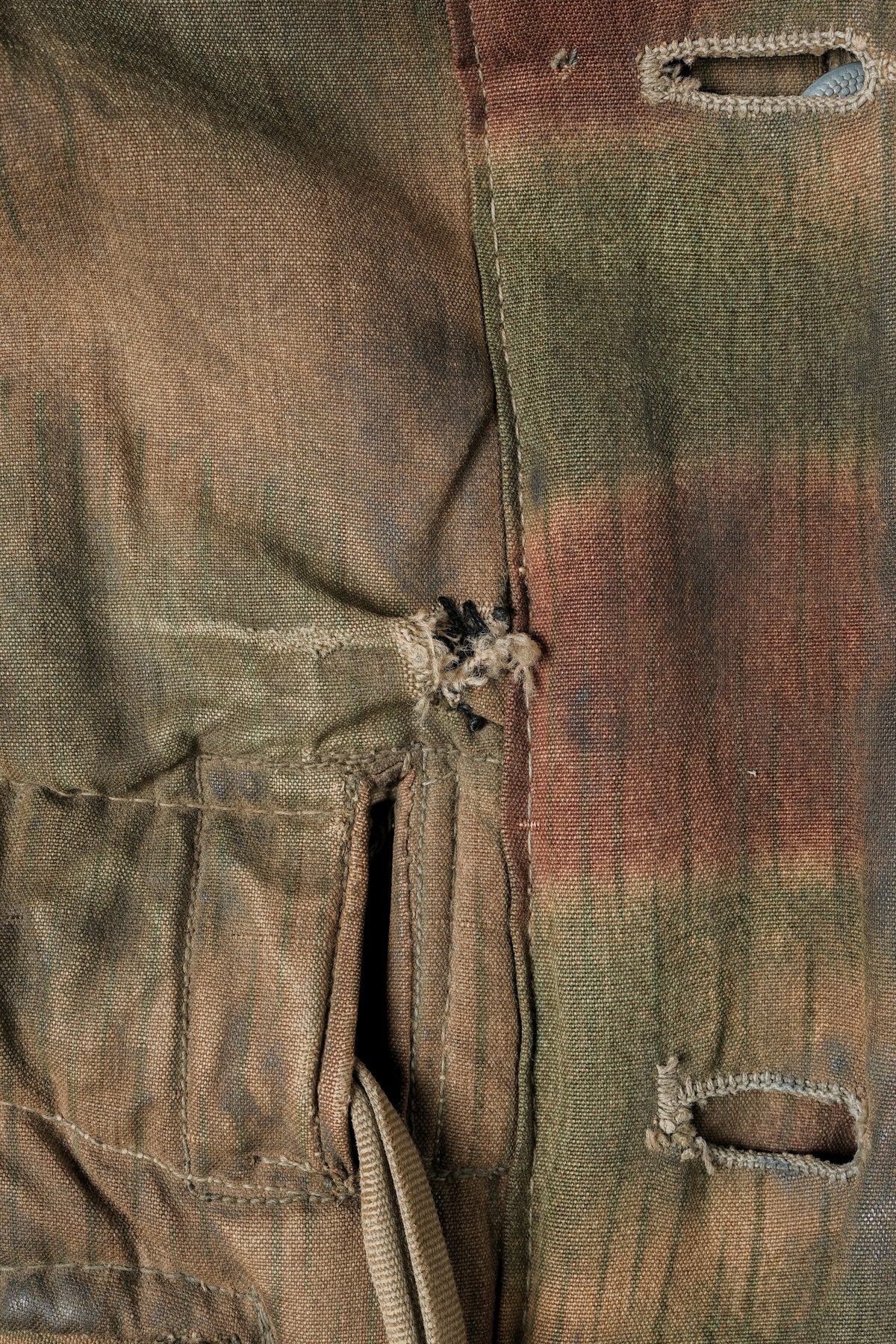
While subtle variations distinguish the two patterns, both employ a beige ground with red-brown and green—three colours in all—distributed throughout.
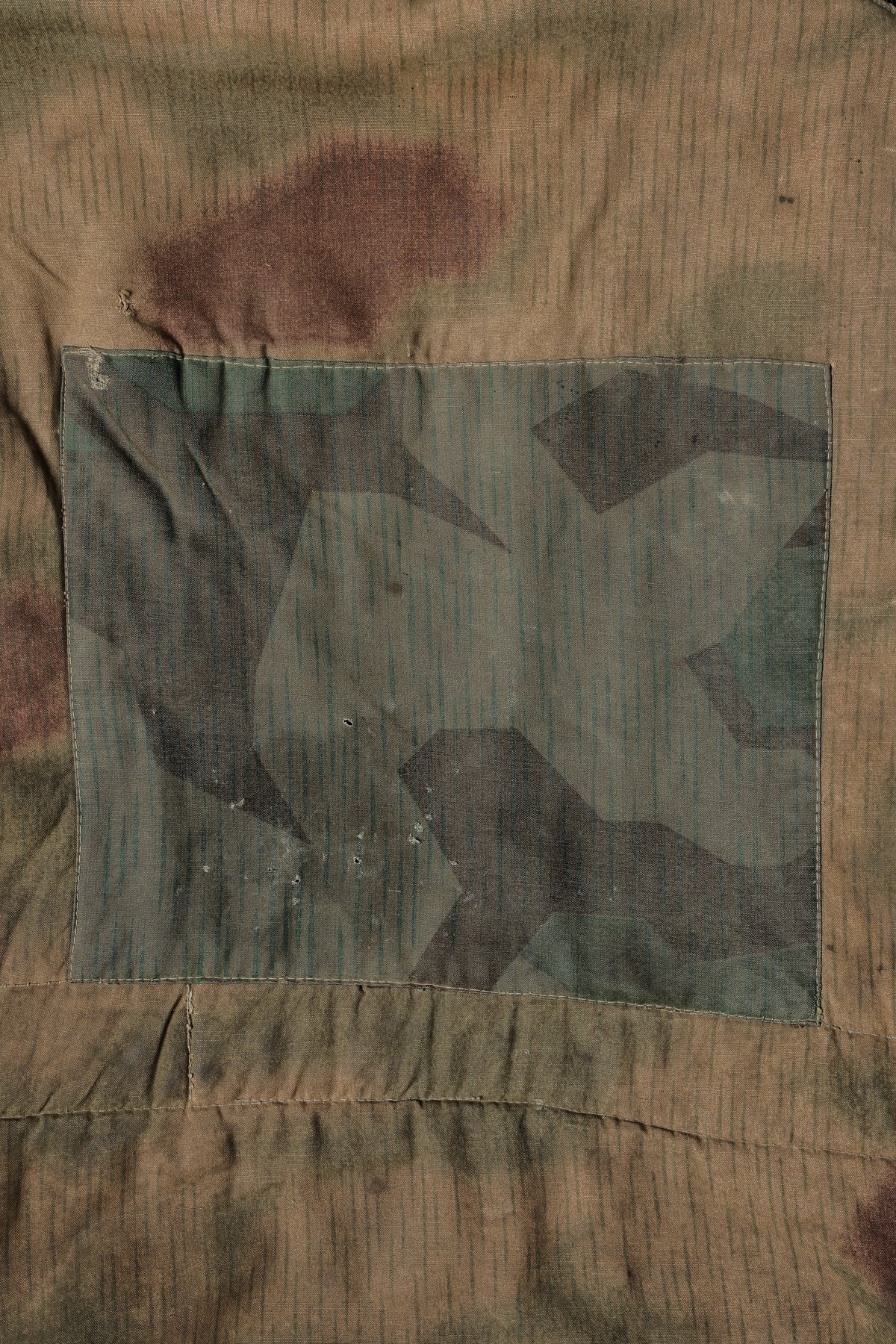
Sumpftarnmuster 43 was influenced by the splinter camouflage pattern known as "Splittermuster 31," wherein angular, fragmented motifs predominated.
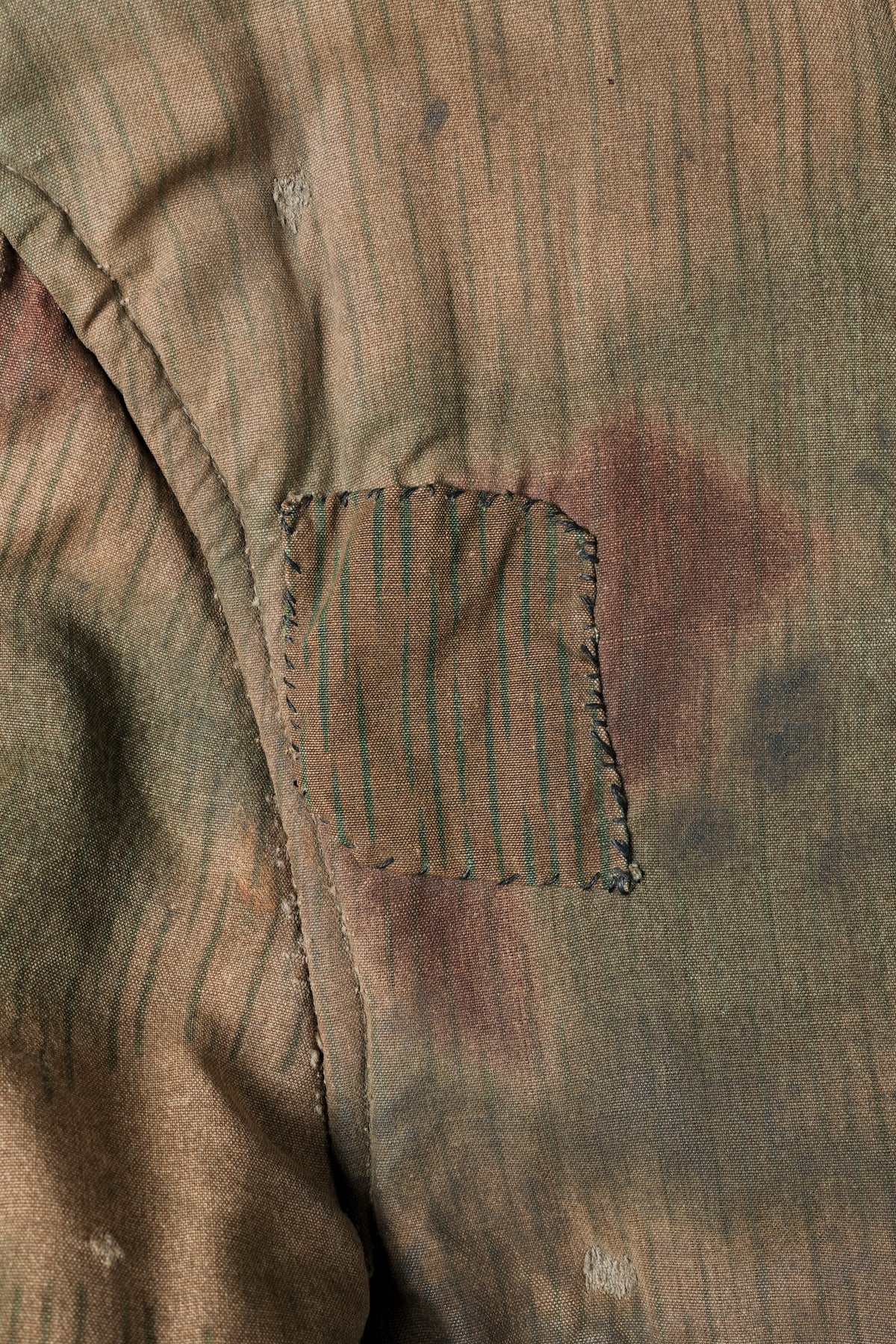
This specimen employs the latter iteration—"Sumpftarnmuster 44"—distinguished by its diffused boundaries and characteristically soft, mottled camouflage rendering.
The winter parka, while issued as seasonal dress, manifests in various Wehrmacht configurations, including alternative camouflage patterns and reversible constructions.
Other models exist bearing Sumpftarnmuster camouflage; nomenclature varies subtly according to pattern nuances and whether the piece features reversible or non-reversible construction.
According to the German military reference material in our possession, the designation of this specimen is "WINTERANZUG 43 IM, SUMPFTARNMUSTER 44."
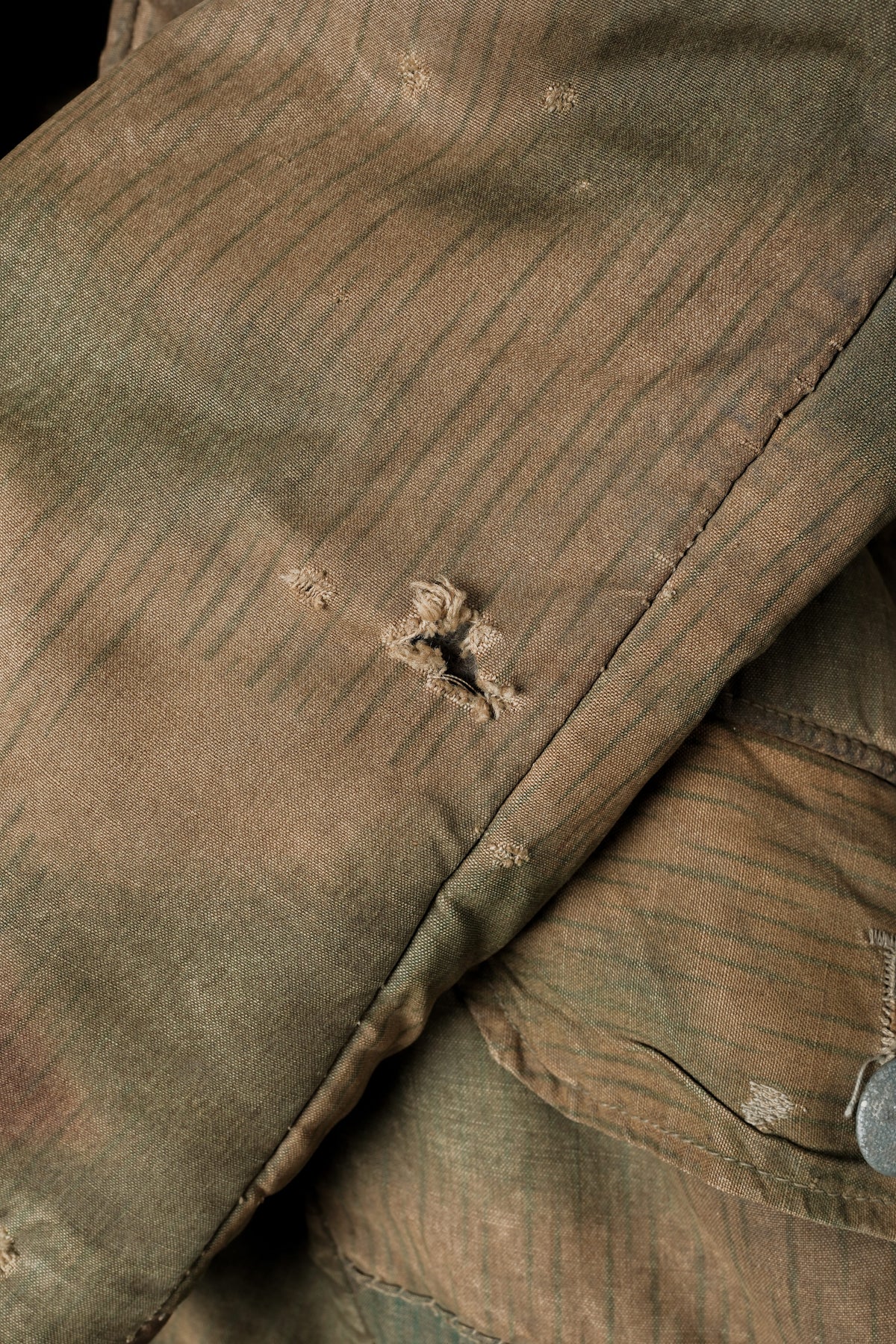
Both outer and lining are constructed from a cotton-rayon blend, rendering this a reversible garment.
The rear features a substantial patchwork panel in "Splittermuster 31," the pattern used by the Wehrmacht during the Second World War—an indulgent detail.
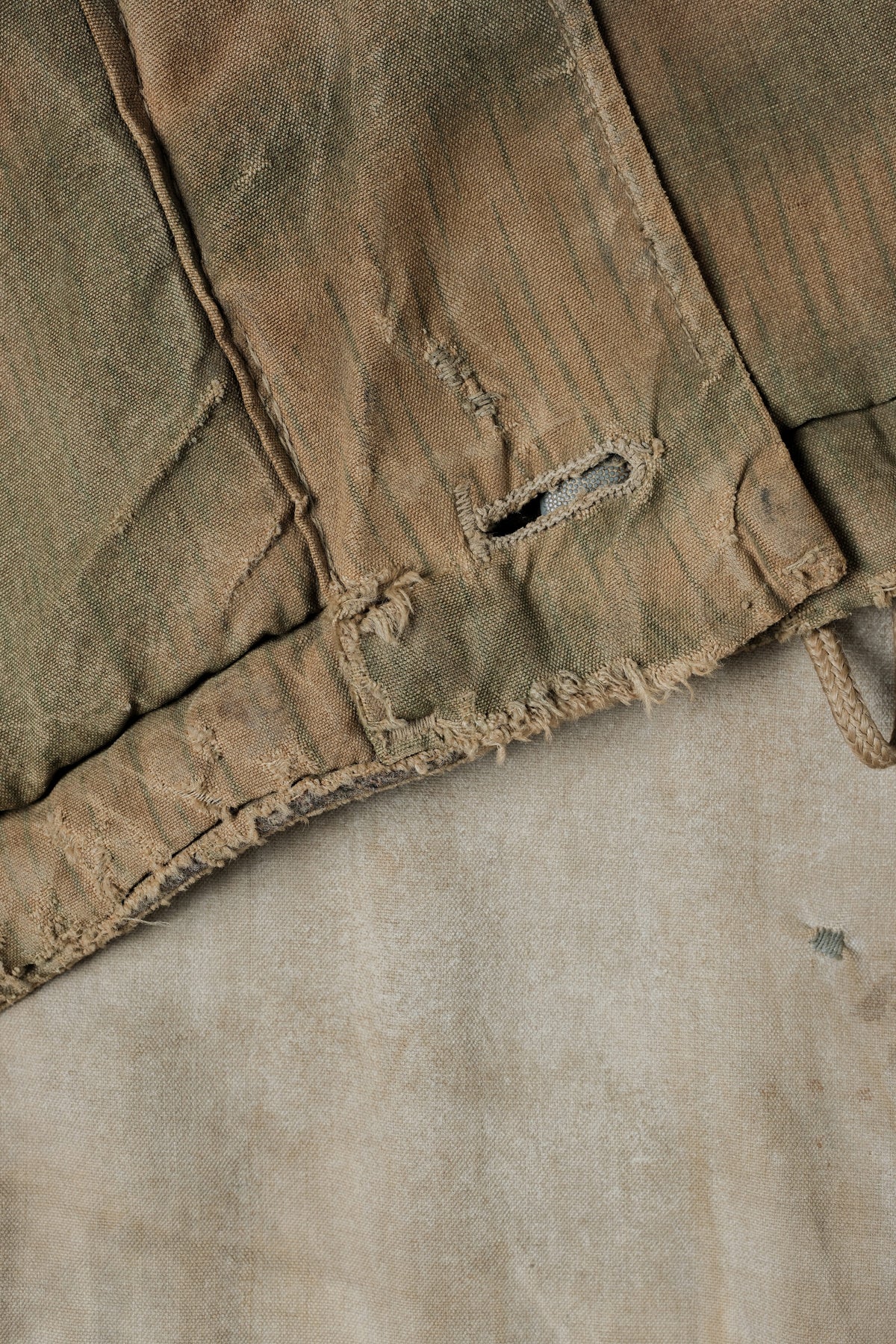
The front closure employs a distinctive double-layer button placket secured by six buttons, creating a double-wall structure. This design ingeniously restricts external air infiltration whilst retaining internal warmth—a pragmatic construction reflecting authentic field considerations.
The hem features exposed-button flap pockets.
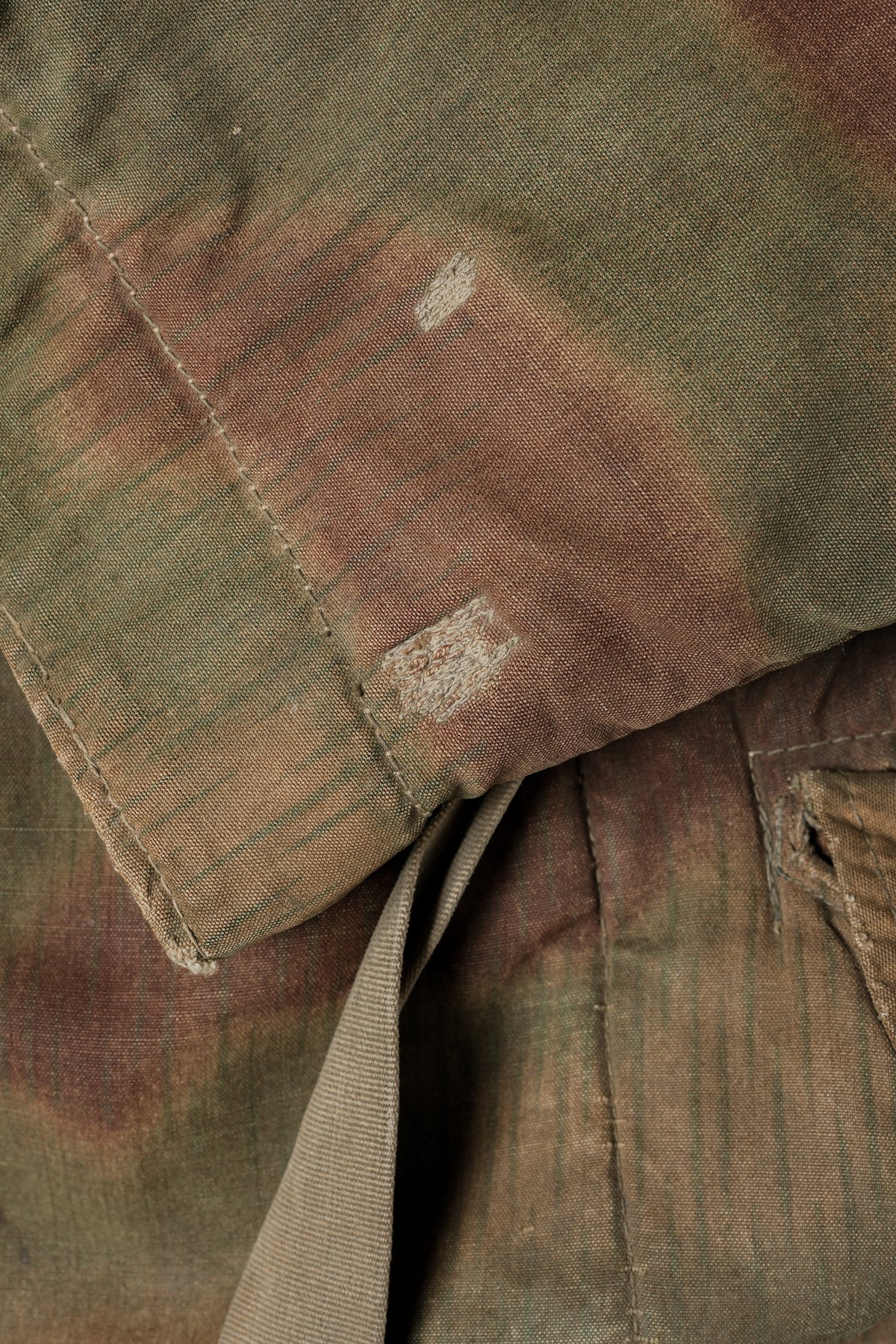
The hood and hem are fitted with drawstring cord, whilst the waist features dual adjustment straps.
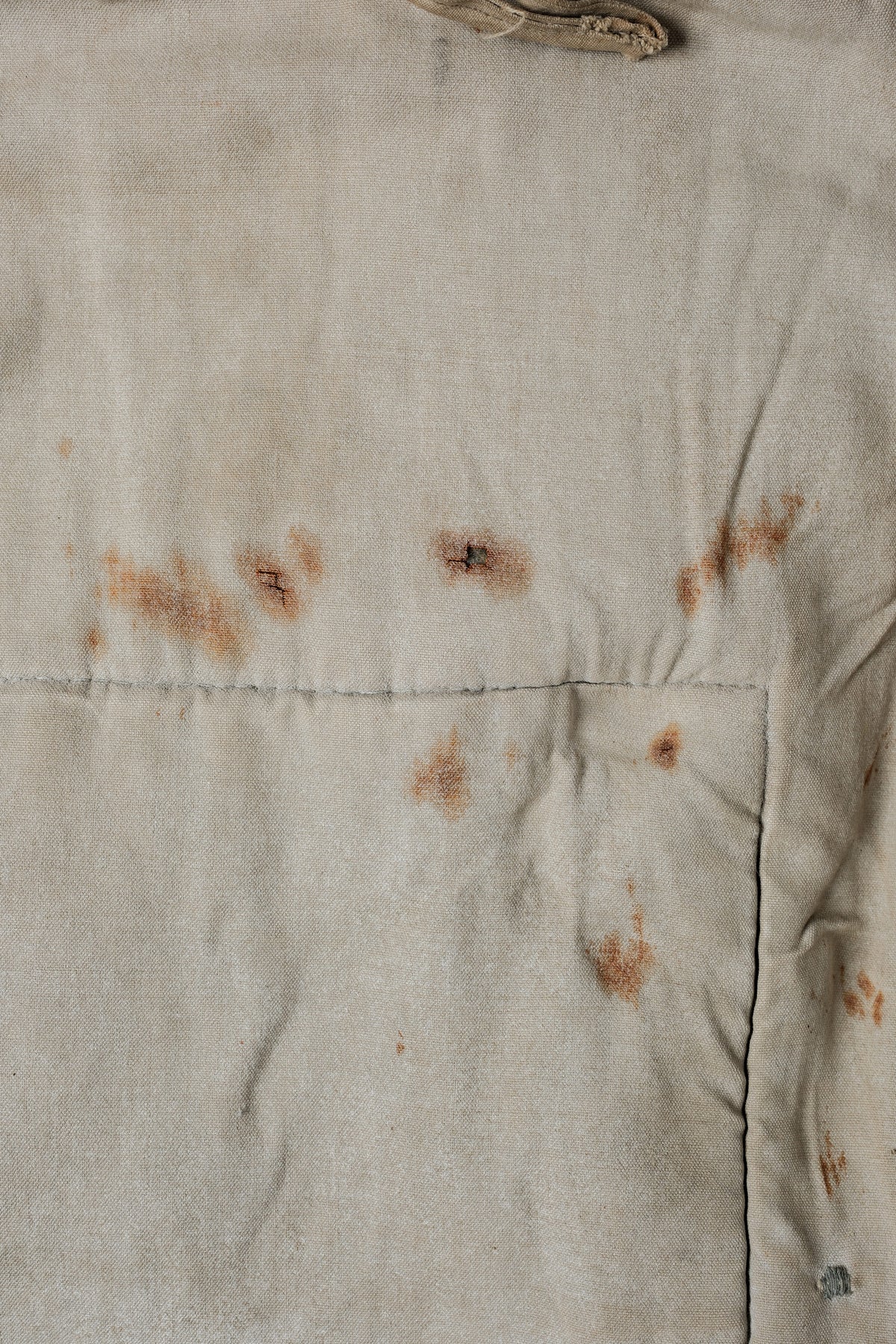
The interior right placket retains faint Wehrmacht stamp markings.
Beyond its rarity, this piece commands attention as a fashion object—undeniably striking in presence. We encourage uninhibited wear.
No size marking is visible, though the piece aligns with approximately Japanese sizes M–L.
The measurements correspond to proportions well-suited to Japanese physiology—a golden-mean size accommodating varied frames. In military tradition, the generous cut permits substantial layering beneath without constraint.
Originally conceived as an over-garment worn atop regulation dress, all examples possess accommodating proportions.
Wear consistent with age is evident—rub marks inherent to the fabric, soiling, abrasion, fraying, small punctures, and repair traces—though no significant damage compromises wearability.
Recent years have witnessed renewed attention toward Wehrmacht specimens. Yet Wehrmacht items remain scarce, their historical significance ensuring scarcity. Supply struggles to meet demand.
Wehrmacht holds a devoted collector base; this archive piece is precisely the sort they retain.
This is not an object readily purchased. Future availability is uncertain.
Whether as working wardrobe, collection, or design reference, this piece merits consideration. Rarely encountered in Japan or abroad, this is a singular piece. Those seeking such objects—or simply the uncommon—should not overlook this opportunity.
ADD TO CART