1940 issue, Hitler-Jugend (Nazi Party youth organization) 'Double Breasted Motorcycle Leather Jacket'.
A special acquisition.
Hitler-Jugend (Hitler-Jugend = HJ) was the youth organization of the Nazi Party during Nazi Germany. Its origins trace back to 1922, but it was formally established in 1926. This organization was designed to cultivate German boys into soldiers obedient to Nazi ideology.
When the Nazis came to power in 1933, Hitler-Jugend expanded rapidly, eventually comprising over 2.3 million members by the end of 1933. By 1936, Hitler-Jugend became the sole legal youth organization within Germany, and by 1939, membership became mandatory for all Germans aged 10 to 18.
Specifically, boys aged 10 to 14 formed the Deutsches Jungvolk, while those aged 14 to 18 formed the Hitler-Jugend proper.
The activities of Hitler-Jugend aimed to instill Nazi ideology in children, with members prepared for their future roles as soldiers through military training, sports, and musical education.
While the organization possessed military aspects, it also incorporated non-military dimensions, making it not entirely a military institution, though much of its character and activity centered on military training and preparation.
The boys underwent military drills, tactical training, and weapons instruction. During the Second World War, as adult men advanced to the front, members of Hitler-Jugend took on roles such as city defense and the protection of vital facilities.
With Germany's defeat in 1945, Hitler-Jugend effectively dissolved, though many former members found it difficult to escape the influence of Nazi ideology, leaving deep scars on German society as a whole.
In summary, Hitler-Jugend was an organization with strong military elements, yet it would be inappropriate to call it purely military, as it also possessed political and educational dimensions.
From such an organization comes this 'Double Breasted Motorcycle Leather Jacket,' believed to have been issued and worn as part of the uniform for motorcycle units during the Second World War.
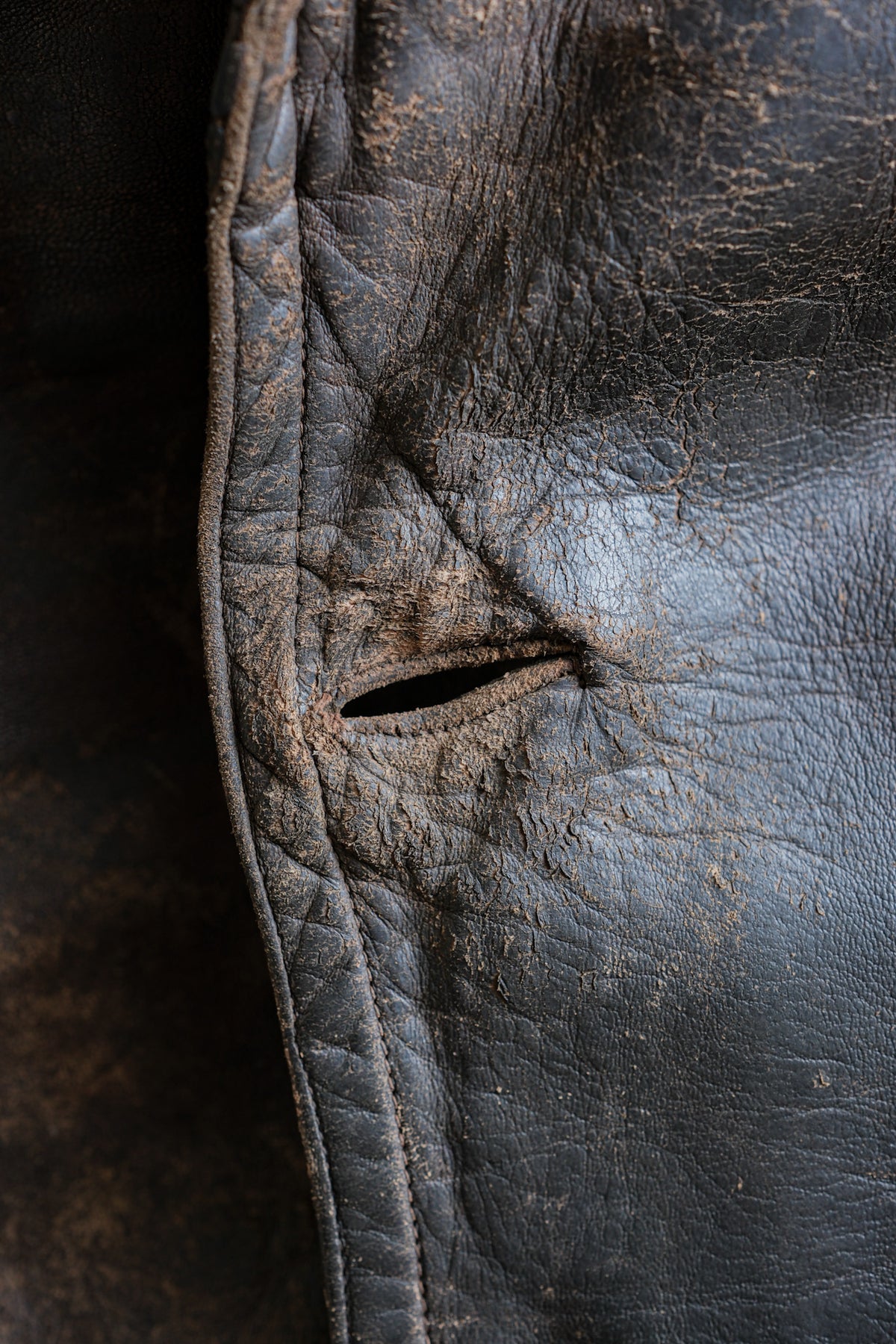
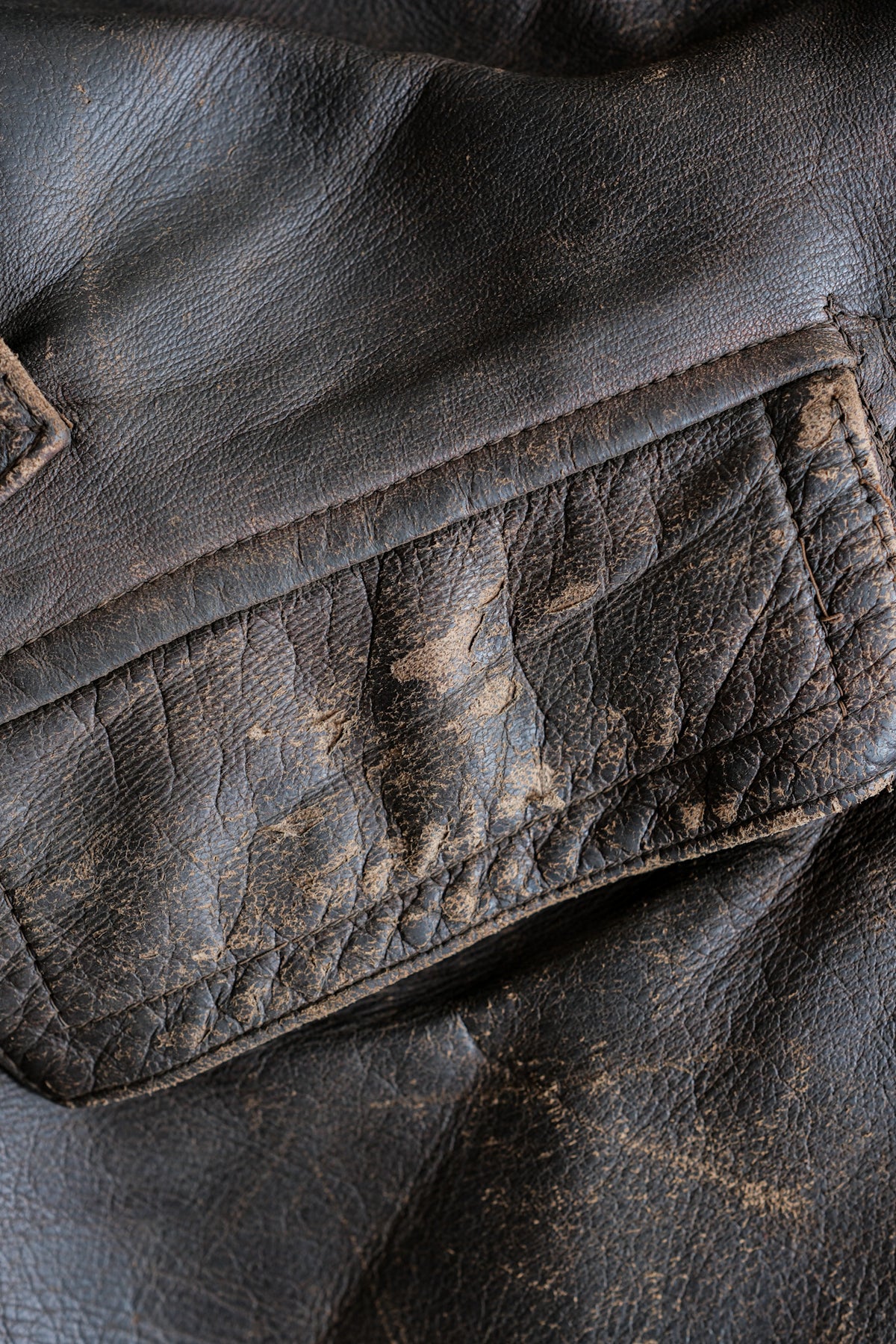
A striking piece brimming with character—featuring substantial tailored lapels with considerable presence, vertically-oriented hand warmer pockets positioned at both waist seams, and flap pockets at both hem edges.
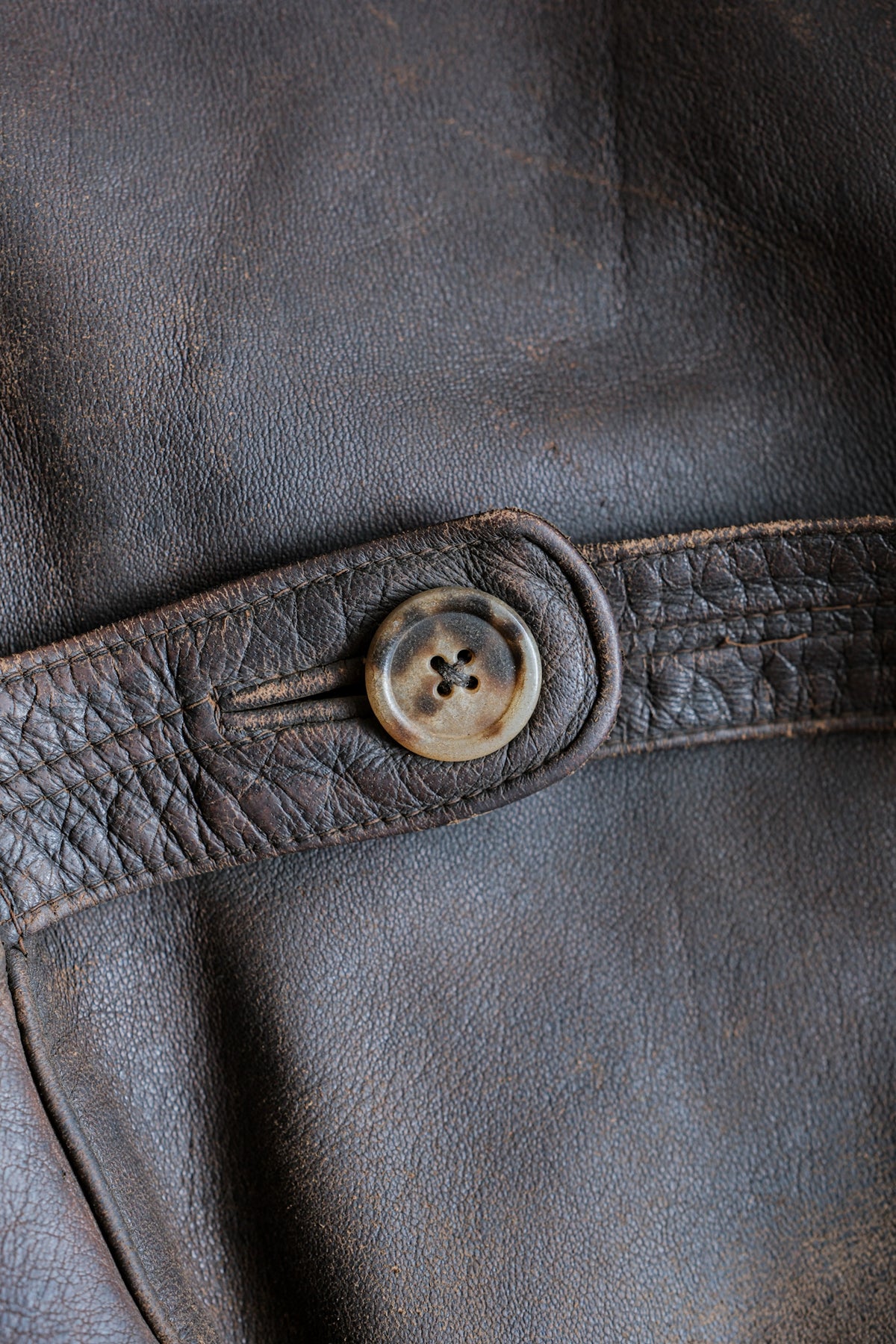
The back also exhibits an arched cutting, and a martingale-style back belt has been incorporated for waist fitting adjustment—details that emerge naturally from sound construction principles.
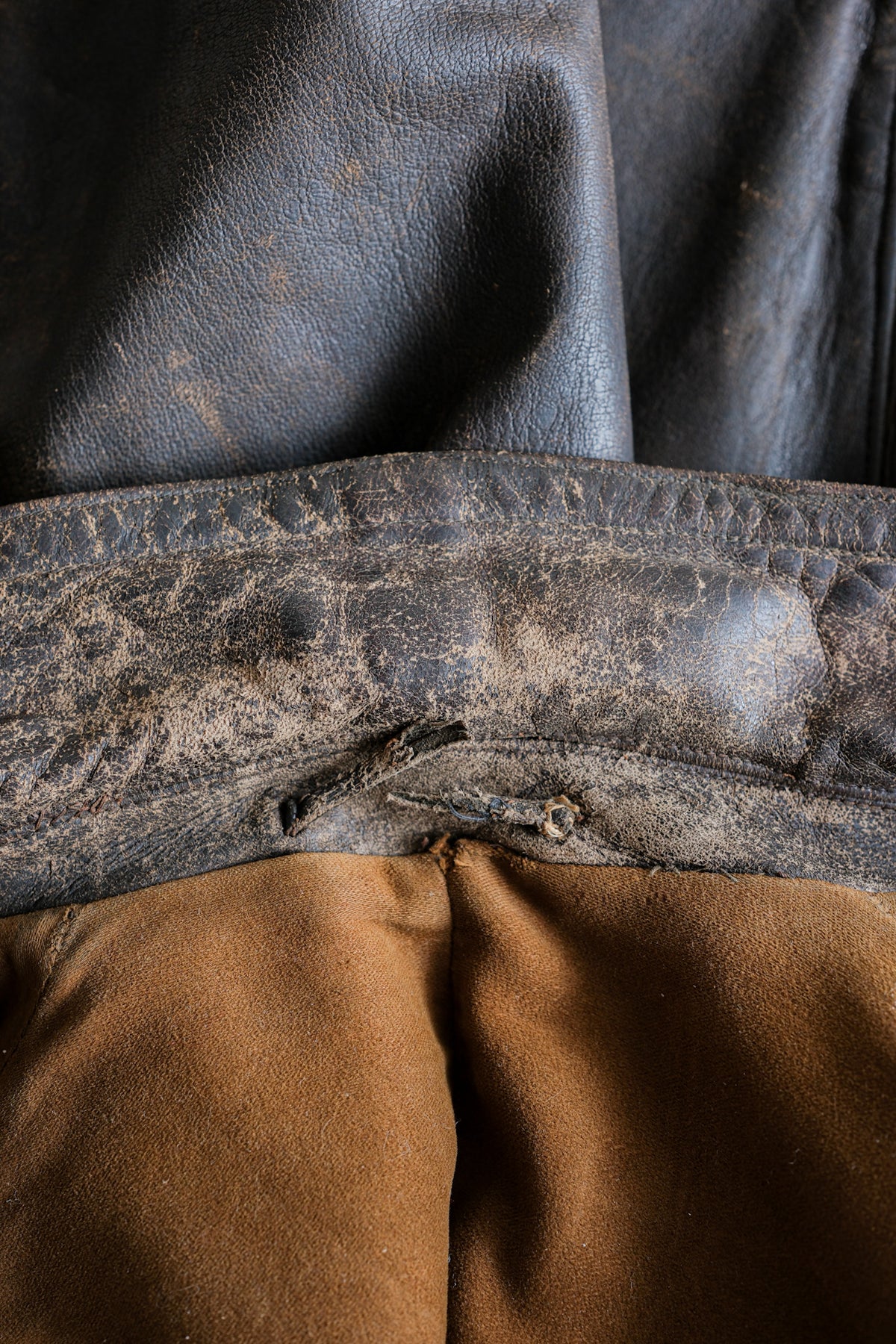
The collar is designed with a chin strap and set higher to ward off wind and enhance warmth. Worn with the collar raised, it commands considerable presence.
The difference between a jacket with a chin strap and one without is considerable. The elevation and atmosphere achieved by raising the collar is of another order entirely.
Inside, a stamp bearing the issue date is visible. The numeral "1940" can be confirmed within the stamp, indicating this piece was formally issued in 1940.
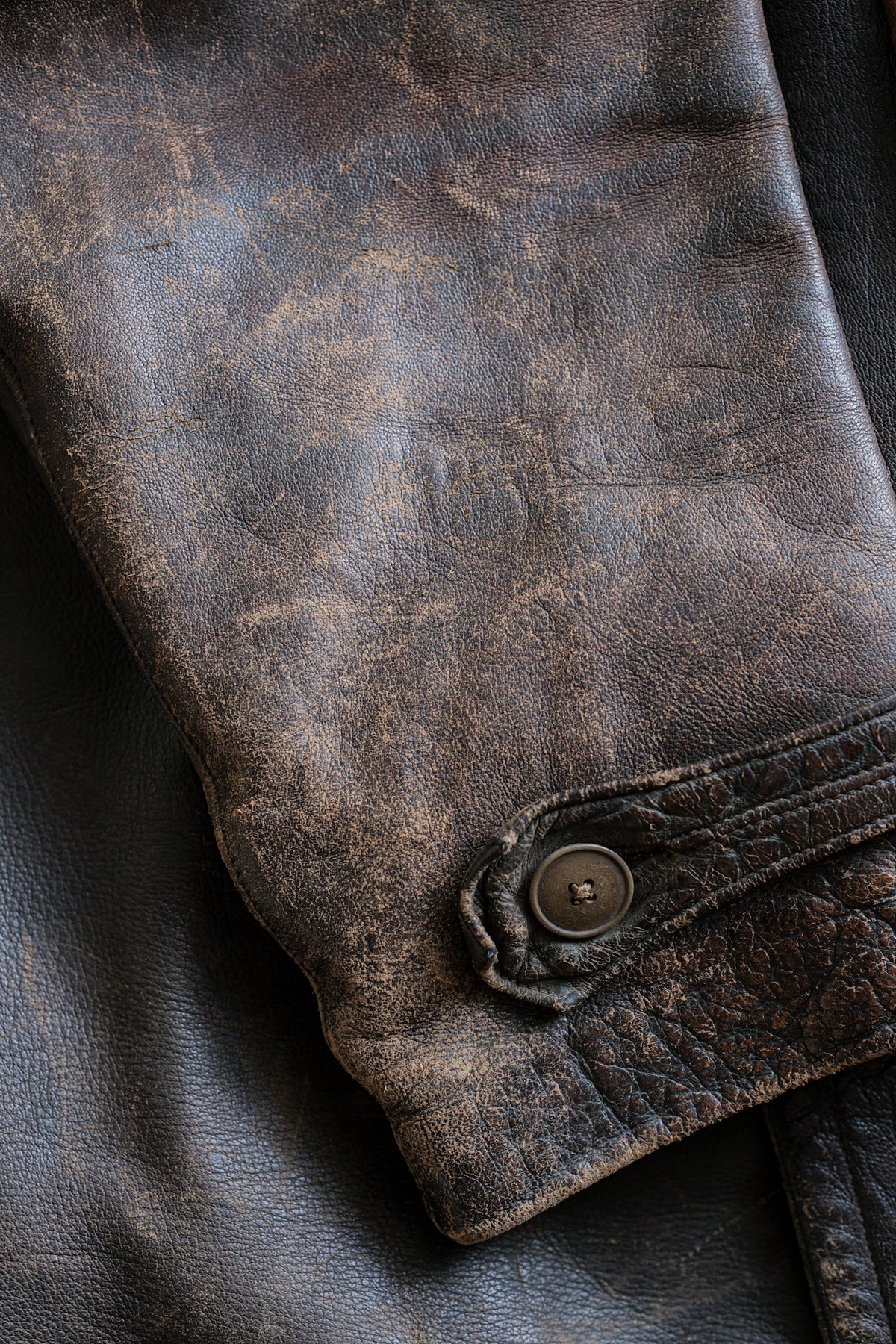
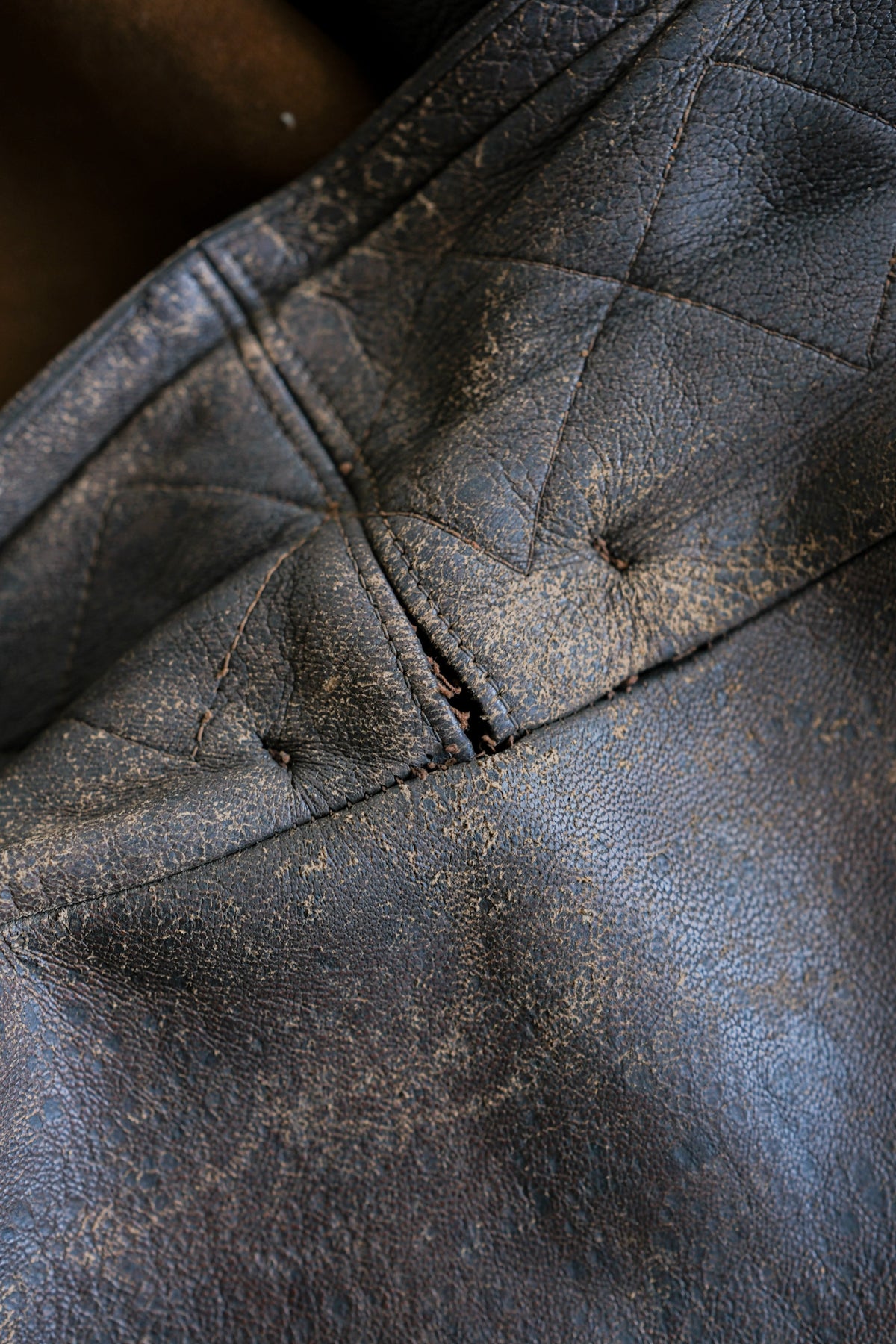
Years of wear have created a patina across the leather's surface, with color variations now evident—the atmosphere is exceptional.Well-preserved leather jackets are certainly commendable, but a jacket weathered to this degree possesses a character unique to vintage garments.
Truly a piece that warrants the description "masculine leather jacket"—steeped entirely in character and presence.
Many may hesitate at the prospect of stiff leather, but such concerns are unfounded.The leather has already softened considerably, clinging comfortably to the body, ensuring excellent wearability.
What emanates from this piece is not the sensibility of a fashion item, but the undeniable authority of genuine motorcycle wear. We encourage you to experience firsthand the weight of authentic workwear from that era.
Suitable for contemporary urban wear, certainly, but we equally recommend its original application—riding.
While no size marking is evident, the fit corresponds approximately to Japanese size XL to XXL.
Given the actual measurements, even those of considerable stature should find it accommodating.
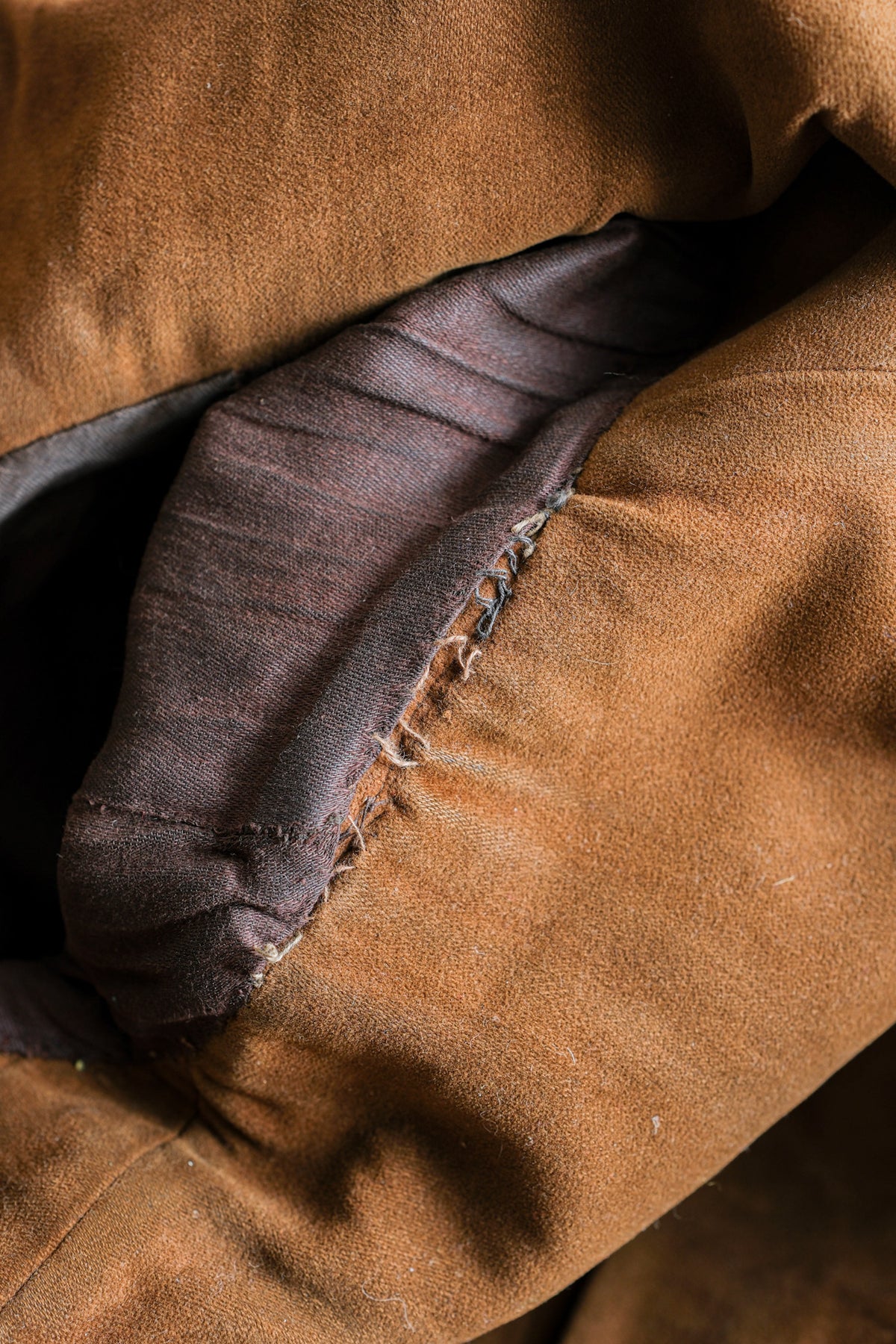
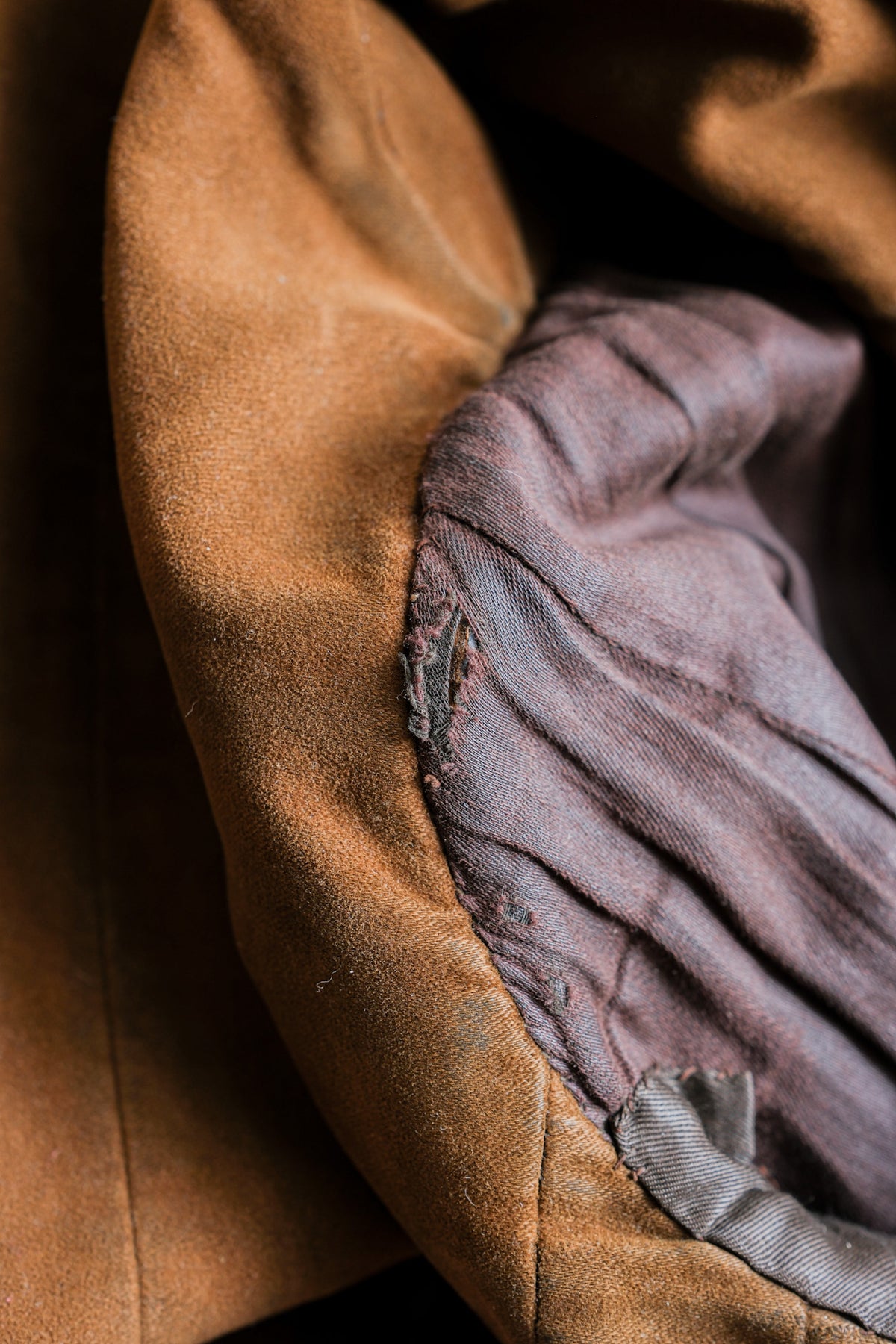
The condition reflects overall use—marked by soiling, fading, discoloration, creasing, loose threads, cracks, and areas of separation—yet vintage character abounds.
We recommend wearing it as-is, though restoration is certainly an option should damage concern you.
German military items have garnered particular attention in recent years. Yet German military artifacts remain scarce in surviving numbers, their historical weight lending them considerable rarity, with demand far outpacing supply.
Among the devoted collectors of German military pieces, this is undoubtedly an archive piece coveted enough that few would willingly part with it.
Worthy both as wardrobe and collection—equally compelling as a design reference.
A rare acquisition that surfaces infrequently in our shop. Should this be what you seek, we urge you not to overlook this opportunity.