Circa 1940s, a Kriegsmarine (German Navy) Drillich Herringbone Twill Cotton Linen Officer Lapel Jacket.
A special acquisition.
The Kriegsmarine was established in 1935 under the Rearmament Act, serving as the naval branch of the German Armed Forces.
Severely restricted by the Treaty of Versailles following the First World War, the German Navy quietly expanded its naval capabilities, including submarines, during the rearmament period of the 1930s.
The Kriegsmarine inherited from both the Imperial Navy (Kaiserliche Marine) of the First World War and the Weimar Republic's Navy (Reichsmarine), operating from 1935 to 1945 under Nazi Germany. It participated in various military operations throughout the Second World War.
Its organization and operations drew heavily from the Reichsmarine, and its establishment and development symbolized Germany's military ambitions of the period, deeply implicating the nation in the international circumstances of the time.
We present a remarkable piece: an Officer Lapel Jacket, believed to have been tailored for naval officers serving in the Kriegsmarine.
Drillich refers to a durable work fabric widely used by the German military, particularly during the Second World War.
Initially adopted as unbleached work and training wear, once the war began, its comfort and practicality led to its adoption as summer combat dress for field deployment.
Though initially designed for work and training purposes, the fabric was continuously refined in color and cut to better suit combat requirements, evolving in response to practical field needs.
The white work and training garments of the Kriegsmarine trace their lineage to the Royal Prussian Navy (1701–1867), were carried forward through the German Imperial Navy (1871–1918), and ultimately inherited by the Kriegsmarine.
This particular specimen represents no ordinary work or training piece—it is a special garment, tailored specifically for officers.
The absence of unnecessary ornamentation on both front and back is itself essential to its contemporary value as a wearable fashion piece.
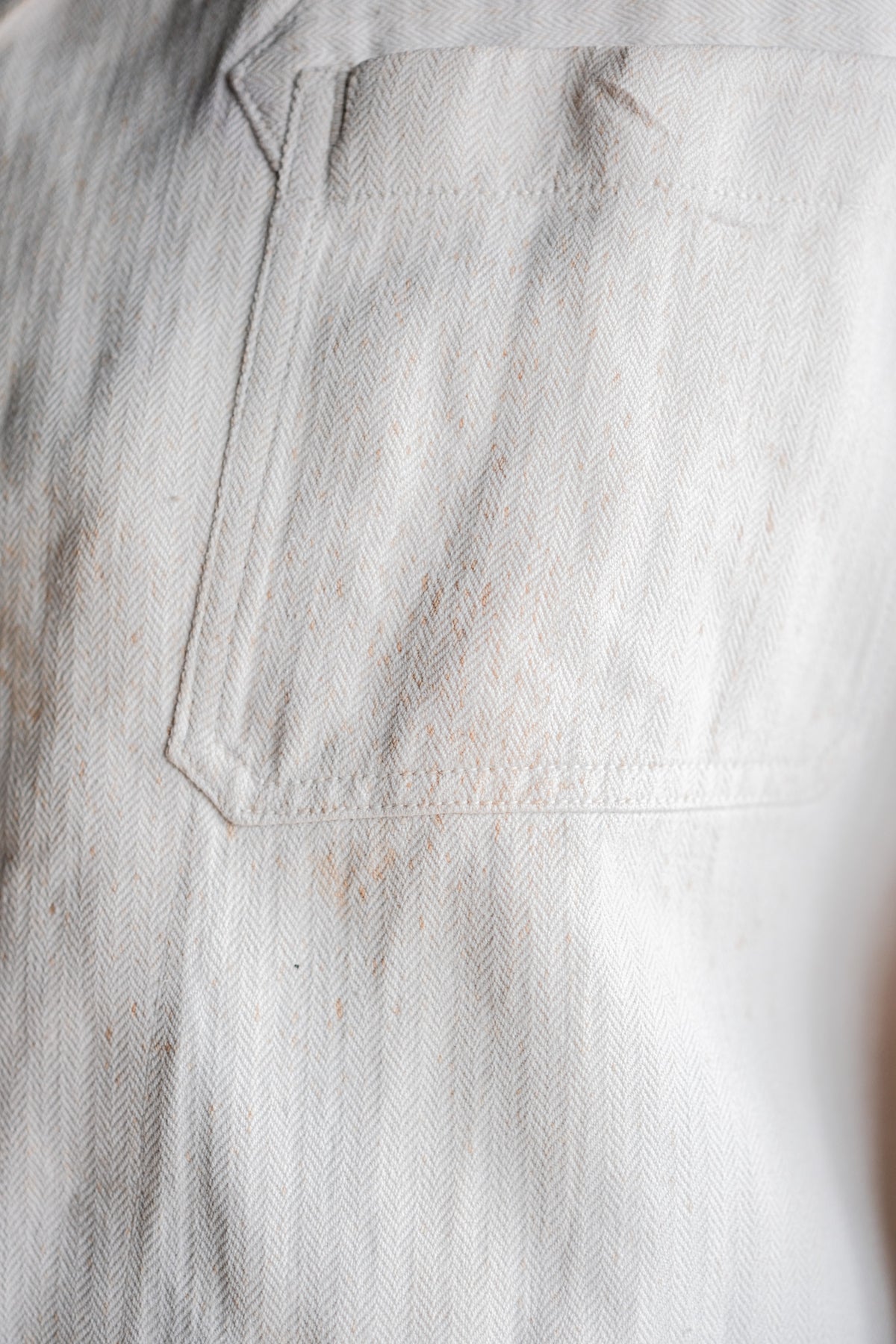
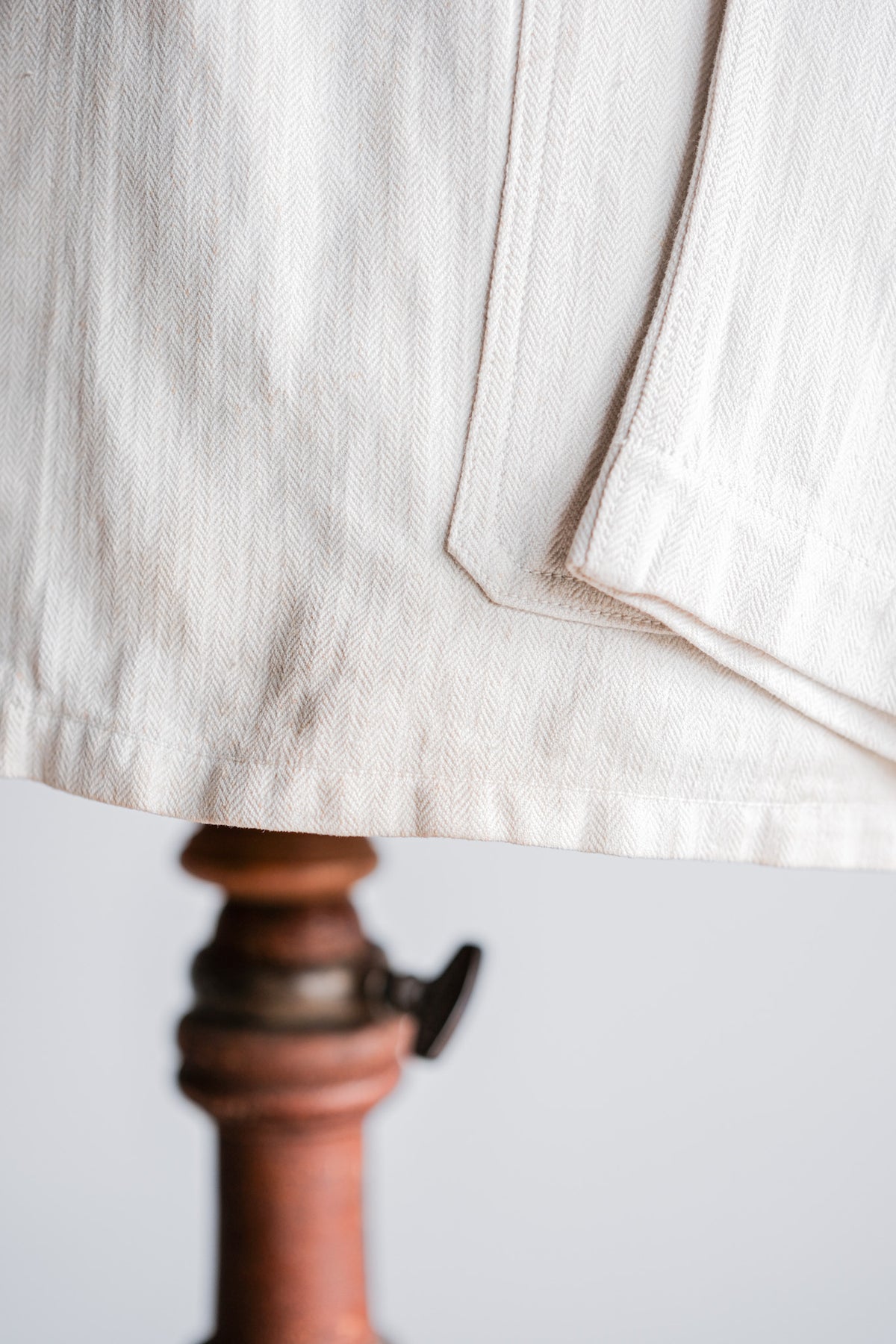
Five buttons at the front, a patch pocket on the chest, and patch pockets at each side of the waist—details that are simple, austere, and utterly without excess.
The gold buttons on the front divide opinion, but personally, they strike an elegant accent against the white ground.
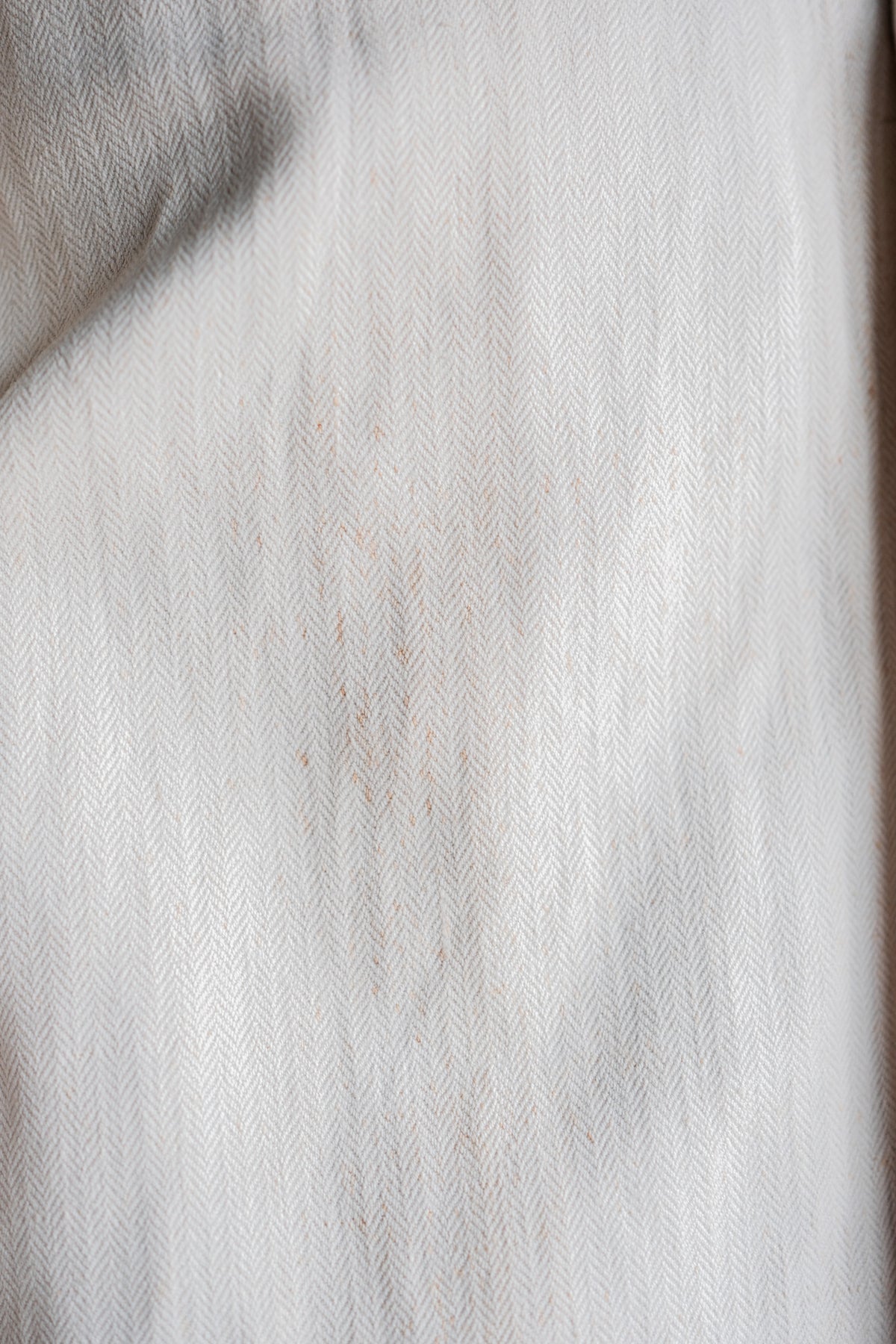
The fabric is the distinctive Drillich weave unique to the German military: a cotton and linen blend in HBT (Herringbone Twill).
The blend appears to be roughly 50/50 cotton and linen, so the supple, fluid movement characteristic of vintage linen is minimal. Yet the fabric remains cool and lightweight—precisely what one needs for warmer seasons.
The silhouette is subtly shaped through the sides and waist, then flares gently from waist to hem in an A-line cut.
It possesses the understated elegance of a tailored jacket, making it equally suitable for casual and formal wear alike—a truly versatile garment. In the best sense, it does not read as a military piece at all.
No size marking is visible, though based on proportions it appears to correspond to a Japanese S or M.
The actual measurements indicate a compact sizing, suitable for those of smaller stature without compromise.
There is evident wear and soiling consistent with age, though no significant damage impairs wearability.
German military pieces have drawn increasing attention in recent years, yet their scarcity—rooted in historical circumstances—means existing examples are exceedingly rare. Demand far outpaces supply.
With a devoted following, German military artifacts remain the kind of archive pieces collectors rarely release.
Essential equally as a wardrobe staple, a collection piece, or a design reference.German military items arrive at our shop with uncommon scarcity. Should you have been seeking such a piece, do not overlook this opportunity.
ADD TO CART