A Winter Sheepskin Fur Vest, estimated to date from the 1940s, issued by the German Waffen-SS.
A special acquisition.
The Waffen-SS was the armed organization of the Schutzstaffel within the NSDAP, established to protect the party and its members from potential betrayal by the Reichswehr or domestic unrest. It was neither military nor police, but rather a politically reliable armed force composed of party loyalists.
The Waffen-SS grew to comprise more than 38 divisions during the war, serving alongside the Wehrmacht, Ordnungspolizei, and other security forces.
Originally, membership was restricted to those deemed "Aryan" in accordance with Nazi racial doctrine. However, in 1940, regulations were partially relaxed, and following the 1941 invasion of the Soviet Union, foreign volunteers and conscripted soldiers were organized into units as part of Nazi propaganda portraying the conflict as a "crusade against Bolshevism in Europe."
The Waffen-SS was fundamentally structured around Nazi racial ideology, and notably, Poles—deemed "inferior" by Nazi classification—were excluded from service.
We present a Sheepskin Fur Vest, believed to have been issued and worn by the Waffen-SS as an overvest worn atop uniforms during winter months.
Archival evidence confirms that the Wehrmacht similarly utilized front-button leather jackets and vests of comparable construction, suggesting that such leather vests were standard winter wear throughout the German military of that period.
This particular example employs metal hook closures rather than the front-button configuration seen in other documented pieces.
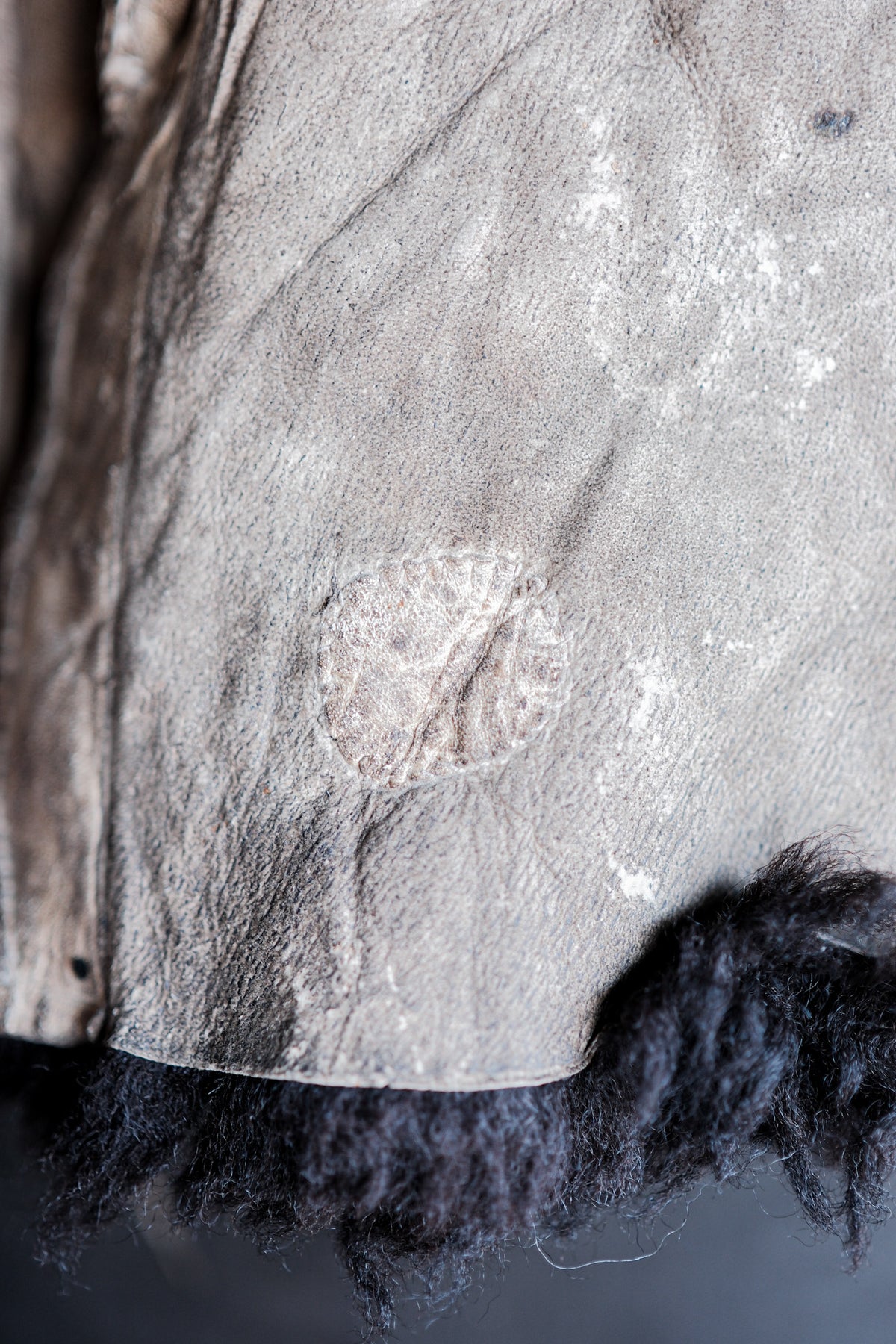
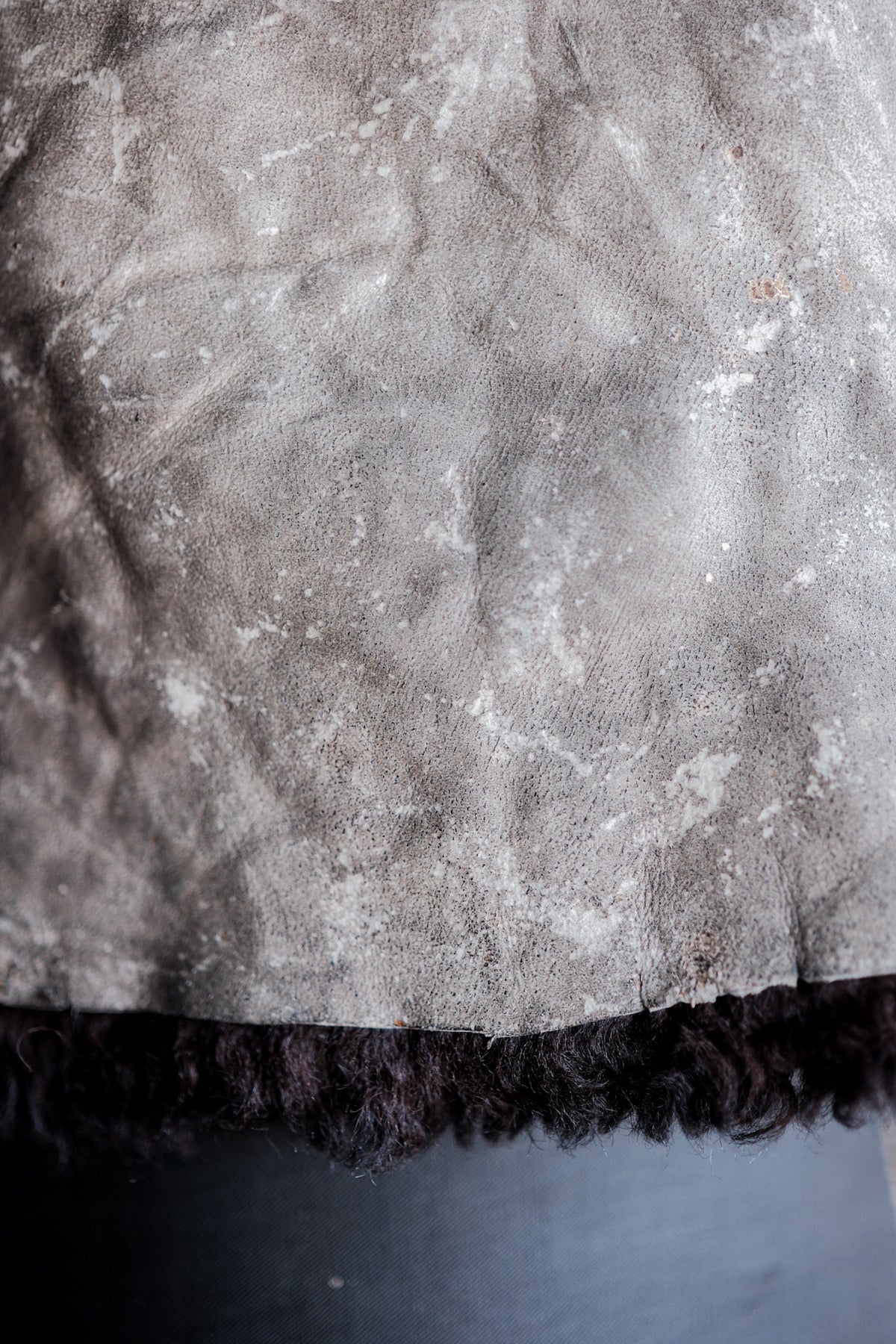
The body utilizes authentic sheepskin, while the lining incorporates genuine fur—a dual approach to insulation that represents, one might argue, the ultimate expression of the vest form.
Sheepskin, derived from hides of animals aged one year or more, is among the lightest and softest leathers available. Though it compromises in durability and abrasion resistance compared to hides from other species, its suppleness adheres to the skin with remarkable conformity, ensuring exceptional fit.
Genuine fur, derived from animal pelts, is constructed by utilizing or processing the hair naturally present on the animal's skin.
Real fur possesses exceptional thermal properties and conveys an impression of luxury and refinement, which is why it remains the material of choice for high-end garments.
The extravagance of materials employed in this piece—unthinkable by modern standards—reflects the craftsmanship sensibility that defined this era.
The armholes and body width are generously proportioned, making it suitable to layer over knits and sweatwear with considerable elegance.
Given the pronounced presence of this piece, we would suggest styling it simply and allowing it to serve as a statement accent.
While the leather face is the intended exterior, reversing the vest to expose the natural fur lining is equally valid.
This two-way versatility, depending on mood and circumstance, is a welcome feature.
No size marking is discernible, though the proportions suggest compatibility with a Japanese M to L range.
Based on measured dimensions, this represents a golden size suitable for a wide range of builds.
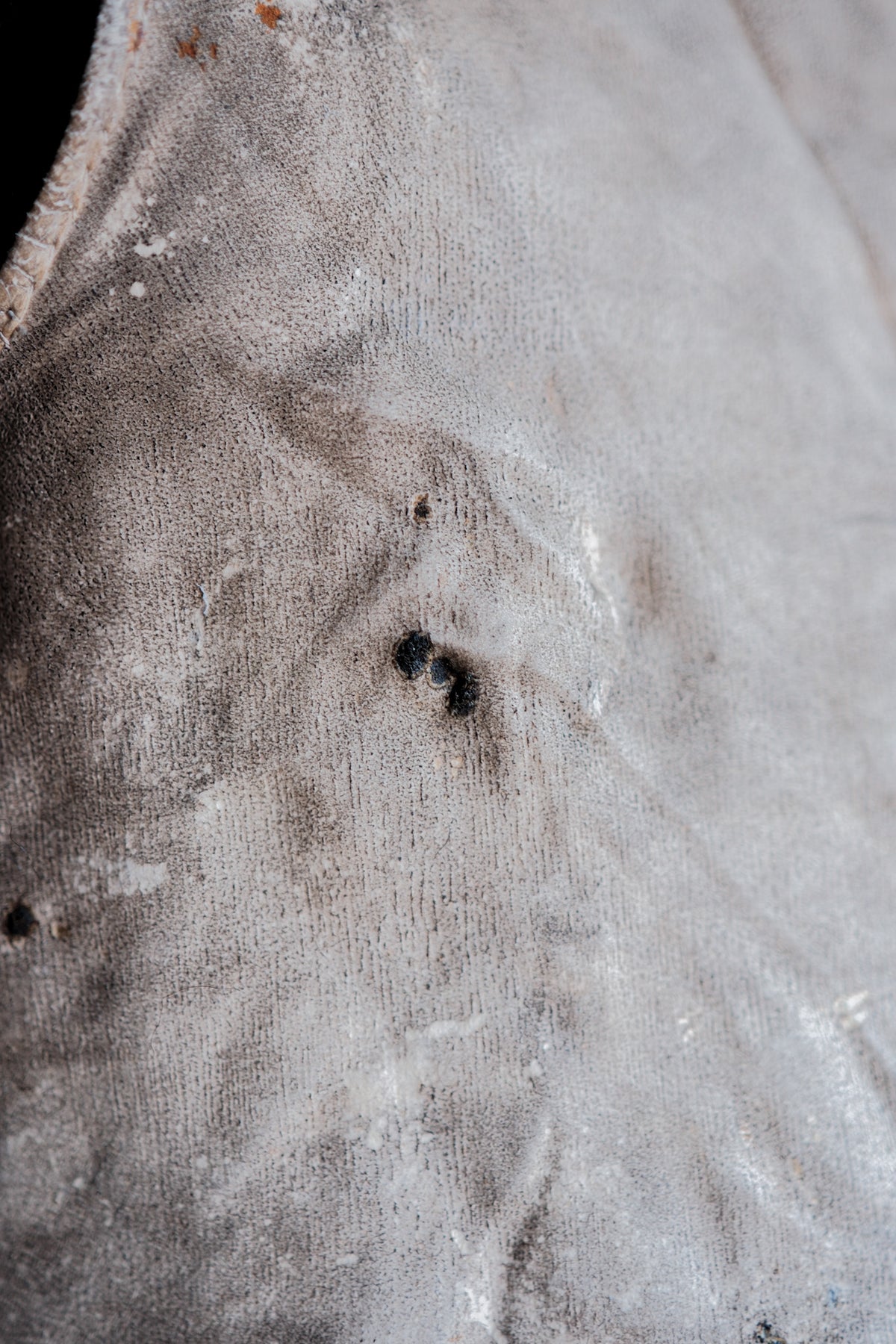
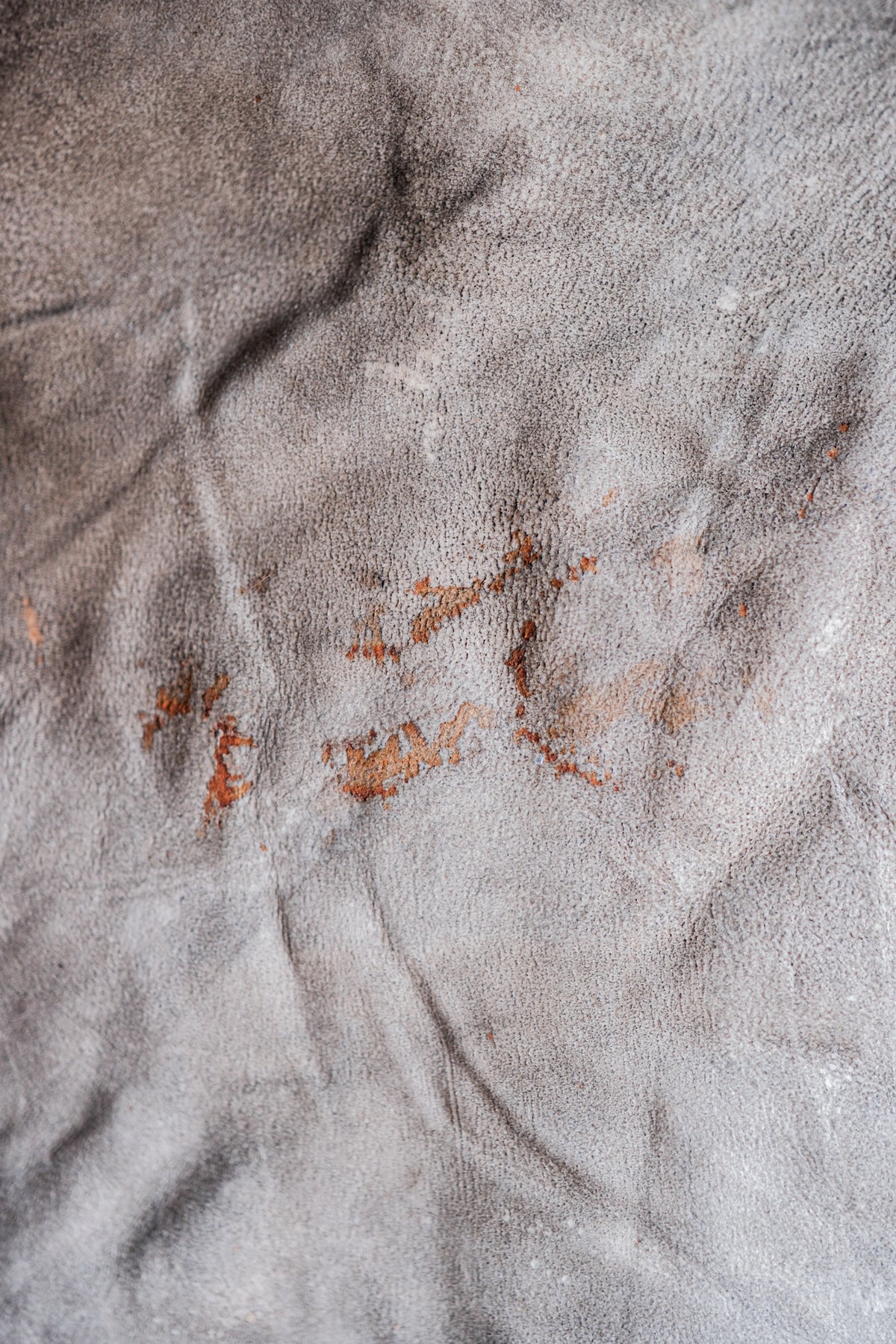
Color variation, fading, soiling, abrasion, fur loss, and repair marks indicate honest use, yet no significant damage compromises wearability. The piece remains eminently serviceable.
Original artifacts from World War II command substantially higher valuations in international markets than domestic ones—a reality so consistent that German pieces are among the most sought after by serious collectors.
With a devoted following among enthusiasts, German military pieces remain coveted archive items that collectors rarely relinquish.
A garment worthy as both wardrobe staple and collection piece.
Rarely encountered domestically, this exemplar merits attention from those who have sought it or hold an affinity for uncommon items.
![[~40's]WWⅡ German Waffen-SS Winter Sheepskin Fur Vest](http://vieuxetnouveau-shop.com/cdn/shop/files/B78D163C-E32A-4441-8DDD-4EF137477BB8-1252-00000299F8378F7C.jpg?v=1701871952&width=2400)
![[~40's]WWⅡ German Waffen-SS Winter Sheepskin Fur Vest](http://vieuxetnouveau-shop.com/cdn/shop/files/FA60712C-0171-4AE3-A543-7D2633B8225A-1252-00000299829C6390.jpg?v=1701871946&width=2400)
![[~40's]WWⅡ German Waffen-SS Winter Sheepskin Fur Vest](http://vieuxetnouveau-shop.com/cdn/shop/files/F27EC695-7101-461E-B498-D56C0C4B9879-1252-00000299F5472161.jpg?v=1701871951&width=2400)
![[~40's]WWⅡ German Waffen-SS Winter Sheepskin Fur Vest](http://vieuxetnouveau-shop.com/cdn/shop/files/33EA852B-A07B-4814-B127-5CB410A230E7-1252-00000299EF24B362.jpg?v=1701871946&width=2400)
![[~40's]WWⅡ German Waffen-SS Winter Sheepskin Fur Vest](http://vieuxetnouveau-shop.com/cdn/shop/files/05B4F63B-BD63-47D4-A742-E8E58C4C35D8-1252-00000299E7A758EA.jpg?v=1701871951&width=2400)
![[~40's]WWⅡ German Waffen-SS Winter Sheepskin Fur Vest](http://vieuxetnouveau-shop.com/cdn/shop/files/8EC10856-0475-434B-902D-9A516A39D174-1252-000002997A671F56.jpg?v=1701871946&width=2400)
![[~40's]WWⅡ German Waffen-SS Winter Sheepskin Fur Vest](http://vieuxetnouveau-shop.com/cdn/shop/files/02427FF4-AE96-4DA5-BC8E-AFB0168E262A-1252-00000299E2AC9DE4.jpg?v=1701871953&width=2400)
![[~40's]WWⅡ German Waffen-SS Winter Sheepskin Fur Vest](http://vieuxetnouveau-shop.com/cdn/shop/files/D45C08E6-D8F5-4D42-9D12-5392541C04D7-1252-00000299DEB215FA.jpg?v=1701871953&width=2400)
![[~40's]WWⅡ German Waffen-SS Winter Sheepskin Fur Vest](http://vieuxetnouveau-shop.com/cdn/shop/files/74BA78AF-7B37-44E4-AE5D-210D8472860C-1252-00000299D8233F67.jpg?v=1701871950&width=2400)
![[~40's]WWⅡ German Waffen-SS Winter Sheepskin Fur Vest](http://vieuxetnouveau-shop.com/cdn/shop/files/970CE732-01D8-42C7-B641-C686555BC087-1252-00000299CFF490FE.jpg?v=1701871950&width=2400)
![[~40's]WWⅡ German Waffen-SS Winter Sheepskin Fur Vest](http://vieuxetnouveau-shop.com/cdn/shop/files/EED911E3-E56D-4D6D-88C0-63A7EEF0BB09-1252-00000299C174D6A4.jpg?v=1701871949&width=2400)
![[~40's]WWⅡ German Waffen-SS Winter Sheepskin Fur Vest](http://vieuxetnouveau-shop.com/cdn/shop/files/94A0A6B1-DE9B-431E-8AE6-E204FD98EE39-1252-00000299867B949C.jpg?v=1701872024&width=2400)
![[~40's]WWⅡ German Waffen-SS Winter Sheepskin Fur Vest](http://vieuxetnouveau-shop.com/cdn/shop/files/76BD990F-5046-416D-B844-0DF871607BF2-1252-000002998E7B3F0F.jpg?v=1701872024&width=2400)
![[~40's]WWⅡ German Waffen-SS Winter Sheepskin Fur Vest](http://vieuxetnouveau-shop.com/cdn/shop/files/5B9853DC-69A2-4433-BE67-D1FFDB2E8360-1252-00000299ABE6D136.jpg?v=1701872024&width=2400)
![[~40's]WWⅡ German Waffen-SS Winter Sheepskin Fur Vest](http://vieuxetnouveau-shop.com/cdn/shop/files/0CCC4C0A-AF83-4747-82F0-8CC00172207F-1252-0000029975E792C5.jpg?v=1701872024&width=2400)
![[~40's]WWⅡ German Waffen-SS Winter Sheepskin Fur Vest](http://vieuxetnouveau-shop.com/cdn/shop/files/4F5EBDBB-3BB1-4E56-A926-F9AF3F58E2A1-1252-0000029C7DEE09BB.jpg?v=1701873151&width=2400)
![[~40's]WWⅡ German Waffen-SS Winter Sheepskin Fur Vest](http://vieuxetnouveau-shop.com/cdn/shop/files/112B1720-077C-4431-AFED-BE37395CB3E8-1252-0000029C77BE4A9C.jpg?v=1701873151&width=2400)
![[~40's]WWⅡ German Waffen-SS Winter Sheepskin Fur Vest](http://vieuxetnouveau-shop.com/cdn/shop/files/72C3F8F2-8EF4-4C86-AC73-81271C78E157-1252-0000029C7525FD0F.jpg?v=1701873151&width=2400)
![[~40's]WWⅡ German Waffen-SS Winter Sheepskin Fur Vest](http://vieuxetnouveau-shop.com/cdn/shop/files/3A442689-6595-4A35-9463-801C343191E0-1252-0000029C7ACA5117.jpg?v=1701873151&width=2400)
![[~40's]WWⅡ German Waffen-SS Winter Sheepskin Fur Vest](http://vieuxetnouveau-shop.com/cdn/shop/files/DSCF0544.jpg?v=1702015700&width=2400)
![[~40's]WWⅡ German Waffen-SS Winter Sheepskin Fur Vest](http://vieuxetnouveau-shop.com/cdn/shop/files/DSCF0546.jpg?v=1702015700&width=2400)
![[~40's]WWⅡ German Waffen-SS Winter Sheepskin Fur Vest](http://vieuxetnouveau-shop.com/cdn/shop/files/DSCF0547.jpg?v=1702015700&width=2400)
![[~40's]WWⅡ German Waffen-SS Winter Sheepskin Fur Vest](http://vieuxetnouveau-shop.com/cdn/shop/files/DSCF0545.jpg?v=1702015700&width=2400)
![[~40's]WWⅡ German Waffen-SS Winter Sheepskin Fur Vest](http://vieuxetnouveau-shop.com/cdn/shop/files/DSCF0543.jpg?v=1702015700&width=2400)
![[~40's]WWⅡ German Waffen-SS Winter Sheepskin Fur Vest](http://vieuxetnouveau-shop.com/cdn/shop/files/DSCF0549.jpg?v=1702015700&width=2400)
![[~40's]WWⅡ German Waffen-SS Winter Sheepskin Fur Vest](http://vieuxetnouveau-shop.com/cdn/shop/files/DSCF0542.jpg?v=1702015700&width=2400)
![[~40's]WWⅡ German Waffen-SS Winter Sheepskin Fur Vest](http://vieuxetnouveau-shop.com/cdn/shop/files/DSCF0550.jpg?v=1702015689&width=2400)
![[~40's]WWⅡ German Waffen-SS Winter Sheepskin Fur Vest](http://vieuxetnouveau-shop.com/cdn/shop/files/DSCF0551.jpg?v=1702015688&width=2400)
![[~40's]WWⅡ German Waffen-SS Winter Sheepskin Fur Vest](http://vieuxetnouveau-shop.com/cdn/shop/files/DSCF0763.jpg?v=1702015688&width=2400)