A Spanish military linen jacket, estimated from the 1940s.
A special item has arrived.
Spanish military history spans centuries, particularly during the era of the Spanish Empire from the 16th to 17th centuries, when it wielded major military power across both Europe and the New World.
By the 18th century, the Spanish Army underwent reorganization based on the French military model.
Subsequently, a coup by a group of Spanish Army generals sparked internal conflict—the "Spanish Civil War (1936-1939)."
The conflict was waged between the left-wing Republican Popular Front government led by Manuel Azaña (Loyalist faction) and the right-wing rebel forces centered on Francisco Franco (Nationalist faction). The Nationalist forces under Franco ultimately prevailed, bringing Spain under Franco's regime.
In the aftermath of the civil war came World War II, during which Franco declared Spain's neutrality and abstained from direct participation.
In the postwar period, the Spanish military underwent reorganization and modernization, and today participates in international military cooperation as a member of NATO.
We are pleased to present a "Linen Jacket" that appears to have been issued and worn as a summer uniform by the Spanish military during World War II.
Although Spain did not formally participate in World War II, the military itself existed during this period. We believe this piece was likely positioned as a uniform worn on base rather than field service wear.
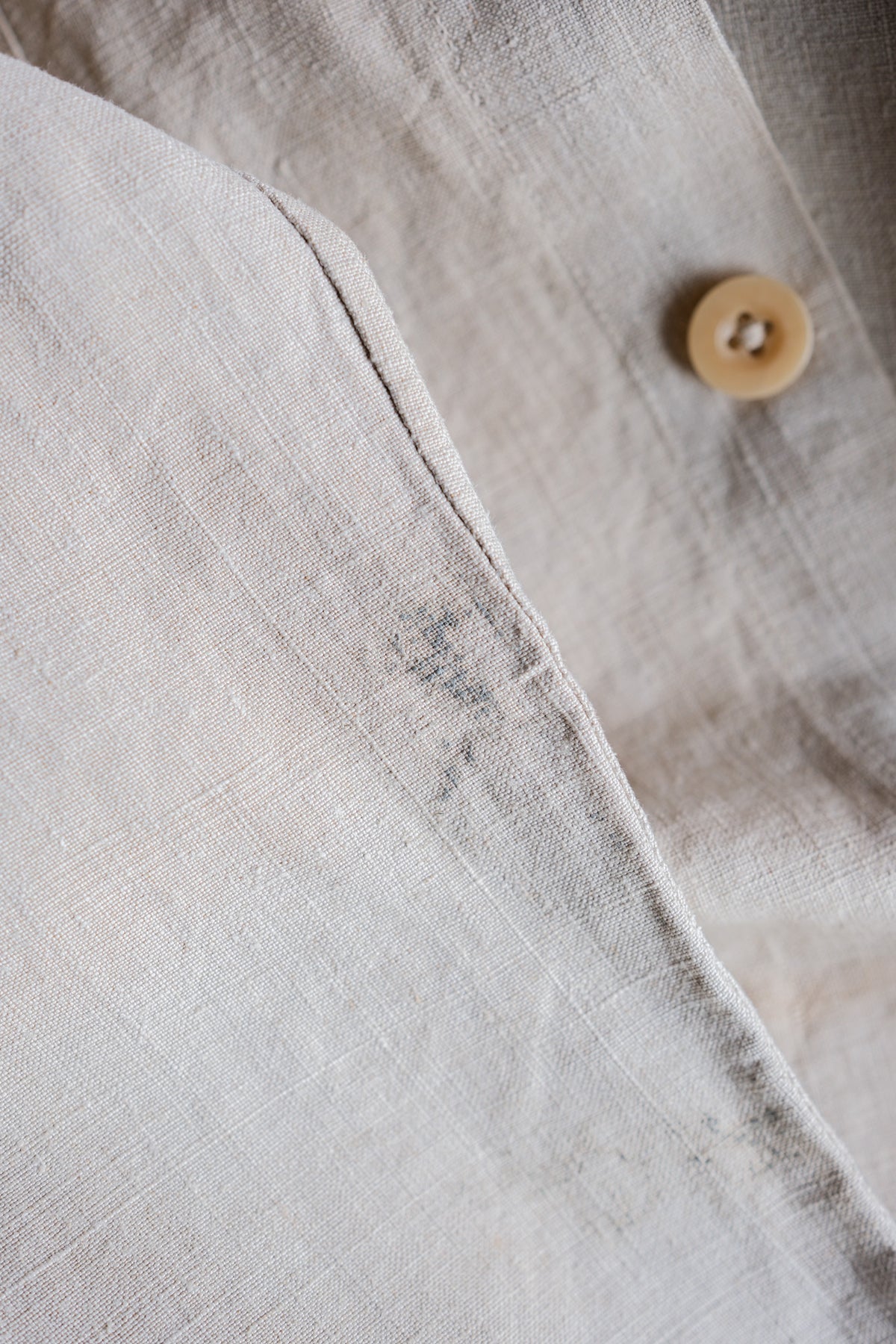
Spanish military garments are characterized by a collar with long points yet rounded tips, and chest pockets with a graceful arc to their seaming—distinctive details of Spanish Army pieces.
The front closure employs a five-button configuration.
Deep slits run along both sides, enhancing freedom of movement, and the fabric's character allows it to be worn with a sensibility reminiscent of a shirt jacket.
The construction employs a medium-weight linen fabric, highly valued in the vintage market.
Linen of this era remains demonstrably superior even to the untrained touch, and it is widely regarded as impossible to replicate by contemporary standards. The fabric alone carries considerable value.
Beyond its rarity, from a purely aesthetic and sartorial perspective, this is a genuinely compelling piece. We encourage its thoughtful wear and appreciation.
No size marking is visible, though it appears to correspond to a Japanese size M.
Given its actual measurements, we consider it a golden size suited to Japanese proportions, accommodating a wide range of physiques. It carries itself equally well worn close or oversized.
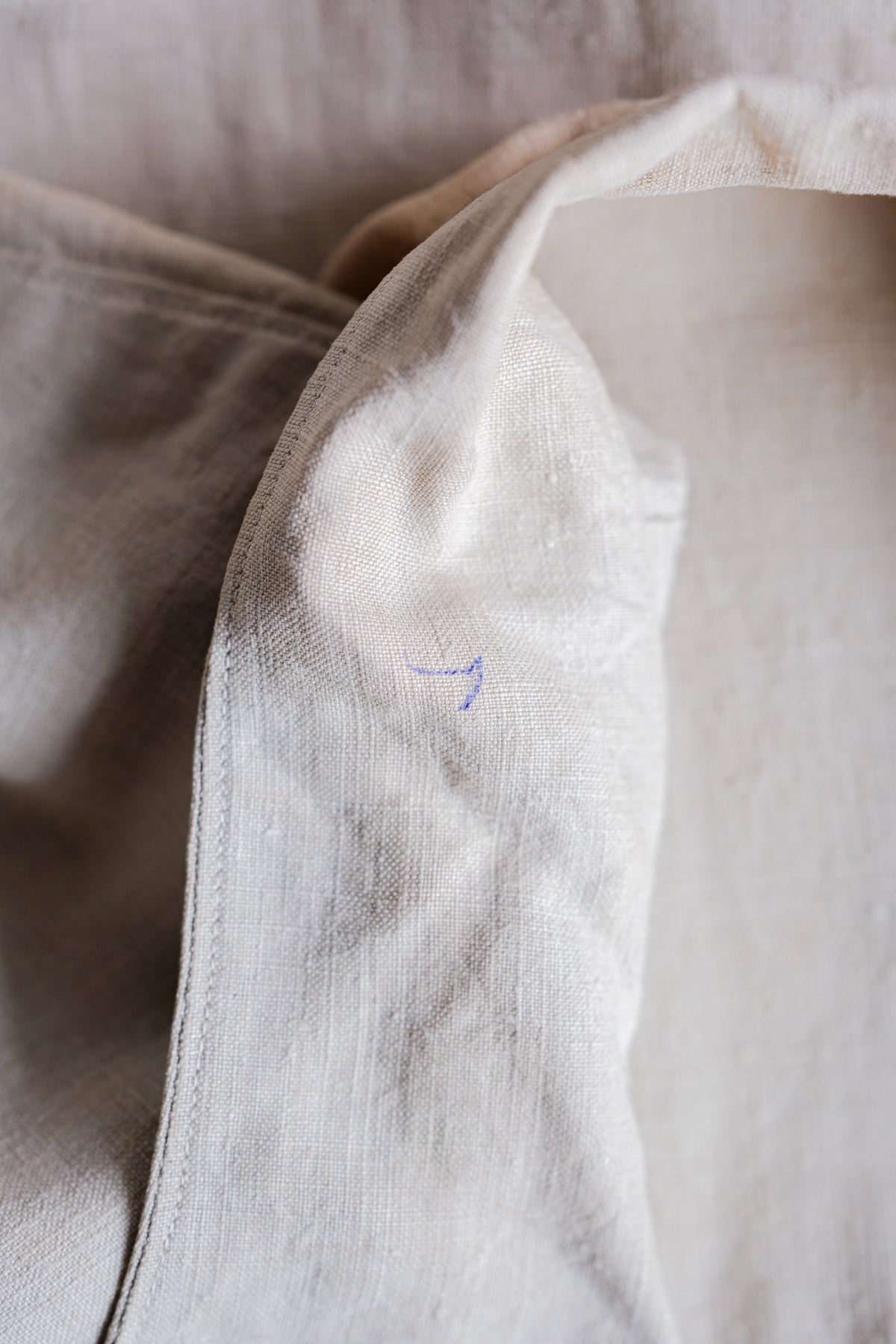
The fabric exhibits the characteristic neps and soiling consistent with its years of use, though no significant damage impairs wearability.
Spanish military pieces rarely appear on the market.
Spanish military pieces have their devoted collectors, and this is undoubtedly an archive piece that would satisfy even the most discerning eye.
Whether for regular wear or as a collection piece and design reference, it warrants serious consideration. A truly rare offering, seldom encountered domestically or abroad. Those who have sought such pieces, or those drawn to distinctive archive items, should not pass on this opportunity.
ADD TO CART