A British-made khaki cotton drill work coat, circa 1941–1952.
Bearing the CC41 label—highly sought after among British vintage collectors—this piece embodies both robust craftsmanship and refined restraint, a garment that carries the unmistakable imprint of its era.
In discussing this example, we must first address the CC41 mark itself.
As the notation explains—CC41 being an official mark indicating compliance with Britain's "Utility Clothing Scheme" during the Second World War, commonly interpreted as "Civilian Clothing 1941"—it represents certification that this garment met standards established to supply "durable, practical clothing" even under strict resource control.
The scheme commenced in 1941, with clothing rationing continuing until 1949, though the manufacture and sale of utility garments persisted until 1952.
Clothing stripped of ornament and engineered with durability and function as paramount concerns has, in our time, come to embody the very aesthetic of British workwear itself.
This example realises that philosophy through disciplined design.
The collar is modest and cleanly proportioned—a refined lapel.
The front closure employs a change button, a characteristic British workwear detail allowing the button to loop through a corresponding eye on the reverse—a practical flourish.
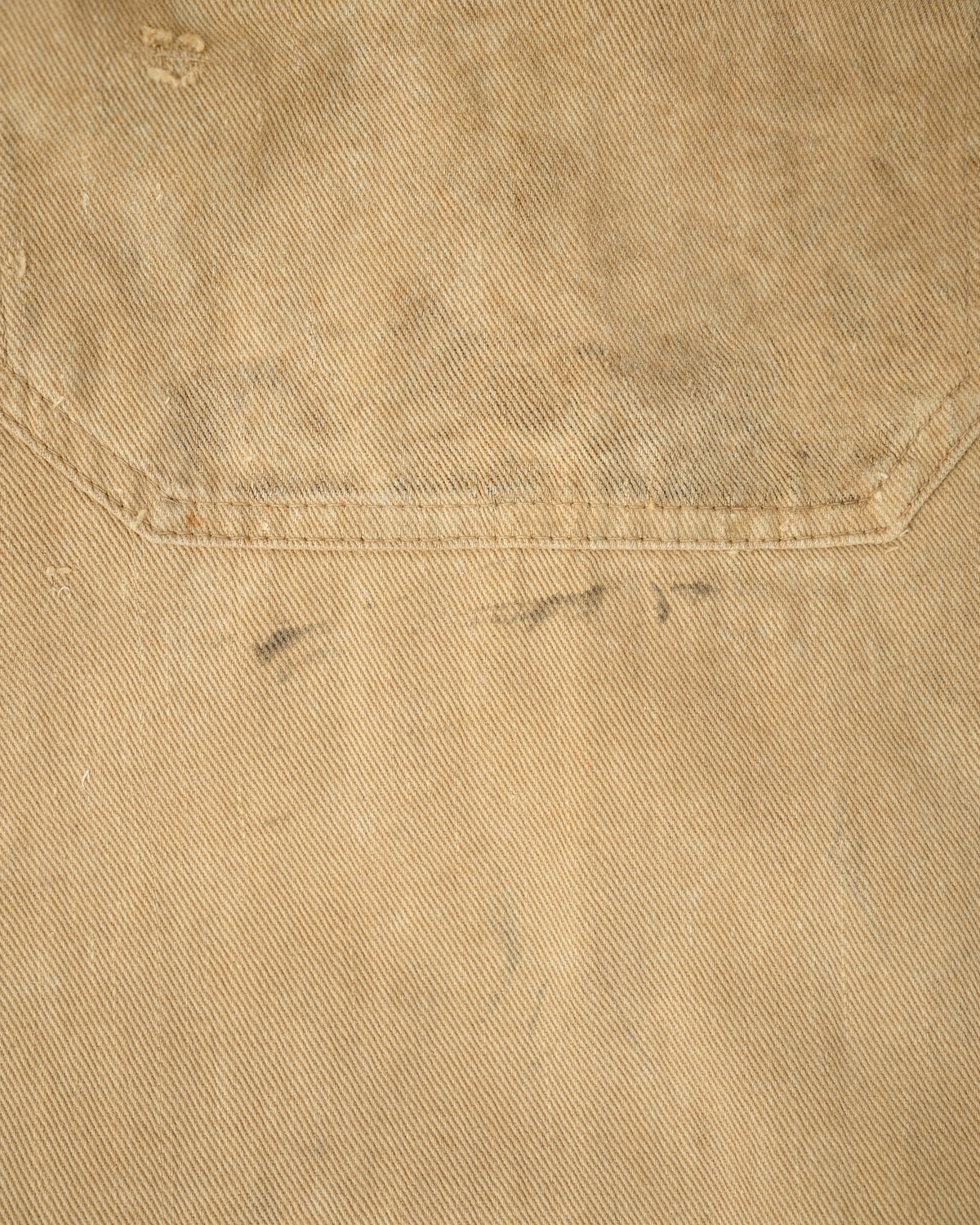
The body features a vertical pass-through pocket at its centre, beneath which sit generous patch pockets on either side—a two-tier arrangement. The vertical pocket, by virtue of its pass-through nature, allows direct access to the trousers beneath; one senses the duster coat heritage here, the design intended to shield the underlying garment from dust and grime.
The sleeves are straightforward and unadorned, less prone to snagging, finished internally with a single layer of cloth.
The chest pocket is absent; faint stitching marks remain, a detail particular to vintage that carries its own quiet resonance.
The inner neckline bears an embroidered label from Banner—a maker of embroidered tags now synonymous with earlier eras. Many seek out pieces bearing such marks.
This example is constructed of 100% cotton drill—a twill weave.
True to Britain's legacy in high-density textiles, it presents a dry hand and an assured core, qualities that speak to durability.
The weight is neither excessive nor slight, a balance that resists abrasion whilst accommodating the body's movement with gradual familiarity. With wear and laundering, fading and creasing accumulate along seams and edges.
Such change—characteristic of cloth that develops with time—carries a quiet authority.
The colour is beige, familiar to any reader of British workwear.
The fine ribs peculiar to drill catch light, creating shadow and depth; from certain angles the tone seems to shift subtly. This gentle character softens the austerity of workwear detail, lending itself equally well to black trousers or indigo denim—a composed accompaniment either way.
It is a beige that quietly elevates everyday composition—dignified and generous in sensibility.
Size marking is not visible, though the piece appears to correspond to a Japanese medium—a proportioned fit for the wider range of contemporary physiques. One might wear it with precision or ease; it accommodates both gracefully.
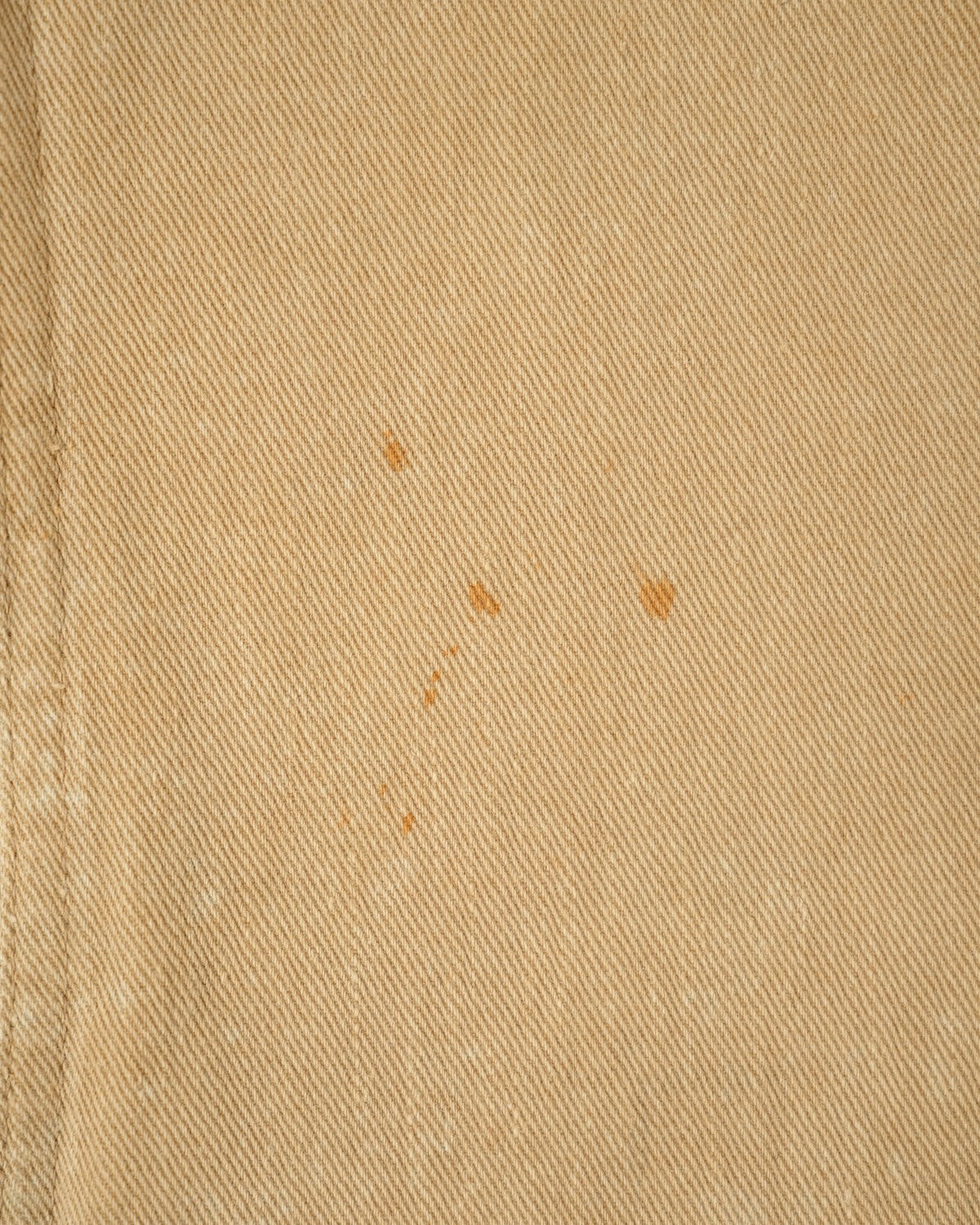
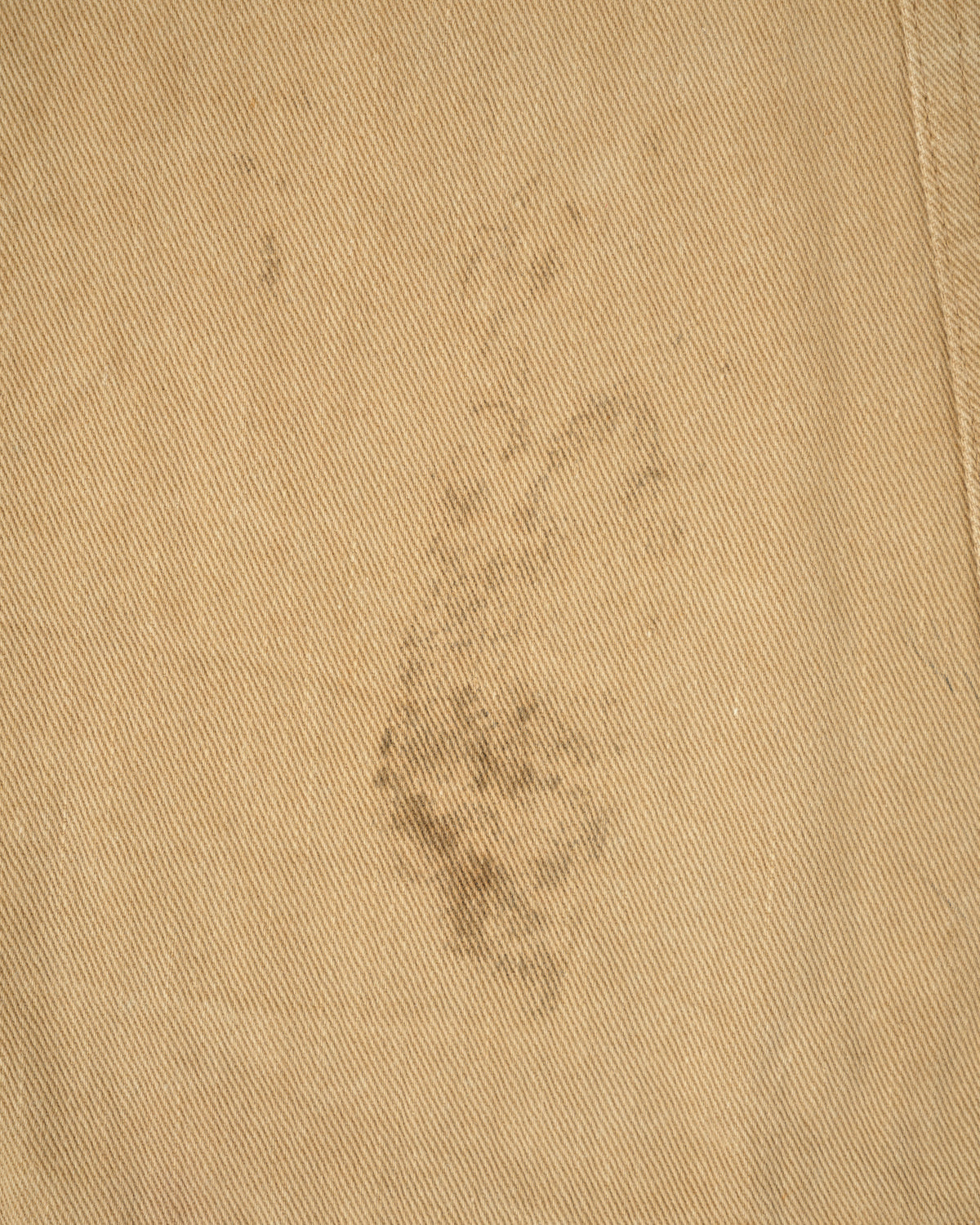
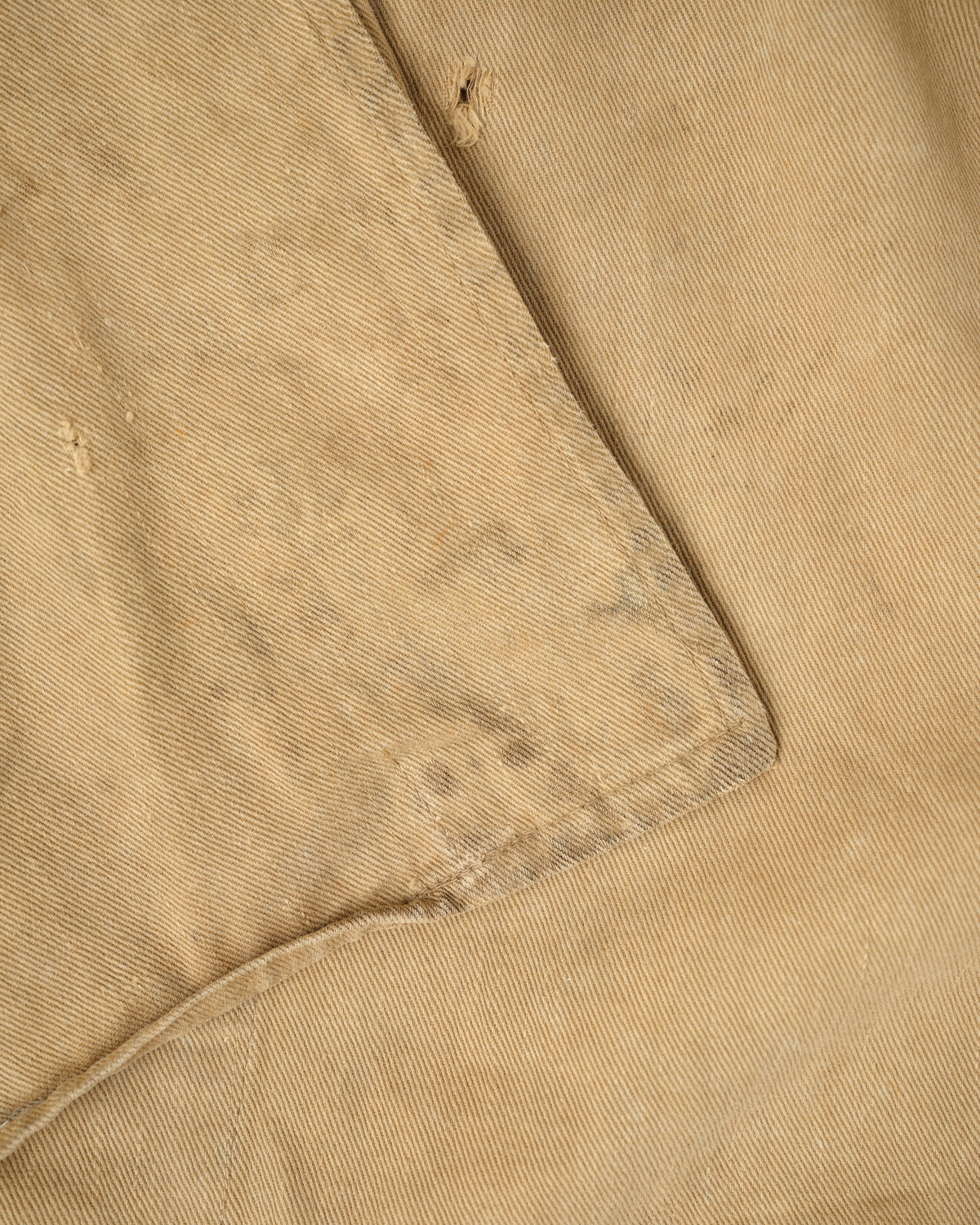
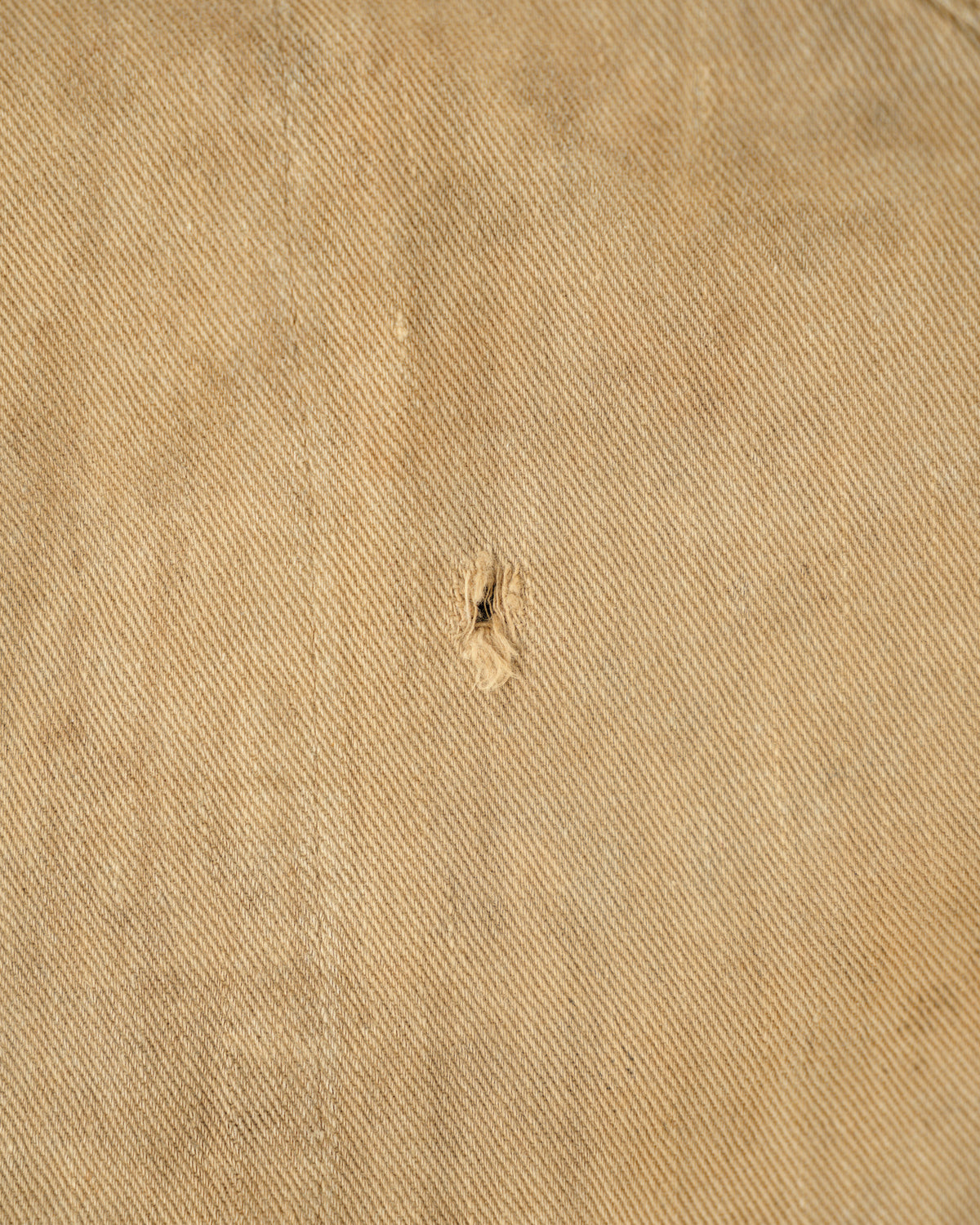
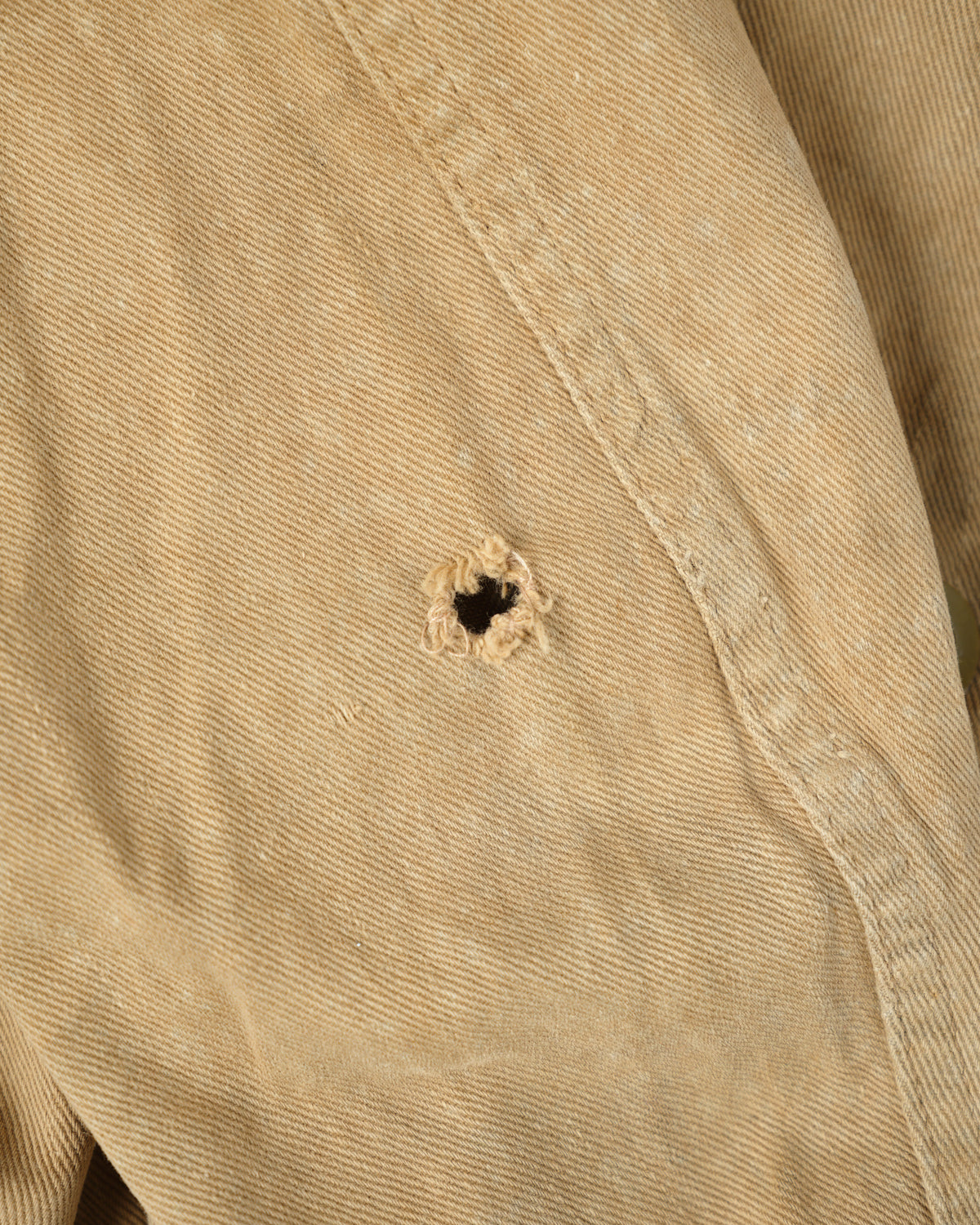
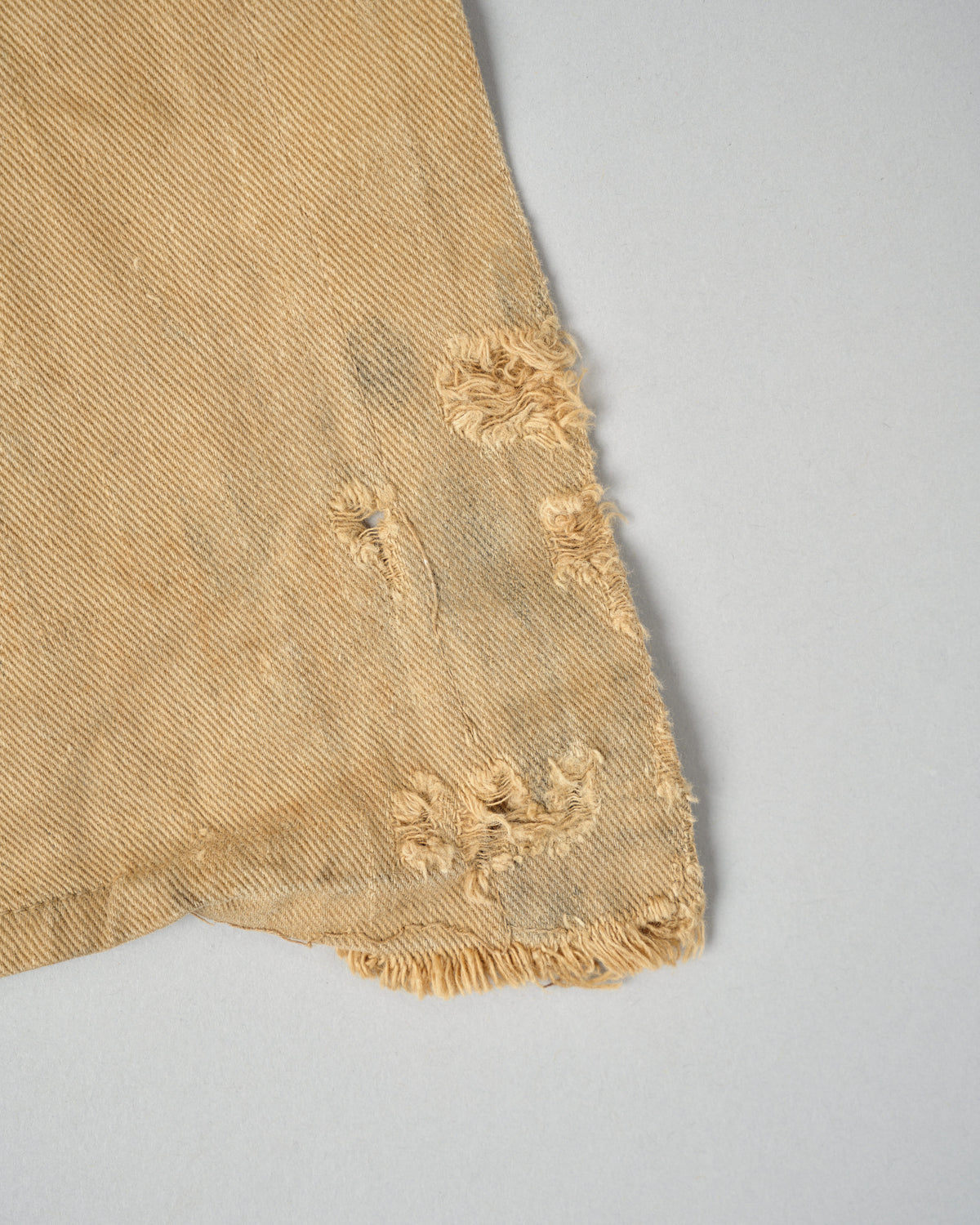
Wear is evident—soiling, creasing, loose stitching, minor punctures, the absent chest pocket—yet no damage of consequence impedes its function. It remains ready to be worn.
A rare example, distinguished by its CC41 label, sought by many. It carries the history of genuine work whilst lending a composed restraint to contemporary styling—a considered piece.
Items of this calibre arrive infrequently at our shop. Should you be searching, this opportunity warrants attention.
ADD TO CART