A ‘Clouds Camouflage Reversible Smock’ of the Czechoslovak People's Army, estimated to date from around the 1950s.
A super special item has come in.
And this time, it is the first collared example our shop has handled.
Today they are two separate countries, the Czech Republic and the Slovak Republic, but from 1918 until 1992 they existed as one nation: Czechoslovakia.
This piece was worn in the Czechoslovak People's Army of that era — "Československá Lidová Armáda" in the local tongue, CSLA for short.
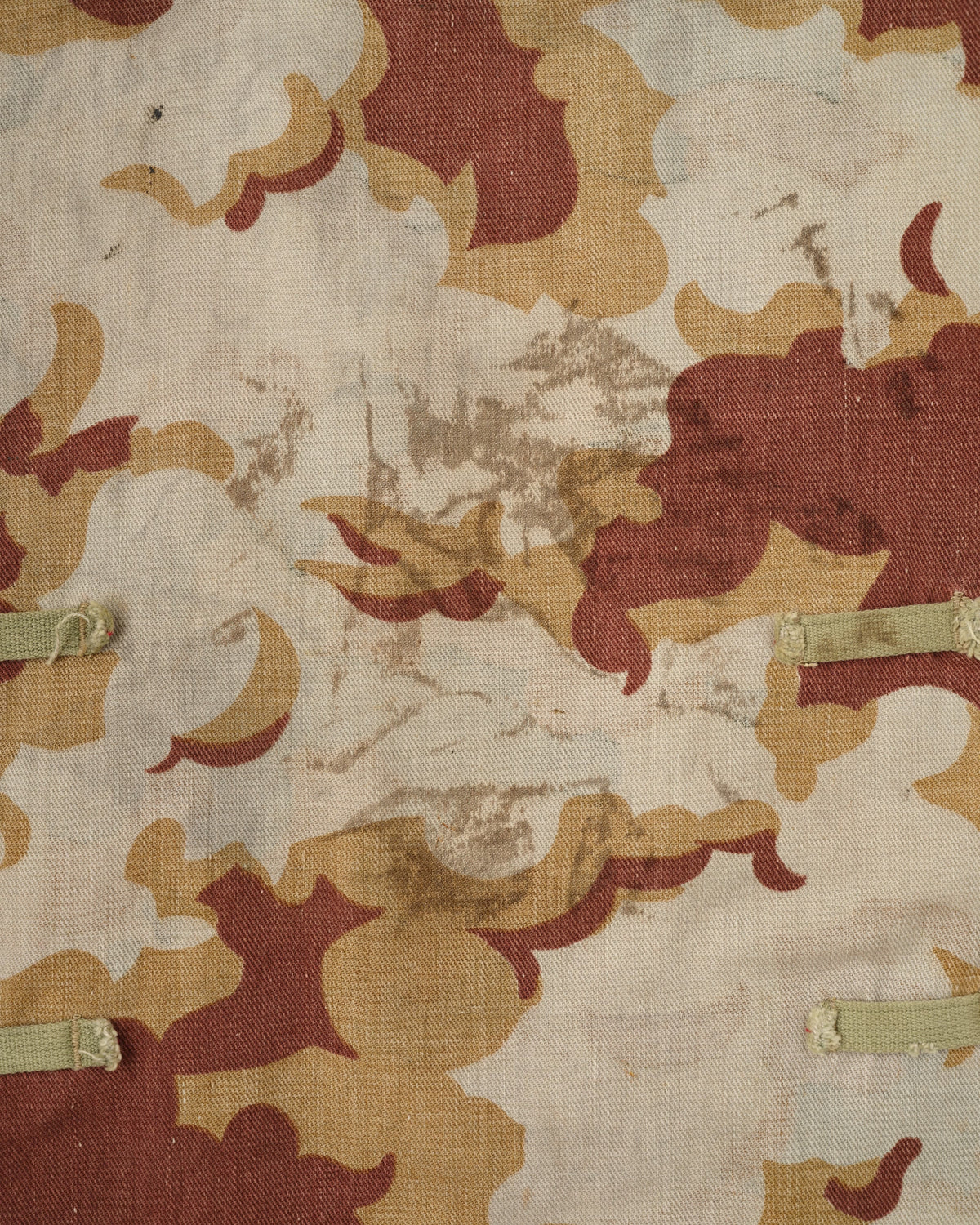
What draws the eye is, above all, this singular camouflage.
From the way its soft-edged blotches overlap it is called "Clouds Camouflage", a pattern particular to that army.
First adopted in the 1950s, it was established as an issued summer camouflage.
From the 1950s into the 1970s it was supplied only to limited units, such as the 22nd Airborne Brigade and the army's snipers and reconnaissance troops.
Although the pattern was in use for some twenty years, formal production itself is said to have been discontinued in 1962.
Which is to say, cloth printed with this pattern has not been made once in over sixty years.
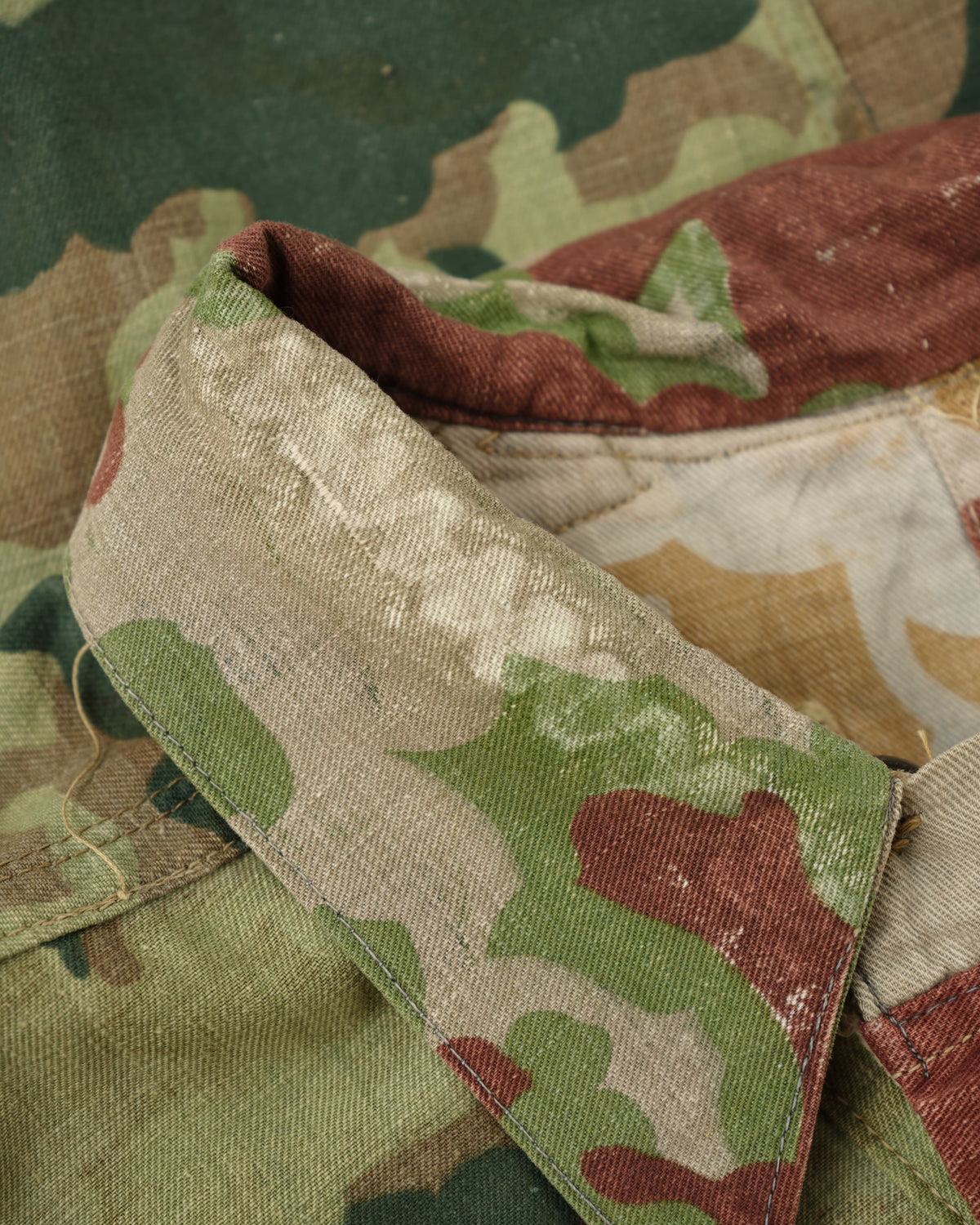
And the greatest luxury of this piece is that it is reversible.
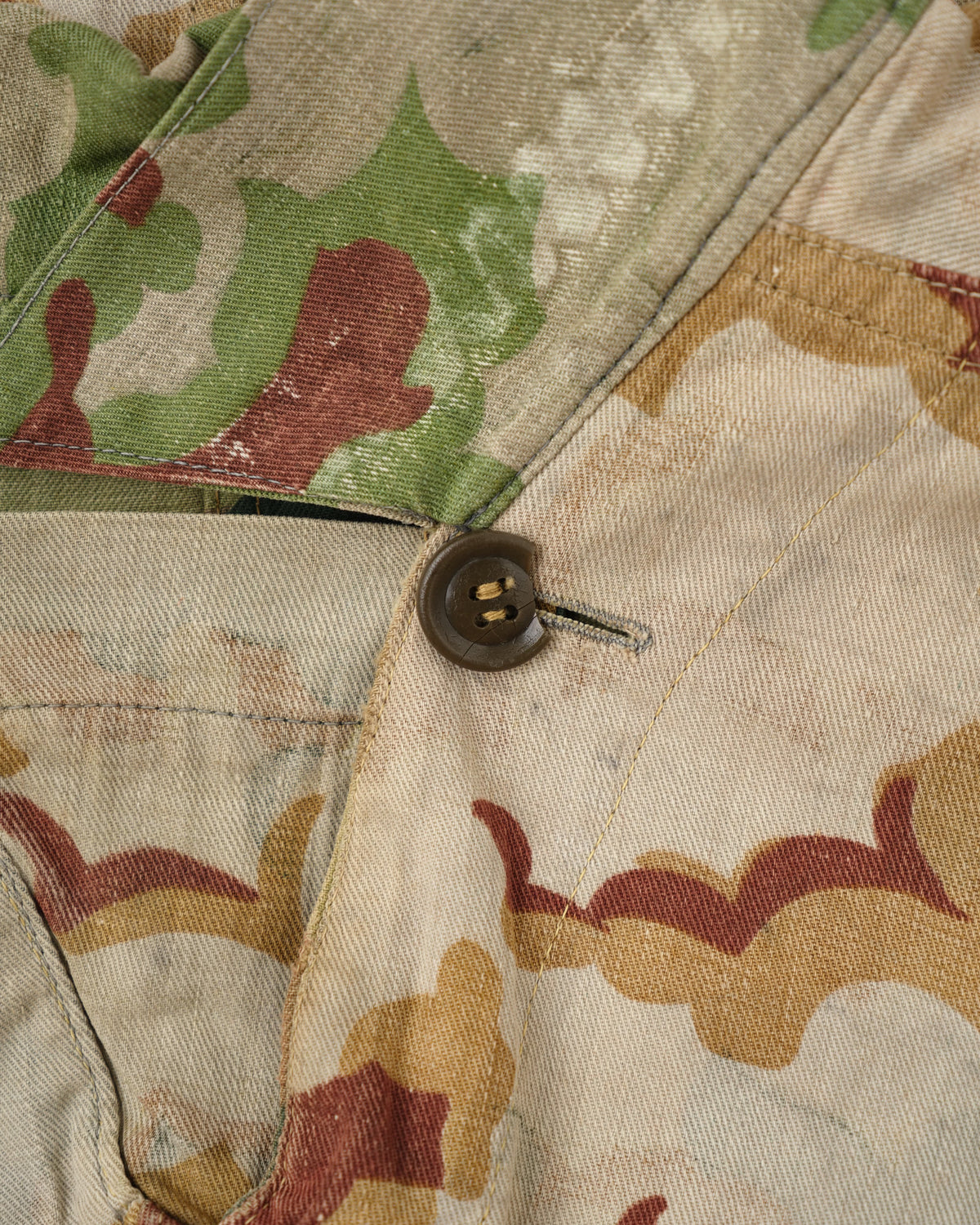
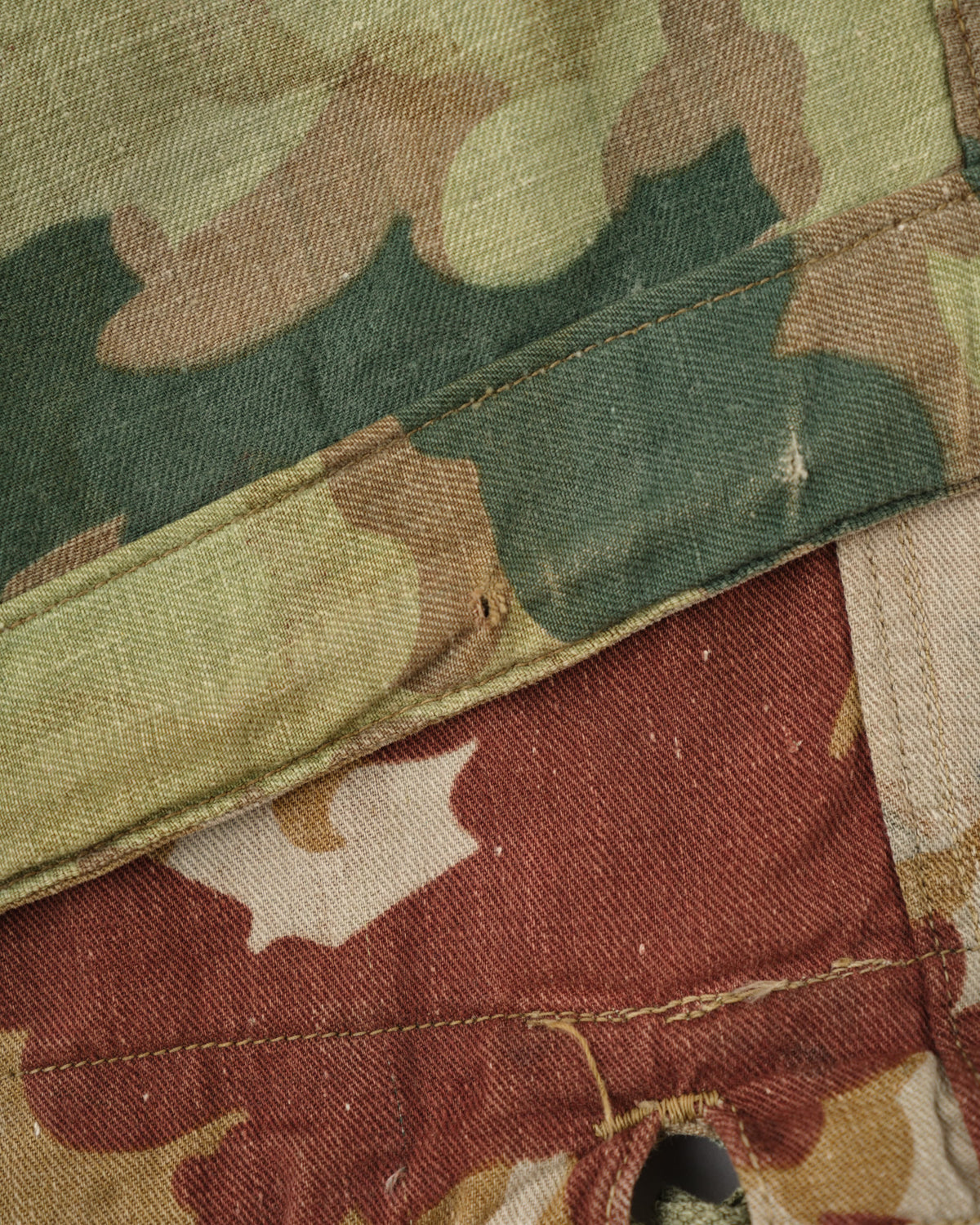
One face carries two depths of olive rising against a pale green ground.
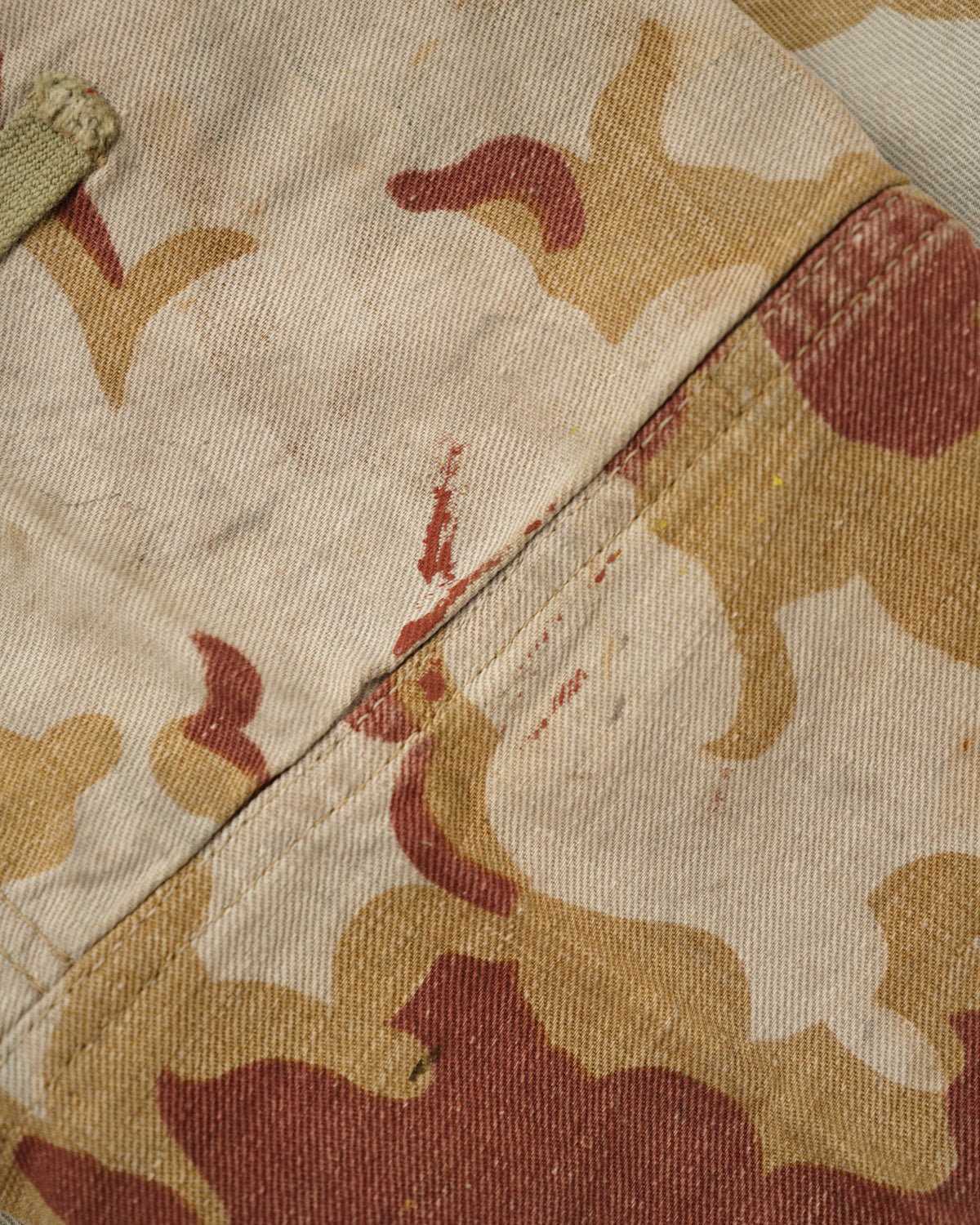
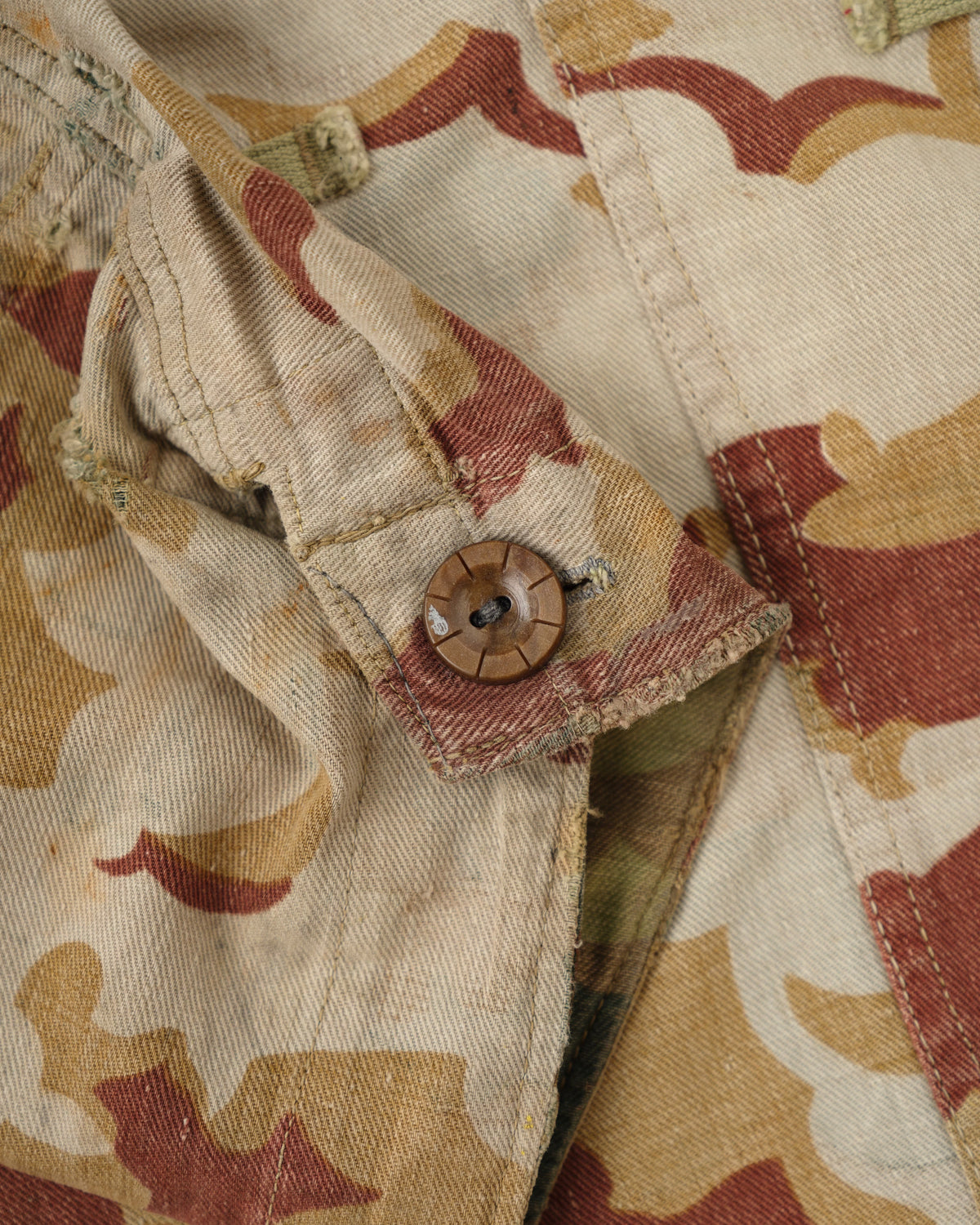
The other carries a reddish brown and a brighter olive scattered over a greyed yellow-brown.
The green face is said to have been conceived for the spring forest, the brown face for the withered fields of autumn.
When the season turns, you turn it inside out. One garment holding two expressions — a genuinely luxurious design, don't you think?
What deserves particular mention on this piece is that the colour has held firmly on both faces.
Most examples of this pattern have faded, and the brown face in particular has usually blanched away to white.
The brown on this one leans, if anything, a touch more towards red-brown than the ones I usually see, and it is genuinely beautiful.
Let us look, in turn, at the details that define the model.
First, the collared specification, a first for our shop.
Every example we have presented so far has had a deep V-neck.
On this piece, a proper turn-down collar sits above that V opening.
That one detail alone entirely changes the impression when worn.
The V-neck versions inevitably put their smock-like plainness forward, whereas with a collar it takes on the face of "clothing" at once.
Personally, I much prefer this.
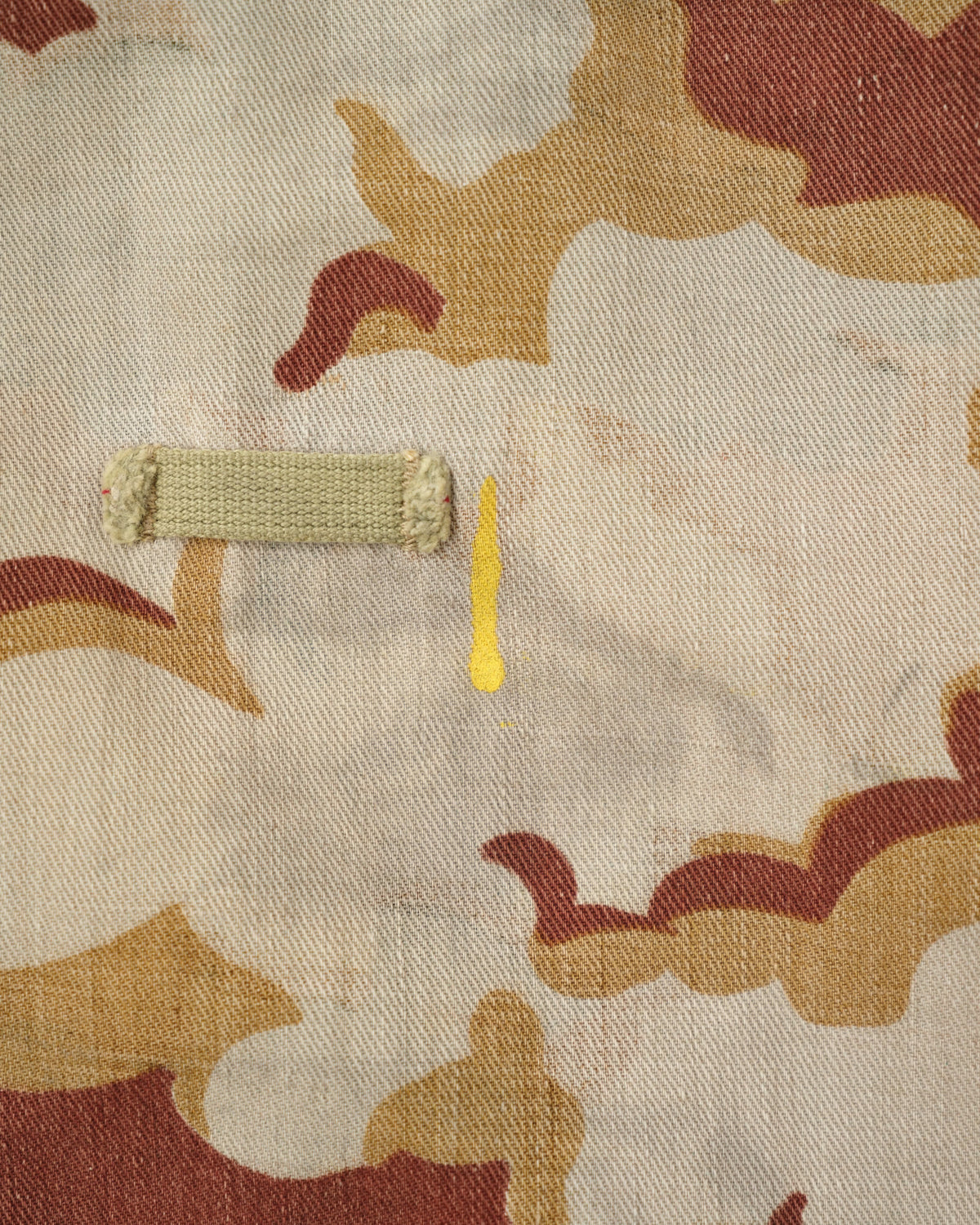
And what I should very much like you to see are the countless narrow loops fitted across the body and the back.
These are called foliage loops, a device for actually inserting branches and grasses from the surroundings to break up the outline.
Concealment by pattern alone was not enough: one wears real vegetation and dissolves completely into the landscape.
Equipment belonging only to a garment issued to snipers and scouts.
The sight of them ranged across the whole of the back is quite a spectacle.
It is a pullover type, put on over the head.
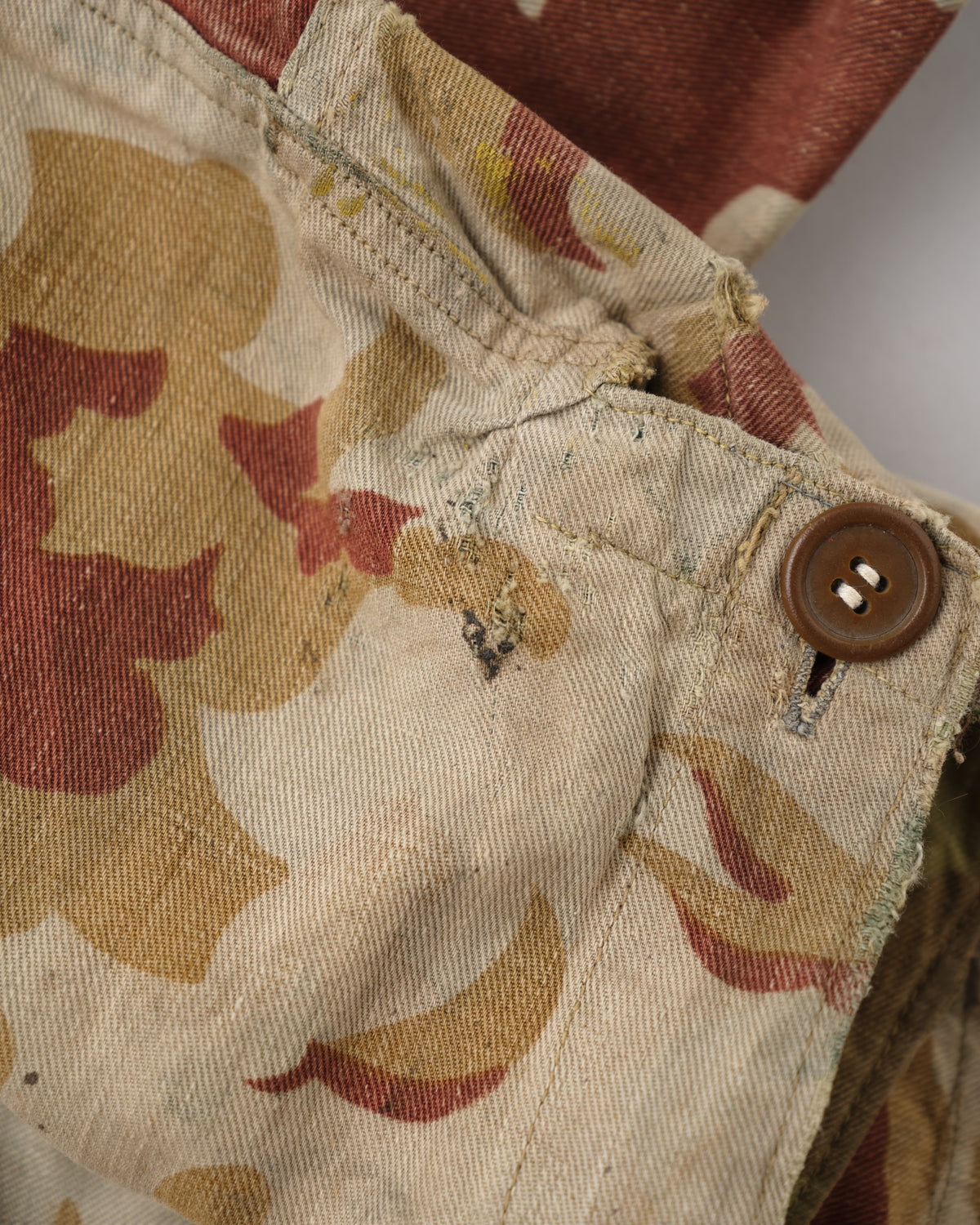
Fastened with a single button at the chest, thought out so it can be got on quickly even in a hurried situation.
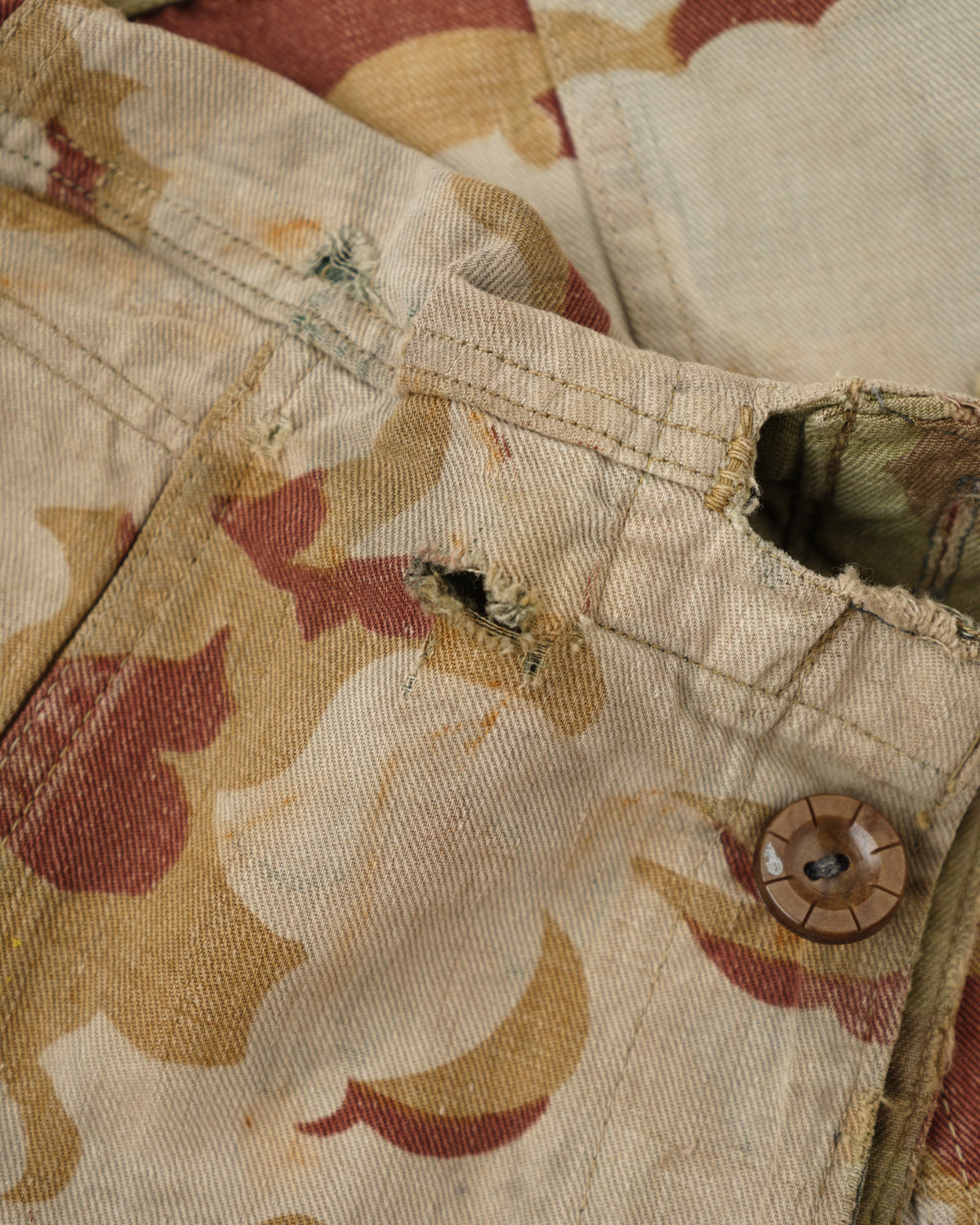
The pockets are pass-through vertical pockets set at the middle of the body. (On this piece they have been sewn shut.)
Pass-through means a construction into which the hand can enter from either face — an inevitable consequence of being worn reversibly.
In addition, buttoned patch pockets are provided.
A drawcord runs through the hem to adjust the gather.
In truth this cord is missing on most examples, but on this one it has survived intact. It may seem a small thing, but examples with such parts complete are, I think, few.
Please note that this piece is a "modified" example, in which the large hood designed to go over a helmet and the gloves at the sleeve ends, both original fittings, were removed by a previous owner.
The shape is that much cleaner for it, so it has if anything become easier to wear as a modern garment.
The cloth is a relatively light cotton twill.
You may be imagining a heavy military cloth, but this is closer to the softness of a shirt.
Given that it was established as summer issue this is only natural, yet the lightness when you put it on may surprise you a little.
Being light, it serves through spring and autumn of course, and as something to throw on during summer evenings as well.
And cotton of this kind gains in softness with every wash. It is already well broken in, but from here it should settle to the body further still.
The colour is spring green on one face, autumn brown on the other.
On the green face, the depths of olive spread quietly for a settled impression.
On the brown face, the contrast of reddish brown and beige takes effect for a warmer, more vivid expression.
Choosing which face to wear according to the mood of the day and the outfit.
Having that choice at all is surely the greatest pleasure of owning this piece.
The pattern itself can carry the leading role, so keeping everything else simple is best, I think.
Black or charcoal bottoms, a plain layer beneath. That alone is quite enough.
No size marking can be confirmed, but judging from the measurements I should think it corresponds to a Japanese "XL".
It was conceived from the start as an over-smock worn on top of a uniform, so the body and armholes are made very generously.
Larger builds will wear it without any trouble, and a smaller person wearing it deliberately oversized would look good too.
There are signs of use — soiling, abrasion, fraying, small holes and tears — but no significant damage that would affect wear, so there is plenty of life left in it.
Some buttons have been replaced, damaged or lost, but none to a degree that hinders wear.
Production of this pattern ended in 1962.
The printing screens, the factory that printed them, and the country itself no longer exist.
It is not something one could make simply by deciding to.
An Eastern European camouflage of over sixty years ago, with two seasons sealed into a single garment.
Could there be another piece this luxurious, and this difficult to come by?
![[~50's] Czechoslovakian Army Clouds Camouflage Reversible Smock "Modified"](http://vieuxetnouveau-shop.com/cdn/shop/files/J01103-1_262b798f-9e01-45d1-8a21-c50266bb153c.jpg?v=1788335131&width=2400)
![[~50's] Czechoslovakian Army Clouds Camouflage Reversible Smock "Modified"](http://vieuxetnouveau-shop.com/cdn/shop/files/J01103-2_70847f1d-c39c-4466-9cc3-a8e433ab8c04.jpg?v=1788335131&width=2400)
![[~50's] Czechoslovakian Army Clouds Camouflage Reversible Smock "Modified"](http://vieuxetnouveau-shop.com/cdn/shop/files/J01103-3_4fd83706-4f4a-4068-8212-4bfd4b3aa128.jpg?v=1788335131&width=2400)
![[~50's] Czechoslovakian Army Clouds Camouflage Reversible Smock "Modified"](http://vieuxetnouveau-shop.com/cdn/shop/files/J01103-4_5e040194-593f-4977-bf6f-b21ef6e3acea.jpg?v=1788335131&width=2400)
![[~50's] Czechoslovakian Army Clouds Camouflage Reversible Smock "Modified"](http://vieuxetnouveau-shop.com/cdn/shop/files/J01103-5_f7e26040-d7bc-4f78-98b4-f9a2b8c33480.jpg?v=1788335131&width=2400)
![[~50's] Czechoslovakian Army Clouds Camouflage Reversible Smock "Modified"](http://vieuxetnouveau-shop.com/cdn/shop/files/J01103-6_bdb807b6-0642-4e7d-9b2d-cbb93c38bc9d.jpg?v=1788335131&width=2400)
![[~50's] Czechoslovakian Army Clouds Camouflage Reversible Smock "Modified"](http://vieuxetnouveau-shop.com/cdn/shop/files/J01103-7_3fcc46c4-9ba3-4e1b-8d21-1e882e9cb61c.jpg?v=1788335131&width=2400)
![[~50's] Czechoslovakian Army Clouds Camouflage Reversible Smock "Modified"](http://vieuxetnouveau-shop.com/cdn/shop/files/J01103-8_014b53d1-3bef-4b6a-8b7b-8292781c13c4.jpg?v=1788335131&width=2400)
![[~50's] Czechoslovakian Army Clouds Camouflage Reversible Smock "Modified"](http://vieuxetnouveau-shop.com/cdn/shop/files/J01103-9_d0405f3f-856b-4812-91d0-b76832c4acfa.jpg?v=1788335131&width=2400)
![[~50's] Czechoslovakian Army Clouds Camouflage Reversible Smock "Modified"](http://vieuxetnouveau-shop.com/cdn/shop/files/J01103-10_80905bcc-74d1-47f5-aa96-3c2cbb3104f9.jpg?v=1788335131&width=2400)
![[~50's] Czechoslovakian Army Clouds Camouflage Reversible Smock "Modified"](http://vieuxetnouveau-shop.com/cdn/shop/files/J01103-11_4616f1db-5127-4045-8443-01f7924451b9.jpg?v=1788335131&width=2400)
![[~50's] Czechoslovakian Army Clouds Camouflage Reversible Smock "Modified"](http://vieuxetnouveau-shop.com/cdn/shop/files/J01103-12_90f8ee32-b15e-4968-b8f2-af29aed8c589.jpg?v=1788335131&width=2400)
![[~50's] Czechoslovakian Army Clouds Camouflage Reversible Smock "Modified"](http://vieuxetnouveau-shop.com/cdn/shop/files/J01103-13_7206bece-ee63-4abd-84bd-553bae6c39f3.jpg?v=1788335131&width=2400)
![[~50's] Czechoslovakian Army Clouds Camouflage Reversible Smock "Modified"](http://vieuxetnouveau-shop.com/cdn/shop/files/J01103-14_f63e1ecd-375b-44f1-90b8-63d28dd3d780.jpg?v=1788335131&width=2400)
![[~50's] Czechoslovakian Army Clouds Camouflage Reversible Smock "Modified"](http://vieuxetnouveau-shop.com/cdn/shop/files/J01103-15_4d0c3cd3-46b0-4258-be11-83c8f2ff788e.jpg?v=1788335131&width=2400)
![[~50's] Czechoslovakian Army Clouds Camouflage Reversible Smock "Modified"](http://vieuxetnouveau-shop.com/cdn/shop/files/J01103-16_8c0e5a4a-1710-4b94-a2de-7584300a822e.jpg?v=1788335131&width=2400)
![[~50's] Czechoslovakian Army Clouds Camouflage Reversible Smock "Modified"](http://vieuxetnouveau-shop.com/cdn/shop/files/J01103-17_2dae1188-b874-4ba9-8e81-24448a0fe56e.jpg?v=1788335131&width=2400)
![[~50's] Czechoslovakian Army Clouds Camouflage Reversible Smock "Modified"](http://vieuxetnouveau-shop.com/cdn/shop/files/J01103-18_e5669e6f-817e-4c88-8f92-c77a410a0fbe.jpg?v=1788335131&width=2400)
![[~50's] Czechoslovakian Army Clouds Camouflage Reversible Smock "Modified"](http://vieuxetnouveau-shop.com/cdn/shop/files/J01103-19_5c73c441-73b0-40a2-9269-76e1770a7a87.jpg?v=1788335131&width=2400)
![[~50's] Czechoslovakian Army Clouds Camouflage Reversible Smock "Modified"](http://vieuxetnouveau-shop.com/cdn/shop/files/J01103-20_a49e5e7e-e440-40e4-8f37-0c2dd1e01a1d.jpg?v=1788335131&width=2400)
![[~50's] Czechoslovakian Army Clouds Camouflage Reversible Smock "Modified"](http://vieuxetnouveau-shop.com/cdn/shop/files/J01103-21_35cdc64c-6017-4f2e-828d-aaffda1838ea.jpg?v=1788335131&width=2400)
![[~50's] Czechoslovakian Army Clouds Camouflage Reversible Smock "Modified"](http://vieuxetnouveau-shop.com/cdn/shop/files/J01103-22_dfbcdadf-036f-413b-85a6-9d693e5ed5c1.jpg?v=1788335131&width=2400)
![[~50's] Czechoslovakian Army Clouds Camouflage Reversible Smock "Modified"](http://vieuxetnouveau-shop.com/cdn/shop/files/J01103-23_f0f7fbe1-e0b1-437d-ad1f-80cd438f8b15.jpg?v=1788335131&width=2400)
![[~50's] Czechoslovakian Army Clouds Camouflage Reversible Smock "Modified"](http://vieuxetnouveau-shop.com/cdn/shop/files/J01103-24_fcdbd367-6093-4de2-8b16-c456f041035e.jpg?v=1788335131&width=2400)
![[~50's] Czechoslovakian Army Clouds Camouflage Reversible Smock "Modified"](http://vieuxetnouveau-shop.com/cdn/shop/files/J01103-25_cd256811-01ec-41d5-80ed-77b48b845441.jpg?v=1788335131&width=2400)
![[~50's] Czechoslovakian Army Clouds Camouflage Reversible Smock "Modified"](http://vieuxetnouveau-shop.com/cdn/shop/files/J01103-26_c6a741c5-3053-4de7-8568-2a2bba43daf9.jpg?v=1788335131&width=2400)
![[~50's] Czechoslovakian Army Clouds Camouflage Reversible Smock "Modified"](http://vieuxetnouveau-shop.com/cdn/shop/files/J01103-27_c1d48578-443a-4133-a27e-bd9298535c62.jpg?v=1788335131&width=2400)
![[~50's] Czechoslovakian Army Clouds Camouflage Reversible Smock "Modified"](http://vieuxetnouveau-shop.com/cdn/shop/files/J01103-28_338c686d-92f1-4c89-81b4-bf31207759c4.jpg?v=1788335131&width=2400)
![[~50's] Czechoslovakian Army Clouds Camouflage Reversible Smock "Modified"](http://vieuxetnouveau-shop.com/cdn/shop/files/J01103-29_f39a8ba1-0e29-4bc5-9aaa-5c6ce5dc0a83.jpg?v=1788335131&width=2400)
![[~50's] Czechoslovakian Army Clouds Camouflage Reversible Smock "Modified"](http://vieuxetnouveau-shop.com/cdn/shop/files/J01103-30_bc45da1f-e2d8-4518-958b-9630a2fa29d9.jpg?v=1788335131&width=2400)
![[~50's] Czechoslovakian Army Clouds Camouflage Reversible Smock "Modified"](http://vieuxetnouveau-shop.com/cdn/shop/files/J01103-31_804afe2a-b17d-48e2-b0e3-beb96e3366d6.jpg?v=1788335131&width=2400)
![[~50's] Czechoslovakian Army Clouds Camouflage Reversible Smock "Modified"](http://vieuxetnouveau-shop.com/cdn/shop/files/J01103-32_4f825dc4-cc54-4834-b7c0-2ad103a70216.jpg?v=1788335131&width=2400)
![[~50's] Czechoslovakian Army Clouds Camouflage Reversible Smock "Modified"](http://vieuxetnouveau-shop.com/cdn/shop/files/J01103-33_dd1a6e40-e722-4ef6-a28e-bd945a67dd71.jpg?v=1788335131&width=2400)
![[~50's] Czechoslovakian Army Clouds Camouflage Reversible Smock "Modified"](http://vieuxetnouveau-shop.com/cdn/shop/files/J01103-34_946846de-c392-496f-b483-444af614c946.jpg?v=1788335131&width=2400)
![[~50's] Czechoslovakian Army Clouds Camouflage Reversible Smock "Modified"](http://vieuxetnouveau-shop.com/cdn/shop/files/J01103-35_570e3169-c037-4149-b9f5-9ce5b5fe131b.jpg?v=1788335131&width=2400)