Estimated to be from the 1950s, these are French Army 'Camouflage Retailored Windproof Trousers'.
A truly exceptional arrival.
The French Armed Forces (Armée française) represent the regular military of the French Republic, comprising primarily the Army (Armée de Terre), Navy (Marine nationale), Air and Space Force (Armée de l'Air et de l'Espace), and National Gendarmerie (Gendarmerie nationale).
The French Army proper (Armée de Terre) holds the oldest tradition, with origins traceable to the medieval Capetian period, though its structure as a modern state military was established following the French Revolution of 1789.
During the First World War, the French Army served as a principal force for the Allies, contributing to victory despite heavy casualties.
Following the Second War, with the establishment of the Fourth Republic in 1946, the French military was reorganized and saw service in colonial campaigns—the Indochina and Algerian Wars among them.
Today, the French Armed Forces maintain their position as a principal actor in international security through the frameworks of the European Union, NATO, and the United Nations, with particular emphasis on counter-terrorism operations in the Sahel region (Operation Barkhane) and power projection capabilities centered around the carrier Charles de Gaulle, enabling global military engagement.
These trousers represent a Windproof Pattern camouflage garment employed by the French military during the Algerian War period.
Based upon British SAS over-trousers, this example appears to have been modified to enhance practical field utility and wearability.
The foundation is the Windproof Pattern over-trousers adopted by the British military as an outgrowth of the Denison smock.
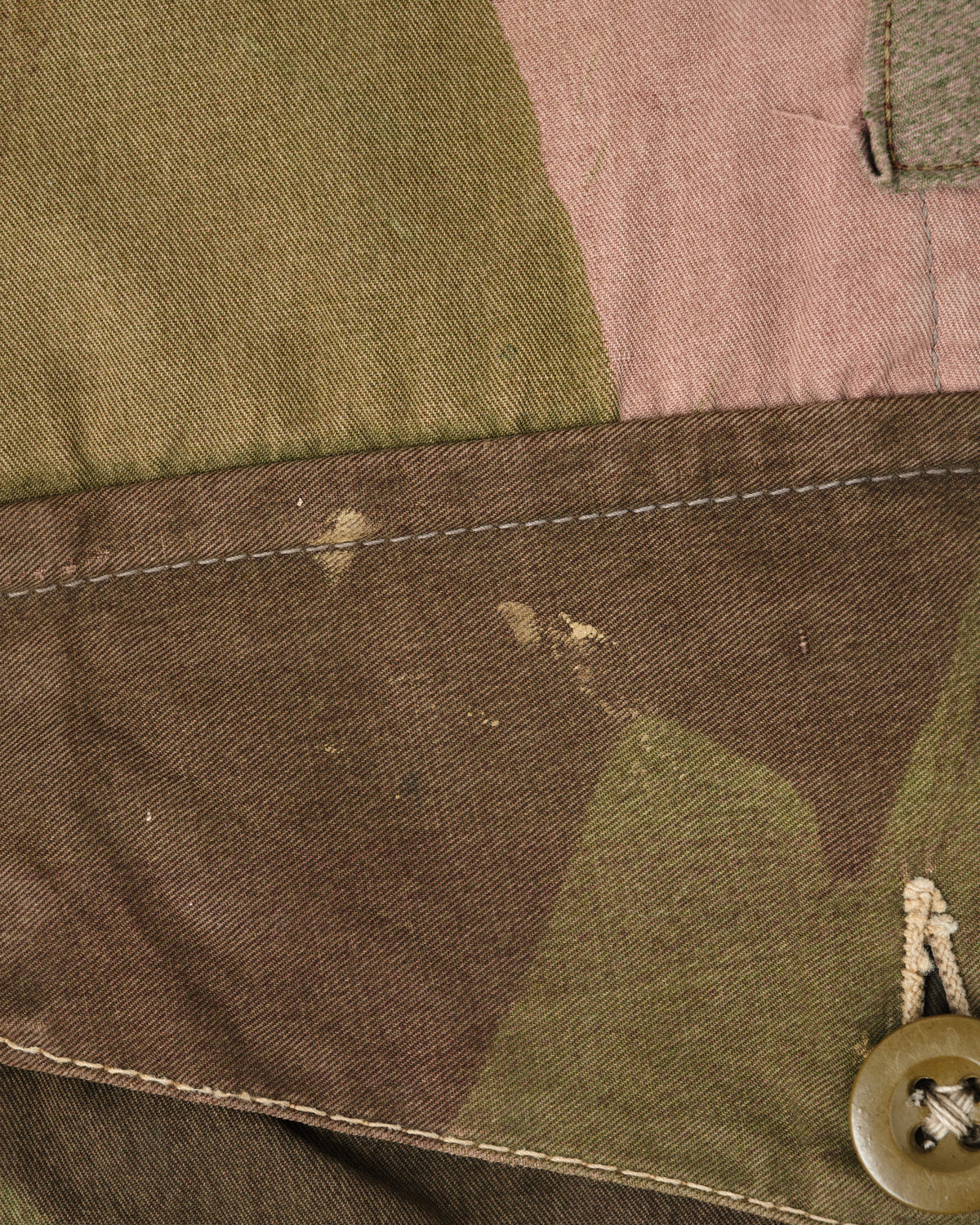
The original design, intended for layering over uniform trousers, featured an exceptionally generous cut. This particular example, however, has been modified with a button fly and two front tucks, yet tapered through the leg to achieve a silhouette suited to daily wear.
Slim belt loops have been sewn, facilitating use with contemporary belts and offering ease of wear for those less inclined toward drawcord systems.
Large flap cargo pockets occupy the outer thighs.
The hem employs a rubber shirring system.
These work equally with boots or, styled by women, with pumps or Mary Janes for a deliberately mixed aesthetic.
According to reference materials, the original Windproof Trousers were designed by the British military to be worn 'over' wool work trousers, resulting in a particularly generous cut.
Further documentation notes that 'examination of the rear reveals the specifics of alteration. The practical improvement is evident in the replacement of drawcords with sewn belt loops. The hem contains elastic. The renowned Algiers tailor Dupont executed numerous military modifications for unit orders', indicating systematic field customization.
Additional documented modifications include waist adjustment, the addition of vertical loop bands, the incorporation of rear 'revolver pockets', the creation of substantial side flap pockets, leg narrowing and hemmed elastic—occasionally drawcords—among other variations.
These matched sets accumulated alterations through individual tailors, both civilian and unit-attached, serving in work capacity, off-duty wear, formal occasions, and even during combat operations.
These historical accounts correspond precisely with this example's two-tuck construction, newly sewn belt loops, elasticated hem, and cargo pocket placement—confirming it as a piece authentically reflecting the field customization practices of its era.
No size marking is visible, though the piece appears to correspond to Japanese sizing of approximately XS to S.
Given the actual measurements, the fit runs small; those of diminutive stature should find it entirely wearable.
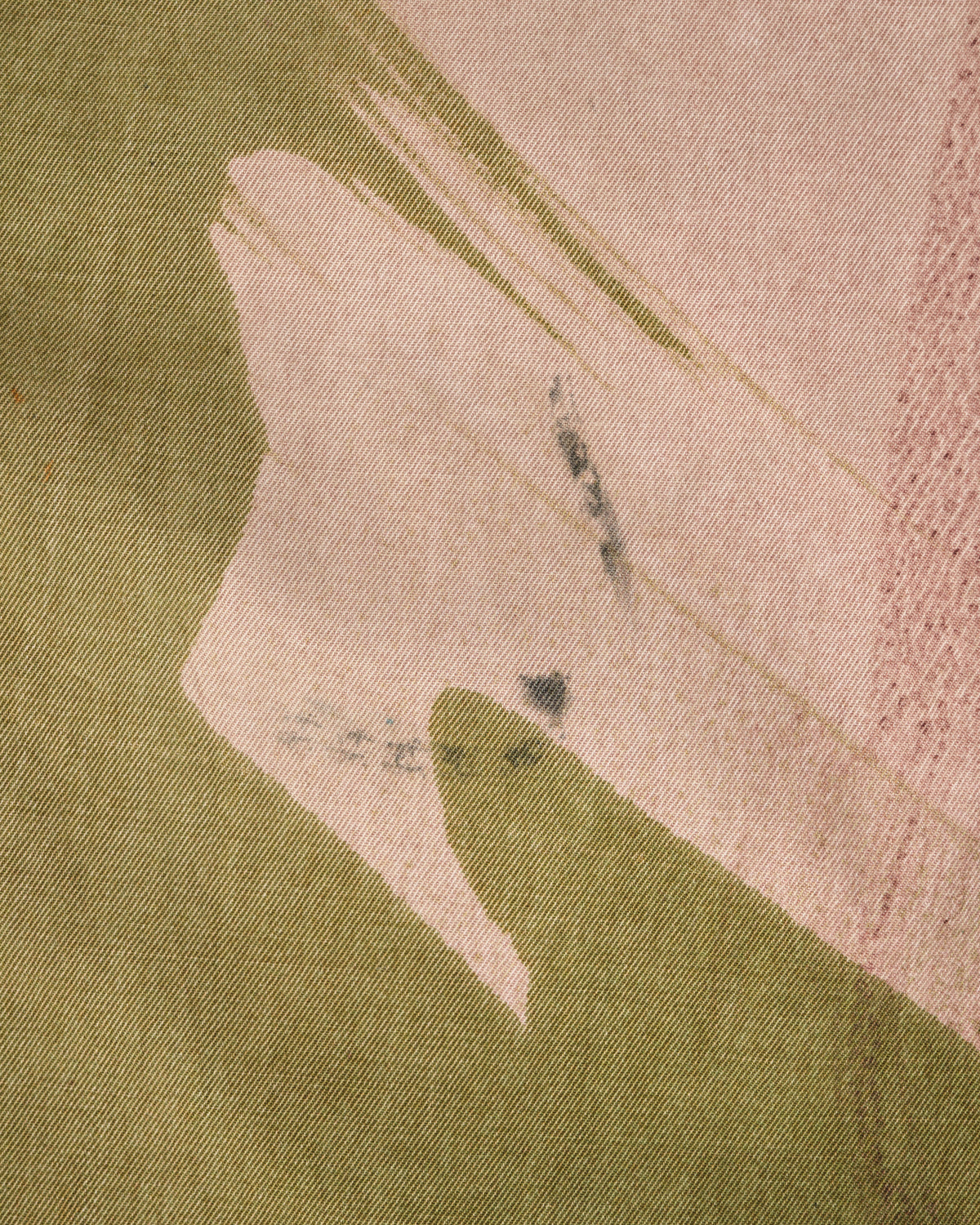
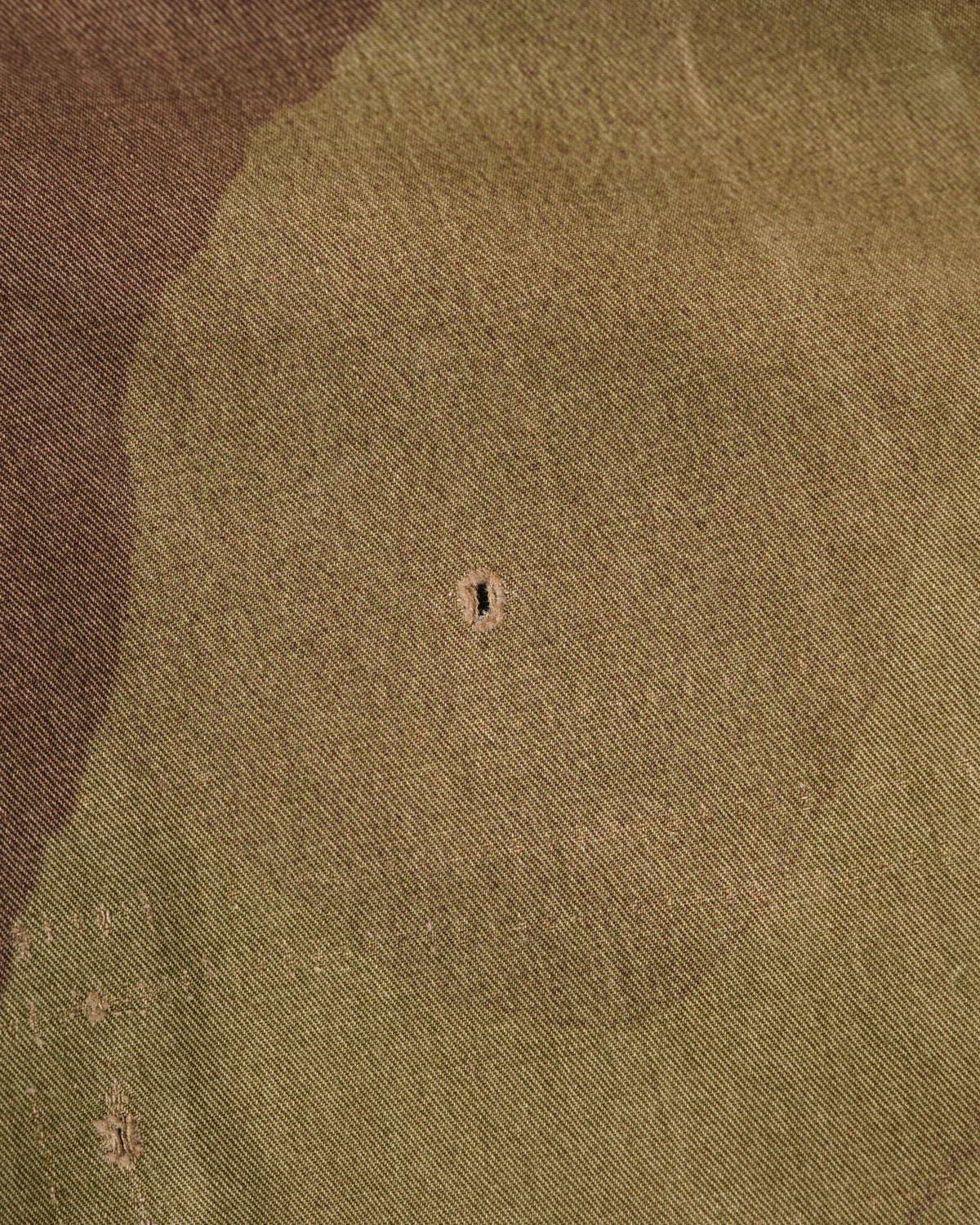
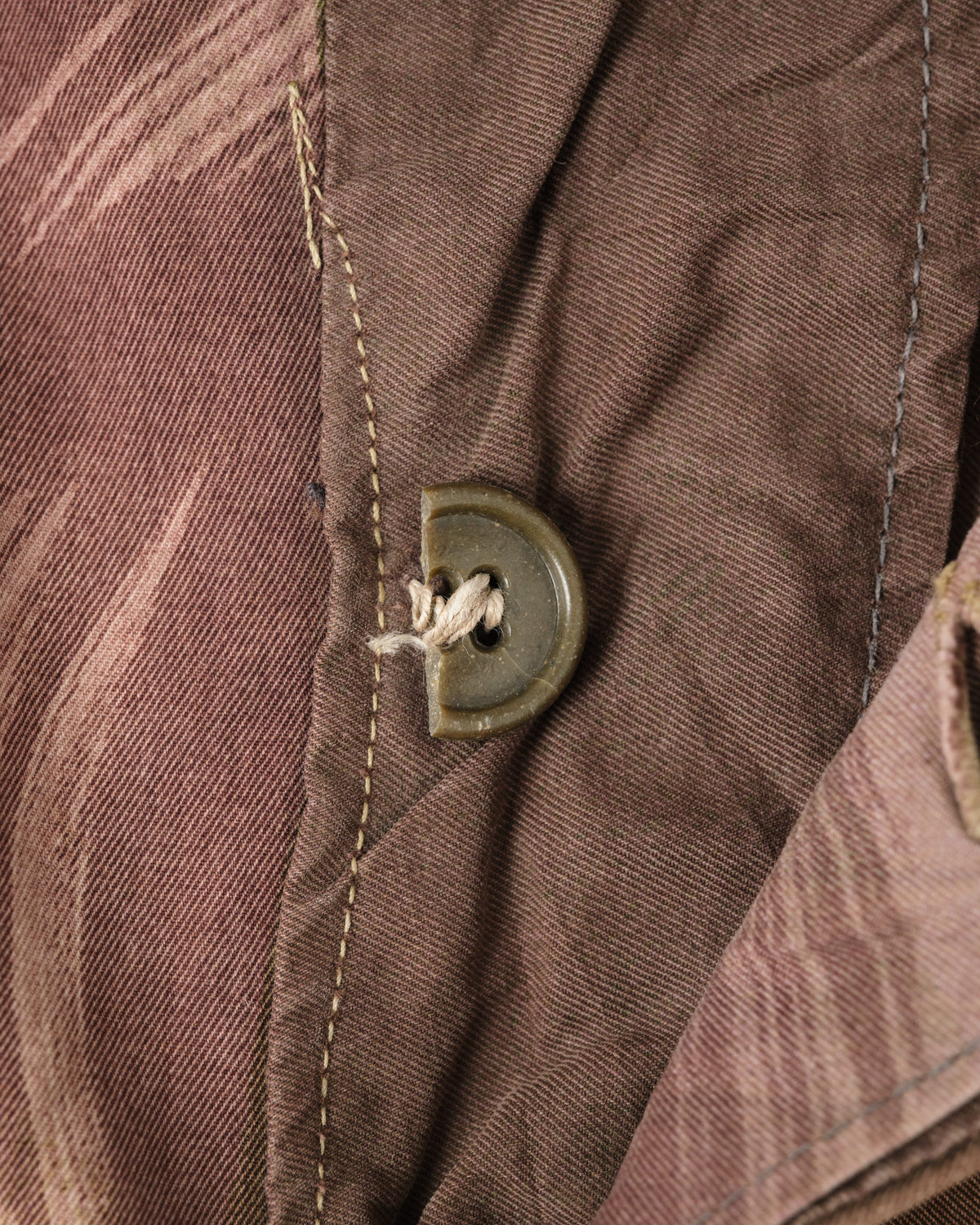
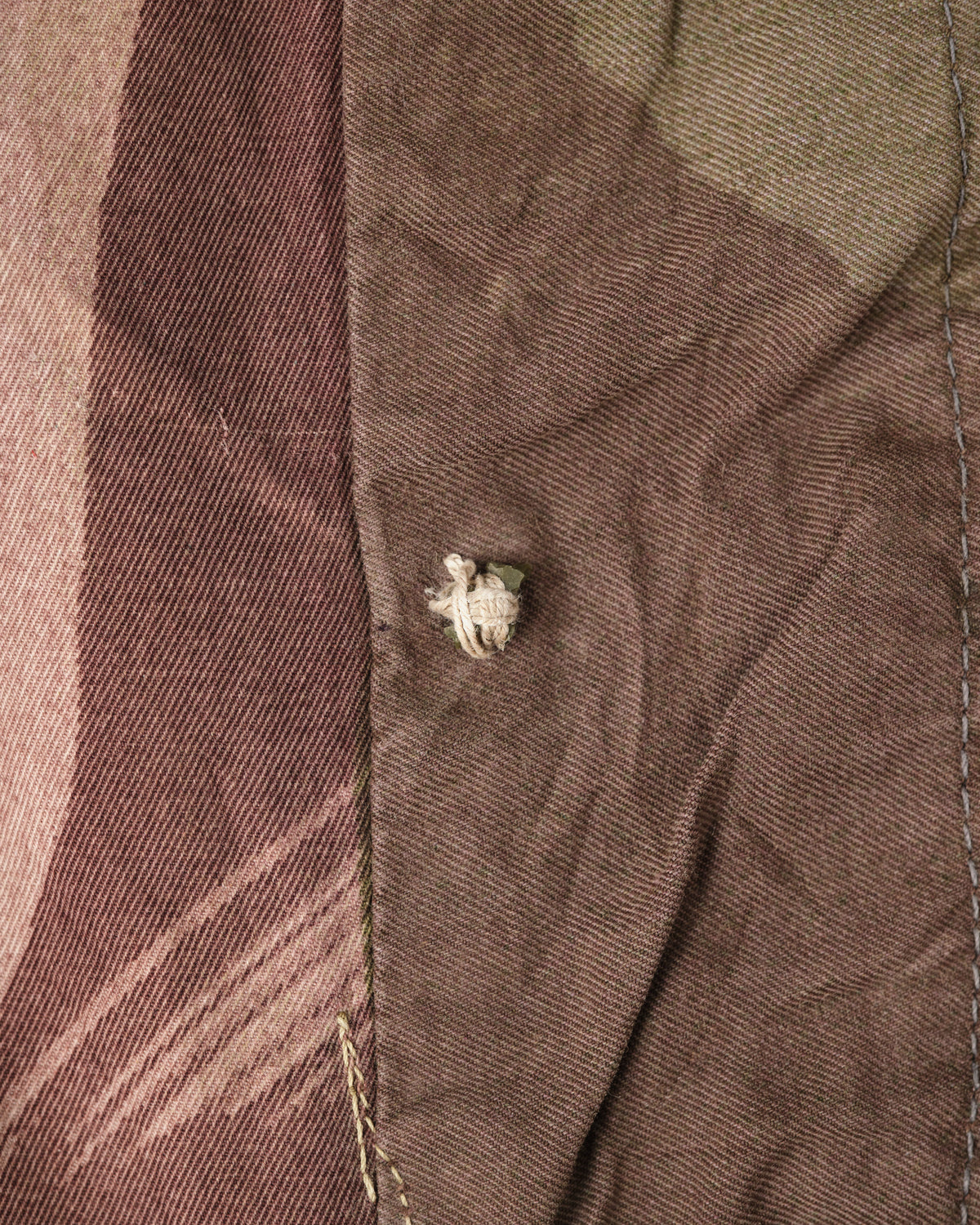
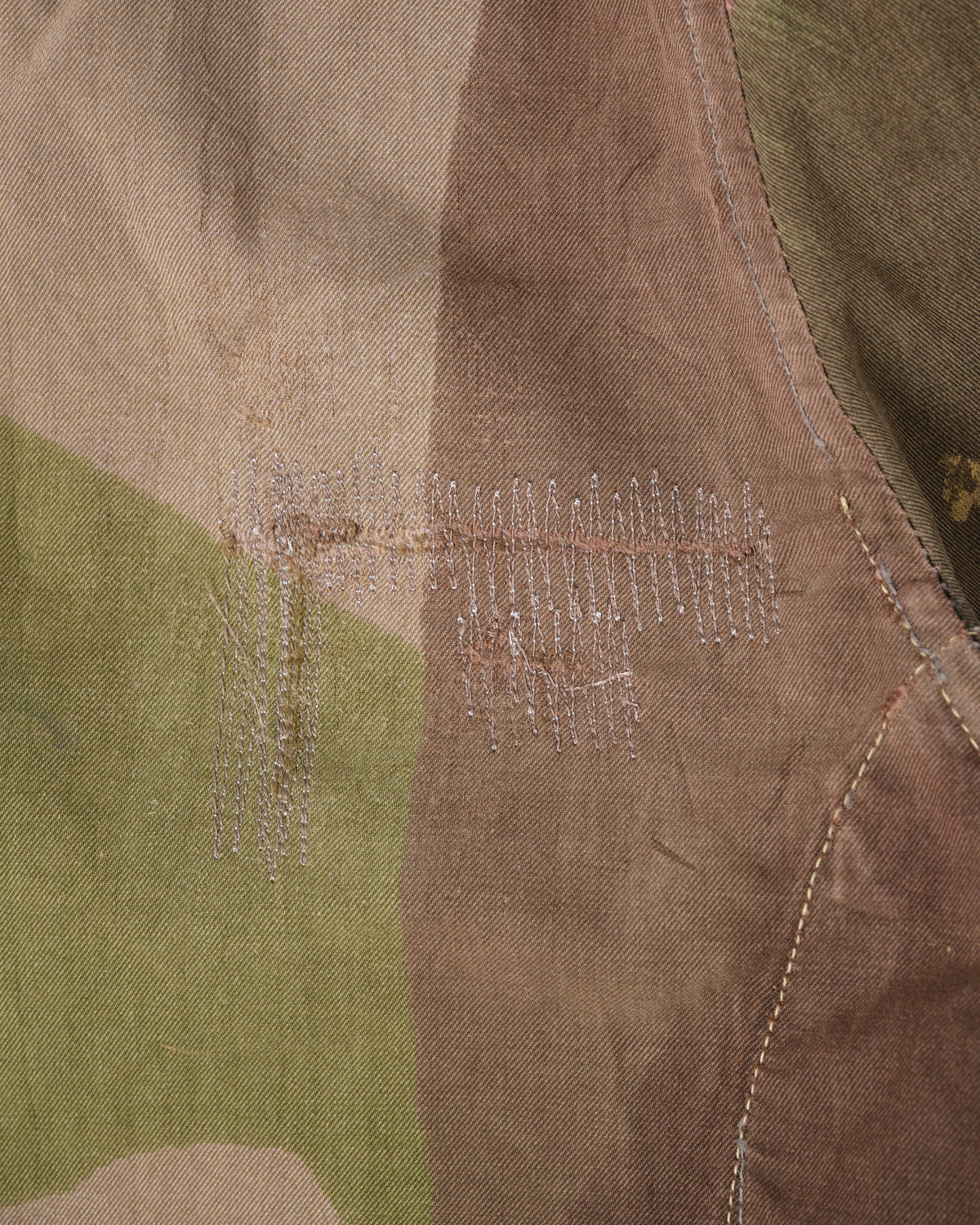
Evidence of use is present—soiling, small holes, button damage, missing buttons, and repair marks—yet no damage sufficient to compromise wear remains visible. The piece remains entirely serviceable.
These Algerian War-period retailored trousers represent a rare convergence: British fabric remade by French military hands. They possess both historical significance and practical utility—a piece that speaks.
Market availability is severely limited, and acquisition remains an infrequent occurrence.
Equally suited to form the foundation of a working wardrobe or to serve as a collection piece and design reference, this is a specimen rarely encountered domestically or abroad.
ADD TO CART