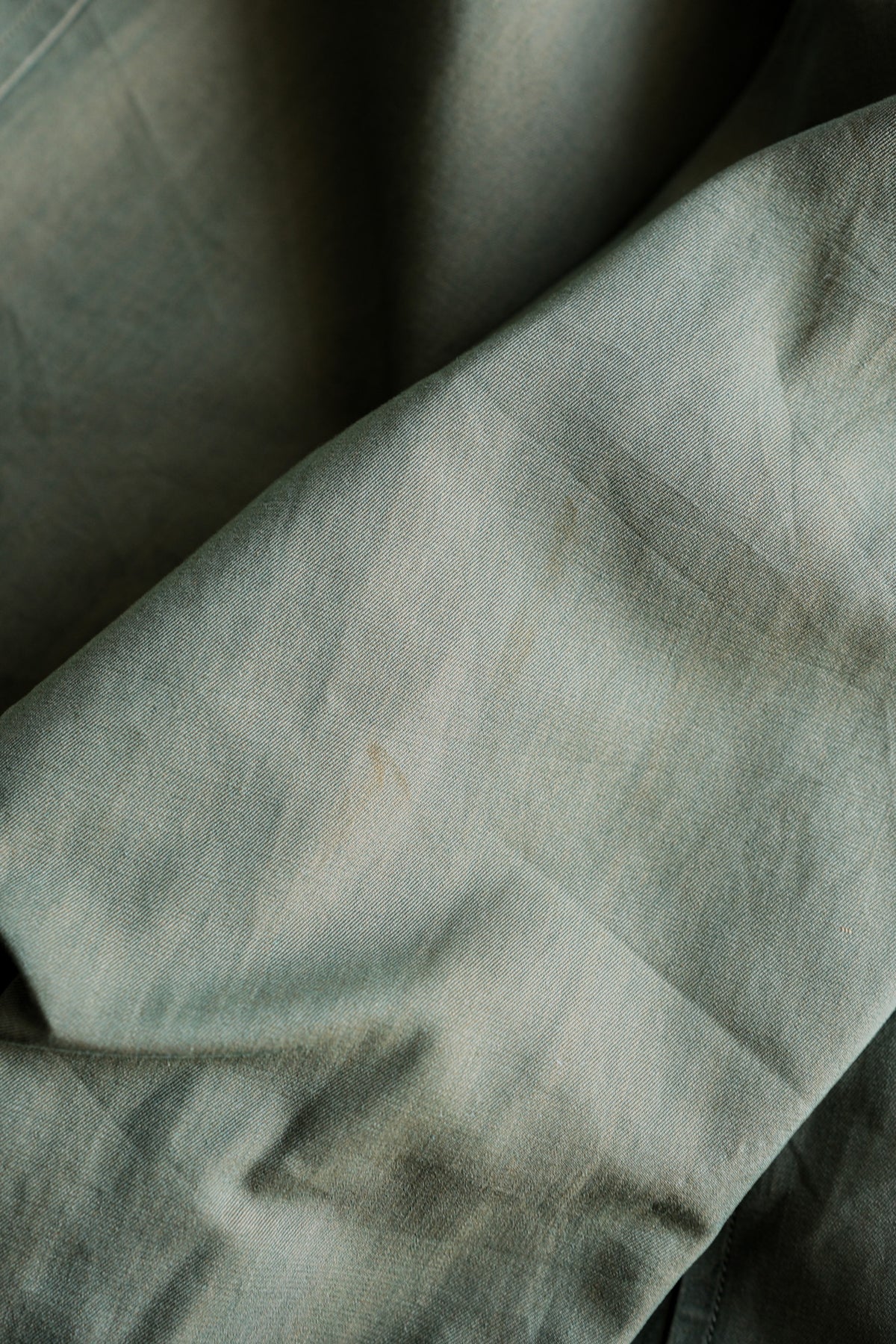
Circa 1950s Burberrys raglan sleeve balmacaan coat.
A particularly rare acquisition.
Made in England.
Burberrys was founded in 1856 by Thomas Burberry in Basingstoke, England, establishing itself as one of Britain's most enduring heritage houses.
In 1879, inspired by the protective garments worn by farmers, Burberry invented gabardine, a fabric of exceptional durability and water resistance.
In 1912, Burberrys patented the Tielocken, a coat design that remains celebrated to this day.
The Equestrian Knight, depicting a mounted rider and adopted as the brand's inaugural logo in 1901, emerged from a public design competition and has become an emblem of Burberrys's commitment to heritage and quality.
The heraldic shield bearing the rider carries the Latin inscription "Prorsum"—forward—a symbol of the house's progressive spirit and commitment to innovation.
In 1924, the Burberry Check, now synonymous with the house, first appeared as the lining of a raincoat and remains registered as the brand's signature pattern.
From nearly 150 years of heritage, this balmacaan coat represents a remarkable specimen from the capital letter tag period—a mark of particular provenance and rarity.
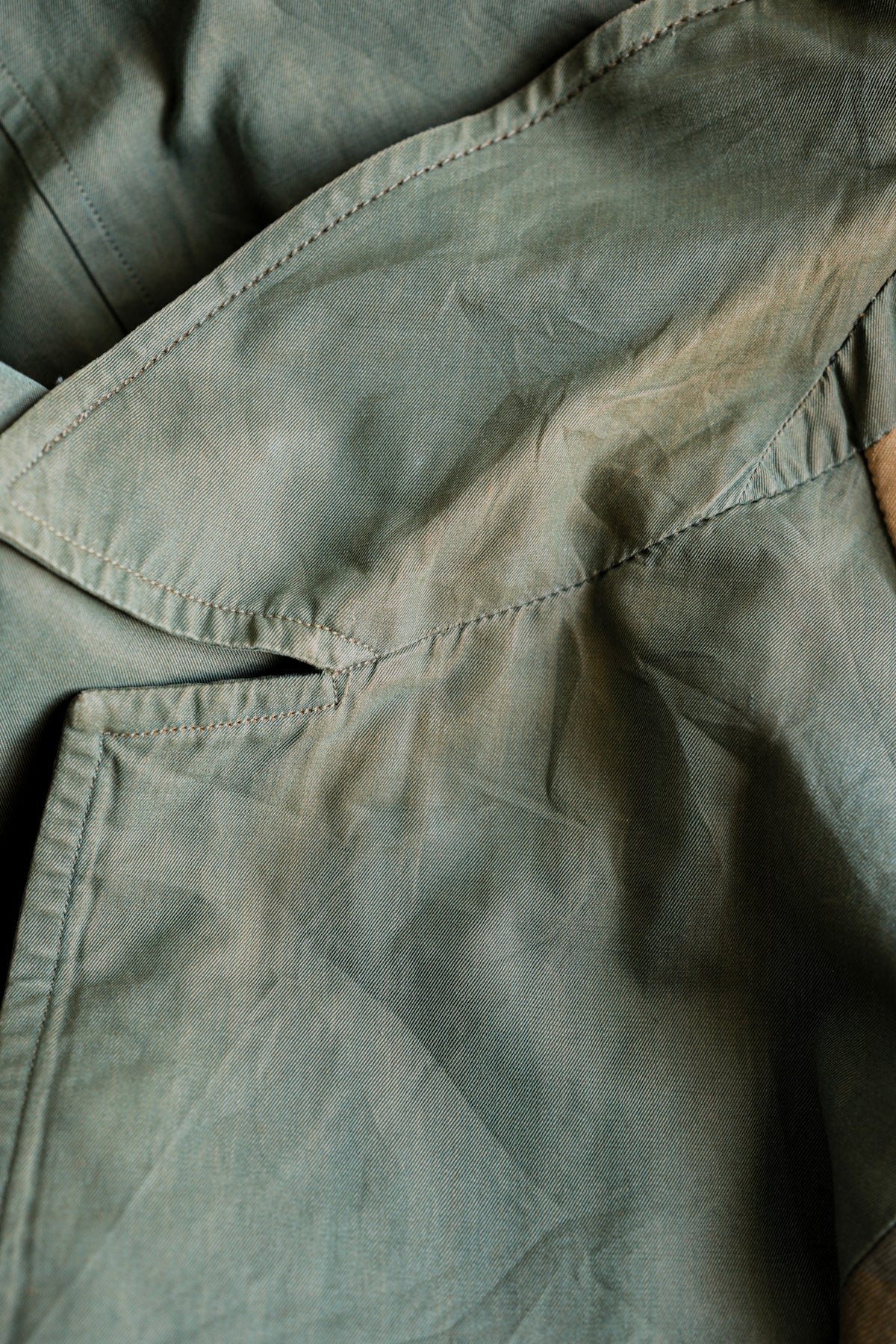
Unlike the one-piece sleeve construction that forms the majority of our stock, this example features the more classical raglan sleeve—characterised by a seam running from the underarm to the neckline.
Whilst many seek the one-piece variant, a properly fitted raglan sleeve delivers an equally refined silhouette with broader ease of movement. For those drawn to a more deliberately classical aesthetic, the raglan construction arguably proves the superior choice.
The raglan construction—with its diagonal seam—permits generous freedom of movement across the shoulders and arms whilst accommodating a variety of builds with natural grace.
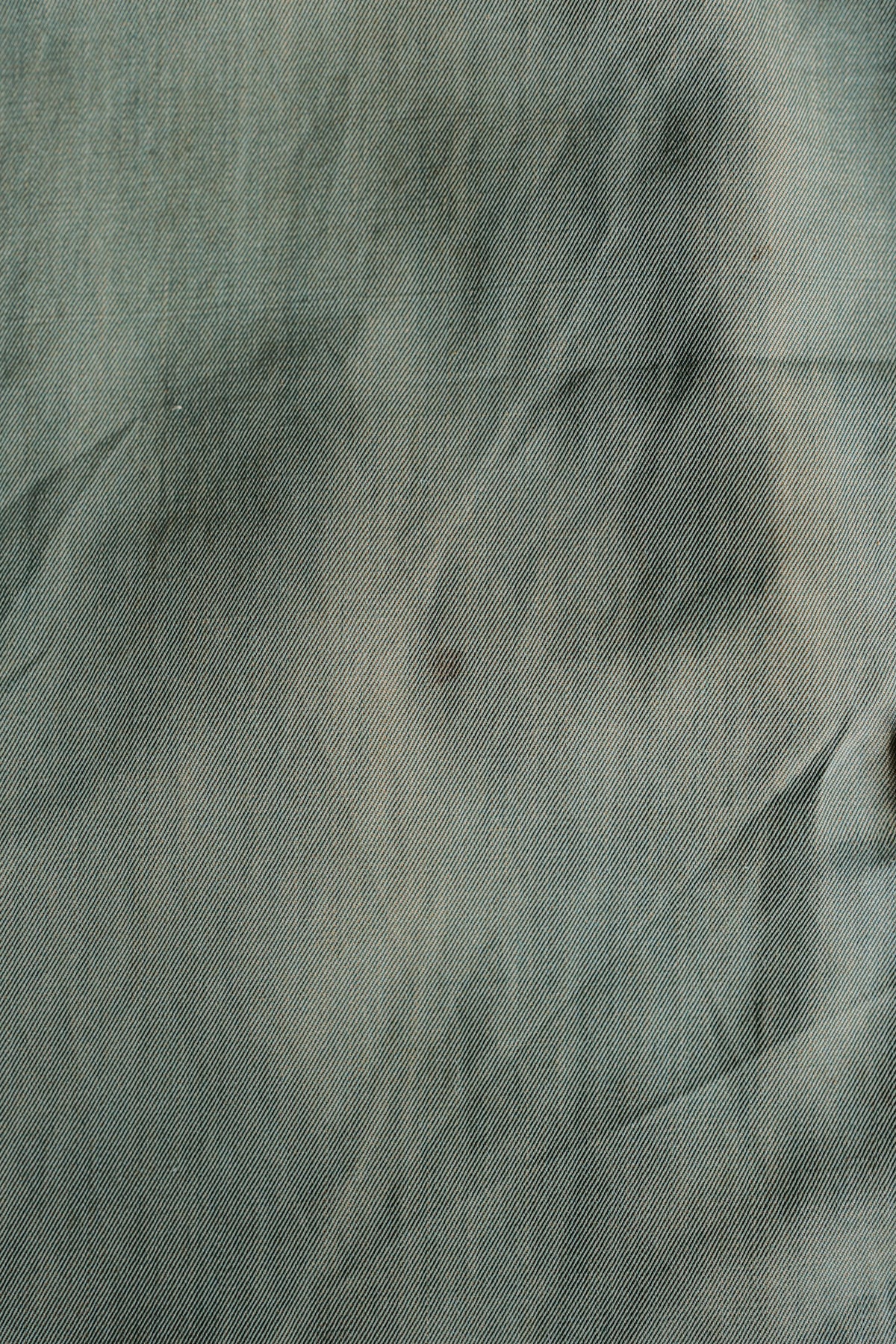
This particular coat is crafted in 100% cotton, a specification many seek.
Pure cotton distinguishes itself from cotton-synthetic blends through superior body and a refined tactile presence.
With wear, 100% cotton develops a particular patina across its surface—a quality of fading and creasing wholly characteristic of the fibre.
The front closure employs a double-breasted concealed button arrangement. Beyond the refined visual effect this provides, the layered construction serves functional purpose—deflecting wind penetration whilst protecting the buttons themselves from external damage.
Buttons and tab fastenings are positioned to permit an upturned collar—a detail that transforms the coat's presence entirely, should one wish to wear it so.The effect is altogether distinctive.
Inside the collar sits a branded label reading "MADE IN ENGLAND," affirming its provenance. Where later examples bear "Burberrys" in lowercase, this piece retains the capital letter format—a detail of considerable significance for the Burberrys enthusiast.
The silhouette—timeless in its proportions—remains among the coat's most compelling characteristics. The pronounced A-line falling toward the hem creates an elegant and decidedly graceful form when worn.
The colourway is a much-sought iridescent green—a shade commanding immediate presence in the market and possessing a unique luminosity that captivates the eye.
Rather than the iconic Burberry Check, the lining presents a restrained checked pattern in tones sympathetic to the exterior, lending a sophisticated understatement to the piece.
No size marking is legible; however, the garment appears to correspond to a contemporary Japanese large. Measured dimensions confirm a substantial cut—accommodating larger frames without compromise.
Surface wear and minor button loss are evident, as is appropriate to an item of this age; however, no structural damage impairs its functionality or wearability.
Burberrys stands as perhaps the first name one considers when pursuing a vintage overcoat.
Examples bearing the capital letter tag, predominantly from the 1950s and earlier, remain exceptionally uncommon in the marketplace.
Should you seek a foundational coat of enduring character, or wish to secure an earlier iteration of Burberrys, we recommend treating this with appropriate consideration. Such examples warrant decisive action.
ADD TO CART