Circa 1960s, a German-made Splinter Camouflage Paratrooper-style jacket.
A special acquisition.
Presented here is a piece constructed in the postwar period using fabric from the Zeltbahn—an isosceles triangular individual shelter cloth that saw service during the Second World War.
While we believe this to be a privately tailored example, and cannot assert it as original Wehrmacht issue, it stands as a remarkably well-executed jacket when viewed on its own merits.
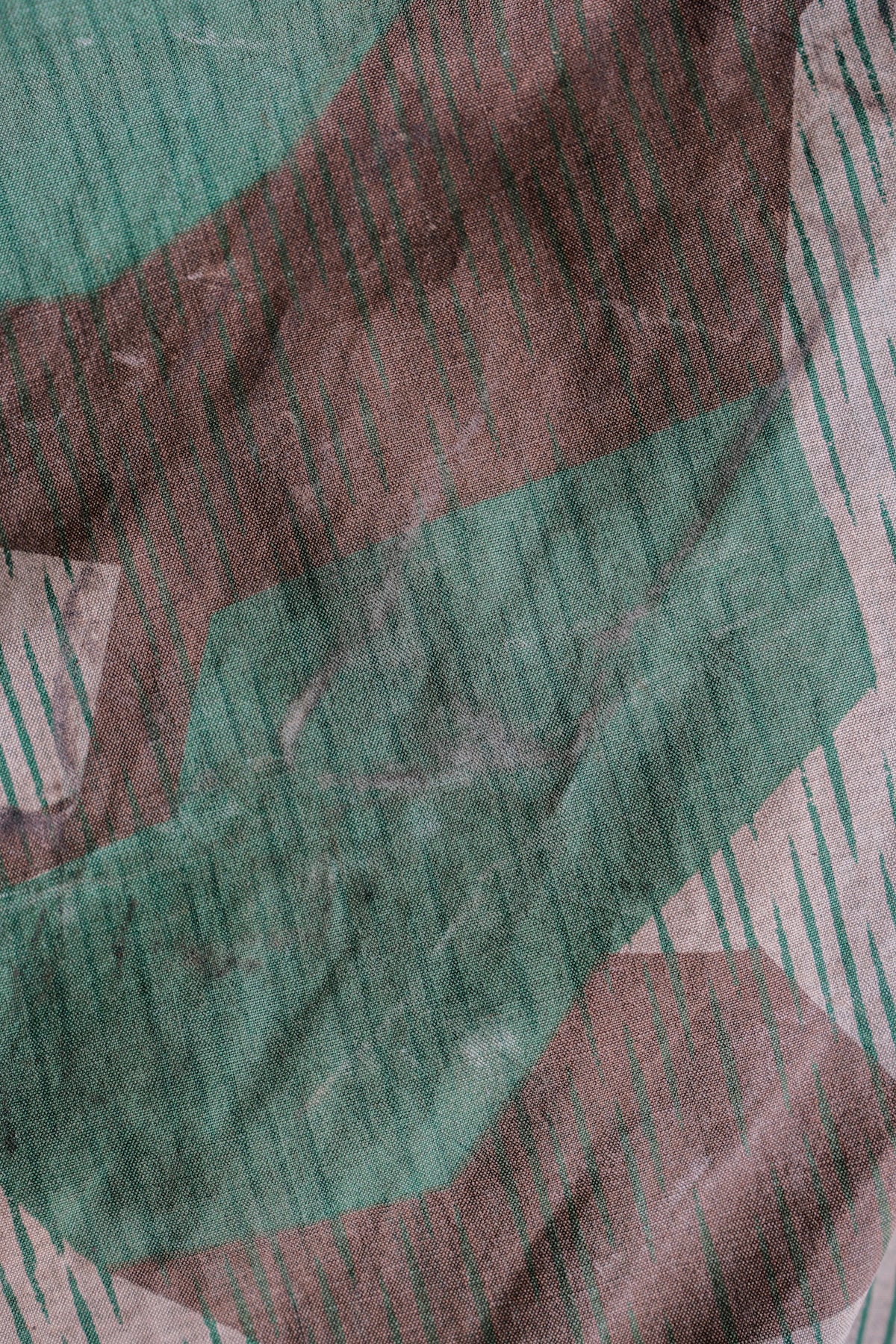
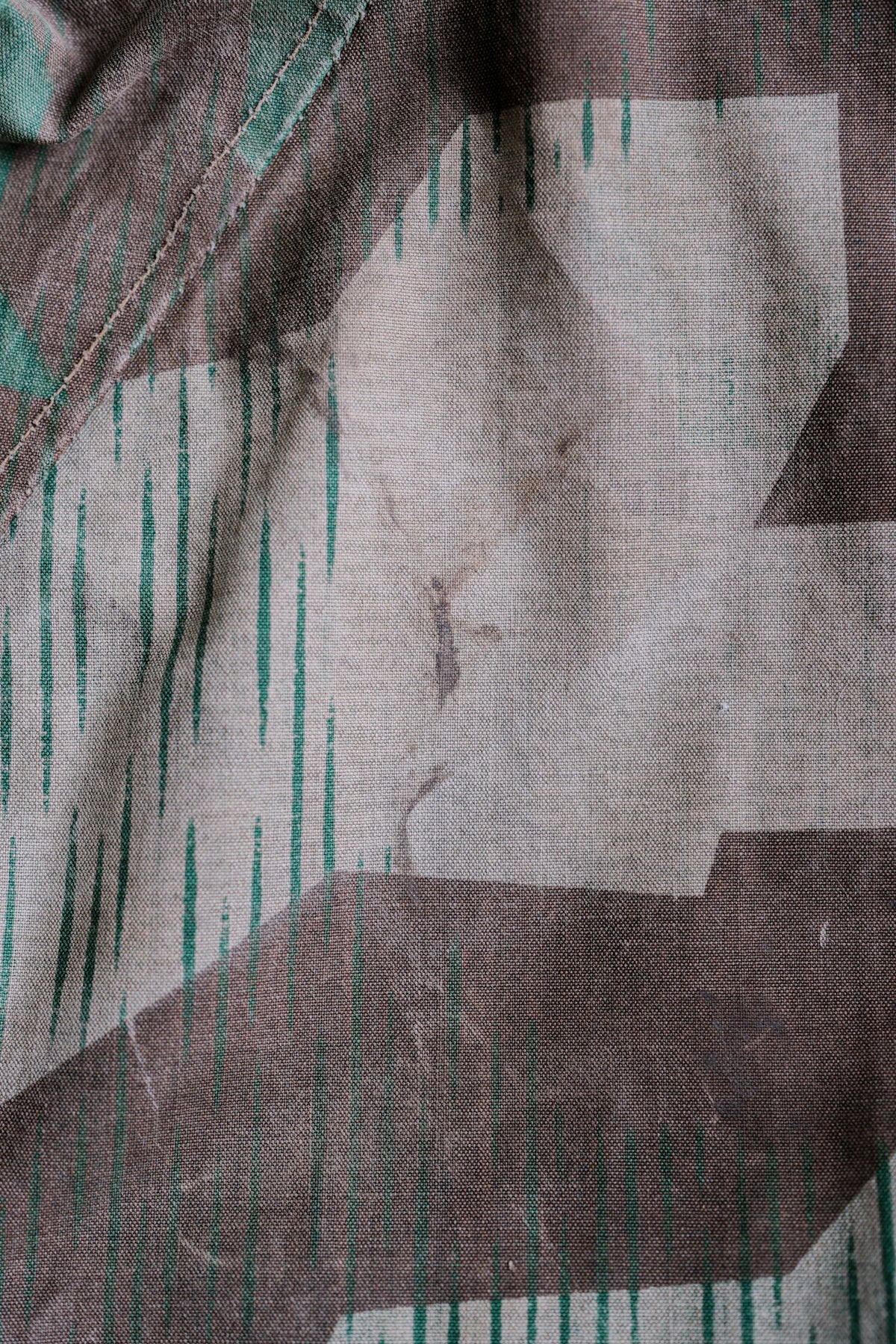
The defining characteristic of this piece is undoubtedly the distinctly German camouflage pattern.
The pattern known as Splittermuster was developed by Germany in the late 1920s as a four-color military camouflage, first adopted by the Wehrmacht in 1931—Germany's inaugural military camouflage pattern.
These patterns bore the formal designation Buntfarbendruck 31, which was renamed Splittermuster 31 in 1935.
This pattern saw primary use on Zeltbahn textiles and was widely adopted on uniforms throughout the Second World War.
The jacket presented here features Splittermuster 31, and carries a presence entirely distinct from the post-1950s iterations of Splitter camouflage—a commanding presence both in its tonal composition and sensibility.
Beyond the camouflage itself, the military details evoke paratrooper jackets across nations—rugged, purposeful design that holds considerable appeal.
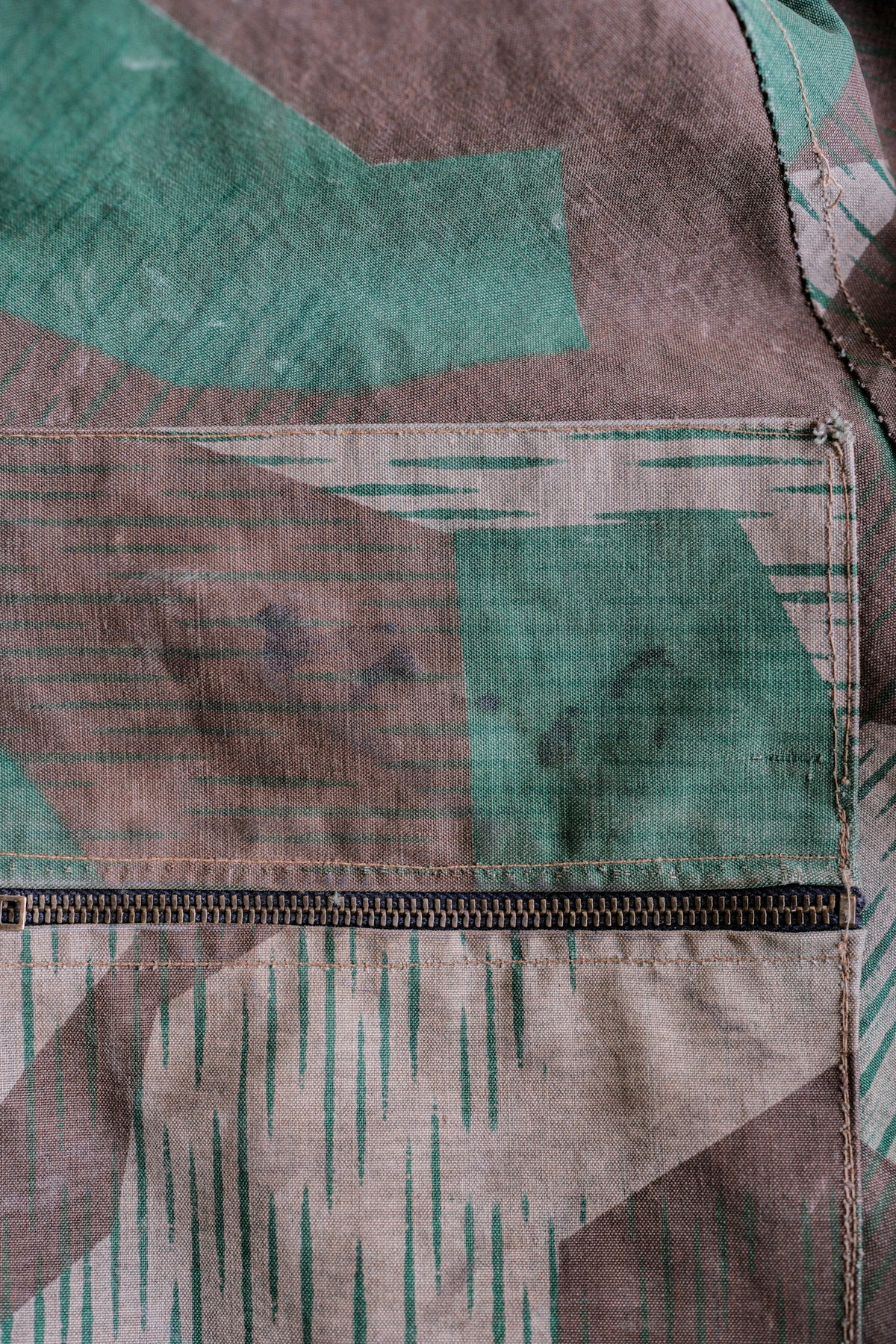
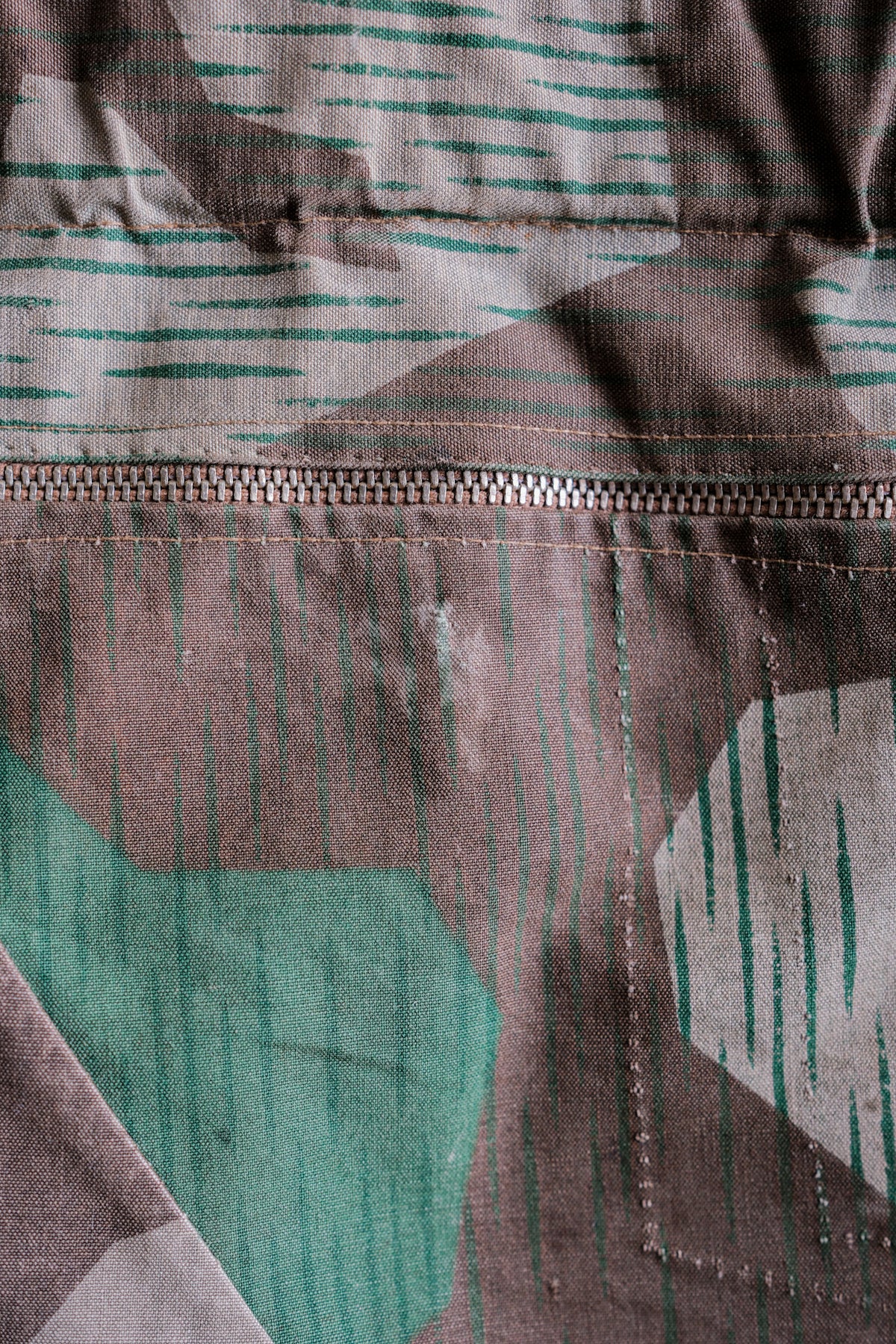
A stand collar fastened by four buttons, waist tabs with button closures, zip pockets positioned at both chest and hem, a flap pocket at the rear hem, and a cigarette pocket on the left sleeve alone—a piece brimming with considered detail.
The waist and hem employ elastic shirring, both preventing wind intrusion and enhancing fit.
The raglan sleeve construction, which expands arm mobility, proves equally welcome.
Whether worn oversized, the fabric falls cleanly along the shoulder line, permitting an always-assured silhouette.
The front closure operates via zip fastener.
The zip slider bears markings, though their precise meaning remains obscure.
Documented Wehrmacht pieces certainly possess their own appeal, yet singular pieces such as this carry their own character and interest.
Among European military garments, this ranks among the special camouflage examples.
Beyond its rarity, when approached as a fashion article, it stands as a genuinely compelling piece—one we encourage you to wear freely and without reserve.
No size marking is discernible, though it appears to correspond roughly to Japanese sizing L to XL.
The actual measurements suggest a generous fit, accommodating larger builds without concern.
In the manner of military pieces, it carries equally well worn oversized.
Signs of use are present—fabric wear, soiling, minor punctures—yet no damage of consequence presents itself, leaving it entirely wearable.
German military pieces have gained considerable attention in recent years, yet original Wehrmacht items remain exceedingly scarce given their historical significance, and supply has never matched demand.
With a devoted following, postwar construction notwithstanding, this qualifies as the sought-after archive piece that collectors do not readily release.
This is not something one simply purchases; future availability cannot be assured.
Whether as a working wardrobe piece, collector's item, or design reference, it speaks for itself.
A singular piece worthy of its status, and essential to those who have sought it or favor the uncommon.