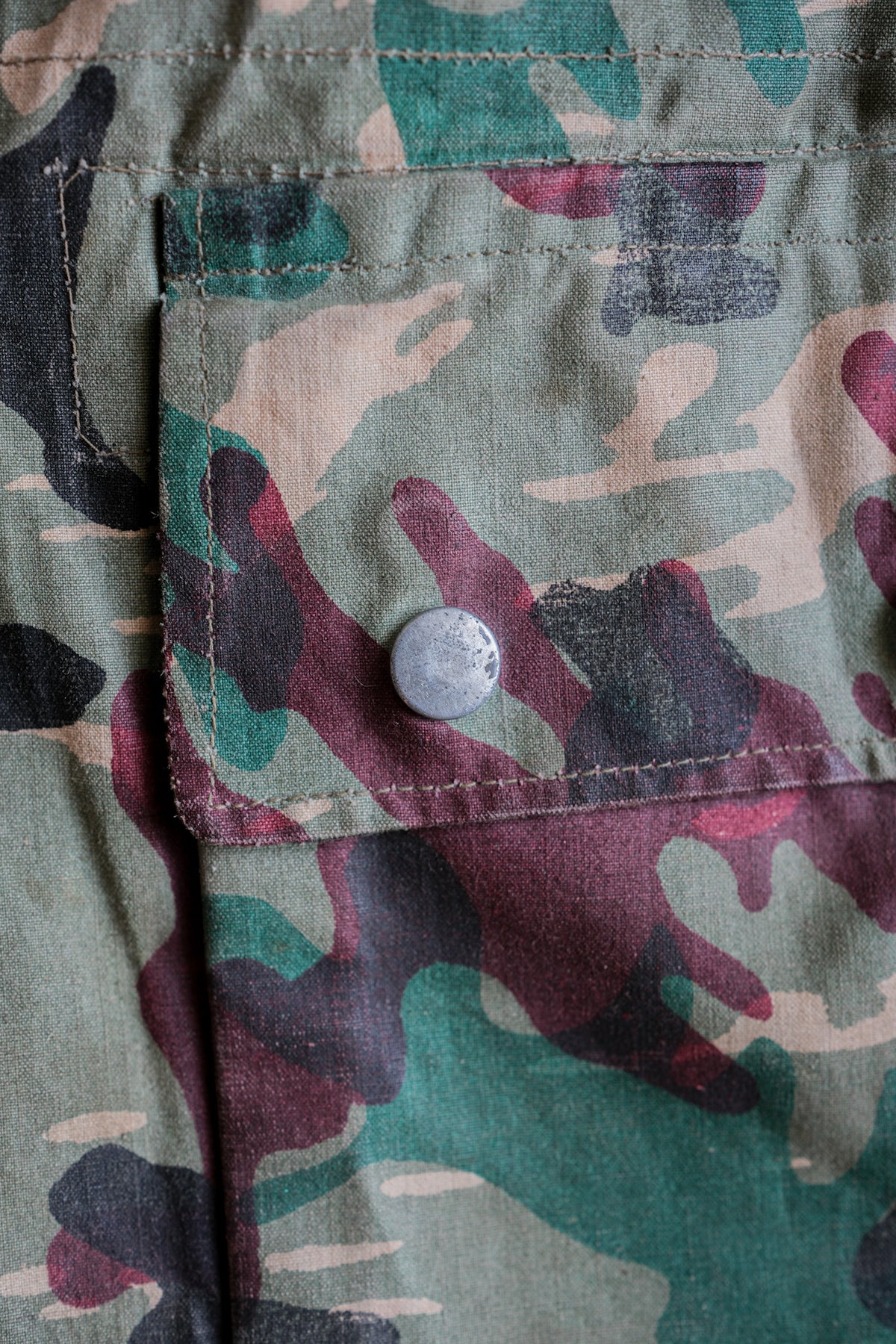
Circa 1960s Spanish Army Green Amoeba Camouflage Paratrooper Jacket.
A special acquisition.
The history of the Spanish Army spans centuries, particularly during the era of the Spanish Empire from the 16th to 17th centuries, when it commanded major military presence across both Europe and the New World.
By the 18th century, the Spanish Army underwent reorganization based on French military models.
Subsequently, a coup orchestrated by military generals within Spain precipitated internal conflict—the Spanish Civil War (1936-1939).
The conflict pitted the left-wing Republican People's Front government led by Manuel Azaña (the Republicans, or Loyalists) against right-wing Nationalist forces under Francisco Franco. Franco's Nationalist forces prevailed, establishing his regime over Spain.
Following the Civil War came World War II. Franco declared neutrality and did not formally enter the conflict.
In the postwar period, the Spanish Army underwent reorganization and modernization, and now participates as a member of NATO in international military cooperation.
The piece we present is a Paratrooper Jacket featuring the Green Amoeba Camouflage pattern, believed to have been issued to and worn by airborne units within the Spanish Army.
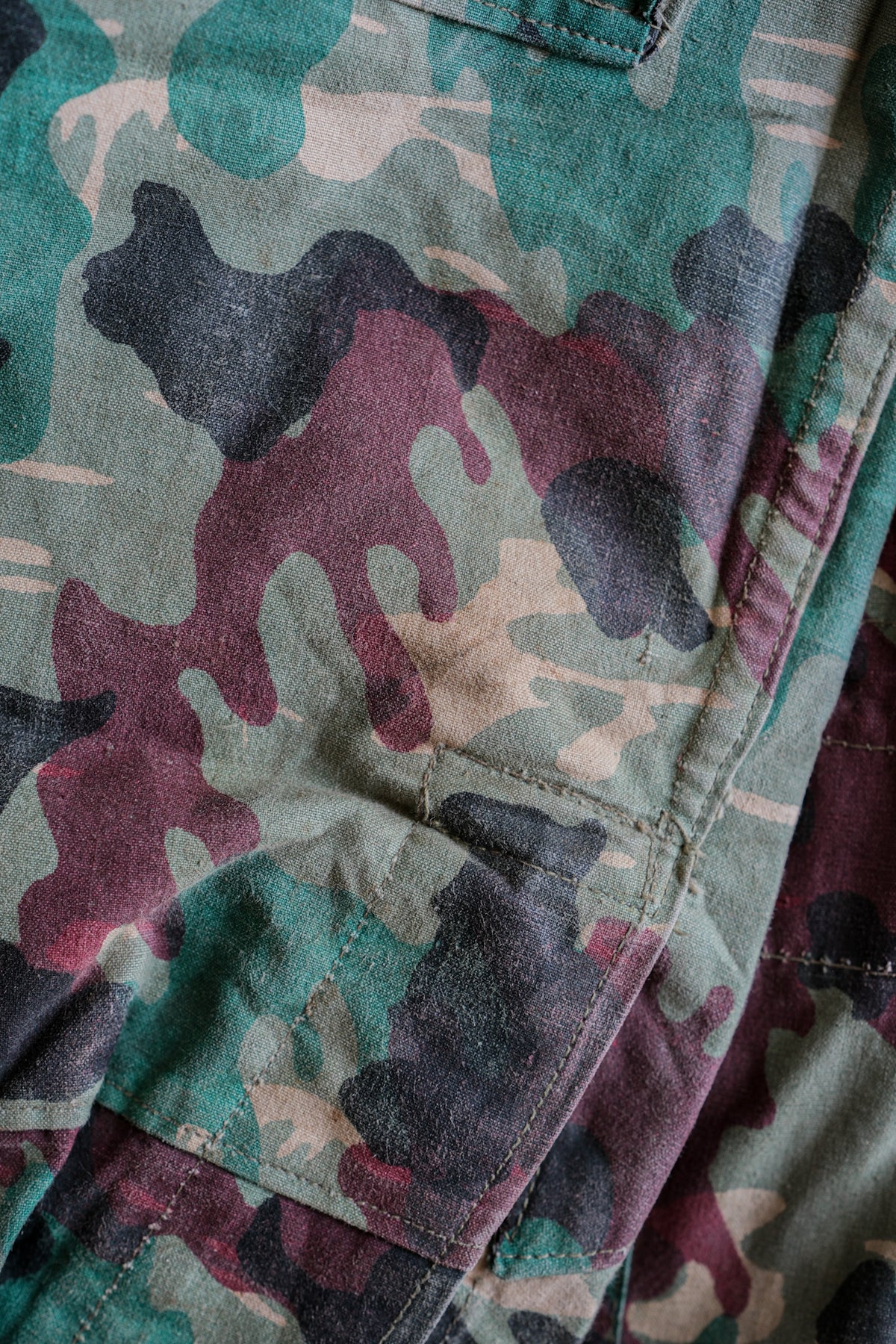
This jacket immediately commands attention with its distinctly characteristic camouflage pattern—the Green Amoeba Camouflage unique to Spanish forces.
Formally designated "M60 Boscosos (Woodland) Camouflage," this represents one of the early military camouflage patterns developed by the Spanish Army in the 1960s.
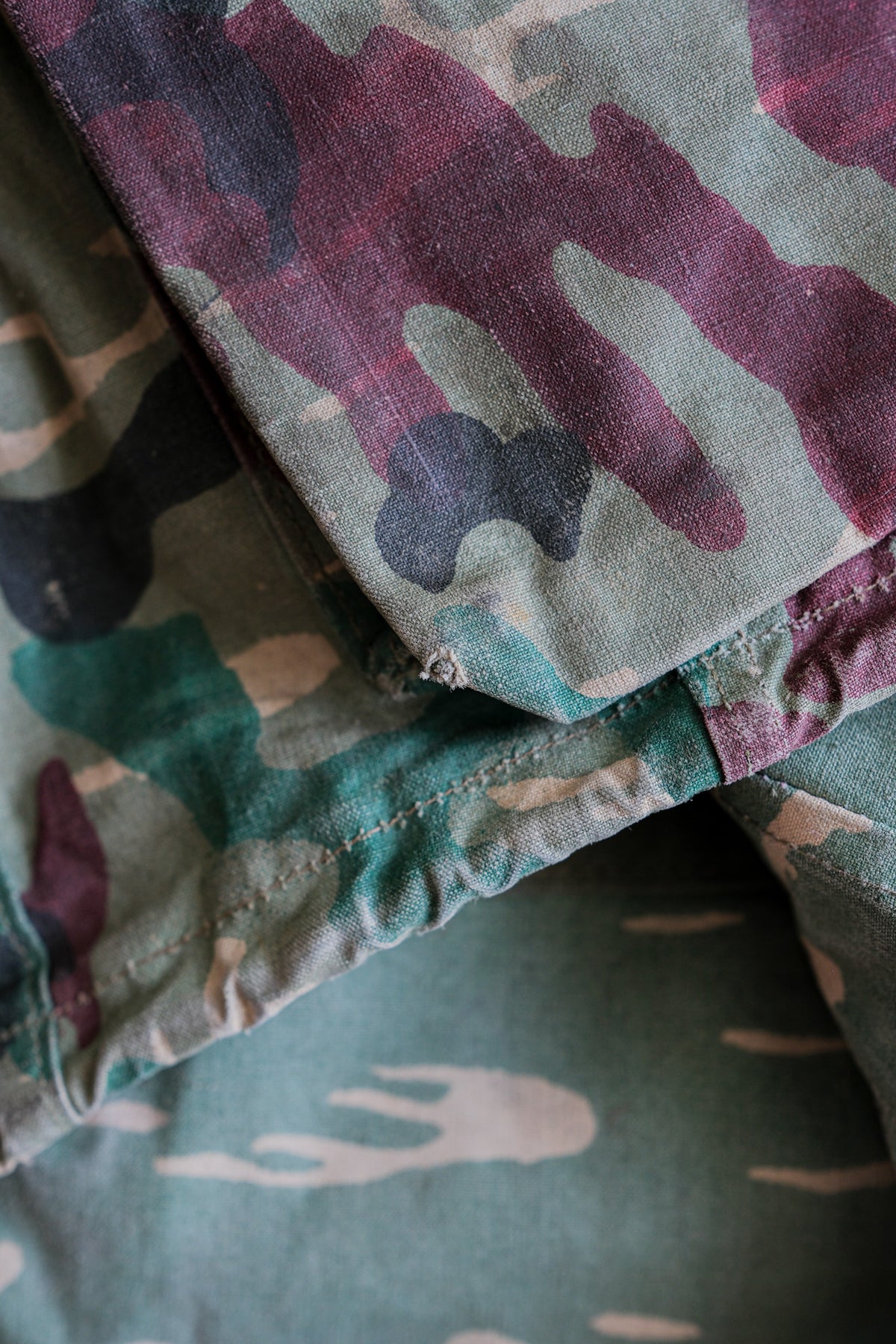
Designed specifically for use in forest environments, the pattern features amoeba-shaped forms in black, red, and green rendered against a pale green ground, overlaid with ecru-toned mottling.
Within Spanish Army ranks, this camouflage was worn primarily by the Special Operations Companies (COE) and the Paracaidistas (airborne units).
Among camouflage patterns worldwide, the Green Amoeba Camouflage ranks among the rarest.
Distribution within Japan is exceptionally limited—likely only a handful in circulation.
Beyond the camouflage itself, the details embody a distinctly utilitarian military character.
The silhouette evokes the Splinter camouflage Paratrooper jackets worn by the Bundeswehr circa the 1950s—a strikingly handsome piece.
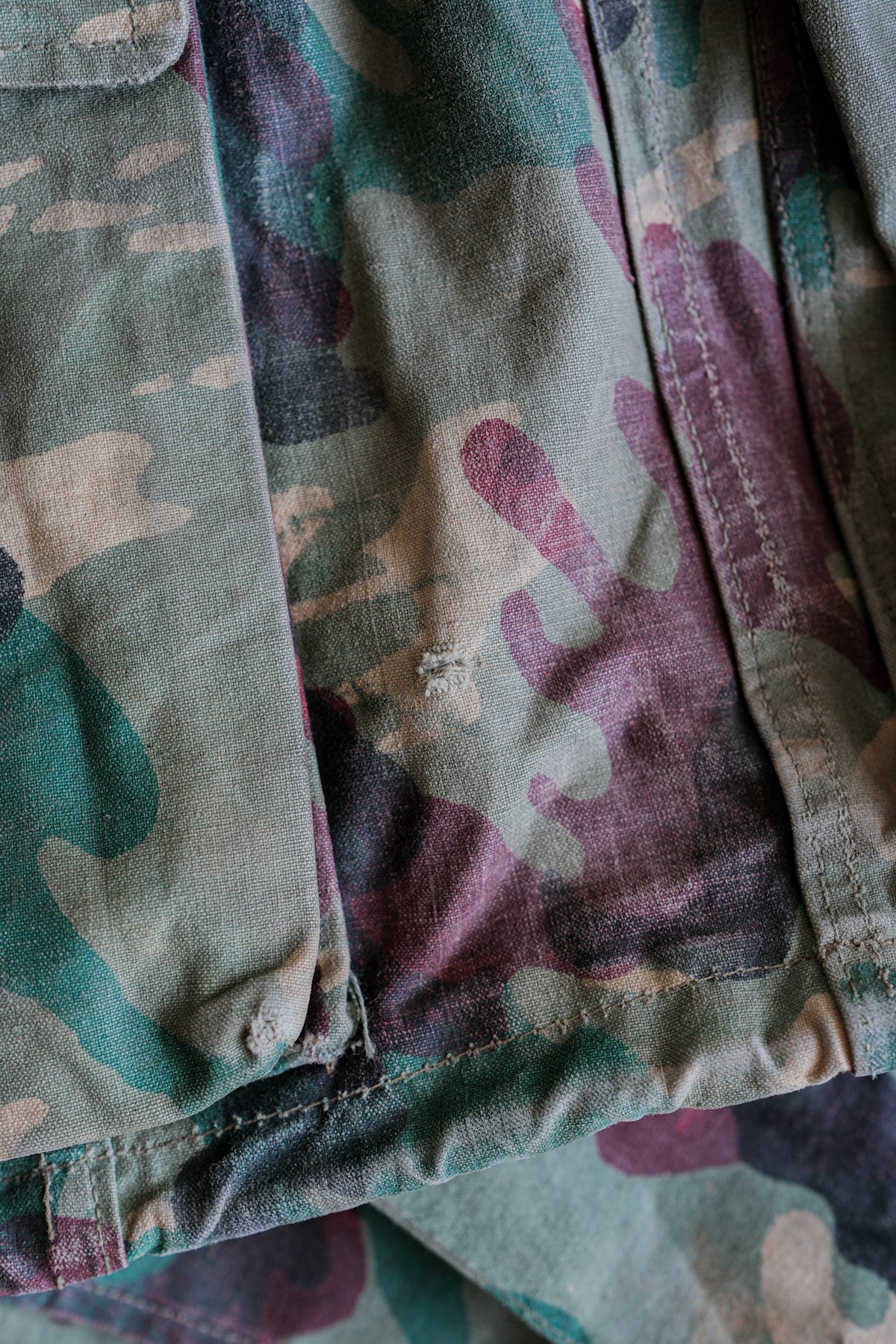
Characteristic details include a generously proportioned sharp collar, epaulettes typical of military jackets, diagonally-positioned zippered chest pockets, flap pockets positioned at front and rear hem, and cigarette pockets on both sleeves—elements that satisfy the discerning eye.
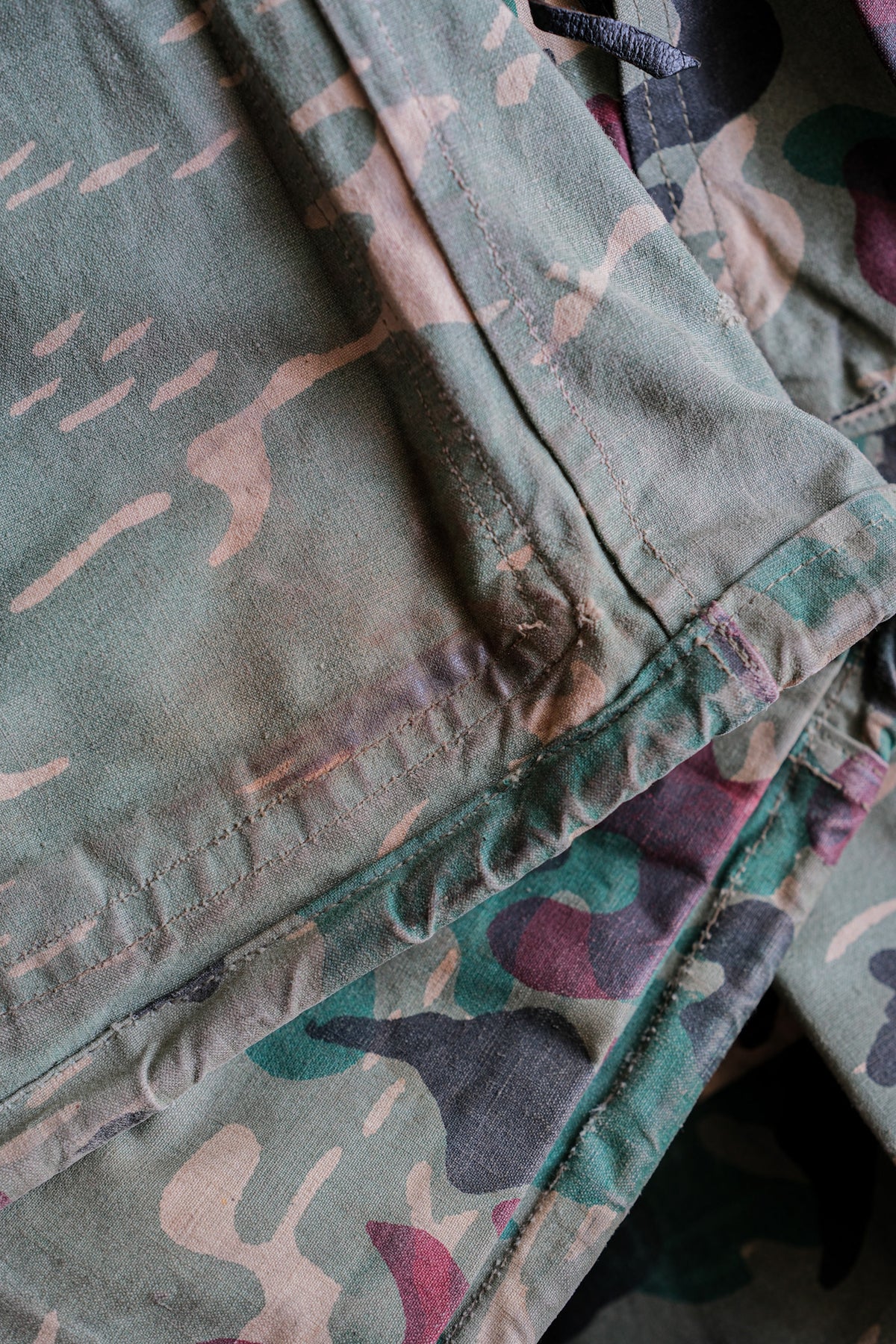
Ventilation apertures are positioned along both sides to prevent moisture accumulation.
The collar, designed with a heightened button-closure configuration, prevents wind infiltration while enhancing thermal retention. The collar can be worn upright for striking effect.
A drawcord at the hem provides additional versatility. By adjusting the drawcord, silhouette variation is possible, offering a two-way design that invites personal styling preference.
The front closure employs a dual-structure fly design combining a zipper and snap fasteners.
While size labeling is not visible, the jacket appears to correspond to roughly M to L in Japanese sizing.
Based on actual measurements, this represents a golden size for the typical Japanese frame, accommodating a broad range of builds. True to military tradition, this piece wears well in a relaxed, oversized manner.
The jacket bears expected signs of wear—soil marks, scuffing, minor perforations, button damage, and missing button covers—yet exhibits no significant damage that would compromise wearability.
Among European military pieces, this example occupies a distinct category of special camouflage.Beyond its rarity, from the perspective of fashion itself, this is an exceptionally striking garment, warranting unreserved use.
This is not an item procurable simply through expenditure of funds, nor can future availability be guaranteed.
Equally valid as a wardrobe staple, a collection piece, or a design reference. An uncommon piece, seldom encountered domestically or abroad. Those who have sought such an example, or who appreciate rare items, should not overlook this opportunity.
ADD TO CART