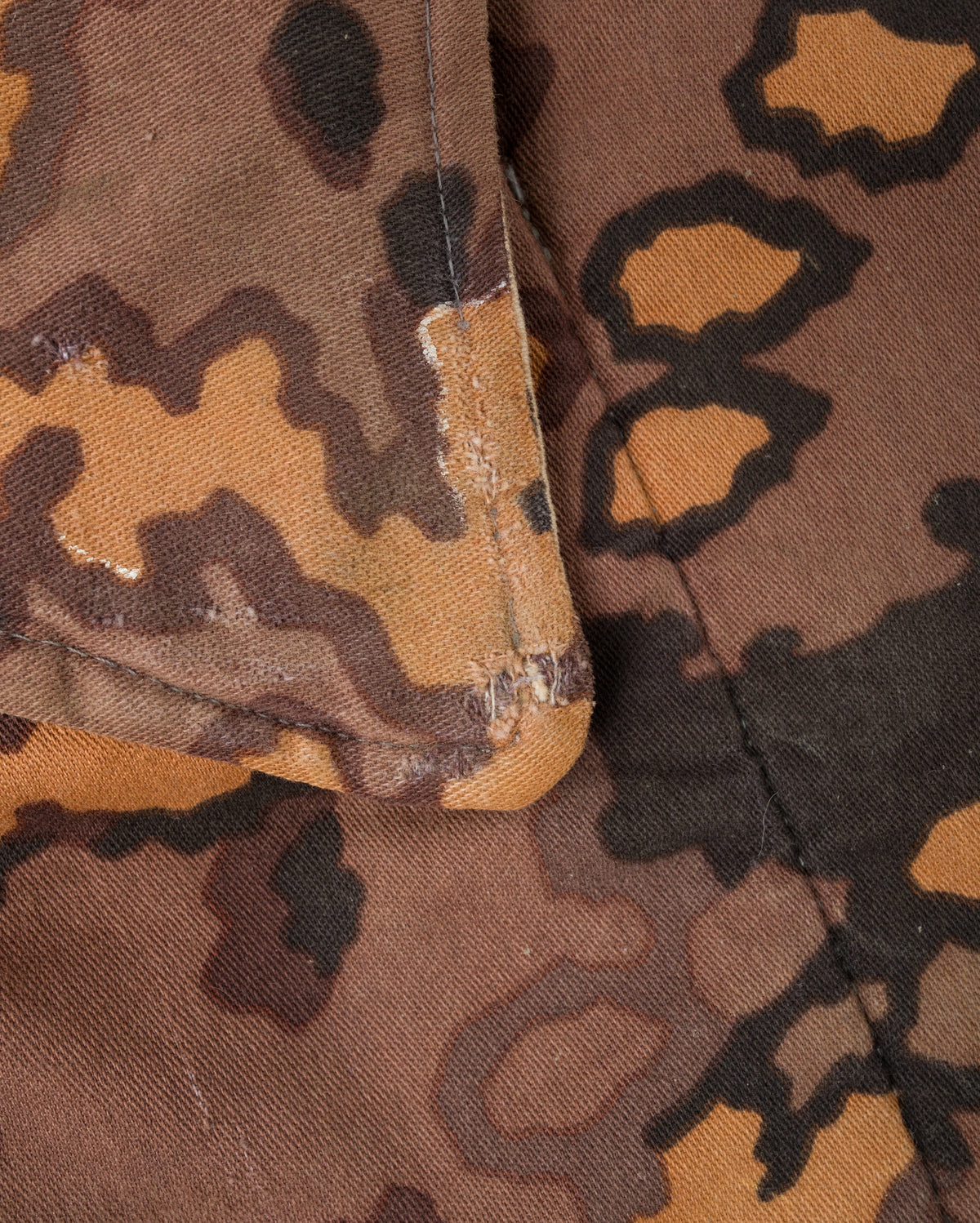
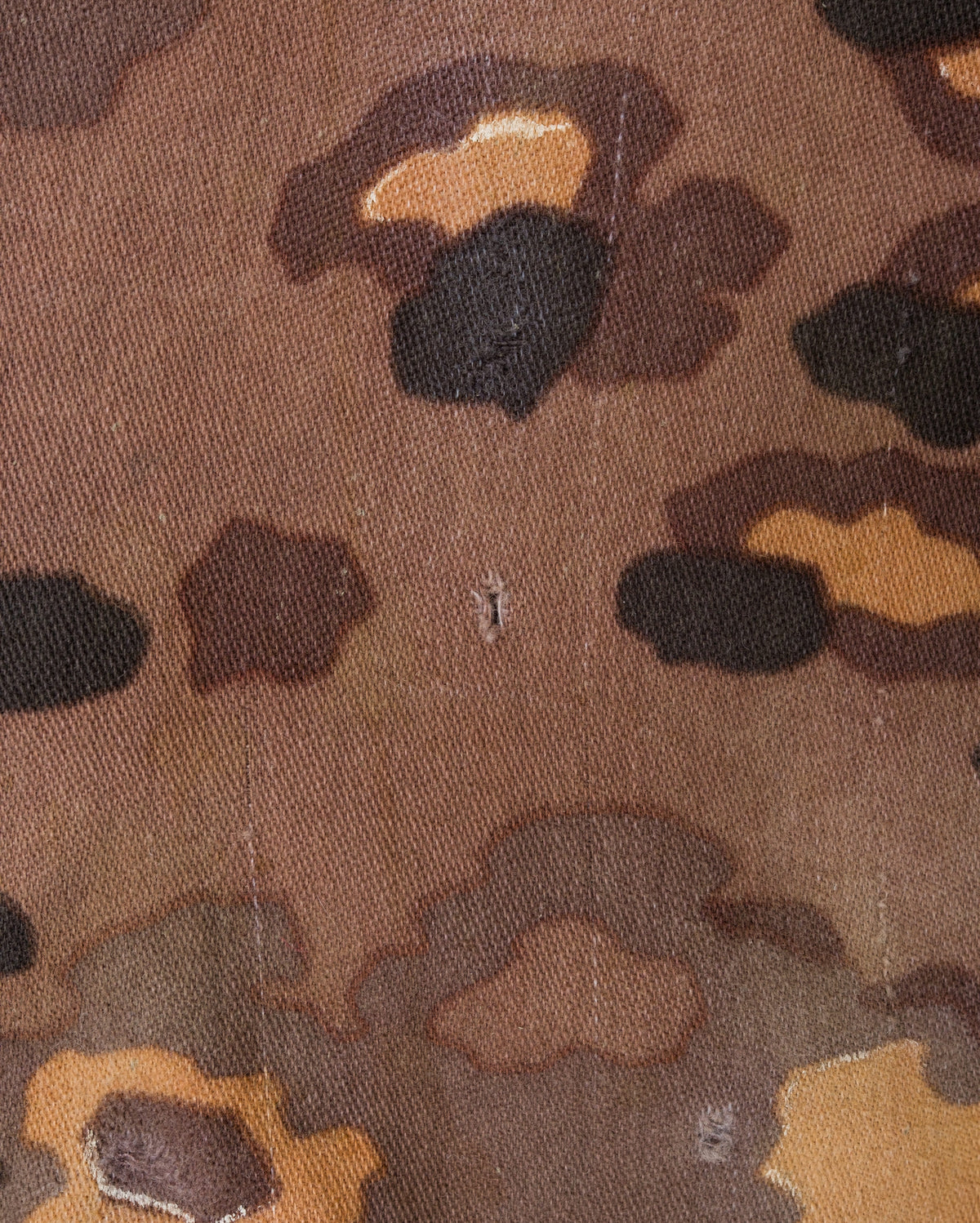
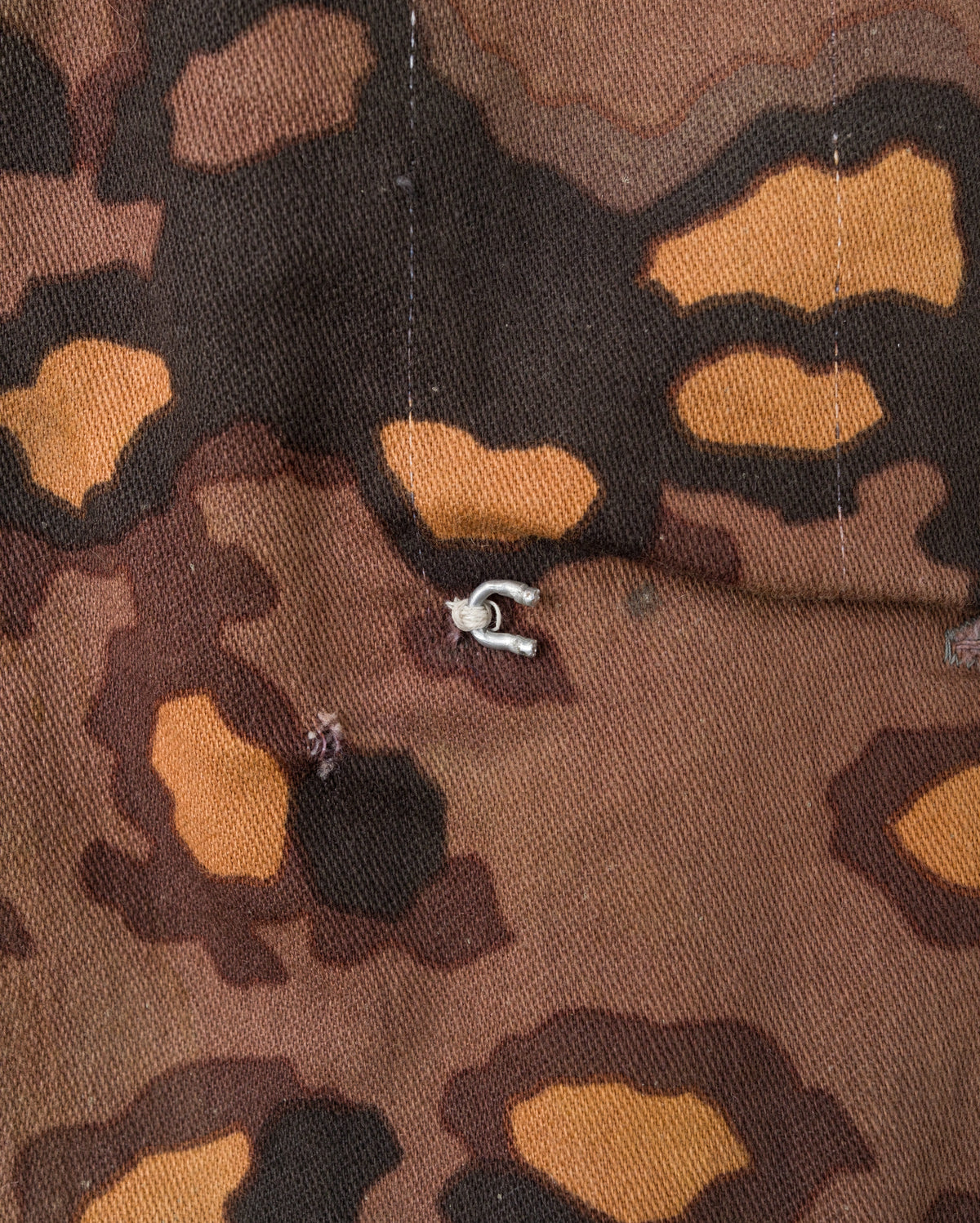
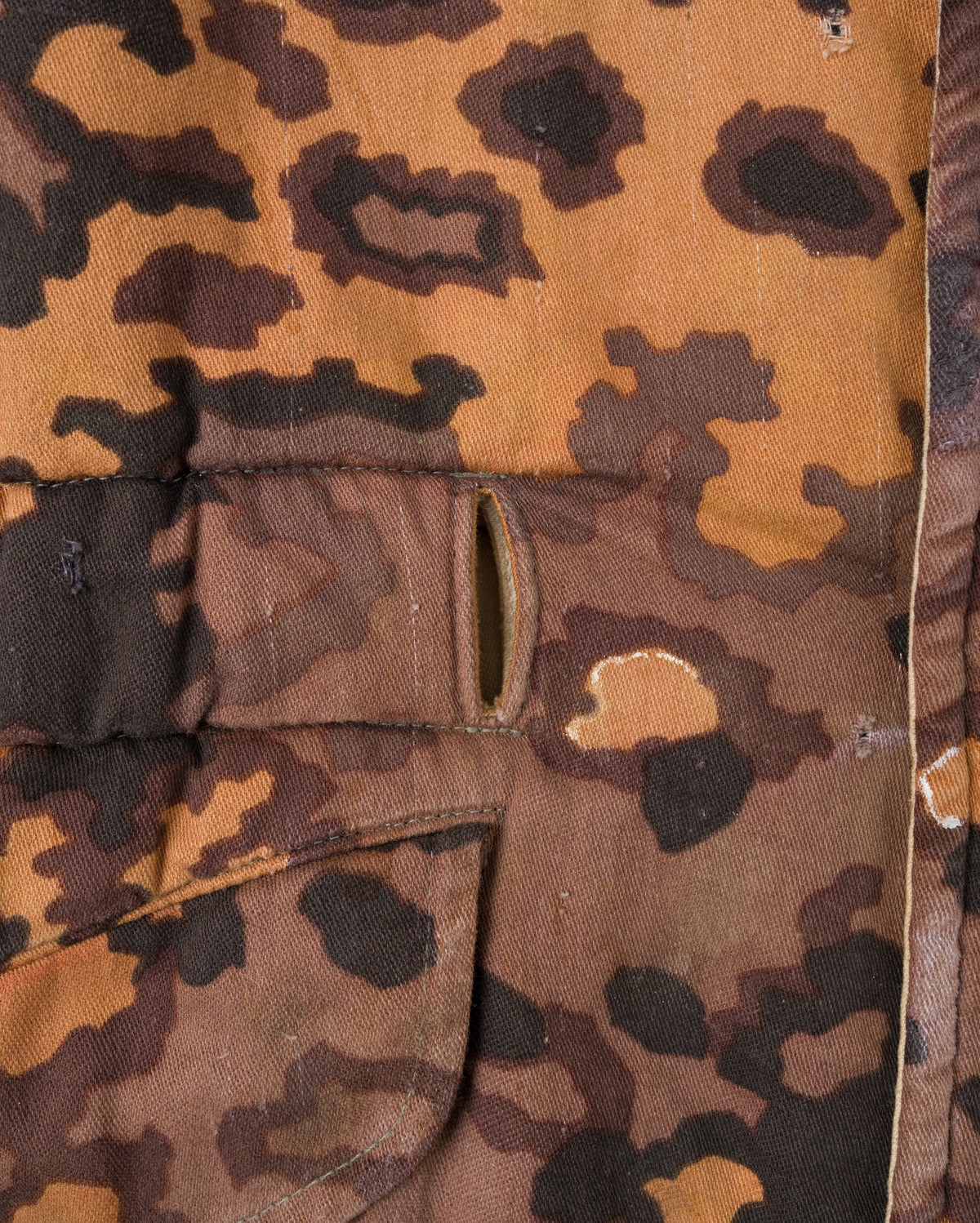
Estimated circa 1990s, a Waffen-SS-type reversible winter jacket featuring autumn oak leaf camouflage.
A special acquisition.
The Waffen-SS was the armed organization of the Schutzstaffel within the NSDAP, established to protect the party and state from perceived internal threats or military insurgency. It was neither conventional military nor police, but rather an armed political organization comprised of ideologically vetted members.
During the war, the Waffen-SS expanded to comprise more than 38 divisions, operating alongside the Wehrmacht, the Ordnungspolizei, and other security forces.
Initially restricted to those meeting Nazi racial criteria, membership rules were partially relaxed in 1940. Following the 1941 invasion of the Soviet Union, foreign volunteers and conscripted soldiers were enlisted as part of Nazi propaganda efforts framed as a "European crusade against Bolshevism."
The Waffen-SS was fundamentally grounded in Nazi racial ideology, with certain nationalities—notably Poles, whom the regime deemed "inferior"—systematically excluded from service.
This piece presents a reversible winter jacket bearing the autumn-winter camouflage pattern known as Oak Leaf Camouflage, or Eichenlaubmuster, adopted by the Waffen-SS during the Second World War.
A reproduction rather than an original Waffen-SS piece, this jacket demonstrates exceptional construction quality. It employs original Wehrmacht buttons and avoids the crude execution typical of lesser reproductions—a genuinely refined example.
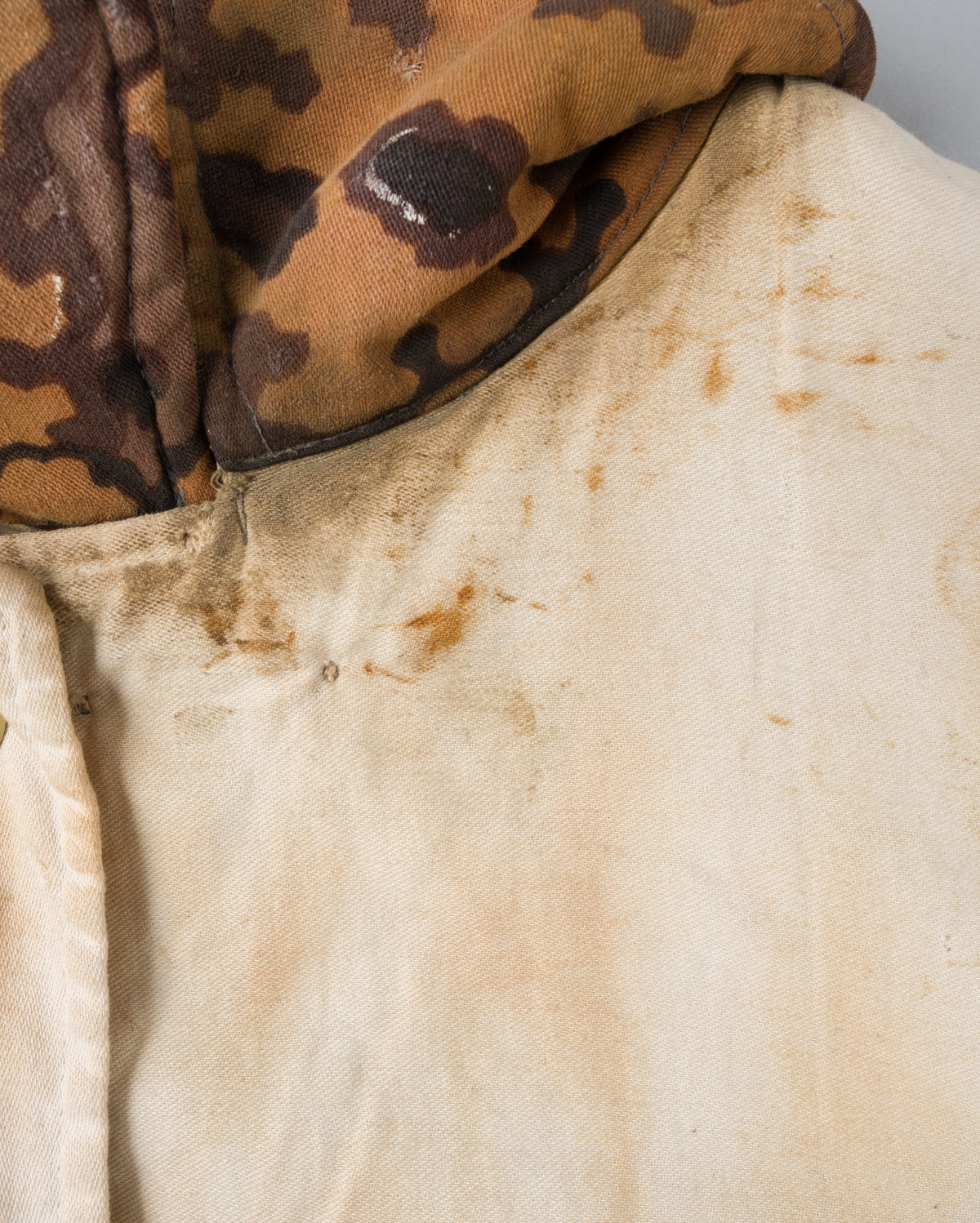
The defining characteristic of this garment is unmistakably the distinctive German military camouflage pattern itself.
The pattern colloquially known as "Oak Leaf Camouflage" was adopted by the Waffen-SS for a brief window between 1942 and 1945, issued in two seasonal variations: spring and autumn.
These patterns carry the formal designation Eichenlaubmuster—literally "oak leaf pattern"—distinguished by its characteristic leaf forms and coloration. The pattern saw primary application in combat uniforms, helmet covers, and Zeltbahn equipment throughout the Waffen-SS.
The spring variant emphasized greens and browns; the autumn variant employed deeper browns and oranges. The design was conceived to facilitate soldier integration within shifting natural environments, with the reversible construction allowing seasonal deployment according to environmental conditions.
Oak leaf patterns exist in two subtly distinct variants: Type A, characterized by ring formations, and Type B, the standard variant—each bearing distinctive design characteristics.
Among global camouflage patterns, Oak Leaf holds singular rarity; authentic examples from the Second World War command prices far beyond practical acquisition in today's market.
Beyond the camouflage itself, all details faithfully reconstruct the Wehrmacht winter parka—a reversible design with meticulous period accuracy.
Original pieces typically employ cotton-rayon blend fabric on both sides; this example is constructed entirely in cotton on both exterior and reverse. The front presents autumn oak leaf camouflage, while the reverse features white snow camouflage.
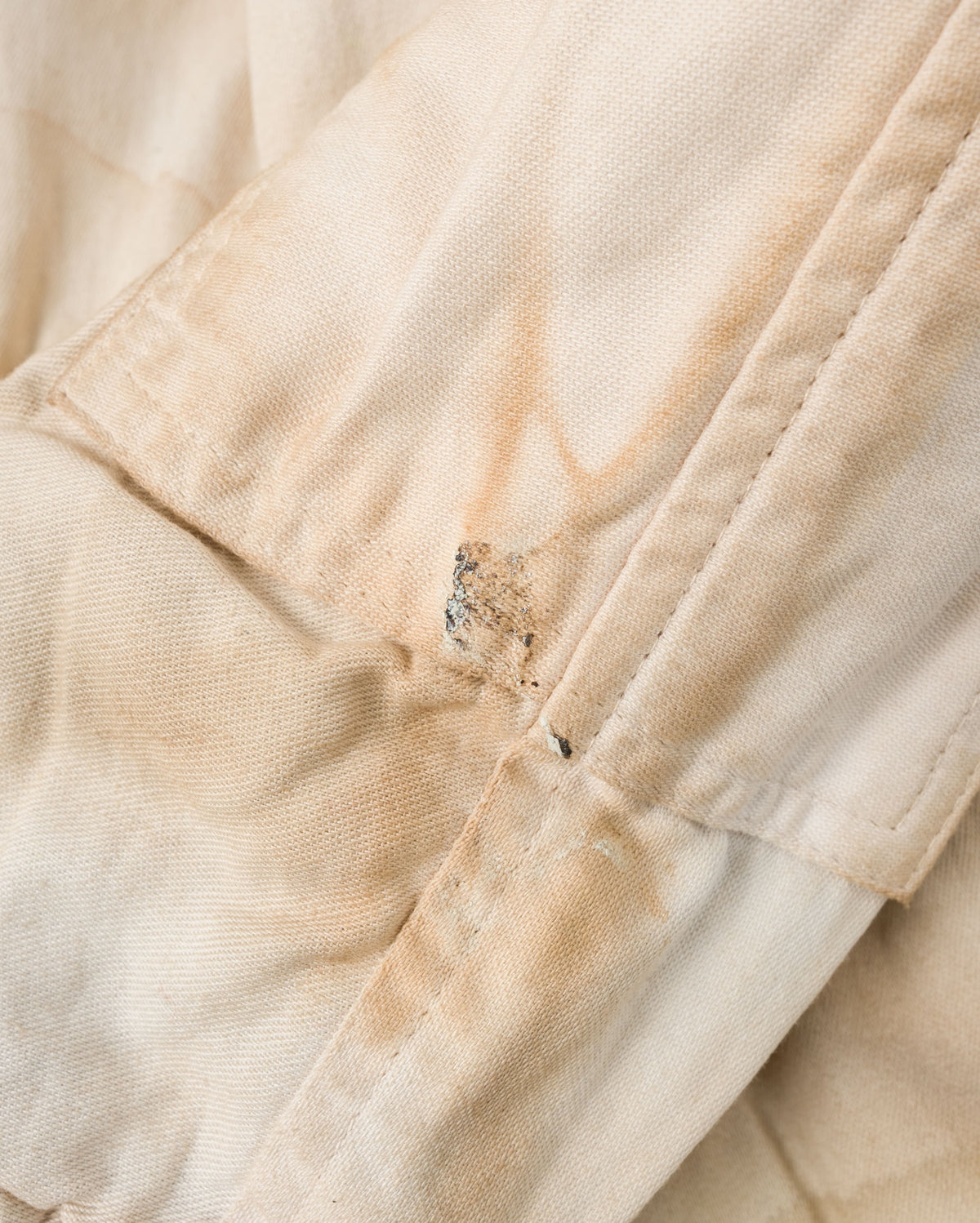
The closure employs a distinctive double-fronted structure with six buttons, creating an ingenious barrier against wind penetration while retaining thermal warmth—a functionally elegant detail.
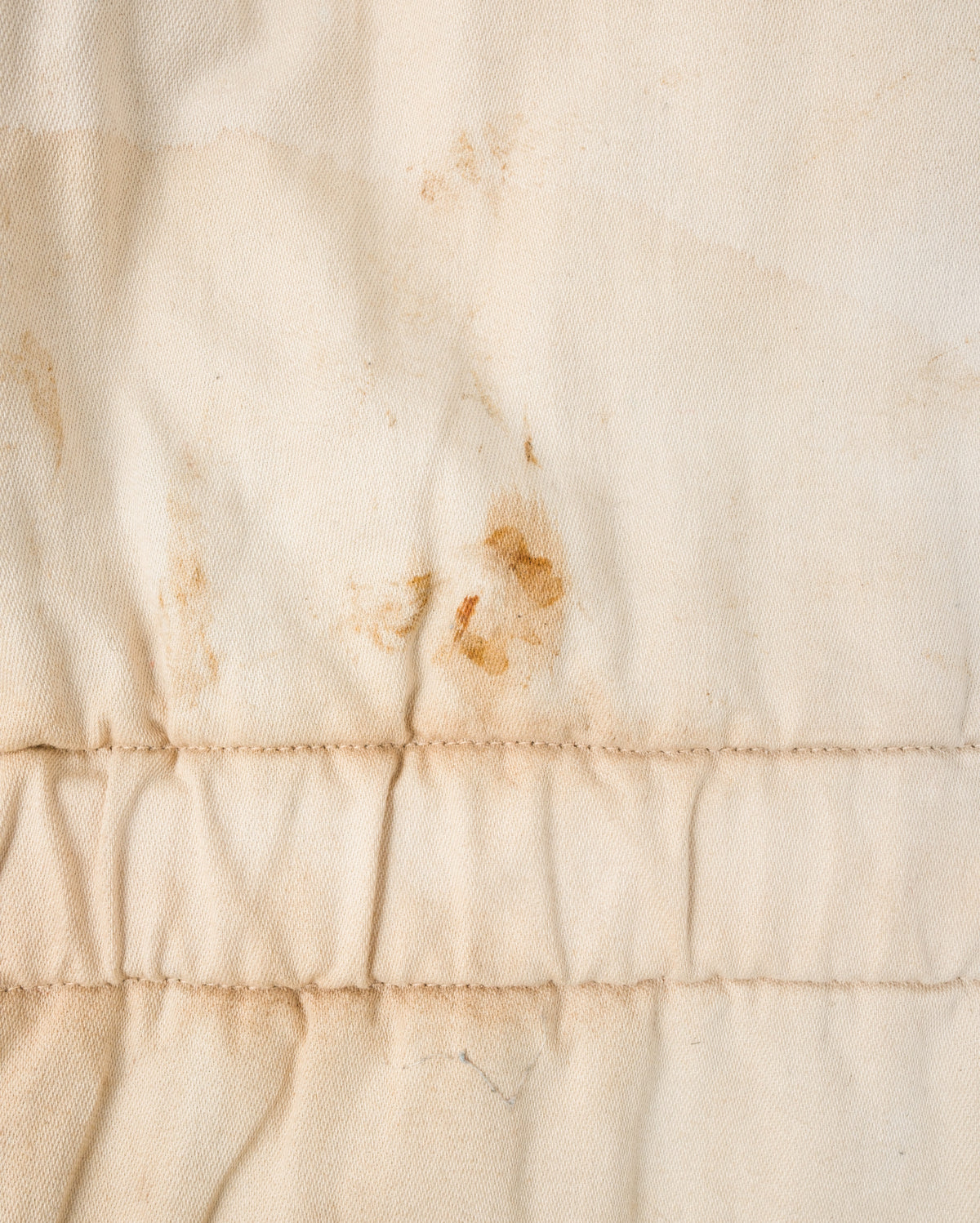
The hem features a drawcord mechanism, while the waist would typically accommodate a double waist strap—present on this example, though the waist strap is absent. The drawcord allows silhouette adjustment, offering versatility in wear according to preference.
The reverse face bears the hand-painted inscription "PW" (Prisoner of War), a historical marker of its provenance.
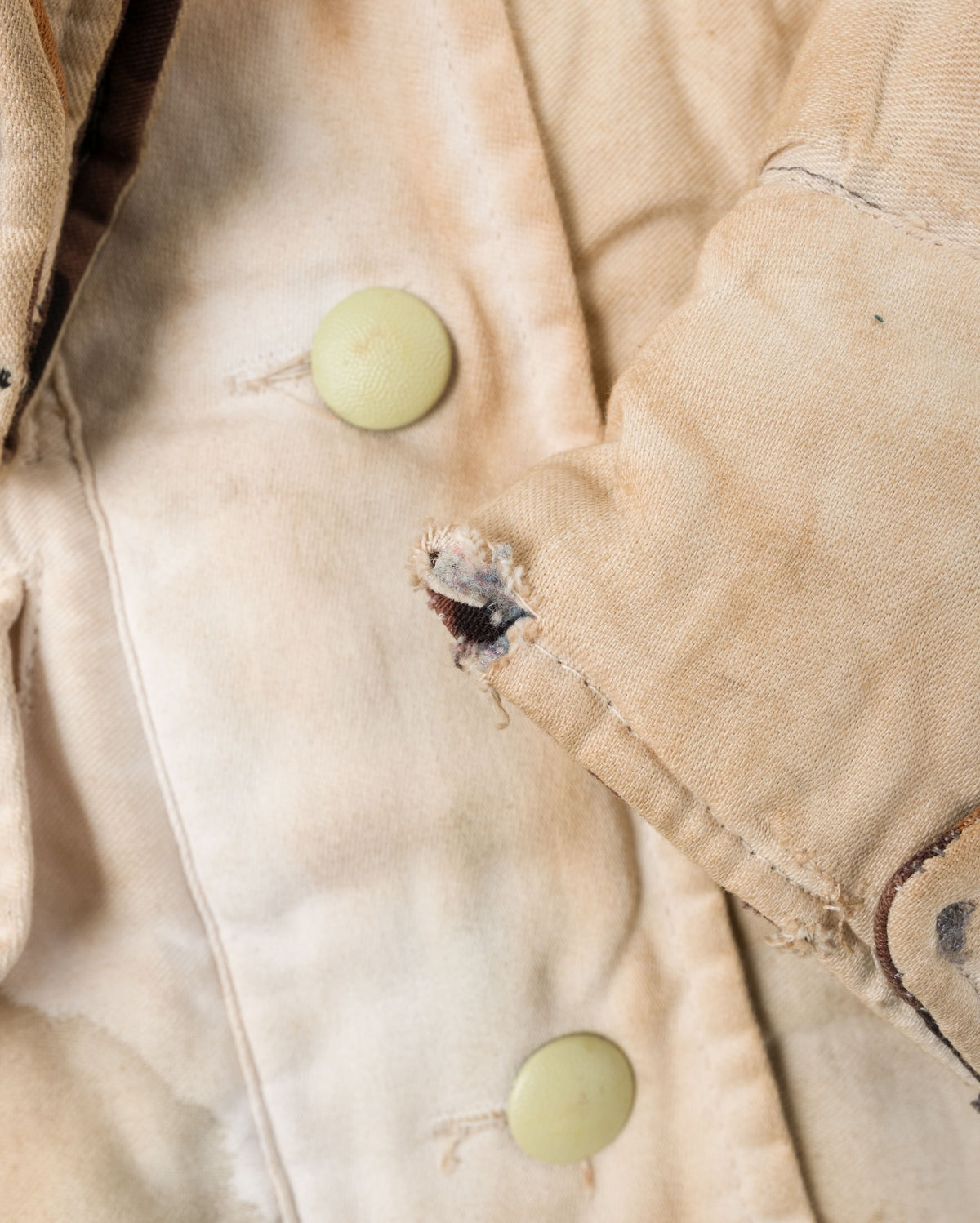
Cotton stitching throughout reveals age appropriate to the period, while buttons bear interior stampings characteristic of original Wehrmacht issue. These details communicate exceptional construction quality throughout.
Beyond its rarity, this piece functions as a genuinely compelling garment from a purely aesthetic standpoint. It merits unself-conscious wear.
No size marking is visible, though measurements suggest alignment with Japanese size L.
Dimensions indicate proportions sympathetic to Japanese frames—a golden size accommodating a broad range of physiques.
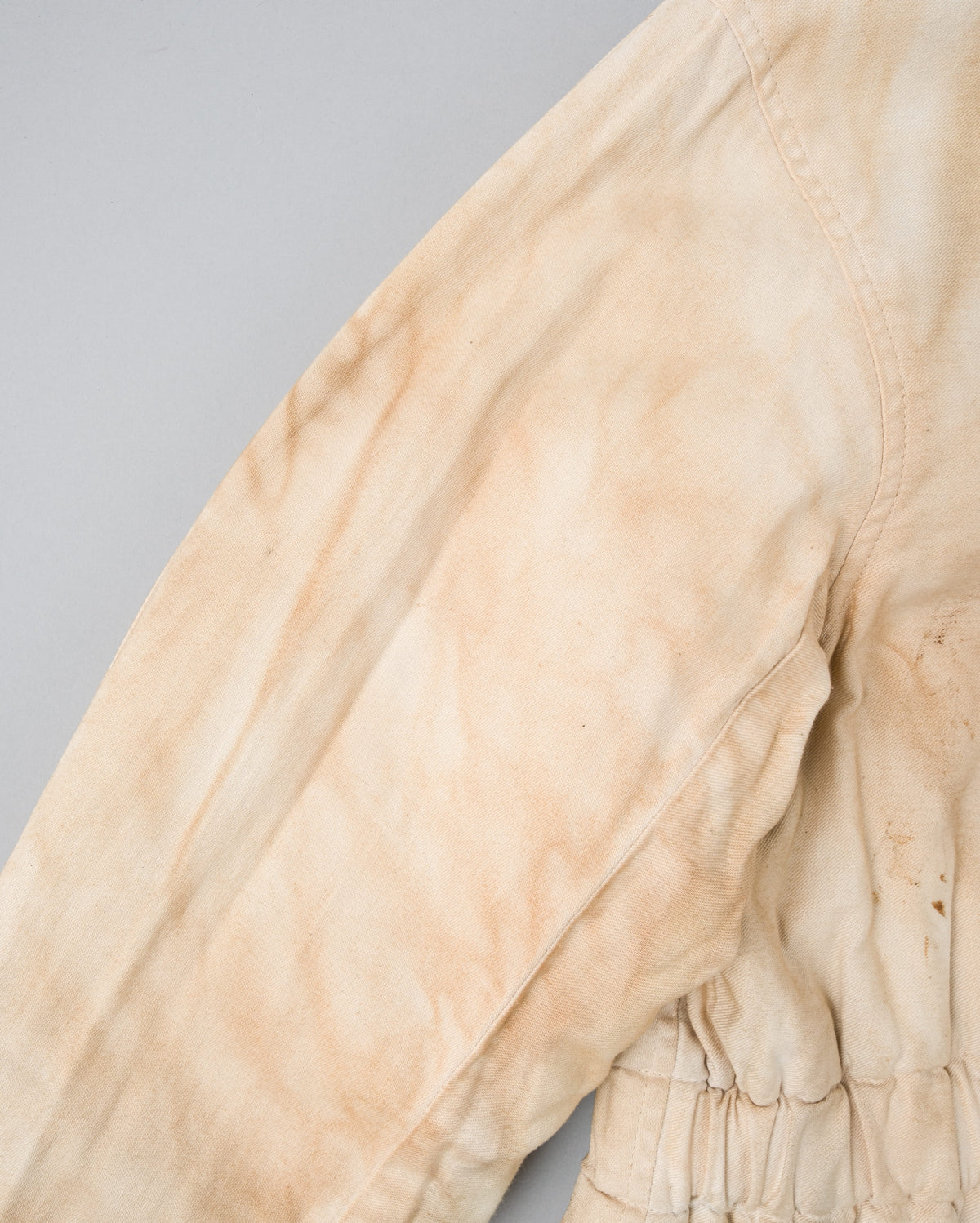
Wear is evident: soiling, abrasion, fraying, small punctures, missing drawcord segments, and button loss. No structural damage impedes wear.
Though not an original Waffen-SS piece, this represents genuine accomplishment in reproduction craft. Considered objectively as a garment, it commands respect; comparable quality proves elusive even among dedicated collectors and institutions.
Original Second World War artifacts typically command higher prices internationally than domestically—German pieces in particular command sustained collector enthusiasm.
German military pieces maintain devoted followings. This remains an archive piece of the caliber collectors rarely relinquish.
Viable as both wardrobe component and collection object, this piece offers uncompromised utility and historical interest. Seldom encountered domestically or abroad, it merits serious consideration from those actively seeking such examples or drawn to exceptional archive material.
ADD TO CART

![[~90's]German Waffen-SS Type Autumn Oak Leaf Camouflage Reversible Winter Jacket "Prisoner of War" "Reproduction"](http://vieuxetnouveau-shop.com/cdn/shop/files/DSCF1162_5b32ac45-a818-41d1-bc22-aa165d603e67.jpg?v=1740411611&width=2400)
![[~90's]German Waffen-SS Type Autumn Oak Leaf Camouflage Reversible Winter Jacket "Prisoner of War" "Reproduction"](http://vieuxetnouveau-shop.com/cdn/shop/files/DSCF1188_05e458ac-e3e9-4506-bb36-cd55e9531778.jpg?v=1740411611&width=2400)
![[~90's]German Waffen-SS Type Autumn Oak Leaf Camouflage Reversible Winter Jacket "Prisoner of War" "Reproduction"](http://vieuxetnouveau-shop.com/cdn/shop/files/DSCF1163_e2643534-450d-4d36-b93c-153536add2f3.jpg?v=1740411611&width=2400)
![[~90's]German Waffen-SS Type Autumn Oak Leaf Camouflage Reversible Winter Jacket "Prisoner of War" "Reproduction"](http://vieuxetnouveau-shop.com/cdn/shop/files/DSCF1193_4d5b1646-f04d-4d35-8ef7-73af39124a0e.jpg?v=1740411611&width=2400)
![[~90's]German Waffen-SS Type Autumn Oak Leaf Camouflage Reversible Winter Jacket "Prisoner of War" "Reproduction"](http://vieuxetnouveau-shop.com/cdn/shop/files/DSCF1219_7a9543a2-2880-45dc-bb46-7c335df8f949.jpg?v=1740411611&width=2400)
![[~90's]German Waffen-SS Type Autumn Oak Leaf Camouflage Reversible Winter Jacket "Prisoner of War" "Reproduction"](http://vieuxetnouveau-shop.com/cdn/shop/files/DSCF1197_dc1b121e-cbd2-4b9f-a4d1-8df9102245d8.jpg?v=1740411611&width=2400)
![[~90's]German Waffen-SS Type Autumn Oak Leaf Camouflage Reversible Winter Jacket "Prisoner of War" "Reproduction"](http://vieuxetnouveau-shop.com/cdn/shop/files/DSCF1168_3f4a43ae-5407-408b-9c6f-bef76793a96c.jpg?v=1740411611&width=2400)
![[~90's]German Waffen-SS Type Autumn Oak Leaf Camouflage Reversible Winter Jacket "Prisoner of War" "Reproduction"](http://vieuxetnouveau-shop.com/cdn/shop/files/DSCF1166_2d751ba1-c9ac-4546-ac6d-4c00824aba0a.jpg?v=1740411611&width=2400)
![[~90's]German Waffen-SS Type Autumn Oak Leaf Camouflage Reversible Winter Jacket "Prisoner of War" "Reproduction"](http://vieuxetnouveau-shop.com/cdn/shop/files/DSCF1169_2ea31479-7596-4889-bace-3c268a74dc14.jpg?v=1740411611&width=2400)
![[~90's]German Waffen-SS Type Autumn Oak Leaf Camouflage Reversible Winter Jacket "Prisoner of War" "Reproduction"](http://vieuxetnouveau-shop.com/cdn/shop/files/DSCF1170_9b755c4f-3554-4de9-a956-ecced5e714d5.jpg?v=1740411611&width=2400)
![[~90's]German Waffen-SS Type Autumn Oak Leaf Camouflage Reversible Winter Jacket "Prisoner of War" "Reproduction"](http://vieuxetnouveau-shop.com/cdn/shop/files/DSCF1182_61488892-6790-427f-a53e-0270b3d7cabd.jpg?v=1740411611&width=2400)
![[~90's]German Waffen-SS Type Autumn Oak Leaf Camouflage Reversible Winter Jacket "Prisoner of War" "Reproduction"](http://vieuxetnouveau-shop.com/cdn/shop/files/DSCF1183_b6121213-d391-40ed-8486-b0757a3f1fa3.jpg?v=1740411611&width=2400)
![[~90's]German Waffen-SS Type Autumn Oak Leaf Camouflage Reversible Winter Jacket "Prisoner of War" "Reproduction"](http://vieuxetnouveau-shop.com/cdn/shop/files/DSCF1172_20fe7473-be4e-48c2-976d-97034294849e.jpg?v=1740411611&width=2400)
![[~90's]German Waffen-SS Type Autumn Oak Leaf Camouflage Reversible Winter Jacket "Prisoner of War" "Reproduction"](http://vieuxetnouveau-shop.com/cdn/shop/files/DSCF1176.jpg?v=1740411611&width=2400)
![[~90's]German Waffen-SS Type Autumn Oak Leaf Camouflage Reversible Winter Jacket "Prisoner of War" "Reproduction"](http://vieuxetnouveau-shop.com/cdn/shop/files/DSCF1173_74a1762a-9aad-4cc7-abec-2a3f89bec2f1.jpg?v=1740411611&width=2400)
![[~90's]German Waffen-SS Type Autumn Oak Leaf Camouflage Reversible Winter Jacket "Prisoner of War" "Reproduction"](http://vieuxetnouveau-shop.com/cdn/shop/files/DSCF1174_ca16bbfc-95cc-464b-8176-a6e4c87173a3.jpg?v=1740411611&width=2400)
![[~90's]German Waffen-SS Type Autumn Oak Leaf Camouflage Reversible Winter Jacket "Prisoner of War" "Reproduction"](http://vieuxetnouveau-shop.com/cdn/shop/files/DSCF1175_da4a1763-8d78-45b8-b651-0e8b3862506f.jpg?v=1740411611&width=2400)
![[~90's]German Waffen-SS Type Autumn Oak Leaf Camouflage Reversible Winter Jacket "Prisoner of War" "Reproduction"](http://vieuxetnouveau-shop.com/cdn/shop/files/DSCF1167_7f5bd3a1-2ca9-4391-b761-76c9f70a0b13.jpg?v=1740411611&width=2400)
![[~90's]German Waffen-SS Type Autumn Oak Leaf Camouflage Reversible Winter Jacket "Prisoner of War" "Reproduction"](http://vieuxetnouveau-shop.com/cdn/shop/files/DSCF1201_84da55e1-5e52-4ca4-8005-3ad9340e2433.jpg?v=1740411611&width=2400)
![[~90's]German Waffen-SS Type Autumn Oak Leaf Camouflage Reversible Winter Jacket "Prisoner of War" "Reproduction"](http://vieuxetnouveau-shop.com/cdn/shop/files/DSCF1200_33b32bf3-bd19-4602-b94d-13581c865ab9.jpg?v=1740411611&width=2400)
![[~90's]German Waffen-SS Type Autumn Oak Leaf Camouflage Reversible Winter Jacket "Prisoner of War" "Reproduction"](http://vieuxetnouveau-shop.com/cdn/shop/files/DSCF1202_eff718f0-cd47-4c19-b6ca-ea56607e17ef.jpg?v=1740411611&width=2400)
![[~90's]German Waffen-SS Type Autumn Oak Leaf Camouflage Reversible Winter Jacket "Prisoner of War" "Reproduction"](http://vieuxetnouveau-shop.com/cdn/shop/files/DSCF1203_9997272e-7ae6-441e-b6a7-1c456ef3bdc0.jpg?v=1740411611&width=2400)
![[~90's]German Waffen-SS Type Autumn Oak Leaf Camouflage Reversible Winter Jacket "Prisoner of War" "Reproduction"](http://vieuxetnouveau-shop.com/cdn/shop/files/DSCF1213_0e4a7754-53ec-401f-95b9-964812df96ac.jpg?v=1740411611&width=2400)
![[~90's]German Waffen-SS Type Autumn Oak Leaf Camouflage Reversible Winter Jacket "Prisoner of War" "Reproduction"](http://vieuxetnouveau-shop.com/cdn/shop/files/DSCF1206_b65a0e32-2933-49ca-b9e6-4d656b63dc5f.jpg?v=1740411611&width=2400)
![[~90's]German Waffen-SS Type Autumn Oak Leaf Camouflage Reversible Winter Jacket "Prisoner of War" "Reproduction"](http://vieuxetnouveau-shop.com/cdn/shop/files/DSCF1207_106dc96b-15a7-4f84-bf45-555056725529.jpg?v=1740411611&width=2400)
![[~90's]German Waffen-SS Type Autumn Oak Leaf Camouflage Reversible Winter Jacket "Prisoner of War" "Reproduction"](http://vieuxetnouveau-shop.com/cdn/shop/files/DSCF1189_b603bc36-9552-4c01-bdf6-ddd71823105a.jpg?v=1740411611&width=2400)
![[~90's]German Waffen-SS Type Autumn Oak Leaf Camouflage Reversible Winter Jacket "Prisoner of War" "Reproduction"](http://vieuxetnouveau-shop.com/cdn/shop/files/DSCF1180_569c7451-6ebe-4c99-a7c3-286a97518e11.jpg?v=1740411611&width=2400)
![[~90's]German Waffen-SS Type Autumn Oak Leaf Camouflage Reversible Winter Jacket "Prisoner of War" "Reproduction"](http://vieuxetnouveau-shop.com/cdn/shop/files/DSCF1371_91d67d8e-65bf-488a-b3ff-efc942b3c14e.jpg?v=1740411611&width=2400)
![[~90's]German Waffen-SS Type Autumn Oak Leaf Camouflage Reversible Winter Jacket "Prisoner of War" "Reproduction"](http://vieuxetnouveau-shop.com/cdn/shop/files/DSCF1372_22fb16e2-5ab4-4a7f-a9a7-54969173c0ac.jpg?v=1740411611&width=2400)
![[~90's]German Waffen-SS Type Autumn Oak Leaf Camouflage Reversible Winter Jacket "Prisoner of War" "Reproduction"](http://vieuxetnouveau-shop.com/cdn/shop/files/DSCF1373_8ae38eaf-15da-40e3-95e8-6f20d9f22fa6.jpg?v=1740411611&width=2400)
![[~90's]German Waffen-SS Type Autumn Oak Leaf Camouflage Reversible Winter Jacket "Prisoner of War" "Reproduction"](http://vieuxetnouveau-shop.com/cdn/shop/files/DSCF1374.jpg?v=1740411611&width=2400)
![[~90's]German Waffen-SS Type Autumn Oak Leaf Camouflage Reversible Winter Jacket "Prisoner of War" "Reproduction"](http://vieuxetnouveau-shop.com/cdn/shop/files/DSCF1370_3cb22a64-7f43-456a-bd03-9dedc93dfcd9.jpg?v=1740411611&width=2400)
![[~90's]German Waffen-SS Type Autumn Oak Leaf Camouflage Reversible Winter Jacket "Prisoner of War" "Reproduction"](http://vieuxetnouveau-shop.com/cdn/shop/files/DSCF1367_1c46f71a-c8b2-4d71-8fe5-91029af180c8.jpg?v=1740411611&width=2400)
![[~90's]German Waffen-SS Type Autumn Oak Leaf Camouflage Reversible Winter Jacket "Prisoner of War" "Reproduction"](http://vieuxetnouveau-shop.com/cdn/shop/files/DSCF1368_8094e904-48b8-4c78-bb5a-07a7e71675dd.jpg?v=1740411611&width=2400)
![[~90's]German Waffen-SS Type Autumn Oak Leaf Camouflage Reversible Winter Jacket "Prisoner of War" "Reproduction"](http://vieuxetnouveau-shop.com/cdn/shop/files/DSCF1369_8791264b-0356-43f7-a53c-696246a70321.jpg?v=1740411611&width=2400)
![[~90's]German Waffen-SS Type Autumn Oak Leaf Camouflage Reversible Winter Jacket "Prisoner of War" "Reproduction"](http://vieuxetnouveau-shop.com/cdn/shop/files/DSCF1378_37ce1c3d-dd8d-4c1e-b262-7a57b1426067.jpg?v=1740411611&width=2400)
![[~90's]German Waffen-SS Type Autumn Oak Leaf Camouflage Reversible Winter Jacket "Prisoner of War" "Reproduction"](http://vieuxetnouveau-shop.com/cdn/shop/files/DSCF1379_60d43904-777d-4685-b775-015d716ed7b8.jpg?v=1740411611&width=2400)
![[~90's]German Waffen-SS Type Autumn Oak Leaf Camouflage Reversible Winter Jacket "Prisoner of War" "Reproduction"](http://vieuxetnouveau-shop.com/cdn/shop/files/DSCF1375_39c3ba87-0776-435b-b118-eafb99869447.jpg?v=1740411611&width=2400)
![[~90's]German Waffen-SS Type Autumn Oak Leaf Camouflage Reversible Winter Jacket "Prisoner of War" "Reproduction"](http://vieuxetnouveau-shop.com/cdn/shop/files/DSCF1376_787d5d6f-316a-46f5-af39-26ade1605c90.jpg?v=1740411611&width=2400)
![[~90's]German Waffen-SS Type Autumn Oak Leaf Camouflage Reversible Winter Jacket "Prisoner of War" "Reproduction"](http://vieuxetnouveau-shop.com/cdn/shop/files/DSCF1377_7edb4eee-baf9-4343-9337-d90781cfe100.jpg?v=1740411611&width=2400)
![[~90's]German Waffen-SS Type Autumn Oak Leaf Camouflage Reversible Winter Jacket "Prisoner of War" "Reproduction"](http://vieuxetnouveau-shop.com/cdn/shop/files/DSCF1364_79d77024-b9f6-462d-9222-c6502c9c5501.jpg?v=1740411611&width=2400)
![[~90's]German Waffen-SS Type Autumn Oak Leaf Camouflage Reversible Winter Jacket "Prisoner of War" "Reproduction"](http://vieuxetnouveau-shop.com/cdn/shop/files/DSCF1365_fd46dd35-6fbc-4084-ad40-69479773876e.jpg?v=1740411611&width=2400)
![[~90's]German Waffen-SS Type Autumn Oak Leaf Camouflage Reversible Winter Jacket "Prisoner of War" "Reproduction"](http://vieuxetnouveau-shop.com/cdn/shop/files/DSCF1366_d91db2e8-6a6d-4773-8567-6c73d972ffc8.jpg?v=1740411611&width=2400)