A one-piece sleeve Balmacaan coat by BURBERRYS, which we date to around the 1950s.
A special piece has come in.
Say Burberry and one thinks of Britain. There is no questioning that.
Which is precisely why, standing before a piece with "MADE IN FRANCE" woven into the label inside, I always find myself straightening up a little.
Basingstoke, Hampshire, 1856.
The question he spent his life trying to answer was a genuinely simple one.
To solve it, he arrived at a method of proofing the yarn before weaving and then weaving it to a high density.
This cloth went on to become the history of exploration itself.
In 1901 the brand adopted the equestrian knight.
Sewn inside this piece is that very knight, woven in gold thread on a black ground.
That the brand name appears in capitals as "BURBERRYS" also supports a dating of no later than the 1950s.
Now, let us look at the details that define this model.
The collar first.
The front is a fly front.
The pockets are hand-warmers, cut on a curve.
The sleeves are one-piece.
The silhouette is a clean A-line.
And the lining.
This is not, however, the so-called Burberry check.
As for the composition of the cloth, no content label survives, so I cannot state it with certainty; from the hand I would say it is chiefly polyester, possibly with a little cotton in it.
To the touch, what comes back first is a dry, crisp sensation.
It is precisely this body that keeps the A-line from collapsing and lets the hem fall cleanly. Material and pattern are correctly matched in this piece.
The colour is "ivory".
Not white, not unbleached, but a colour carrying the warmth of cream. Age has laid a slight yellow over it, and it has weathered just about perfectly.
It is because of this plain colour that the gold-embroidered label on black stands out.
An ivory coat gathers light in itself.
Beneath it, black, navy or grey — it makes no difference. If anything, the darker what you wear under it, the more the brightness of this coat will stand.
The pattern is beyond fashion, so you should be wearing it in the same way ten years from now.
There is no size marking, but I should say it corresponds to roughly a Japanese "M to L".
It is cut for women, but the measurements show ample volume, so a slighter gentleman should have no trouble wearing it.
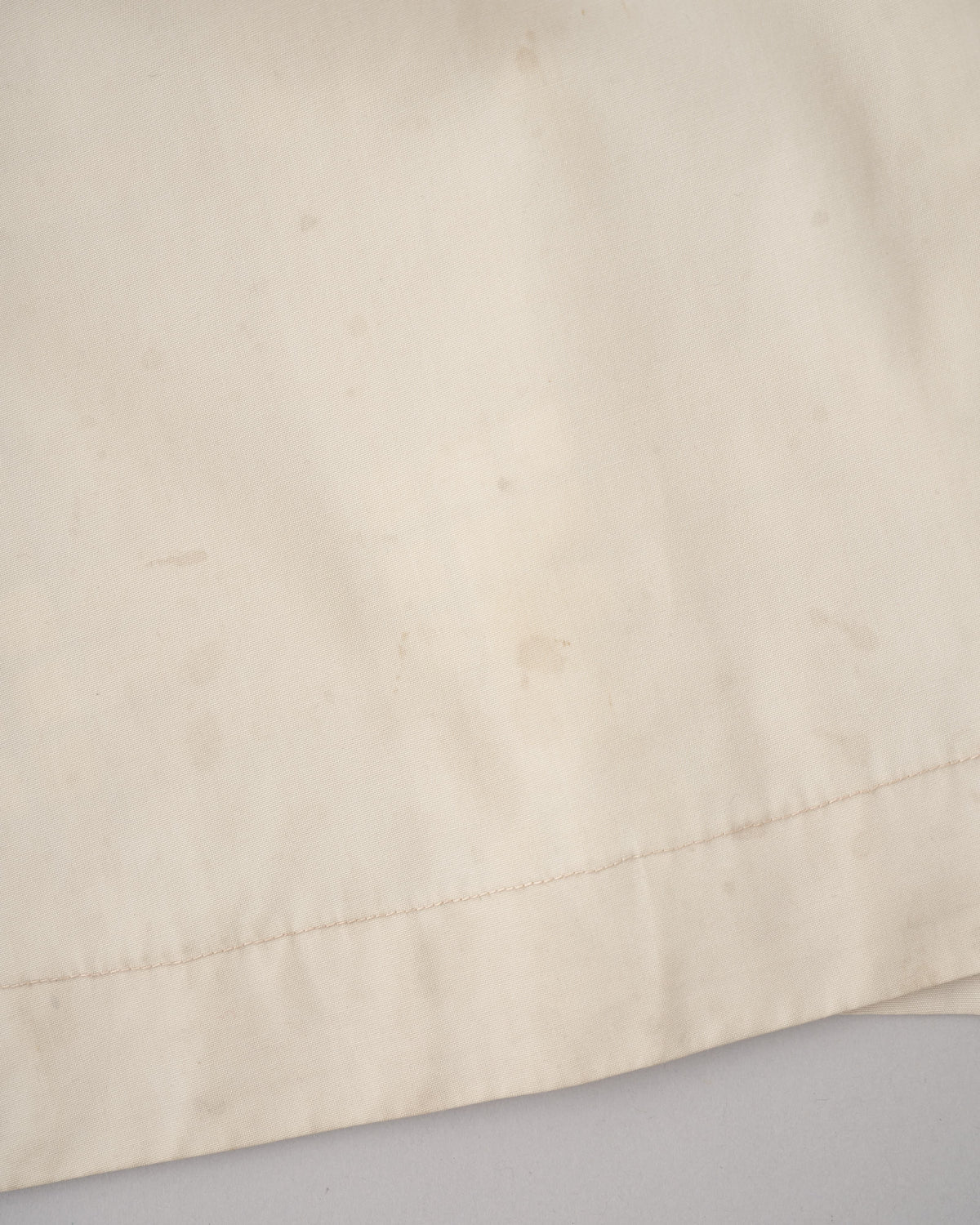
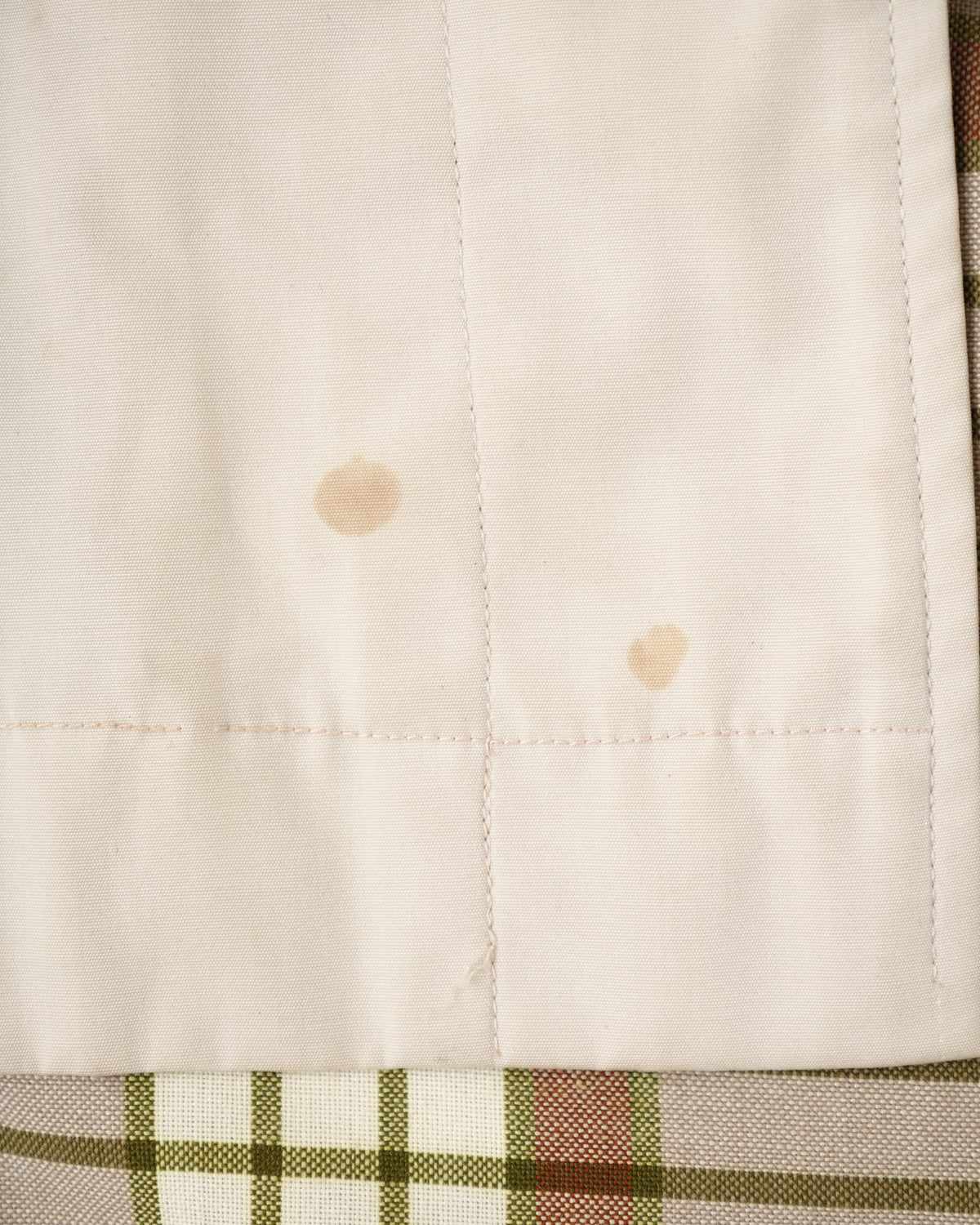
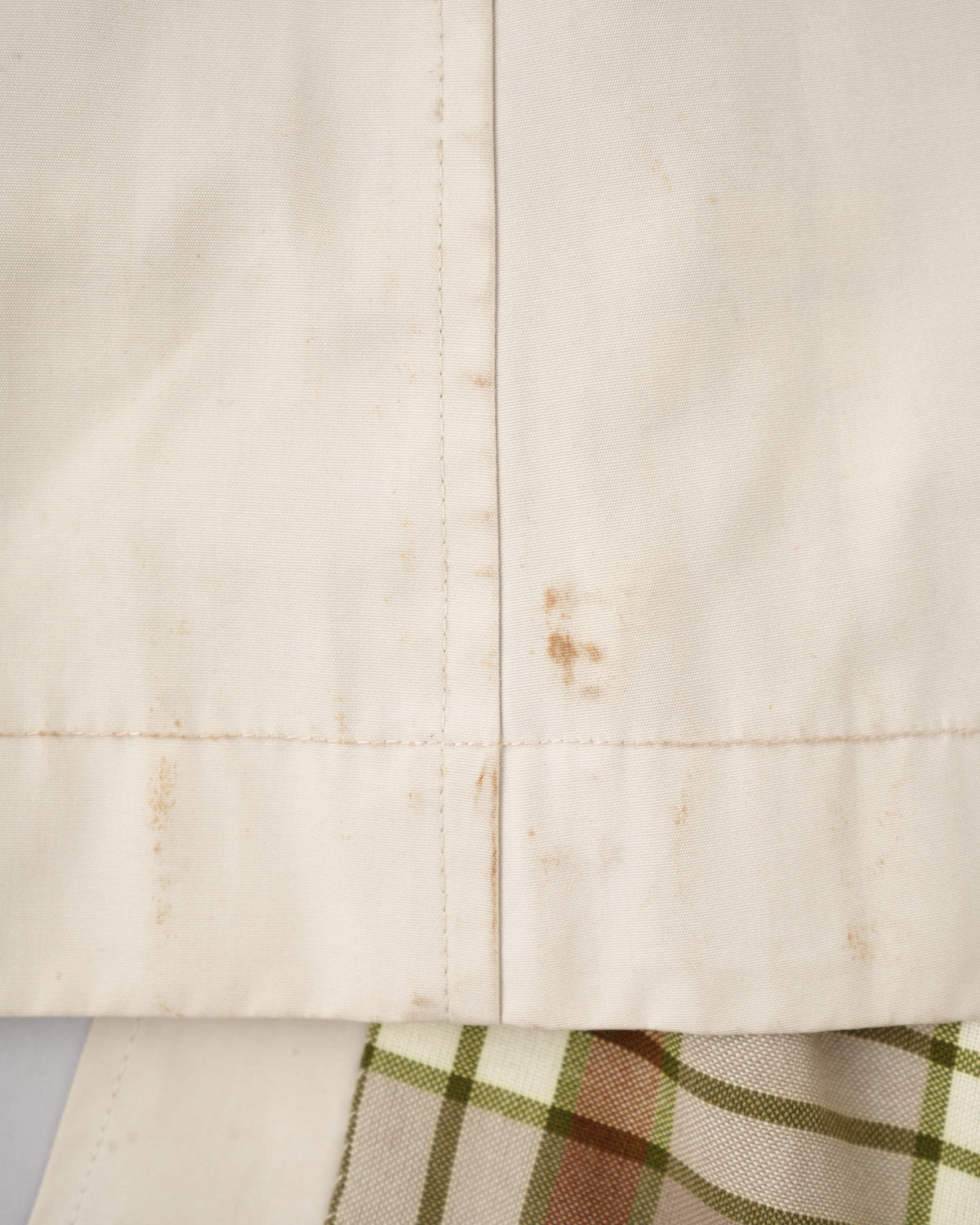
There are marks of use, including soiling and a missing button, but no damage that would affect wearing, so there is plenty of life in it yet.
That it has one-piece sleeves. And that it was made in France.
Burberry as a brand is still very much with us worldwide, but production in France has long since ceased.
A cloth born for explorers, tailored in Paris, and here with us now, more than seventy years on.
ADD TO CART

![[~50's] Vintage Burberrys Paris One-Piece Sleeve Balmacaan Coat for Ladies "Made in France"](http://vieuxetnouveau-shop.com/cdn/shop/files/C0182-1_762b5887-1594-441e-ad61-14406d216202.jpg?v=1786431656&width=2400)
![[~50's] Vintage Burberrys Paris One-Piece Sleeve Balmacaan Coat for Ladies "Made in France"](http://vieuxetnouveau-shop.com/cdn/shop/files/C0182-2_1cb22428-750c-4ed7-9881-abef5c52af0f.jpg?v=1786431656&width=2400)
![[~50's] Vintage Burberrys Paris One-Piece Sleeve Balmacaan Coat for Ladies "Made in France"](http://vieuxetnouveau-shop.com/cdn/shop/files/C0182-3_77d9d526-6958-4478-9948-9da1acc7d91b.jpg?v=1786431656&width=2400)
![[~50's] Vintage Burberrys Paris One-Piece Sleeve Balmacaan Coat for Ladies "Made in France"](http://vieuxetnouveau-shop.com/cdn/shop/files/C0182-4_2c0bbed9-bfac-4993-84bf-263501bdbaef.jpg?v=1786431656&width=2400)
![[~50's] Vintage Burberrys Paris One-Piece Sleeve Balmacaan Coat for Ladies "Made in France"](http://vieuxetnouveau-shop.com/cdn/shop/files/C0182-5_8bed2db3-97cb-44e6-97af-1b2e7ecda40c.jpg?v=1786431656&width=2400)
![[~50's] Vintage Burberrys Paris One-Piece Sleeve Balmacaan Coat for Ladies "Made in France"](http://vieuxetnouveau-shop.com/cdn/shop/files/C0182-6_d4acc9d8-d08c-4aa7-ab92-2264338cd8f7.jpg?v=1786431656&width=2400)
![[~50's] Vintage Burberrys Paris One-Piece Sleeve Balmacaan Coat for Ladies "Made in France"](http://vieuxetnouveau-shop.com/cdn/shop/files/C0182-7_3a66b384-c4d8-4c9d-85bd-e1fb7bd39d64.jpg?v=1786431656&width=2400)
![[~50's] Vintage Burberrys Paris One-Piece Sleeve Balmacaan Coat for Ladies "Made in France"](http://vieuxetnouveau-shop.com/cdn/shop/files/C0182-8_a75eaa4a-e787-4a48-9efd-7ef9ea447c59.jpg?v=1786431656&width=2400)
![[~50's] Vintage Burberrys Paris One-Piece Sleeve Balmacaan Coat for Ladies "Made in France"](http://vieuxetnouveau-shop.com/cdn/shop/files/C0182-9_d9426613-26f4-44f2-99ee-fd3ec988d61f.jpg?v=1786431656&width=2400)
![[~50's] Vintage Burberrys Paris One-Piece Sleeve Balmacaan Coat for Ladies "Made in France"](http://vieuxetnouveau-shop.com/cdn/shop/files/C0182-10_89fac3ba-d8da-4f7c-a73e-6ee61eaec15a.jpg?v=1786431656&width=2400)
![[~50's] Vintage Burberrys Paris One-Piece Sleeve Balmacaan Coat for Ladies "Made in France"](http://vieuxetnouveau-shop.com/cdn/shop/files/C0182-11_e665acae-787d-49c4-9fc1-64e0dc7dea23.jpg?v=1786431656&width=2400)
![[~50's] Vintage Burberrys Paris One-Piece Sleeve Balmacaan Coat for Ladies "Made in France"](http://vieuxetnouveau-shop.com/cdn/shop/files/C0182-12_9e737bda-9338-4330-8228-e2eb7a9551f5.jpg?v=1786431656&width=2400)
![[~50's] Vintage Burberrys Paris One-Piece Sleeve Balmacaan Coat for Ladies "Made in France"](http://vieuxetnouveau-shop.com/cdn/shop/files/C0182-13_0b9edb01-c8a1-44d3-aaff-a6f8c05c4b4b.jpg?v=1786431656&width=2400)
![[~50's] Vintage Burberrys Paris One-Piece Sleeve Balmacaan Coat for Ladies "Made in France"](http://vieuxetnouveau-shop.com/cdn/shop/files/C0182-14_ceb8f2dc-e994-4251-95e6-3bcbd9628e55.jpg?v=1786431656&width=2400)
![[~50's] Vintage Burberrys Paris One-Piece Sleeve Balmacaan Coat for Ladies "Made in France"](http://vieuxetnouveau-shop.com/cdn/shop/files/C0182-15_b9a24536-b33f-4839-88a0-4c735033118a.jpg?v=1786431656&width=2400)
![[~50's] Vintage Burberrys Paris One-Piece Sleeve Balmacaan Coat for Ladies "Made in France"](http://vieuxetnouveau-shop.com/cdn/shop/files/C0182-16_e72b828d-26b9-445c-84d2-a6f52dfc2c59.jpg?v=1786431656&width=2400)
![[~50's] Vintage Burberrys Paris One-Piece Sleeve Balmacaan Coat for Ladies "Made in France"](http://vieuxetnouveau-shop.com/cdn/shop/files/C0182-17_0d0ca521-0eba-4b97-b222-d78bb6c3aa6c.jpg?v=1786431656&width=2400)
![[~50's] Vintage Burberrys Paris One-Piece Sleeve Balmacaan Coat for Ladies "Made in France"](http://vieuxetnouveau-shop.com/cdn/shop/files/C0182-18_b46d3457-e709-47e0-9e0f-404657c32fab.jpg?v=1786431656&width=2400)
![[~50's] Vintage Burberrys Paris One-Piece Sleeve Balmacaan Coat for Ladies "Made in France"](http://vieuxetnouveau-shop.com/cdn/shop/files/C0182-19_02562c0d-6d2d-413e-a850-35bdf5abcc7c.jpg?v=1786431656&width=2400)
![[~50's] Vintage Burberrys Paris One-Piece Sleeve Balmacaan Coat for Ladies "Made in France"](http://vieuxetnouveau-shop.com/cdn/shop/files/C0182-20_2d253860-67a1-4770-a2b0-25042710abcf.jpg?v=1786431656&width=2400)
![[~50's] Vintage Burberrys Paris One-Piece Sleeve Balmacaan Coat for Ladies "Made in France"](http://vieuxetnouveau-shop.com/cdn/shop/files/C0182-21_3405481f-f7fb-49fb-8708-d77e7a56ef6c.jpg?v=1786431656&width=2400)
![[~50's] Vintage Burberrys Paris One-Piece Sleeve Balmacaan Coat for Ladies "Made in France"](http://vieuxetnouveau-shop.com/cdn/shop/files/C0182-22_e5b837fd-4756-4b76-9002-244e49294d13.jpg?v=1786431656&width=2400)
![[~50's] Vintage Burberrys Paris One-Piece Sleeve Balmacaan Coat for Ladies "Made in France"](http://vieuxetnouveau-shop.com/cdn/shop/files/C0182-23_913f4582-4994-43f2-920c-dd33fea7dde5.jpg?v=1786431656&width=2400)
![[~50's] Vintage Burberrys Paris One-Piece Sleeve Balmacaan Coat for Ladies "Made in France"](http://vieuxetnouveau-shop.com/cdn/shop/files/C0182-24_ad719e3c-a09e-4615-8dba-918b1e6e3d13.jpg?v=1786431656&width=2400)
![[~50's] Vintage Burberrys Paris One-Piece Sleeve Balmacaan Coat for Ladies "Made in France"](http://vieuxetnouveau-shop.com/cdn/shop/files/C0182-25_c260d352-8c5a-4024-9bf4-5b258d2099a0.jpg?v=1786431656&width=2400)
![[~50's] Vintage Burberrys Paris One-Piece Sleeve Balmacaan Coat for Ladies "Made in France"](http://vieuxetnouveau-shop.com/cdn/shop/files/C0182-26_5a020e45-ed6c-46a1-b9a9-65c50efe3352.jpg?v=1786431656&width=2400)